Tag: Child Safety

  • Helping Teens Stay Drug-Free

    FAMILY LIFE

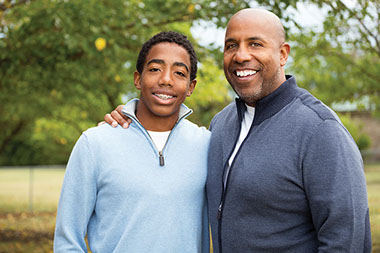
    Father and teen son smiling.

    Most parents don’t want to think about their teen using drugs. They assume their teen is doing OK. They may also think it would be obvious if their teen was into drugs or alcohol.

    Unfortunately, even teens with great parents sometimes take risks and make dangerous choices.

    Why do teens take risks?

    A teen’s brain is very sensitive to emotions and doing things that feel good. Plus, their brains aren’t fully developed yet.

    This means they are not ready to make rational decisions all the time. They may also struggle with mental health issues like depression or anxiety. It can be all too easy to slip into using drugs or alcohol.

    What can parents do?

    A good relationship with your teen is important. This can help them feel they can talk to you about challenges they are facing. This also means they might come to you if they have a problem with drugs or alcohol. Here are some tips to help you stay connected:

    *Be a great listener.Talk with your teen about their daily life. Give them a chance to express their opinion. Don’t interrupt. If they tell you something upsetting, try to remain calm. Ask them how you can help.

    *Help them find activities.Teens do well if they have an outlet for fun and stress relief. This may be music, sports, religious activities or volunteering.

    *Know your teen’s friends.Encourage your teen and their friends to hang out at your house.

    *Don’t solve their problems for them.Parents want to help their teen when they need it. But it’s often more effective to teach them skills to help them solve their own problems. If they have a fight with a friend, talk with them about ways they could work it out themselves. Offer your support but try not to step in.

    *Talk about tough stuff.Help your teen figure out what to do if they are being pressured into something. Show them that they can turn to you. Do they feel comfortable calling you if they need a ride home from a party? Can they talk to you about peer pressure and drinking?

    Source: National Institutes of Health

    © American Institute for Preventive Medicine

  • A Parents Guide To Gaming

    FAMILY LIFE

    Father and son playing virtual games.

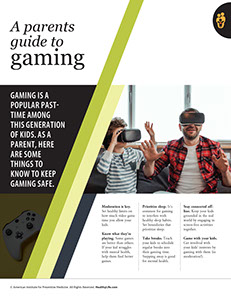
    Gaming is a popular past-time among this generation of kids. As a parent, here are some things to know to keep gaming safe.

    *  Moderation is key. Set healthy limits on how much video game time you allow your kids.

    *  Know what they’re playing. Some games are better than others. If your kid struggles with mental health, help them find better games.

    *  Prioritize sleep. It’s common for gaming to interfere with healthy sleep habits. Set boundaries that prioritize sleep.

    *  Take breaks. Teach your kids to schedule regular breaks into their gaming time. Stepping away is good for mental health.

    *  Stay connected off-line. Keep your kids grounded in the real world by engaging in screen-free activities together.

    *  Game with your kids. Get involved with your kids’ interests by gaming with them (in moderation!).

    © American Institute for Preventive Medicine

  • Prevent Child Abuse With Strong Families

    FAMILY LIFE

    Young child cuddled up with teddy bear.

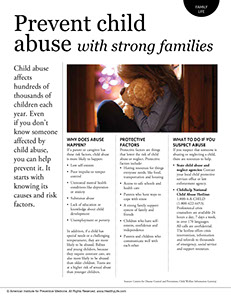
    Child abuse affects hundreds of thousands of children each year. Even if you don’t know someone affected by child abuse, you can help prevent it. It starts with knowing its causes and risk factors.

    Why does abuse happen?

    If a parent or caregiver has these risk factors, child abuse is more likely to happen:

    *  Low self-esteem

    *  Poor impulse or temper control

    *  Untreated mental health conditions like depression or anxiety

    *  Substance abuse

    *  Lack of education or knowledge about child development

    *  Unemployment or poverty

    In addition, if a child has special needs or a challenging temperament, they are more likely to be abused. Babies and young children, because they require constant care, are also more likely to be abused than older children. Teens are at a higher risk of sexual abuse than younger children.

    Protective factors

    Protective factors are things that lower the risk of child abuse or neglect. Protective factors include:

    *  Having resources for things everyone needs, like food, transportation and housing

    *  Access to safe schools and health care

    *  Parents who have ways to cope with stress

    *  A strong family support system of family and friends

    *  Children who have self-esteem, confidence and independence

    *  Parents and children who communicate well with each other

    What to do if you suspect abuse

    If you suspect that someone is abusing or neglecting a child, there are resources to help.

    *State child abuse and neglect agencies:Contact your local child protective services office or law enforcement agency.

    *Childhelp National Child Abuse Hotline:1.800-4-A-CHILD  (1-800-422-4453). Professional crisis counselors are available 24 hours a day, 7 days a week, in over 170 languages. All calls are confidential. The hotline offers crisis intervention, information and referrals to thousands of emergency, social service and support resources.

    Sources: Centers for Disease Control and Prevention, Child Welfare Information Gateway

    © American Institute for Preventive Medicine

  • A To Z Guide To Help Kids Be Healthy & Safe

    Child Safety

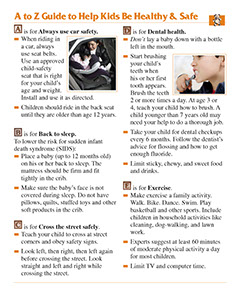
    A is for Always use car safety.

    *  When riding in a car, always use seat belts. Use an approved child-safety seat that is right for your child’s age and weight. Install and use it as directed.

    *  Children should ride in the back seat until they are older than age 12 years.

    B is for Back to sleep.

    To lower the risk for sudden infant death syndrome (SIDS):

    *  Place a baby (up to 12 months old) on his or her back to sleep. The mattress should be firm and fit tightly in the crib.

    *  Make sure the baby’s face is not covered during sleep. Do not have pillows, quilts, stuffed toys and other soft products in the crib.

    C is for Cross the street safely.

    *  Teach your child to cross at street corners and obey safety signs.

    *  Look left, then right, then left again before crossing the street. Look straight and left and right while crossing the street.

    D is for Dental health.

    Don’t lay a baby down with a bottle left in the mouth.

    Start brushing your child’s teeth when his or her first tooth appears. Brush the teeth 2 or more times a day. At age 3 or 4, teach your child how to brush. A child younger than 7 years old may need your help to do a thorough job.

    Take your child for dental checkups every 6 months. Follow the dentist’s advice for flossing and how to get enough fluoride.

    Limit sticky, chewy, and sweet food and drinks.

    E is for Exercise.

    *  Make exercise a family activity. Walk. Bike. Dance. Swim. Play basketball and other sports. Include children in household activities like cleaning, dog-walking, and lawn work.

    *  Experts suggest at least 60 minutes of moderate physical activity a day for most children.

    *  Limit TV and computer time.

    F is for Feed your child healthy foods.

    G is for Give positive feedback.

    *  Praise good behaviors.

    *  Hug, read, and play together.

    H is for Hand washing.

    Teach your child to wash his or her hands often. Show them how to do it the right way. Use soap and running water. Take at least 20 seconds to wash the hands. This is the amount of time it takes to sing “Happy Birthday” two times. Dry the hands with clean paper towels that can be thrown away.

    Hand washing is important before your child eats and after he or she goes to the bathroom, plays, handles pets, and sneezes or coughs.

    I is for Install.

    *  Install smoke alarms. Install carbon monoxide detectors, too.

    *  Follow the rules of the city you live in.

    *  Check to see that they work well. Do this every month.

    *  Ask your local fire department for help, if you need it.

    J is for Join.

    Join your child in being physically active and in eating healthy foods. Join group activities as a family.

    K is for Keep harmful things out of children’s reach. These include:

    *  Medicines and vitamins. Store these in “child- safe” bottles.

    *  Bleach and other household products. Read labels to find out which ones can harm a child and for first aid information.

    *  Matches, lighters, guns and bullets.

    *  All knives and sharp utensils.

    L is for Listen and Learn.

    Listen to your child.

    Learn about your child’s interests. Learn who their friends are, too.

    Learn child first aid and CPR.

    M is for Medicine safety.

    *  When you give medicine to your child, make sure it is the right kind and dose for your child’s weight.

    *  Give medicine as advised by your child’s doctor.

    *  Do not give aspirin to anyone under 19 years of age due to its link to Reye’s Syndrome.

    N is for Never leave a baby, toddler, or young child unattended.

    *  Never leave a baby alone on a bed or table.

    *  It takes only seconds for a toddler or curious children to get into something they should not be into.

    *  Never leave a child alone in a bathtub or baby bath.

    *  Never leave a child alone in a car and around cars.

    O is for Obey traffic laws and other rules.

    *  Laws and rules are made to keep people safe. Teach your child to obey them.

    *  Set rules that your child needs to follow.

    P is for Poison Control Center hotline.

    This number is 800.222.1222. Keep it by each phone. Program it in your cell phone.

    Q is for Quit Smoking!

    *  Smoking and secondhand smoke are very harmful to you and your child.

    *  Don’t smoke. Don’t let your child smoke.

    *  Do not allow smoking in your home.

    *  If needed, get help to quit smoking. Get help from your doctor or from 800.QUIT.NOW (784.8669) andwww.smokefree.gov.

    R is for Role model.

    *  Children copy what they see.

    *  Eat healthy foods. Do regular exercise.

    S is for Safety-proof the house.

    *  Set the thermostat on your water heater to 120ºF or less.

    *  Put safety plugs in outlets.

    *  Teach your child to stay away from the stove.

    *  Keep guard rails around space heaters. Gate off unsafe areas.

    *  Do not let young children get toys or other things with small parts. They could choke on them.

    *  Never leave a child alone near water. Wear life jackets when boating or near a lake. Empty buckets with water, etc. right away after use.

    *  Get more safety tips from Safe Kids Worldwide atwww.usasafekids.org.

    T is for Talk to your child.

    Talk about ways to be healthy and safe. Tell your child what you expect of him or her. Tell your child often that you love him or her.

    U is for Use products that are safety approved for kids.

    *  These include: Car seats, cribs, playpens, toys, and sleepwear.

    *  Find out if a product is safe or has been recalled from The U.S. Consumer Product Safety Commission atwww.cpsc.gov.

    V is for Vaccines.

    W is for Wear protective gear.

    *  Wear a helmet when riding a bike, rollerblading, skating, etc.

    *  Wear the right gear when practicing and playing team sports.

    *  Wear clothes or material that reflects the light when outdoors in the dark.

    X is for eXams from a health care provider.

    Children age 3 years and older should get a yearly checkup. Children under age 3 years need checkups when they are 1, 2, 4, 6, 9, 12, 15, 18, and 24 months old.

    Y is for Yearly flu vaccine.

    A yearly flu vaccine is the single best way to prevent getting the flu. All children ages 6 to 59 months should get a flu vaccine. So should others as advised by their doctors.

    Z is for ZZZZs (sleep).

    Get enough sleep each night:

    *  Adults need at least 7 to 9 hours.

    *  Teens need at least 8-1⁄2 to 9-1⁄2 hours.

    *  After 6 months of age, most children need 9 to 12 hours. Up to age 5 years, children may also take daytime naps for a total of 1⁄2 to 2 hours a day.

    Children's Self-Care book by the American Institute for Preventive Medicine. www.HealthyLife.com. All rights reserved.

    © American Institute for Preventive Medicine

  • Child Passenger Safety

    Child Safety

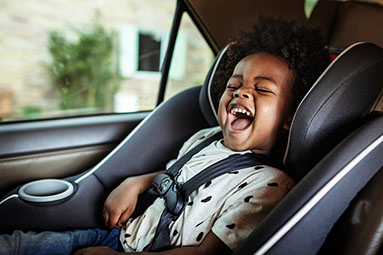
    Yound child in a car seat laughing.

    Child safety seats help protect your child from injury and death.

    Children aged 12 and under should sit properly restrained in the back seat.

    When you install a child safety or booster seat, use the instructions that come with it and the vehicle owner’s manual.

    A rear-facing infant child safety seat should never be placed in front of a passenger seat air bag.

    If you must transport a child in the front seat of a vehicle with an active air bag or near any passenger seat with a side air bag, install an on-off switch and press “off.”

    Have a certified child passenger safety technician check to see that the safety seat has been installed the right way. Find a technician or an inspection center near you fromnhtsa.gov/equipment/car-seats-and-booster-seats.

    A Year of Health Hints book by the American Institute for Preventive Medicine. www.HealthyLife.com. All rights reserved.

    © American Institute for Preventive Medicine

  • Easy Ways To Childproof Your Home

    Child Safety

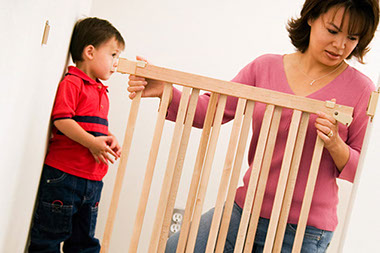
    Image of mom placing a safety gate on stairs.

    Is your home safe for curious children?

    To see your home from a toddler’s point of view, get down on your hands and knees and crawl around. Look for conditions that can lead to burns, falls, electric shock, entrapment, or poisoning. Then take steps to prevent harm. Some suggestions:

    *  Cover all toddler-height electrical outlets with plastic outlet covers.

    *  Install childproof locks on cabinets where household cleaners, chemicals, and other items that could harm children are stored.

    *  To prevent scalding burns, lower the thermostat on the water heater to 120ºF or lower.

    *  Store medicines and alcohol in high, out-of-reach places. Never leave them on a countertop, a table, or other places children can get them.

    *  Toddlers should eat and drink from plastic dishes and cups only.

    *  Don’t place a child’s crib or bed next to a window. An active or curious toddler could accidentally fall out.

    *  Keep all sharp objects like scissors, knives, or pins out of a toddler’s reach.

    A Year of Health Hints book by the American Institute for Preventive Medicine. www.HealthyLife.com. All rights reserved.

    © American Institute for Preventive Medicine

  • Infant Safety

    Child Safety

    Young baby wearing blue hat and wrapped in blue blanket.

    Infants depend on their families to keep them safe. While all babies are unique, there are some safety issues that apply to all infants.

    Never leave a baby or young child alone near any water, such as a bathtub, a toilet, a bucket with water, etc., not even to answer a telephone or the door.

    Do not leave a baby alone on a changing table, bed, sofa or chair.

    Sudden Infant Death Syndrome (SIDS) is the leading cause of death among babies between 1 month and 1 year old. To reduce the risk, place a baby to sleep on its back with a wearable blanket on a flat, sleep surface, covered only with a fitted sheet. Do not use a blanket, pillow, or add toys.

    From infancy on, ask your child’s doctor to check your child’s vision at regular exams. In general, children should start getting vision screening exams starting at age 3.

    A Year of Health Hints book by the American Institute for Preventive Medicine. www.HealthyLife.com. All rights reserved.

    © American Institute for Preventive Medicine

  • Pedaling Safely With Your Toddler

    Child Safety

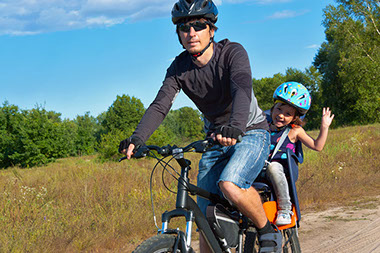
    Image of father and daughter on a bike.

    It’s easy to equip a bicycle with a child safety seat so your toddler can ride with you. To ensure the safety of your child:

    *  Be sure the seat is properly installed. If you aren’t sure how to install it correctly, consider having someone at a bicycle repair shop do it.

    *  A plastic cover should shield the back wheel, so the child’s clothing doesn’t get caught in the spokes.

    *  The back of the seat should be high enough to support and protect the child’s back and neck, and it should be marked with reflective tape if you ride after dark.

    *  A passenger restraint (safety belt) should fasten over the child’s shoulder.

    *  The seat should have a footrest, and the child’s legs should not hang free.

    Test the bicycle seat by riding without the youngster to be sure it’s securely fastened. When you take your child riding, be sure he or she is wearing a helmet.

    A Year of Health Hints book by the American Institute for Preventive Medicine. www.HealthyLife.com. All rights reserved.

    © American Institute for Preventive Medicine

  • Take The Hazard Out Of Halloween

    Child Safety

    Image of children in halloween customs.

    Dressing up to go trick-or-treating is a traditional childhood ritual. But wandering the streets in the dark dressed in bizarre costumes and knocking on strangers’ doors to ask for food can pose hazards. To be sure your children have a Halloween that’s fun and safe, take these precautions.

    *  Choose white or bright costumes, preferably of flame-retardant fabric and marked with reflective tape.

    *  Be sure a costume is short enough so that your child won’t trip.

    *  Don’t let your trick-or-treaters wear masks, which can interfere with their vision. Instead, apply makeup to their faces.

    *  Trick-or-treaters should carry flashlights, not candles. Small children should be accompanied by an adult.

    *  Avoid trick-or-treating at homes on dark streets or in unfamiliar neighborhoods.

    *  Check all treats before your children eat them. Don’t let children eat candy or other treats that aren’t commercially wrapped or look as though they’ve been tampered with.

    *  Keep carved, candlelit pumpkins out of reach of young children. And be sure to set your jack-o’- lantern on a nonflammable surface.

    A Year of Health Hints book by the American Institute for Preventive Medicine. www.HealthyLife.com. All rights reserved.

    © American Institute for Preventive Medicine

  • Traffic Tips For Tots

    Child Safety

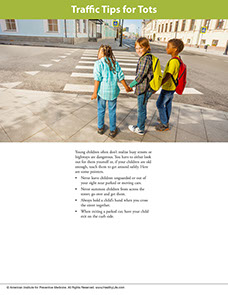
    Image of three children at a cross walk.

    Young children often don’t realize busy streets or highways are dangerous. You have to either look out for them yourself or, if your children are old enough, teach them to get around safely. Here are some pointers.

    *  Never leave children unguarded or out of your sight near parked or moving cars.

    *  Never summon children from across the street; go over and get them. Always hold a child’s hand when you cross the street together.

    *  When exiting a parked car, have your child exit on the curb side.

    A Year of Health Hints book by the American Institute for Preventive Medicine. www.HealthyLife.com. All rights reserved.

    © American Institute for Preventive Medicine