Tag: Colds, Flu, Covid

  • Covid-19, Cold, Flu, Or Allergy?

    SELF-CARE CORNER

    Women wearing a face mask.

    Know the difference

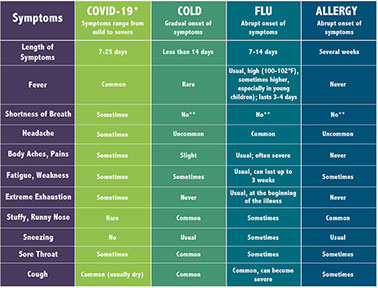
    You’re feeling pretty lousy. You’ve got sniffles, sneezing, and a sore throat. Is it COVID-19, a cold, flu, or allergies? It can be hard to tell them apart because they share so many symptoms. But understanding the differences will help you choose the best treatment.

    Comparison chart of symptoms between COVID-19, Cold, Flu and Allergies.

    © American Institute for Preventive Medicine

  • Flu Shot Faqs

    MEDICAL NEWS

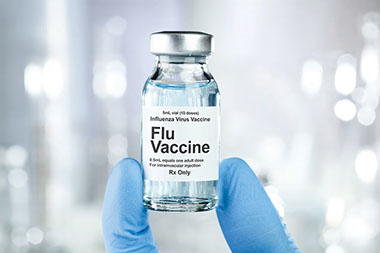
    Flu vaccine in bottle.

    Every year, millions of people get the flu. Some get very sick and need to be hospitalized. Thousands of people die from the flu every year.

    This year as we battle COVID-19, getting a flu shot is more important than ever. Flu shots decrease the chance that you will be hospitalized or die from the flu. This helps ensure that hospitals will not become overwhelmed with flu and COVID-19 patients.

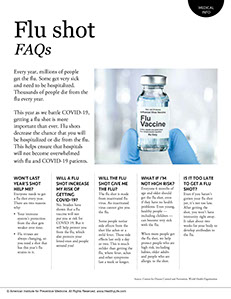
    Won’t last year’s shot help me?

    Everyone needs to get a flu shot every year. There are two reasons why:

    *  Your immune system’s protection from the shot gets weaker over time.

    *  Flu viruses are always changing, so you need a shot that has this year’s flu strains in it.

    Will a flu shot increase my risk of getting COVID-19?

    No. Studies have shown that a flu vaccine will not put you at risk for COVID-19. But it will help protect you from the flu, which also protects your loved ones and people around you!

    Will the flu shot give me the flu?

    The flu shot is made from inactivated flu virus. An inactivated virus cannot give you the flu. Some people notice side effects from the shot like aches or a mild fever. These side effects last only a day or two. This is much milder than getting the flu, where fever, aches and other symptoms last a week or longer.

    What if I’m not high risk?

    Everyone 6 months of age and older should get the flu shot, even if they have no health problems. Even young, healthy people – including children – can become very sick with the flu.

    When more people get the flu shot, we help protect people who are high risk, including babies, older adults and people who are allergic to the shot.

    Is it too late to get a flu shot?

    Even if you haven’t gotten your flu shot yet, it’s not too late. After getting the shot, you won’t have immunity right away. It takes about two weeks for your body to develop antibodies to the flu.

    Source: Centers for Disease Control and Prevention, World Health Organization

    © American Institute for Preventive Medicine

  • Stop The Spread Of Respiratory Infections

    MEDICAL NEWS

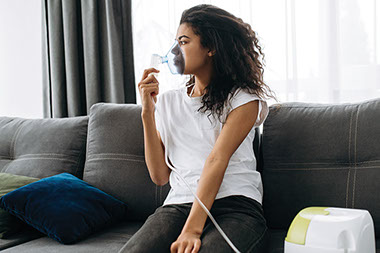
    Women sitting with a portable oxygen mask.

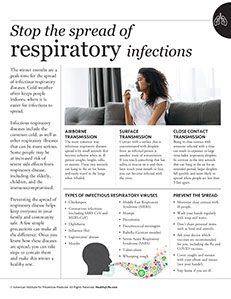
    The winter months are a peak time for the spread of infectious respiratory diseases. Cold weather often keeps people indoors, where it is easier for infections to spread.

    Infectious respiratory diseases include the common cold, as well as other respiratory illnesses that can be more serious. Some people may be at increased risk of severe side effects from respiratory disease, including the elderly, children, and the immunocompromised.

    Preventing the spread of respiratory disease helps keep everyone in your family and community safe. A few simple precautions can make all the difference. Once you know how these diseases are spread, you can take steps to contain them and make this winter a healthy one.

    Airborne transmission

    The most common way infectious respiratory diseases spread is by small aerosols that become airborne when an ill person coughs, laughs, talks, or sneezes. These tiny aerosols can hang in the air for hours and easily travel to the lungs when inhaled.

    Surface transmission

    Contact with a surface that is contaminated with droplets from an infected person is another route of transmission. If you touch something that has saliva or mucus on it and then later touch your mouth or face, you can become infected with the virus.

    Close contact transmission

    Being in close contact with someone infected with a virus can result in exposure to large virus-laden respiratory droplets. In contrast to the tiny aerosols that can hang in the air for an extended period, larger droplets fall quickly and most likely to spread when people are less than 3 feet apart.

    Types of infectious respiratory viruses

    *  Chickenpox

    *  Coronavirus infections (including SARS-CoV and MERS-CoV)

    *  Diphtheria

    *  Influenza (flu)

    *  Legionnaires’ disease

    *  Measles

    *  Middle East Respiratory Syndrome (MERS)

    *  Mumps

    *  Pneumonia

    *  Pneumococcal meningitis

    *  Rubella (German measles)

    *  Severe Acute Respiratory Syndrome (SARS)

    *  Tuberculosis

    *  Whooping cough

    Prevent the spread

    *  Minimize close contact with ill people.

    *  Wash your hands regularly with soap and water.

    *  Don’t share personal items such as food and utensils.

    *  Ask your doctor which vaccines are recommended for you, including the flu and COVID vaccines.

    *  Cover coughs and sneezes with your elbow and tissues (not your hands!).

    *  Stay home if you are ill.
    © American Institute for Preventive Medicine

  • Pneumonia

    Respiratory conditions

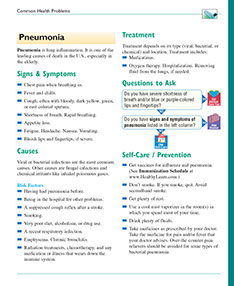
    Pneumonia is lung inflammation. It is one of the leading causes of death in the U.S., especially in the elderly.

    Signs & Symptoms

    *  Chest pain when breathing in.

    *  Fever and chills.

    *  Cough, often with bloody, dark yellow, green, or rust-colored sputum.

    *  Shortness of breath. Rapid breathing.

    *  Appetite loss.

    *  Fatigue. Headache. Nausea. Vomiting.

    *  Bluish lips and fingertips, if severe.

    Causes

    Viral or bacterial infections are the most common causes. Other causes are fungal infections and chemical irritants like inhaled poisonous gases.

    Risk Factors

    *  Having had pneumonia before.

    *  Being in the hospital for other problems.

    *  A suppressed cough reflex after a stroke.

    *  Smoking.

    *  Very poor diet, alcoholism, or drug use.

    *  A recent respiratory infection.

    *  Emphysema. Chronic bronchitis.

    *  Radiation treatments, chemotherapy, and any medication or illness that wears down the immune system.

    Treatment

    Treatment depends on its type (viral, bacterial, or chemical) and location. Treatment includes:

    *  Medications.

    *  Oxygen therapy. Hospitalization. Removing fluid from the lungs, if needed.

    Questions to Ask

    Self-Care / Prevention

    *  Get vaccines for influenza and pneumonia.

    *  Don’t smoke. If you smoke, quit. Avoid secondhand smoke.

    *  Get plenty of rest.

    *  Use a cool-mist vaporizer in the room(s) in which you spend most of your time.

    *  Drink plenty of fluids.

    *  Take medicines as prescribed by your doctor. Take the medicine for pain and/or fever that your doctor advises. Over-the-counter pain relievers should be avoided for some types of bacterial pneumonia.

    Healthier at Home book by the American Institute for Preventive Medicine. www.HealthyLife.com. All rights reserved.

    © American Institute for Preventive Medicine

  • Cold, Flu, Or Allergy?

    SELF-CARE CORNER

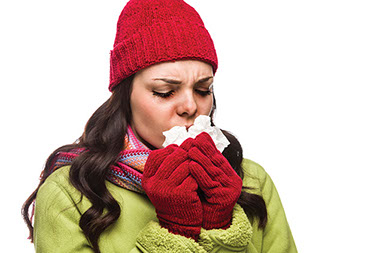
    Image of young women dressed warmly coughing into a tissue.

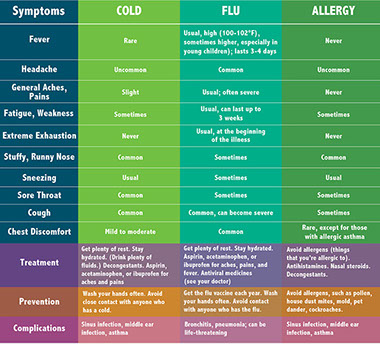
    You’re feeling pretty lousy. You’ve got sniffles, sneezing, and a sore throat. Is it a cold, flu, or allergies? It can be hard to tell them apart because they share so many symptoms. But understanding the differences will help you choose the best treatment, advises the NIH News in Health.

    Chart showing symptoms of a cold vs the flu vs an allergy.

    © American Institute for Preventive Medicine

  • Is It The Flu?

    MEDICAL NEWS

    Image with the words "Fight the Flu" written in a banner.

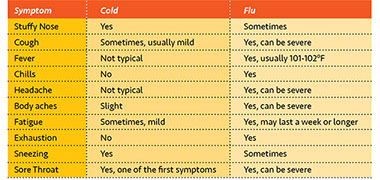
    Influenza, or the flu, circulates every winter and leaves thousands of people sick with a cough, aches, fever, and fatigue. The flu is much more serious than a cold: thousands of people die each year from flu-related complications. Unfortunately, many people don’t realize they have the flu until it’s too late. By then, they may have exposed people at work, school, or other public places. Here’s how to know if you have the flu, or just a cold:

    Chart showing symptoms of the cold vs the flu.

    When you come down with a cold, your symptoms usually appear very gradually over a few days. They often start with a sore throat followed by a runny nose. The flu often hits hard, very quickly. Symptoms appear suddenly and the exhaustion and aches can quickly become severe.

    If in doubt, try to stay home and stay away from others when you’re sick. In particular, try to avoid exposing young children and older adults, who may be more likely to suffer from flu-related problems. Wash your hands frequently and encourage others in your household to do the same.

    If you think you have the flu, call your doctor right away. You may be able to take an antiviral medication (brand name: Tamiflu), which can decrease your symptoms and the amount of time you are sick. Antiviral medications should be taken within 48 hours of the start of symptoms.

    Finally, talk to your doctor about getting a flu shot each year: it’s the number one way to help avoid getting – and spreading – the flu!

    Sources: Centers for Disease Control, U.S. Department of Veterans Affairs

    © American Institute for Preventive Medicine

  • Questions Answered About Mers

    MEDICAL NEWS

    Illustration of lungs with MERS.

    As concern increases about Middle Eastern Respiratory Syndrome, or MERS, in the Middle East and in Asia, Dr. Peter Hotez, dean of the National School of Tropical Medicine at Baylor College of Medicine, answers questions on what we need to know about this emerging infectious disease.

    What is MERS?

    It is a serious lower respiratory infection caused by the MERS coronavirus. This emerging viral pathogen was first acquired from camels, but now has limited human-to-human transmission.

    What are the symptoms?

    The symptoms include fever, cough, and respiratory symptoms that could lead to respiratory failure and other organ system breakdown. This infectious disease is similar to SARS (severe acute respiratory syndrome) that caused a severe and highly lethal outbreak in South China in 2002-2003. Some data from previous SARS outbreaks indicate that 13% of cases may have no symptoms and this could also be true for MERS.

    How is it spread?

    The mode of spread is still not well known. In general, it involves close contact, especially in health care settings. For SARS, a related coronavirus, sneezing and cough seems to facilitate transmission.

    Is there a treatment? Is there a vaccine?

    There is no proven antiviral treatment, yet, for MERS. Several prototype vaccines are in different stages of development.

    Who is at risk? Any groups more at risk?

    For about 30 to 40%, of people who get MERS, the disease is fatal. At greatest risk of dying are the elderly and those with underlying heart and lung disease or diabetes.

    Should we be concerned?

    The MERS epidemic in South Korea looks as though it will be contained soon with all new cases appearing among the estimated 3,000 people in quarantine. However, in Saudi Arabia and elsewhere on the Arabian Peninsula, new cases continue to appear. Individuals thinking about travelling to the Arabian Peninsula should consult their doctor if they are elderly or have underlying chronic disease conditions.

    © American Institute for Preventive Medicine

  • What To Know About Whooping Cough

    SELF-CARE CORNER

    Image of man coughing.

    Pertussis, or whooping cough, is more than just an annoying cough. It is a serious and highly contagious disease. The coughing is so severe it causes those affected to gasp for air in between coughs, which make a “whooping” sound that can last for weeks or months. The cough may cause a person to stop breathing temporarily, turn blue, and even vomit. Many people are unable to eat or sleep due to the severe coughing spells. It can lead to complications, such as pneumonia, cracked ribs, and seizures. It can also be life-threatening.

    Whooping cough is on the rise in the U.S. Here’s what you should know to protect yourself and those around you.

    You can spread it before you even know you have it.

    Whooping cough may feel like you have a cold at first. This stage lasts one to two weeks. It often includes a runny nose, sneezing, low-grade fever, and a mild cough. Unfortunately, many people don’t realize they have whooping cough during this stage and can spread it to others.

    Infants under 6 months of age are the most likely to die from pertussis.

    Babies are given whooping cough vaccine at two, four and six months of age. Until they have had all these vaccines, they are more likely to catch whooping cough. The Immunization Action Coalition says babies under six months of age are the most vulnerable because they don’t yet have strong immunity to protect against it.

    Adults are the most likely to pass the infection to young infants.

    The National Foundation for Infectious Diseases (NFID) says adults are the most common source of whooping cough infection in babies.

    Even if you already had a whooping cough vaccine, you might need another one.

    Vaccines aren’t just for babies and kids. Recommendations for whooping cough vaccination have changed in recent years.

    The NFID says the following adults should be vaccinated:

    *  All adults age 19 and older need a whooping cough booster. This is called a Tdap vaccine. It also protects against tetanus and diphtheria.

    *  Pregnant women need a Tdap vaccine during the third trimester (between 27 and 36 weeks of every pregnancy).

    *  Adults of any age who may be in close contact with babies younger than 1 year of age should get a Tdap vaccine. It should be given at least two weeks before being around the baby, if possible.

    *  Health care employees in hospitals and health centers should get the Tdap.

    *  After getting the Tdap vaccine, all other adults should get the Td (tetanus and diphtheria) booster every 10 years.

    © American Institute for Preventive Medicine