Tag: conditions

  • Understanding Autoimmunity

    MEDICAL NEWS

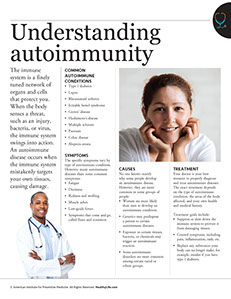
    Smiling female.

    The immune system is a finely tuned network of organs and cells that protect you. When the body senses a threat, such as an injury, bacteria, or virus, the immune system swings into action. An autoimmune disease occurs when the immune system mistakenly targets your own tissues, causing damage.

    Common autoimmune conditions

    *  Type 1 diabetes

    *  Lupus

    *  Rheumatoid arthritis

    *  Irritable bowel syndrome

    *  Graves’ disease

    *  Hashimoto’s disease

    *  Multiple sclerosis

    *  Psoriasis

    *  Celiac disease

    *  Alopecia areata

    Symptoms

    The specific symptoms vary by type of autoimmune condition. However, many autoimmune diseases share some common symptoms:

    *  Fatigue

    *  Dizziness

    *  Redness and swelling

    *  Muscle aches

    *  Low-grade fevers

    *  Symptoms that come and go, called flares and remission

    Causes

    No one knows exactly why some people develop an autoimmune disease. However, they are more common in some groups of people:

    *  Women are more likely than men to develop an autoimmune condition.

    *  Genetics may predispose a person to certain autoimmune diseases.

    *  Exposure to certain viruses, bacteria, or chemicals may trigger an autoimmune reaction.

    *  Some autoimmune disorders are more common among certain racial or ethnic groups.

    Treatment

    Your doctor is your best resource to properly diagnose and treat autoimmune diseases. The exact treatment depends on the type of autoimmune condition, the areas of the body affected, and your own health and medical history.

    Treatment goals include:

    *  Suppress or slow down the immune system to prevent it from damaging tissues.

    *  Control symptoms, including pain, inflammation, rash, etc.

    *  Replace any substances your body can no longer make, for example, insulin if you have type 1 diabetes.
    © American Institute for Preventive Medicine

  • Plane Travel For Those With Special Health Problems

    Healthy Travel

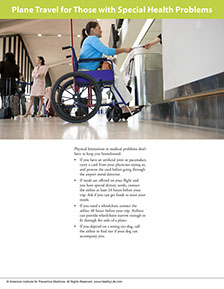
    Women in wheelchair at airport check-in counter.

    Physical limitations or medical problems don’t have to keep you homebound.

    *  If you have an artificial joint or pacemaker, carry a card from your physician saying so, and present the card before going through the airport metal detector.

    *  If meals are offered on your flight and you have special dietary needs, contact the airline at least 24 hours before your trip. Ask if you can get foods to meet your needs.

    *  If you need a wheelchair, contact the airline 48 hours before your trip. Airlines can provide wheelchairs narrow enough to fit through the aisle of a plane.

    *  If you depend on a seeing-eye dog, call the airline to find out if your dog can accompany you.

    Page image from A Year of Health Hints book by the American Institute for Preventive Medicine. www.HealthyLife.com. All rights reserved.

    © American Institute for Preventive Medicine
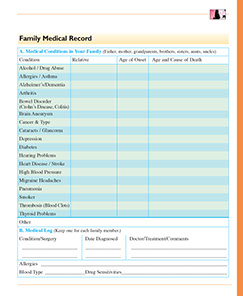
  • Family Medical Record

    Medical History

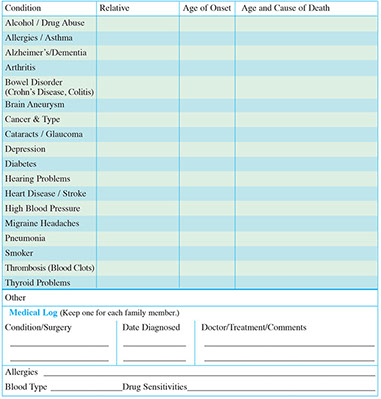
    Family medical record chart.
    Page from the Healthier at Home book by the American Institute for Preventive Medicine. www.HealthyLife.com. All rights reserved

    © American Institute for Preventive Medicine
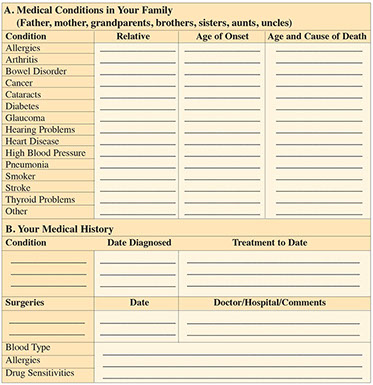
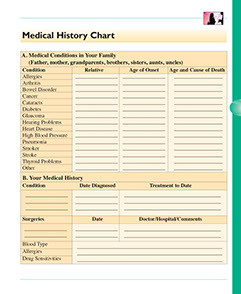
  • Medical History Chart

    Medical History

    Medical history chart.
    Page from the Health at Home Lifetime book by the American Institute for Preventive Medicine. www.HealthyLife.com. All rights reserved.

    © American Institute for Preventive Medicine