Tag: emergency

  • First Aid Kits: Stay Up To Date

    SELF-CARE CORNER

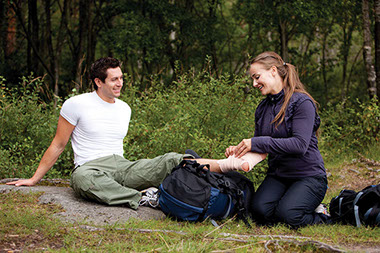
    Women helping wrap man's foot and ankle with sprain wrap.

    A first aid kit is an essential self-care item that should always be handy. A well-stocked kit prepares you for any situation or emergency that may arise.

    If you don’t have a first aid kit, you can purchase ready-made kits at most pharmacies. Ideally, you should have a kit for your home as well as your vehicle, so you’re covered anywhere you go.

    First aid kits should be updated every six months to keep supplies stocked and replace expired items. Now is a good time to go through your kits to ensure they are up to date and stocked with everything you need.

    What should be in your kit?

    *  2 absorbent compress dressings (5 x 9 inches)

    *  25 adhesive bandages (assorted sizes)

    *  1 adhesive cloth tape (10 yards x 1 inch)

    *  5 antibiotic ointment packets

    *  5 antiseptic wipe packets

    *  2 packets of aspirin (81 mg each)

    *  1 emergency blanket

    *  1 breathing barrier (with one-way valve)

    *  1 instant cold compress

    *  2 pairs of nonlatex gloves (size: large)

    *  2 hydrocortisone ointment packets

    *  1 3-inch gauze roll (roller) bandage

    *  1 roller bandage (4 inches wide)

    *  5 3 x 3-inch sterile gauze pads

    *  5 sterile gauze pads (4 x 4 inches)

    *  A thermometer (non-mercury/non-glass)

    *  2 triangular bandages

    *  Tweezers

    *  A first aid guide or reference book

    Personalize your kit

    Depending on the needs of yourself and your family, you should add special items unique to your situation. For example:

    *  If someone in your family has diabetes, include glucose tabs/gels, quick glucose snacks, and a glucagon injection kit.

    *  If someone in your family has a severe allergy, include an epi-pen and some antihistamine medication.

    *  Include a list of medications that each family member takes, as well as contact information for their doctors.

    *  Include your address in a prominent place in your first aid kit. This will allow the person who is helping you in an emergency to give this information to first responders.
    © American Institute for Preventive Medicine
  • Get To Know An Aed

    MEDICAL NEWS

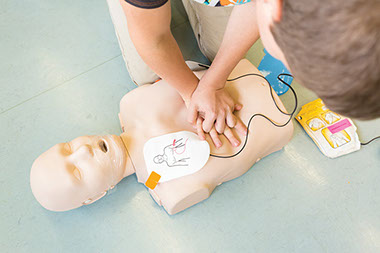
    Person training to use an AED.

    Automated external defibrillators help a person who is in cardiac arrest. They can deliver an electric shock to help get the heart beating normally again.

    You may have seen AEDs at places like stores, malls, hotels or gyms. Many public places have them and they are usually mounted on a wall.

    What is cardiac arrest?

    Cardiac arrest and a heart attack are not the same thing.

    In a heart attack, a blockage stops blood flow to the heart. But with cardiac arrest, the heart’s electrical rhythm isn’t working properly. The heart stops pumping, or is “arrested.” A heart attack can cause cardiac arrest.

    Why should I learn to use an AED?

    Sudden cardiac arrest is a major cause of death. An AED is the only way to restore a person’s heart rhythm during cardiac arrest. Knowing how to do cardiopulmonary resuscitation (CPR) is also helpful.

    You still need to call 911 if someone is in cardiac arrest. But it takes a few minutes for an ambulance to arrive. In those minutes, an AED could be life-saving.

    When to use one

    If a person has cardiac arrest, they will be completely unresponsive. If the person cannot talk or wake up, check to see if they are breathing. If they aren’t breathing and don’t have a pulse, start CPR and ask someone else to get the AED, if possible.

    What to do

    Even if you’re not trained, you can use an AED on someone in cardiac arrest. The machine helps guide you along. Here’s what to do:

    *  Call 911 or have someone else call.

    *  If possible, have someone do chest compressions or CPR while someone else gets the AED ready.

    *  Turn on the AED.

    *  Remove clothes from the person’s chest. Dry their skin with a cloth if needed.

    *  Put the pads on the chest as pictured on the pads.

    *  Do not place AED pads on top of a pace maker.

    *  First, the AED will measure the person’s heart rhythm. Don’t touch the person while this happens.

    *  If the person needs a shock, the AED will tell you.

    *  The AED will tell you when it gives a shock and what to do next. Stand back while it gives a shock through the pads.

    Together, CPR and an AED can save lives.

    Sources: American Heart Association, American Red Cross

    © American Institute for Preventive Medicine
  • Keeping An Eye Out For Retinal Detachment

    SELF-CARE CORNER

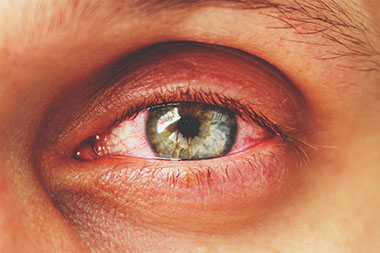
    Close up of eye.

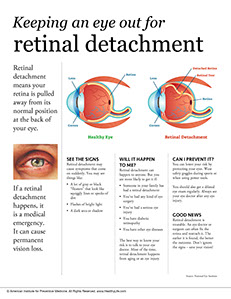
    Retinal detachment means your retina is pulled away from its normal position at the back of your eye. If a retinal detachment happens, it is a medical emergency. It can cause permanent vision loss.

    See the signs

    Retinal detachment may cause symptoms that come on suddenly. You may see things like:

    *  A lot of gray or black “floaters” that look like squiggly lines or specks of dirt

    *  Flashes of bright light

    *  A dark area or shadow

    Will it happen to me?

    Retinal detachment can happen to anyone. But you are more likely to get it if:

    *  Someone in your family has had a retinal detachment

    *  You’ve had any kind of eye surgery

    *  You’ve had a serious eye injury

    *  You have diabetic retinopathy

    *  You have other eye diseases

    The best way to know your risk is to talk to your eye doctor. Most of the time, retinal detachment happens from aging or an eye injury.

    Can I prevent it?

    You can lower your risk by protecting your eyes. Wear safety goggles during sports or when using power tools.

    You should also get a dilated eye exam regularly. Always see your eye doctor after any eye injury.

    Good news

    Retinal detachment is treatable. An eye doctor or surgeon can often fix the retina and reattach it. The earlier it is found, the better the outcome. Don’t ignore the signs – save your vision!

    Source: National Eye Institute

    © American Institute for Preventive Medicine
  • Medical Loans: The Good, Bad, And The Alternatives

    FINANCIAL HEALTH

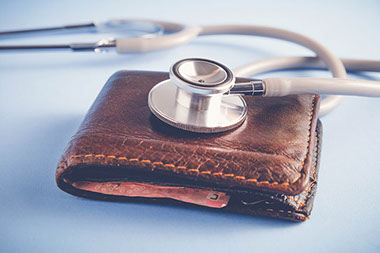
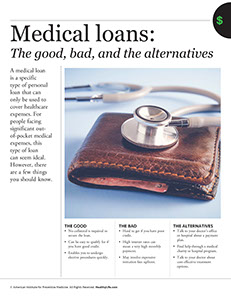
    Wallet with stethoscope.

    A medical loan is a specific type of personal loan that can only be used to cover healthcare expenses. For people facing significant out-of-pocket medical expenses, this type of loan can seem ideal. However, there are a few things you should know.

    The Good

    *  No collateral is required to secure the loan.

    *  Can be easy to qualify for if you have good credit.

    *  Enables you to undergo elective procedures quickly.

    The Bad

    *  Hard to get if you have poor credit.

    *  High interest rates can mean a very high monthly payment.

    *  May involve expensive initiation fees upfront.

    The Alternatives

    *  Talk to your doctor’s office or hospital about a payment plan.

    *  Find help through a medical charity or hospital program.

    *  Talk to your doctor about cost-effective treatment options.

    © American Institute for Preventive Medicine
  • Check Your Health Insurance Coverage

    Healthy Travel

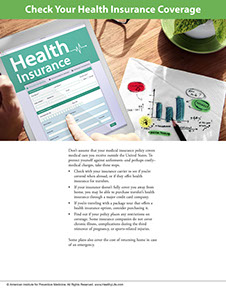
    Image of Health Insurance form on tablet.

    Don’t assume that your medical insurance policy covers medical care you receive outside the United States. To protect yourself against unforeseen-and perhaps costly-medical charges, take these steps.

    *  Check with your insurance carrier to see if you’re covered when abroad, or if they offer health insurance for travelers.

    *  If your insurance doesn’t fully cover you away from home, you may be able to purchase traveler’s health insurance through a major credit card company.

    *  If you’re traveling with a package tour that offers a health insurance option, consider purchasing it.

    *  Find out if your policy places any restrictions on coverage. Some insurance companies do not cover chronic illness, complications during the third trimester of pregnancy, or sports-related injuries.

    Some plans also cover the cost of returning home in case of an emergency.

    Page image from A Year of Health Hints book by the American Institute for Preventive Medicine. www.HealthyLife.com. All rights reserved.

    © American Institute for Preventive Medicine
  • How To Locate A Physician Away From Home

    Healthy Travel

    Image of doctor with medical icons.

    The best made travel plans can’t guarantee against illness or injuries. Although travelers don’t like thinking about the possibility of a medical emergency, a little forethought can save you a lot of misery or aggravation. Knowing what to do and who to contact should you need medical help, especially when traveling abroad, reduces anxiety and avoids wasting time when minutes count.

    Specialized travel medical clinics exist in some areas. Consult the following for names of physicians you can contact, if need be, in the area you plan to visit.

    International Association for Medical Assistance to Traveler (IAMAT)

    1623 Military Rd. #279

    Niagra Falls, NY 14304-1745

    716.754.4883

    www.iamat.org

    Overseas Citizens Services (OCS), Bureau of Consular Affairs

    1.888.407.4747

    http://travel.state.gov/about/contact/contact_4745.html

    The American Embassy or American, British, or Canadian consul or consulate in the country you’re visiting.

    Page image from A Year of Health Hints book by the American Institute for Preventive Medicine. www.HealthyLife.com. All rights reserved.

    © American Institute for Preventive Medicine

  • If You Suspect A Narcotics Overdose, Act Fast

    Substance Use & Abuse

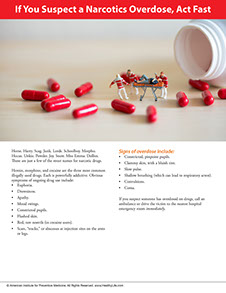
    Horse. Harry. Scag. Junk. Lords. Schoolboy. Morpho. Hocus. Unkie. Powder. Joy. Snow. Miss Emma. Dollies. These are just a few of the street names for narcotic drugs. Heroin, morphine, and cocaine are the three most common illegally used drugs. Each is powerfully addictive. Obvious symptoms of ongoing drug use include:

    *  Euphoria.

    *  Drowsiness.

    *  Apathy.

    *  Mood swings.

    *  Constricted pupils.

    *  Flushed skin.

    *  Red, raw nostrils (in cocaine users).

    *  Scars, “tracks,” or abscesses at injection sites on the arms or legs.

    Signs of overdose include:

    *  Constricted, pinpoint pupils.

    *  Clammy skin, with a bluish tint.

    *  Slow pulse.

    *  Shallow breathing (which can lead to respiratory arrest).

    *  Convulsions.

    *  Coma.

    If you suspect someone has overdosed on drugs, call an ambulance or drive the victim to the nearest hospital emergency room immediately.

    Page from A Year of Health Hints book by the American Institute for Preventive Medicine. www.HealthyLife.com. All rights reserved.

    © American Institute for Preventive Medicine
  • Poison Control

    Home Safety

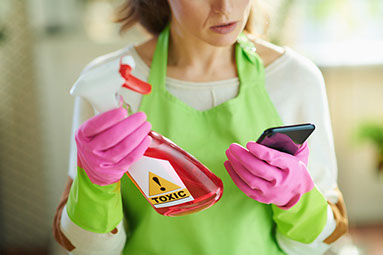
    Female wearing cleaning gloves, holding a cleaning bottle with the word "Toxic" on it and looking at her phone in the other hand.

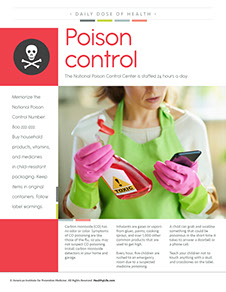
    The National Poison Control Center is staffed 24 hours a day. Memorize the National Poison Control Number: 800.222.1222. Buy household products, vitamins, and medicines in child-resistant packaging. Keep items in original containers. Follow label warnings.

    Carbon monoxide (CO) has no odor or color. Symptoms of CO poisoning are like those of the flu, so you may not suspect CO poisoning. Install carbon monoxide detectors in your home and garage.

    Inhalants are gases or vapors from glues, paints, cooking sprays, and over 1,000 other common products that are used to get high.

    Every hour, five children are rushed to an emergency room due to a suspected medicine poisoning.

    A child can grab and swallow something that could be poisonous in the short time it takes to answer a doorbell or a phone call.

    Teach your children not to touch anything with a skull and crossbones on the label.

    A Year of Health Hints book by the American Institute for Preventive Medicine. www.HealthyLife.com. All rights reserved.

    © American Institute for Preventive Medicine

  • Save For More Than Just A Rainy Day

    Financial Health

    Invest in your future.

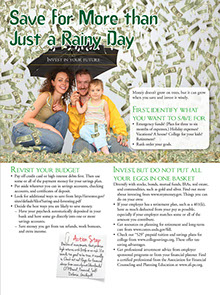
    Money doesn’t grow on trees, but it can grow when you save and invest it wisely. First, identify what you want to save for:

    *  Emergency funds? (Plan for three to six months of expenses.) Holiday expenses? Vacations? A house? College for your kids? Retirement?

    *  Rank order your goals.

    Invest, but do not put all your eggs in one basket.

    Diversify with stocks, bonds, mutual funds, IRAs, real estate, and commodities, such as gold and silver. Find out more about investing fromwww.mymoney.gov. Things you can do on your own:

    *  If your employer has a retirement plan, such as a 401(k), have as much deducted from your pay as possible, especially if your employer matches some or all of the amount you contribute.

    *  Get resources on planning for retirement and long-term care fromwww.csrees.usda.gov/fsll.

    *  Check out “529” prepaid tuition and savings plans for college fromwww.collegesavings.org. These offer tax-saving advantages.

    *  Get professional investment advice from employer sponsored programs or from your financial planner. Find a certified professional from the Association for Financial Counseling and Planning Education atwww.afcpe.org.

    Revisit your budget:

    *  Pay off credit card or high interest debts first. Then use some or all of the payment money for your savings plan.

    *  Put aside whatever you can in savings accounts, checking accounts, and certificates of deposit.

    *  Look for additional ways to save fromhttp://investor.gov/sites/default/files/Saving-and-Investing.pdf

    *  Decide the best ways you are likely to save money.

    – Have your paycheck automatically deposited in your bank and have some go directly into one or more savings accounts.

    – Save money you get from tax refunds, work bonuses, and extra income.

    Action Step

    Beware of investments that promise high returns with little or no risk. If it sounds too good to be true, it usually is.

    Ways to Well-Being. Published by the American Institute for Preventive Medicine.

    © American Institute for Preventive Medicine
  • Keep A Survival Kit In Your Car

    Personal Safety

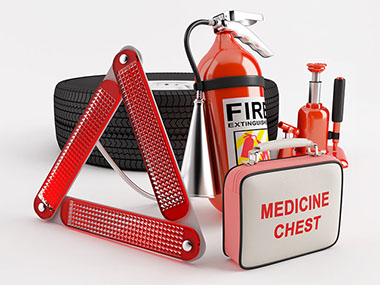
    Image of a car kit.

    No car should be without a survival kit of items that you might need in the event you’re in an accident, run out of gas, have a breakdown, or get stuck. Items to include:

    *  First-aid kit.

    *  Flares.

    *  White cloth, for distress signal.

    *  Flashlight with spare batteries.

    *  Snow shovel.

    *  Knife or other basic tools.

    *  Empty gas can, for purchasing gas.

    *  Small fire extinguisher.

    *  Paper and pencil.

    *  Blanket.

    *  Change, for phone calls and tolls.

    *  Food and water, for long trips through unpopulated areas. Whistle.

    A Year of Health Hints book by the American Institute for Preventive Medicine. www.HealthyLife.com. All rights reserved.

    © American Institute for Preventive Medicine