Tag: Emergency Preparedness

  • Being Ready For A Disaster

    Home Safety

    By acting on the items below, you and your family can be prepared for many types of disasters that may occur in the future.

    General Tips to Stay Safe

    *  Be alert and aware of what’s around you (e.g., a strange car parked in the same spot for a long time or an odd package). Report these and threats of violence to local police. Since the attack inside Columbine High School in 1999, plans for violence in other schools have been prevented because people have found and told police about notes with plans, materials to make bombs, etc. Stay calm and patient.

    *  Listen for sirens that alert you about a possible disaster.

    *  Tune into the TV or radio for news as well as what to do. The Emergency Alert System (EAS) decides what actions should be taken. For more information, contactwww.fcc.gov/eb/eas.

    *  Check for injuries and give first aid, if needed.

    Plans to Make Before a Disaster

    *  Write down, ahead of time, the steps to take for different disasters (e.g., house, fires, floods, etc.). Go through drills for each plan with the whole family. Make sure the car always has gas. This is in case you have to leave an area.

    *  Know your place of work’s emergency plans. Find out about them from your supervisor, Employee Assistance Program (EAP), etc.

    *  Take a course in first aid from the Red Cross, your police or fire department.

    *  Give each family member a prepaid phone card with about a ten dollar value. Instruct children how to use the card and a pay phone. Some cell phone services may be overwhelmed in an emergency.

    *  Set up a “check-in” plan. Choose someone for family members to call or e-mail to check on each other. Pick someone far enough away who would not likely be part of the same event. Of course, call each other on cell, regular, or pay phones.

    *  Choose two places to meet. One is at home or near your home. Choose another place farther away in case you can’t get home. Make plans for the safety of your children.

    *  If you have children in school, find out the school’s crisis plan. Know the school’s policy for sending children home. Make sure the school has current phone numbers for you and other caregivers in case you can’t be reached. Find out what the school needs to have to release your child to designated caregivers.

    *  If you have a pet, plan for its safety. For more information, contact the Red Cross orwww.disasterrelief.org/library/prepare/pets.html.

    *  When you enter a building, find emergency exits and stairways. Plan ahead how to get out quickly from buildings, vehicles, crowded public places, etc.

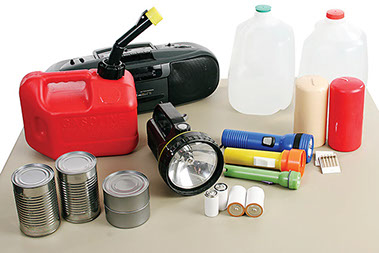
    *  Make an emergency supply kit. Put these things in backpacks or containers that one or more family members can easily carry:

    – Three days’ supply of bottled water (one gallon a day per person if possible. Put these next to, not in your containers.)

    – Food that won’t spoil. A hand can opener.

    – Flashlight and extra batteries

    – A battery powered radio or TV and extra batteries

    – First aid kits for the home and the car

    – Sleeping bags or blankets

    – A change of clothing for each person

    – Items for family members with special needs (e.g., baby supplies, medicines, etc.)

    – Duct tape and dry towels that you can make wet to make a room airtight

    – Bleach

    – Important documents, cash, and credit cards

    For more information on being ready for disasters, contactwww.redcross.orgor call your local Red Cross. Ask about their “Preparing for the Unexpected” class. This one and a half-hour class teaches families and employees safety steps to take for many kinds of disasters.

    Types of Disasters

    Weather Disasters

    *  Find out and be prepared for disasters that are likely to occur in your area (e.g., floods, earthquakes, tornados, etc.).

    *  Tune in, daily, to weather forecasts. The Emergency Broadcast System (EBS) uses radio and TV stations to issue a WATCH (for an expected emergency) or a WARNING (for an emergency in progress or one that is about to occur).

    *  Heed the warnings given. Emergency sirens may also sound. Know when your community does a practice drill for sirens (e.g., the first Saturday of the month at 1:00 p.m). Then you won’t confuse this with an actual emergency.

    *  Watch for fallen power lines. Avoid them.

    For more information on weather updates, contact The National Weather Service atwww.nws.noaa.gov.

    Biological Terrorism

    Biological terrorism includes anthrax, smallpox, and other biological agents. If a biological attack occurs, the public will be informed and told what to do. Stay calm and listen for instructions on the radio or television.

    For up-to-date information on biological agents, contact the Centers for Disease Control and Prevention. Call 888.246.2675 (English), 888.246.2857 (Spanish) or visitwww.bt.cdc.gov.

    Bomb Threats

    *  Don’t touch strange packages.

    *  Be suspicious if packages have a ticking sound or have wires or aluminum foil sticking out from them.

    *  Leave the building as fast as you can.

    *  Call local police and the building manager.

    *  When leaving a building, try not to walk by windows.

    For more information, contactwww.disasterrelief.org.

    Anthrax

    Anthrax has already led to illness and death for a limited number of Americans. How concerned should you be about this now? Again, knowledge is power. Don’t panic!

    Know these simple facts:

    *  Anthrax is caused by a specific bacteria. If caught early enough, it can be treated with antibiotics. It does not spread from person to person.

    *  Know what anthrax looks like. It can be brownish and grainy. This is a crude form. It can also be a very fine, white powder.

    *  Know the symptoms of anthrax infections. Symptoms depend on the way anthrax causes the infection. The most common way to get infected is anthrax exposure through a cut or abrasion in the skin. When treated early, this is curable. Inhaled anthrax is more harmful, but is also treatable if found very early.

    Signs and Symptoms of Inhaled Anthrax

    *  Fever

    *  Cough (dry, not with phlegm)

    *  Muscle aches

    *  A hard time breathing

    *  Chest discomfort

    *  A runny nose is not a symptom.

    Signs and Symptoms of Skin Anthrax

    *  A raised, itchy bump that looks like a bug bite

    *  Within two days, this changes into a fluid-filled sac.

    *  A painless ulcer with a dark or black area in the center

    What Else Can You Do?

    *  Get a flu shot at the start of flu season. This lessens the chance of getting the flu. Then you won’t confuse flu symptoms with those of anthrax.

    *  Seek medical care for anthrax symptoms. This is most important for persons who could have been exposed to anthrax where they work or live.

    *  Take antibiotics only if they are prescribed. Don’t take them “just in case” to prevent getting anthrax. Taking antibiotics when they are not needed could lead to resistant bacteria. This means the medicine will no longer work against the germ.

    *  When you open mail keep it away from your face.

    *  Don’t blow or sniff the contents.

    *  WASH YOUR HANDS WELL AFTER YOU HANDLE MAIL!

    *  For more information on anthrax, contactwww.bt.cdc.gov.

    Smallpox

    Smallpox is caused by a specific virus. It was wiped out as a disease in 1977, but may exist in labs in some foreign countries. This makes it possible for use in germ warfare. Smallpox is very contagious.

    What Can You Do?

    *  Listen to the news on a regular basis. If a confirmed case of smallpox occurs, the public will be informed and told what to do.

    *  Know the symptoms of smallpox.

    *  For people exposed to smallpox, a vaccine (from an emergency supply) can be given to lessen the severity of or even prevent the illness. The vaccine needs to be given within 4 days after exposure, though.

    {Note: Besides anthrax and smallpox, there are other biological agents that terrorists could use. The government will provide information if this is an issue to be concerned about.}

    Signs and Symptoms of Smallpox

    These occur about 12 days after exposure.

    *  High fever

    *  Fatigue

    *  Headache

    *  Backache

    *  Skin rash, mostly on the face and then on the arms and legs a few days later

    *  The rash starts out flat and red and then becomes pus-filled.

    *  Crusts form early in the second week.

    *  Scabs form and

    Explosions and Fires

    *  Follow fire prevention measures. Install and maintain smoke alarms. Plan escape routes from both your home and your place of work. For a more complete list of fire prevention tips, contact: National Fire Protection Association atwww.nfpa.orgor contactwww.firesafetytips.com.

    *  Know the building’s emergency plan.

    *  Know where fire exits are.

    *  Keep fire extinguishers working. Know where they are and how to use them.

    *  Learn first aid.

    *  Keep a battery-operated radio, flashlights and extra batteries, a first-aid kit, and bright tape to mark off unsafe areas on each floor.

    *  Stay calm and exit the building quickly.

    *  If things are falling, get under a strong table or chair.

    For more information on fire safety, contactwww.disasterrelief.org.

    When Inside a Building Where a Fire Occurs

    *  Get out! Stay low (crawl) and exit the burning building as fast as you can.

    *  Feel the top, middle, and bottom of a closed door for heat. If the door is not warm, brace yourself against the door and open it slowly. If the door is warm, find another way out.

    *  Always stay below the smoke.

    *  After you are out, call 911!

    When Trapped in a Collapsed Building

    *  Use a flashlight, if you have one.

    *  Don’t move more than necessary so you won’t kick up dust. Cover your mouth with clothing.

    *  To help someone find you, tap a pipe or wall or whistle. Don’t yell. Doing so can cause you to breathe in dangerous amounts of dust. Shout only as a last resort.

    *  Wait for emergency workers. (Untrained people should not try to go inside a collapsed building for any reason.)

    Harmful Chemical Exposures

    Once in awhile, you hear about chemical leaks from industrial sites. The threat of chemical warfare is also on the minds of Americans. Of utmost concern is to keep your home safe.

    What Can You Do?

    *  Install a carbon monoxide detector in your home and garage. Follow the manufacturer’s instructions.

    *  If the alarm sounds, open windows and doors. Leave the building right away. Call 911 if persons are dizzy, weak, short of breath, confused, etc. If not, turn off all appliances that use fuel and have a qualified person inspect your home.

    *  Don’t run cars and lawn mowers in the garage. Don’t use gas ranges for heat.

    *  Have your home furnace, chimney, and flue checked by a qualified person every year. If you think there is a gas leak, call the local gas company and follow their advice.

    *  Use common sense. Buying biohazard suits and expensive gas masks are a waste of money.

    *  If you work at a company where a harmful chemical leak or exposure could occur, follow your workplace safety guidelines. Use Material Safety Data Sheets (MSDS’s), which tell you how to use chemicals safely. Know where this data is. Use the information given.

    *  In the event of a chemical leak or exposure, follow the advice of local officials. You may be told to “evacuate” or “shelter in place.”

    Evacuate

    *  If officials tell you to leave the area, do so right away.

    *  Take your disaster supply kit, if available.

    *  Wear pants, long-sleeved shirts, and sturdy shoes for protection.

    *  Lock your home.

    *  Travel routes approved by local officials. Shortcuts could be dangerous or closed.

    *  Take pets.

    *  Watch for fallen power lines and avoid them.

    Shelter in Place

    If local officials recommend to “shelter in place,” stay in your home or workplace.

    *  Close and lock windows and outside doors.

    *  Turn off heating and cooling units and fans.

    *  Close the fireplace flue.

    *  Get your disaster supply kit, if available.

    *  Turn on the radio and listen for what to do.

    *  If you can, go to an inside room with no windows above ground level.

    *  Seal vents and cracks around doors with duct tape and wet towels. Tape all the faucets and drains, too.

    Contact with chemicals can kill. For this reason, do not leave the shelter to help victims. Persons trained to deal with harmful chemicals should treat victims.
    Take Charge, Coping with a Crisis book by the American Institute for Preventive Medicine. www.HealthyLife.com. All rights reserved.

    © American Institute for Preventive Medicine
  • Coping With A Crisis

    Home Safety

    The first step in coping with a crisis is to recognize what is happening. Part of this is to accept the feelings and reactions you have as normal responses to an abnormal event. Some reactions show that your body and mind are on a high state of alert. Others are part of the healing process. The second step is to manage the effect the crisis has on you (e.g., how you feel and the ability to live your life).

    Typical Reactions

    Reactions to a crisis or trauma vary widely. You may experience many, only a few, or none of these reactions. These reactions to a crisis or trauma are common. Most people fully recover from even moderate stress reactions within six to sixteen months.

    Behavior Reactions

    *  Crying, anger outbursts, restlessness

    *  Withdrawal, isolating yourself, or clinging to others

    *  Increased urge for alcohol or drugs

    *  Problems with family, friends, co-workers

    *  Being “on guard” or easily startled

    *  Inappropriate humor

    *  Change in eating, sleeping, and or other behaviors

    *  No longer maintaining daily routines. You may be too afraid to leave your home.

    Physical Reactions

    *  Headaches

    *  Upset stomach

    *  Nervousness

    *  Change in appetite

    *  Muscle aches

    *  Tiredness, fatigue, exhaustion

    *  Insomnia

    Emotional Reactions

    *  Anger

    *  Irritability

    *  Emotional numbness

    *  Worry

    *  Fear

    *  Sadness

    *  Grief

    *  Feeling unmotivated

    *  Feeling unsafe

    *  Weakness

    *  Feeling insecure

    *  Helplessness

    *  Hopelessness

    *  Guilt

    *  Feeling overwhelmed

    Mental Reactions

    *  Disbelief

    *  Shock

    *  Recurring thoughts of the event

    *  Confusion

    *  Poor memory

    *  Impaired concentration

    *  Inability to make decisions

    *  Bad dreams

    *  Violent fantasies

    *  Changes in or questions about religious beliefs

    Handling Anxiety

    *  Write down, ahead of time, the steps to take for different disasters (e.g., house, fires, floods, etc.). Go through drills for each plan with the whole family. Make sure the car always has gas. This is in case you have to leave an area.

    *  Know your place of work’s emergency plans. Find out about them from your supervisor, Employee Assistance Program (EAP), etc.

    *  Take a course in first aid from the Red Cross, your police or fire department.

    *  Give each family member a prepaid phone card with about a ten dollar value. Instruct children how to use the card and a pay phone. Some cell phone services may be overwhelmed in an emergency.

    *  Set up a “check-in” plan. Choose someone for family members to call or e-mail to check on each other. Pick someone far enough away who would not likely be part of the same event. Of course, call each other on cell, regular, or pay phones.

    *  Choose two places to meet. One is at home or near your home. Choose another place farther away in case you can’t get home. Make plans for the safety of your children.

    *  If you have children in school, find out the school’s crisis plan. Know the school’s policy for sending children home. Make sure the school has current phone numbers for you and other caregivers in case you can’t be reached. Find out what the school needs to have to release your child to designated caregivers.

    *  If you have a pet, plan for its safety. For more information, contact the Red Cross orwww.disasterrelief.org/library/prepare/pets.html.

    *  When you enter a building, find emergency exits and stairways. Plan ahead how to get out quickly from buildings, vehicles, crowded public places, etc.

    *  Make an emergency supply kit. Put these things in backpacks or containers that one or more family members can easily carry:

    – Three days’ supply of bottled water (one gallon a day per person if possible. Put these next to, not in your containers.)

    – Food that won’t spoil. A hand can opener.

    – Flashlight and extra batteries

    – A battery powered radio or TV and extra batteries

    – First aid kits for the home and the car

    – Sleeping bags or blankets

    – A change of clothing for each person

    – Items for family members with special needs (e.g., baby supplies, medicines, etc.)

    – Duct tape and dry towels that you can make wet to make a room airtight

    – Bleach

    – Important documents, cash, and credit cards

    For more information on being ready for disasters, contactwww.redcross.orgor call your local Red Cross. Ask about their “Preparing for the Unexpected” class. This one and a half-hour class teaches families and employees safety steps to take for many kinds of disasters.

    Deal with Fear

    Handling Anxiety

    Anxiety is a feeling of dread, fear, or distress over a real or imagined threat to your mental or physical well being. When anxiety becomes extreme, possible threats are overestimated. Also, inner strength, support from family, the community, and the nation are underestimated.

    A certain amount of anxiety is normal. It can alert you to seek safety when you are in physical danger. Anxiety is not normal, though, when there is no apparent reason for it or when it overwhelms you and interferes with your day-to-day life. If this is the case, seek help from your doctor, a mental health professional, or your Employee Assistance Program (EAP) at work. Treatment can include medication and counseling. It may also include behavior therapy or taking part in a self-help group.

    Signs and Symptoms of Anxiety

    *  Rapid pulse and/or breathing rate

    *  Racing or pounding heart

    *  Dry mouth

    *  Sweating

    *  Trembling

    *  Shortness of breath

    *  Faintness

    *  Numbness/tingling of the hands, feet, or other body part

    *  Feeling a “lump in the throat”

    *  Stomach problems

    Self-Help for Anxiety

    *  If you are prescribed medication, take it as advised.

    *  Identify your feelings.

    *  Talk to others about your fears. It’s okay to ask for help. If available at your place of work, attend group meetings with an EAP counselor or other mental health professional where people can share feelings.

    *  Maintain your normal routines.

    *  Escape for a little while. Go to a movie. Read a good book. Take a walk in the woods or a trip to a museum.

    *  Take a long, warm shower or bath.

    *  Don’t fight the desire to cry. Tears can help relieve stress and also release a natural pain-relieving substance from the brain.

    *  Laugh a lot. Laughter relaxes muscles and relieves tension.

    *  Recognize the things you can control and what you can’t control. Identify and use your own strengths and resources.

    *  Use measures that have helped you overcome fear and helplessness in the past.

    *  Don’t take on more than you can handle. Make a to-do list. Prioritize important items.

    *  Reward yourself. Treat yourself to little things that make you feel good.

    *  Think positively.

    Take Charge, Coping with a Crisis book by the American Institute for Preventive Medicine. www.HealthyLife.com. All rights reserved.

    © American Institute for Preventive Medicine

  • Make A Fire Escape Plan

    Home Safety

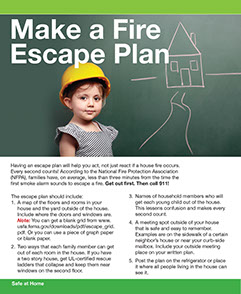
    Image of child with a hard hat on an a drawing of a house.

    Having an escape plan will help you act, not just react if a house fire occurs. Every second counts! According to the National Fire Protection Association (NFPA), families have, on average, less than three minutes from the time the first smoke alarm sounds to escape a fire. Get out first. Then call 911!

    The escape plan should include:

    1.  A map of the floors and rooms in your house and the yard outside of the house. Include where the doors and windows are. Note: You can get a blank grid fromwww.usfa.fema.gov/downloads/pdf/escape_grid.pdf. Or you can use a piece of graph paper or blank paper.

    2.  Two ways that each family member can get out of each room in the house. If you have a two story house, get UL-certified rescue ladders that collapse and keep them near windows on the second floor.

    3.  Names of household members who will get each young child out of the house. This lessens confusion and makes every second count.

    4.  A meeting spot outside of your house that is safe and easy to remember. Examples are on the sidewalk of a certain neighbor’s house or near your curb-side mailbox. Include your outside meeting place on your written plan.

    5.  Post the plan on the refrigerator or place it where all people living in the house can see it.

    Practice Your Escape Plan

    1.  Do this twice a year with everyone who lives in the house, including children and adults who will need help to get out.

    2.  Gather everyone and discuss the escape plan. Tell school-age children that this is like a fire drill at school, but for  your house.

    3.  Have a smoke alarm go off so everyone knows what it sounds like.

    4.  Have each person practice getting out of the house according to the plan. Practice both exit plans.

    5.  Have children practice how to get out on their own in case you cannot help them. Show them how to get low to the floor and crawl along the perimeter of the room to the exit and how to keep their mouths covered.

    6.  Tell your child to feel a closed door with the back of his or her hand before opening it. If the door is hot, tell your child to use the second way out if there is one.

    7.  If you have a rescue ladder, learn how to use it and practice once to make sure it works well. Hold the child in front of you as you back out of the window onto the ladder. Hold the child one rung above you. Keep the child between the ladder and your body as you climb down together.

    8.  Go to your meeting place and call 911!

    9.  Never go back into a house that is on fire. Tell firefighters if anyone or any pets have not yet gotten out.

    10. Remember to practice your fire escape plan every 6 months. Practice once during the day and another time at night.

    Safe at Home - Do This, Not That Book. Published by the American Institute for Preventive Medicine. www.HealthyLife.com. All rights reserved.

    © American Institute for Preventive Medicine
  • Getting On With Your Life

    Home Safety

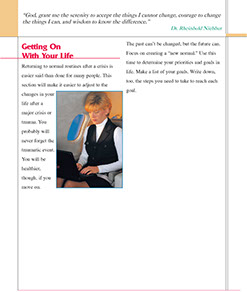
    Returning to normal routines after a crisis is easier said than done for many people. This section will make it easier to adjust to the changes in your life after a major crisis or trauma. You probably will never forget the traumatic event. You will be healthier, though, if you move on. The past can’t be changed, but the future can. Focus on creating a “new normal.” Use this time to determine your priorities and goals in life. Make a list of your goals. Write down, too, the steps you need to take to reach each goal.

    Balance Body, Mind, and Spirit

    *  Give yourself time to heal. Know that this will not be an easy time. Let yourself feel whatever you are feeling. Be patient with changes in your feelings.

    *  Stay involved with other people and activities. Be informed.

    *  Help others.

    *  Connect with people. Visit or call people who will support you. Rely on family, friends, co-workers, neighbors, and support groups.

    *  Think positively about challenges ahead.

    *  Get extra rest.

    *  Eat healthy foods.

    *  Exercise.

    *  Take extra care of yourself, even if you don’t feel like it.

    *  Plan your time. Stay busy. Work. Read. Play sports. Do hobbies.

    *  Express your thoughts and feelings about the event. Find good listeners. Talking about it lessens the power trauma has over you, clears your head, and calms you. It also helps you to heal and feel more in control. It helps to write down your thoughts and feelings, too.

    *  Find time to relax. Do things you enjoy. Breathe deeply. Meditate. Do yoga.

    *  Don’t use alcohol or drugs to feel better. You must deal with your emotions so you can heal. Numbing the feelings won’t help.

    *  Find healthy things to do that make you feel good about yourself or feel more in control.

    *  Limit TV watching of disasters.

    *  Don’t make big life decisions in haste.

    Spirituality Can Help You Cope

    During times of crisis, many people find a deep inner peace and strength through their faith. Faith can give deeper meaning to life and helps you focus on what really matters. Some people may question their faith as they search for meaning in a tragedy. Questions and doubts during hard times are normal. The benefits of spirituality come in many ways.

    *  Praying and meditating. Prayer vigils.

    *  Counting your blessings

    *  Forgiving and healing

    *  Practicing and receiving unconditional love

    *  Connecting to a higher power

    *  Reaching out to help others

    *  Attending a place of worship can provide a sense of community and shared purpose as well as support, reassurance, and understanding.

    Pastoral counselors can help with mental health and spiritual concerns. They are certified mental health professionals. They also have had in-depth training in religion and/or theology. You can choose one of your faith (e.g., Catholic, Jewish, Muslim, Protestant, etc.). Call 800.225.5603 or visitwww.aapc.org.

    Effects of the Media

    Having easy access to a world of information can be empowering and help allay fears by keeping us informed and connected to the world at large. On the other hand, newspaper and television, in particular, can overwhelm viewers and have a negative effect on many people. This includes increasing fear.

    Television’s immediate and powerful images can burn into your memory, especially if a traumatic event is watched over and over. How much is too much? The answer depends on the person. Here are some general tips:

    *  Control TV watching. Immediately after a crisis, it is natural to want to keep the TV or radio on for much of the day to stay informed. After a couple of days or if you feel anxious, turn it off. Do not expose children under the age of six to televised videotapes of attacks and disasters. Limit TV viewing for older children and watch it with them.

    *  Use the newspaper, radio, or internet to keep informed.

    *  Check in a few times a day in case something new has happened. Don’t leave the TV on all day. While TV can give a feeling of being connected, it is also emotionally draining. There is a time to just turn it off.

    *  Use the media in moderation. Spend time on other activities you enjoy.

    *  Watch cartoons, other funny shows and videos with your children.

    *  If waking up to the news from a clock radio every morning is draining, find a nice music station instead.

    *  Don’t read, watch, or listen to the news for at least an hour before bed.

    Helping Children Cope

    In the wake of crisis or disaster, helping children cope is a priority in the minds of parents and teachers. According to the American Counseling Association, after any disaster, children are most afraid of the following:

    *  That the event will recur

    *  That they or someone they love will be hurt or killed

    *  That they may be separated from those they love and will be left alone

    Things you say and do can help your children cope with a crisis.

    Talking with Children

    *  Comfort children. Let them know that you will keep them safe, that you are safe, and you will take care of them. Tell them how rare disasters are and about all the people who work to keep us safe. Tell them that good acts in the world outnumber the bad.

    *  Answer children’s questions honestly. Keep in mind their age and maturity when you respond. Give basic answers. Don’t give too much detail. Children will ask for more information if they want it.

    *  Find out what the child is concerned about. What have they seen? Heard? Experienced? Listen without judging.

    *  Allow children to express their feelings, but do not push them if they aren’t ready. If they can’t talk about their feelings, let them express feelings through drawing, play, etc.

    *  Encourage children to feel in control. Let them make choices about meals, clothing, etc.

    *  As children retell events, ask questions or play out the event. Many children need to hear the same thing over and over before they understand. Help young children to learn words that express their feelings. n Let children know it is normal to feel upset after something bad happens and that the traumatic event was not their fault.

    *  Remind children of times they have been brave before in a new or difficult situation.

    *  Do not criticize regressive behavior or shame the child with statements like, “You’re acting babyish.”

    *  Let children cry and be sad. Don’t expect them to be brave and tough.

    *  Don’t keep secrets. Children will imagine something much worse is going on or think they are to blame. Don’t be afraid to say, “I don’t know.”

    *  Tell them about the heroes involved in a tragedy, (e.g., firefighters, police, doctors, nurses, and ordinary people).

    *  Some children may express hate toward a large group of people. You may feel hate, as well. Let children know that you understand their anger toward specific people who may have caused harm. Help them to separate those feelings from prejudice toward a larger group. Remind them how prejudice causes many problems and that the world can be a better place by being good to others.

    Actions to Take to Help Children

    Above all, stay calm. Children look to us for how to respond.

    *  Try to return to normal routines (school, after- school activities, and play, etc.) as soon as possible.

    *  Make sure the child gets enough rest and eats healthy foods.

    *  Review family safety plans. This will help children feel prepared in the event an emergency situation occurs.

    *  Understand there may be a short, temporary decline in school performance. Talk to teachers, coaches, etc. to see how your children are doing in other settings. Let these same persons know how your child is doing at home.

    *  Spend extra time together as a family. Spend one-on- one time with each child. Give your children hugs and kisses.

    *  Be a role model for tolerance, understanding, and peace.

    *  Do things that show how one person can make a difference. Donate time. Send cards. n Don’t let children under age six watch or hear the news. Watch the news with older children and talk to them about it afterward.

    *  Do relaxing activities together. Read books. Listen to music. Draw or do other artwork. Take a walk, etc.

    *  Limit how much young children hear adults talking about the event.

    *  Avoid unnecessary separations from parents or other important caregivers.

    *  Allow time to cope. Be patient with angry outbursts. Give children a healthy outlet for anger, such as a pillow to punch.

    *  Tell and show children how much you love them. This is true at all times, but even more so after a crisis.

    *  If, after six weeks following a crisis, your child is not able to function normally at home, at school, or in play, seek help for your child from a mental health professional.

    What Really Matters

    After a crisis, many people decide what is truly important to them. You, too, may find yourself experiencing the following common reactions:

    *  You draw closer to loved ones. You tell them how we feel about them. You spend more time with family and friends.

    *  You become more spiritual. You look for deeper meaning in your life.

    *  You make decisions or do things you may have been putting off.

    *  You work less and play more.

    *  You slow down the pace of a hectic lifestyle.

    *  You become more informed about the world.

    *  You reach out to help others and strive to make the world a better place.

    *  Realizing how fragile life is, you learn to enjoy each moment more and fret less.

    *  You learn survival skills.

    *  Communities, nations, and the world unite.

    Take Charge, Coping with a Crisis book by the American Institute for Preventive Medicine. www.HealthyLife.com. All rights reserved.

    © American Institute for Preventive Medicine
  • Home Safe Home

    Home Safety

    Protect your family from accidents, injuries, and intruders.

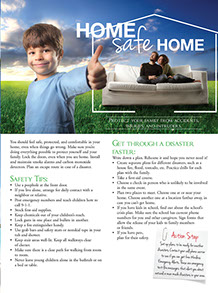
    You should feel safe, protected, and comfortable in your home, even when things go wrong. Make sure you’re doing everything possible to protect yourself and your family. Lock the doors, even when you are home. Install and maintain smoke alarms and carbon monoxide detectors. Plan an escape route in case of a disaster.

    Safety Tips:

    *  Use a peephole at the front door.

    *  If you live alone, arrange for daily contact with a neighbor or relative.

    *  Post emergency numbers and teach children how to call 9-1-1.

    *  Stock first-aid supplies.

    *  Keep chemicals out of your children’s reach.

    *  Lock guns in one place and bullets in another.

    *  Keep a fire extinguisher handy.

    *  Use grab bars and safety mats or nonskid tape in your tub and shower.

    *  Keep stair areas well-lit. Keep all walkways clear  of clutter.

    *  Make sure there is a clear path for walking from room to room.

    *  Never leave young children alone in the bathtub or on a bed or table.

    Ways to get through a disaster faster:

    Write down a plan. Rehearse it and hope you never need it!

    *  Create separate plans for different disasters, such as a house fire, flood, tornado, etc. Practice drills for each plan with the family.

    *  Take a first-aid course.

    *  Choose a check-in person who is unlikely to be involved in the same event.

    *  Plan two places to meet. Choose one at or near your home. Choose another one at a location farther away, in case you can’t get home.

    *  If you have kids in school, find out about the school’s crisis plan. Make sure the school has current phone numbers for you and other caregivers. Sign forms that allow the release of your kids to family members or friends.

    *  If you have pets, plan for their safety.

    Action Step

    Set up plans to be ready for weather disasters. Contact your cell phone carrier to see if you can get free Wireless Emergency Alerts.

    Ways to Well-Being book by the American Institute for Preventive Medicine. www.HealthyLife.com. All rights reserved.

    © American Institute for Preventive Medicine
  • National Preparedness

    WELL-BEING

    Image of emergency kit.

    Floods, tornadoes and hurricanes are common stories in the news. Would you and your family be ready for these weather disasters and other unexpected events, such as a house fire or a terrorist attack?

    The Federal Emergency Management Agency (FEMA) in the US Department of Homeland Security wants you to learn what you need to do to be prepared for a variety of disasters. Its website,www.ready.gov, takes you through the following steps to make preparation easier:

    *  Be informed

    *  Make a plan

    *  Build a kit

    *  Get involved

    Each of these areas covers what to do when you are at home, as well as other locations. These include workplaces, schools, and college campuses. You will also find out ways to address caring for pets, aiding family members with access and functional needs and safely shutting off utilities.

    Pre-financial disaster planning is also important. Disasters leave many people without access to finances or with expensive damages. Learn what documents, such as your house deed and insurance policies to keep in a safety deposit box or other safe place away from your home. Make copies of important documents and keep them in your emergency kit or an emergency financial first aid kit (EFFAK). Get a complete list of what to put in the EFFAK fromwww.fema.gov/media-library/assets/documents/29791.

    The Centers for Disease Control and Prevention has many resources and tools to help you be prepared for disasters. Access these fromwww.cdc.gov/features/beready.

    Some disasters strike without warning, so get started today to be prepared.

    © American Institute for Preventive Medicine
  • National Safety Month

    WELL-BEING

    Image of worder wearing proper hard-hat and protective eye glasses.

    Each June, the National Safety Council celebrates National Safety Month. This year’s theme is “Safety: It takes all of us.” Join the Council and thousands of organizations across the country to reduce the risk of these key safety issues:

    Week 1: Prevent prescription drug abuse

    *  Ask your doctor about the risk of addiction when he or she advises prescription painkillers. Take these medicines only as prescribed.

    *  If you suspect a co-worker is abusing prescription drugs, contact your Employee Assistance Program or Human Resources. Signs of abusing these drugs include:

    –  Lack of focus or attention

    –  Poor judgment

    –  Missing work often

    Week 2: Stop slips, trips and falls

    *  Follow your workplace’s safety guidelines.

    *  Keep walkways and stairs free from clutter, water and other falling hazards.

    *  At home, use grab bars and safety mats in your tub and shower and next to the toilet.

    Week 3: Be aware of your surroundings

    *  Scan your area for potential hazards.

    *  Follow workplace safety rules for storing objects securely and safe use of machines.

    *  Pay attention at all times. Do not get distracted when working or when you walk, especially when using your cell phone.

    Week 4: Put an end to distracted driving

    When you are driving, focus on the road. Do not use your smartphone or cell phone for texting or talking. Hands-free talking does not make driving safer. Your mind is still sidetracked.

    *  The National Safety Council suggests that you change your voicemail greeting to something like: “Hi, you’ve reached (insert your name). I’m either away from my phone or I’m driving. Please leave a message.”

    *  Avoid other distractions, too. Examples are eating, talking to passengers, grooming, reading (including maps) and adjusting a radio, CD player, or MP3 player.

    Bonus week: Summer safety

    *  Limit exposure to the sun, especially between 10 a.m. and 4 p.m. Wear a broad-spectrum sunscreen with a sun protection factor (SPF) of 15 or higher, as directed. Wear a wide-brimmed hat and sunglasses that wrap around and block both UVA and UVB rays.

    *  Follow directions to use outdoor tools and the lawn mower safely.

    *  Drink plenty of water to help prevent heat-related problems.

    © American Institute for Preventive Medicine

  • When The Wind Blows

    WELL-BEING

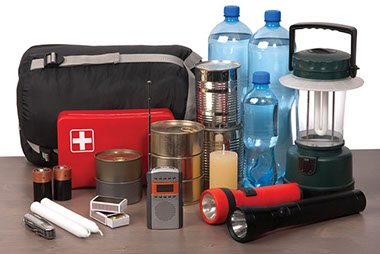
    Image of emergency items, such as flash lights.

    When a winter blizzard (or any natural disaster) leaves you without power, are you prepared to weather the storm?

    Know these facts from the University of Nebraska Extension service:

    *  Keep the refrigerator and freezer doors closed as much as possible to maintain the cold temperature. Once the power goes off, the refrigerator will keep food safely cold for about 4 hours if it’s unopened. A full freezer will hold the temperature for about 48 hours (24 hours if it’s half full) if the door remains closed.

    *  Keep an insulated cooler on hand and gel packs or water-filled and frozen milk cartons in the freezer to cool perishable items. Outside sub-freezing temps will also preserve frozen food if the power stays out for days.

    Stock one gallon of drinking water per person per day. Also stock up on staples that don’t need to be refrigerated such as canned foods (and a hand-held can opener), soups, dried or smoked meats, dried fruits and vegetables, powdered or evaporated milk, peanut butter, trail mix, granola bars, pet food, and ready-to-eat cereals.

    © American Institute for Preventive Medicine