Tag: Family Life

  • Hand Washing Or Sanitizer?

    WELL-BEING

    Close up image of person washing hand with soap and water.

    If there’s one habit that’s good for everyone’s health, it’s hand washing. But is hand sanitizer just as good as soap and water? Maybe not. Hand sanitizers:

    *  Do not get rid of all germs.

    *  Don’t work well when hands have dirt or grease on them.

    *  May not remove dangerous chemicals, like pesticides and heavy metals.

    Hand washing does all these things – when you use soap and water and scrub for at least 20 seconds.

    Use hand sanitizer when you can’t get soap and water. But always choose the sink and soap when you can!

    Source: Centers for Disease Control and Prevention

    © American Institute for Preventive Medicine

  • Say Goodbye To Bad Habits

    WELL-BEING

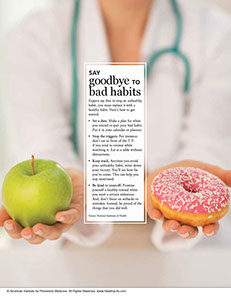
    Doctor holding apple in one hand and a donut in the other hand.

    Experts say that to stop an unhealthy habit, you must replace it with a healthy habit. Here’s how to get started.

    *Set a date.Make a plan for when you intend to quit your bad habit. Put it in your calendar or planner.

    *Stop the triggers.For instance, don’t eat in front of the T.V. if you tend to overeat while watching it. Eat at a table without distractions.

    *Keep track.Anytime you avoid your unhealthy habit, write down your victory. You’ll see how far you’ve come. This can help you stay motivated.

    *Be kind to yourself.Promise yourself a healthy reward when you meet a certain milestone. And, don’t focus on setbacks or mistakes. Instead, be proud of the things that you did well.

    Source: National Institutes of Health

    © American Institute for Preventive Medicine

  • Child Passenger Safety

    Child Safety

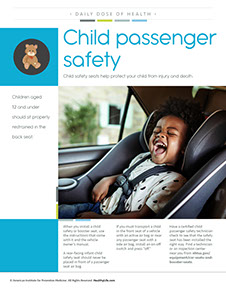
    Yound child in a car seat laughing.

    Child safety seats help protect your child from injury and death.

    Children aged 12 and under should sit properly restrained in the back seat.

    When you install a child safety or booster seat, use the instructions that come with it and the vehicle owner’s manual.

    A rear-facing infant child safety seat should never be placed in front of a passenger seat air bag.

    If you must transport a child in the front seat of a vehicle with an active air bag or near any passenger seat with a side air bag, install an on-off switch and press “off.”

    Have a certified child passenger safety technician check to see that the safety seat has been installed the right way. Find a technician or an inspection center near you fromnhtsa.gov/equipment/car-seats-and-booster-seats.

    A Year of Health Hints book by the American Institute for Preventive Medicine. www.HealthyLife.com. All rights reserved.

    © American Institute for Preventive Medicine

  • Infant Immunization

    Pediatric Care

    Young child getting a vaccine from doctor.

    Starting as infants, one-time vaccination throughout childhood is essential to help provide immunity before children are exposed to potentially life-threatening diseases.

    Keep a record of vaccines your child gets. This includes the type of vaccine, the date, and place it was given. List any reactions your child had to the vaccines, too.

    Each state requires children to have vaccines before they enter child care or school. Schools, preschools and child care centers require proof of vaccines.

    Some vaccines can be combined. This means your child gets fewer shots.

    Find out current immunization guidelines and facts about vaccines from Centers for Disease Control and Prevention (CDC) atcdc.gov/vaccines. Vaccines are available from your child’s doctor or your local health department.

    A Year of Health Hints book by the American Institute for Preventive Medicine. www.HealthyLife.com. All rights reserved.

    © American Institute for Preventive Medicine

  • Avoiding Stranger Danger Isn’T Just For Kids

    Home Safety

    Image of a person in shadow.

    Always be on alert and aware of your surroundings.

    You don’t have to be paranoid that people are out to get you, but you should be cautious to avoid being robbed, carjacked, raped, and even killed for nothing more than a pair of shoes. Protect yourself and those you love.

    At home:

    *  When you move into a new home or apartment, change all locks right away.

    *  Use deadbolt locks on doors. Secure windows so they can’t be opened more than five inches from the outside.

    *  Keep shades or curtains drawn after dark and turn on outside lights.

    *  Install motion sensor lights that turn on when someone passes by.

    *  Don’t open your door to anyone you don’t know.

    *  Don’t list your first name in the phone book. Keep your name off your mailbox.

    On the go:

    *  Carry a cell phone with you. Make sure it’s charged.

    *  Walk tall on the streets and stay alert. Avoid walking alone at night, dark alleys, and people who look suspicious.

    *  Carry a whistle or stickpin.

    *  Make sure your car has plenty of gas.

    *  If your car breaks down, call for help. Stay inside with the doors locked and the windows up. Turn on your flashers and wait for police or other help to arrive.

    *  If someone approaches your car, crack your window and ask him or her to call for help. Don’t let the person into your car.

    *  Don’t hitchhike or pick up hitchhikers.

    *  If you are going on a date with someone you just met, meet him or her in a public place.

    Action Step

    Use common sense. Don’t jog, bike, or hike alone in secluded areas day or night. Instead, join a club or ask a friend who shares the same interests to join you.

    Ways to Well-Being book by the American Institute for Preventive Medicine. www.HealthyLife.com. All rights reserved.

    © American Institute for Preventive Medicine

  • Helping Kids Make Health Decisions

    FAMILY LIFE

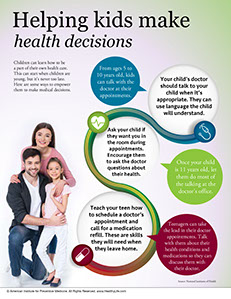
    Couple with young daughter.

    Children can learn how to be a part of their own health care. This can start when children are young, but it’s never too late. Here are some ways to empower them to make medical decisions.

    From ages 5 to 10 years old, kids can talk with the doctor at their appointments.

    Your child’s doctor should talk to your child when it’s appropriate. They can use language the child will understand.

    Once your child is 11 years old, let them do most of the talking at the doctor’s office.

    Ask your child if they want you in the room during appointments. Encourage them to ask the doctor questions about their health.

    Teenagers can take the lead in their doctor appointments. Talk with them about their health conditions and medications so they can discuss them with their doctor.

    Teach your teen how to schedule a doctor’s appointment and call for a medication refill. These are skills they will need when they leave home.

    © American Institute for Preventive Medicine

  • Signs Of Childhood Anxiety

    FAMILY LIFE

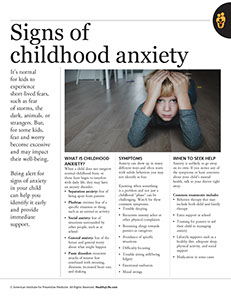
    Young boy laying on floor with hands on top of head.

    It’s normal for kids to experience short-lived fears, such as fear of storms, the dark, animals, or strangers. But, for some kids, fear and worry become excessive and may impact their well-being.

    Being alert for signs of anxiety in your child can help you identify it early and provide immediate support.

    What is childhood anxiety?

    When a child does not outgrow normal childhood fears, or those fears begin to interfere with daily life, they may have an anxiety disorder.

    *  Separation anxiety: fear of being apart from parents

    *  Phobias: extreme fear of a specific situation or thing, such as an animal or activity

    *  Social anxiety: fear of situations surrounded by other people, such as at school

    *  General anxiety: fear of the future and general worry about what might happen

    *  Panic disorder: recurrent attacks of intense fear combined with sweating, dizziness, increased heart rate, and shaking

    Symptoms

    Anxiety can show up in many different ways and often starts with subtle behaviors you may not identify as fear.

    Knowing when something is a problem and not just a childhood “phase” can be challenging. Watch for these common symptoms:

    *  Trouble sleeping

    *  Recurrent tummy aches or other physical complaints

    *  Becoming clingy towards parents or caregivers

    *  Avoidance of specific situations

    *  Difficulty focusing

    *  Trouble sitting still/being fidgety

    *  Emotional outbursts

    *  Mood swings

    When to seek help

    Anxiety is unlikely to go away on its own. If you notice any of the symptoms or have concerns about your child’s mental health, talk to your doctor right away.

    Common treatments include:

    *  Behavior therapy that may include both child and family therapy

    *  Extra support at school

    *  Training for parents to aid their child in managing anxiety

    *  Lifestyle supports such as a healthy diet, adequate sleep, physical activity, and social support

    *  Medication in some cases

    © American Institute for Preventive Medicine

  • Child Safety

    Child Safety

    Do This, Not That

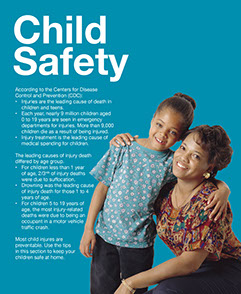
    According to the Centers for Disease Control and Prevention (CDC):

    *  Injuries are the leading cause of death in children and teens.

    *  Each year, nearly 9 million children aged 0 to 19 years are seen in emergency departments for injuries. More than 9,000 children die as a result of being injured.

    *  Injury treatment is the leading cause of medical spending for children.

    The leading causes of injury death differed by age group.

    *  For children less than 1 year of age, 2/3rds of injury deaths were due to suffocation.

    *  Drowning was the leading cause of injury death for those 1 to 4 years of age.

    *  For children 5 to 19 years of age, the most injury-related deaths were due to being an occupant in a motor vehicle traffic crash.

    Most child injures are preventable. Use the tips in this section to keep your children safe at home.

    General Guidelines

    Safe at Home - Do This, Not That Book. Published by the American Institute for Preventive Medicine. www.HealthyLife.com. All rights reserved.

    © American Institute for Preventive Medicine

  • Infant Safety

    Child Safety

    Young baby wearing blue hat and wrapped in blue blanket.

    Infants depend on their families to keep them safe. While all babies are unique, there are some safety issues that apply to all infants.

    Never leave a baby or young child alone near any water, such as a bathtub, a toilet, a bucket with water, etc., not even to answer a telephone or the door.

    Do not leave a baby alone on a changing table, bed, sofa or chair.

    Sudden Infant Death Syndrome (SIDS) is the leading cause of death among babies between 1 month and 1 year old. To reduce the risk, place a baby to sleep on its back with a wearable blanket on a flat, sleep surface, covered only with a fitted sheet. Do not use a blanket, pillow, or add toys.

    From infancy on, ask your child’s doctor to check your child’s vision at regular exams. In general, children should start getting vision screening exams starting at age 3.

    A Year of Health Hints book by the American Institute for Preventive Medicine. www.HealthyLife.com. All rights reserved.

    © American Institute for Preventive Medicine

  • Keep A Survival Kit In Your Car

    Personal Safety

    Image of a car kit.

    No car should be without a survival kit of items that you might need in the event you’re in an accident, run out of gas, have a breakdown, or get stuck. Items to include:

    *  First-aid kit.

    *  Flares.

    *  White cloth, for distress signal.

    *  Flashlight with spare batteries.

    *  Snow shovel.

    *  Knife or other basic tools.

    *  Empty gas can, for purchasing gas.

    *  Small fire extinguisher.

    *  Paper and pencil.

    *  Blanket.

    *  Change, for phone calls and tolls.

    *  Food and water, for long trips through unpopulated areas. Whistle.

    A Year of Health Hints book by the American Institute for Preventive Medicine. www.HealthyLife.com. All rights reserved.

    © American Institute for Preventive Medicine