Tag: Family Life

  • Dealing With Family Arguments

    FAMILY LIFE

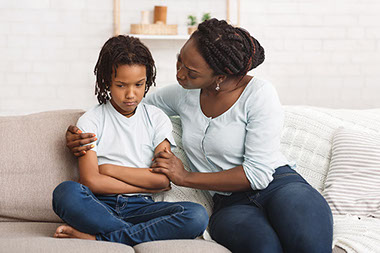
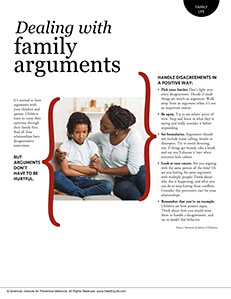
    Mother comforting her young son who's upset.

    It’s normal to have arguments with your children and spouse. Children learn to voice their opinions through their family first. And all close relationships have disagreements sometimes.

    But arguments don’t have to be hurtful.

    Handle disagreements in a positive way:

    *Pick your battles:Don’t fight over every disagreement. Decide if small things are worth an argument. Walk away from an argument when it’s not an important matter.

    *Be open.Try to see others’ point of view. Stop and listen to what they’re saying and really consider it before responding.

    *Set boundaries.Arguments should not include name calling, insults or disrespect. Try to avoid shouting, too. If things get heated, take a break and say you’ll discuss it later when everyone feels calmer.

    *Look at root causes.Are you arguing with the same person all the time? Or are you having the same argument with multiple people? Think about why this is happening, and what you can do to stop having these conflicts. Consider this preventive care for your relationships.

    *Remember that you’re an example.Children see how parents argue. Think about how you would want them to handle a disagreement, and try to model that behavior.

    Source: American Academy of Pediatrics

    © American Institute for Preventive Medicine

  • A Parents Guide To Gaming

    FAMILY LIFE

    Father and son playing virtual games.

    Gaming is a popular past-time among this generation of kids. As a parent, here are some things to know to keep gaming safe.

    *  Moderation is key. Set healthy limits on how much video game time you allow your kids.

    *  Know what they’re playing. Some games are better than others. If your kid struggles with mental health, help them find better games.

    *  Prioritize sleep. It’s common for gaming to interfere with healthy sleep habits. Set boundaries that prioritize sleep.

    *  Take breaks. Teach your kids to schedule regular breaks into their gaming time. Stepping away is good for mental health.

    *  Stay connected off-line. Keep your kids grounded in the real world by engaging in screen-free activities together.

    *  Game with your kids. Get involved with your kids’ interests by gaming with them (in moderation!).

    © American Institute for Preventive Medicine

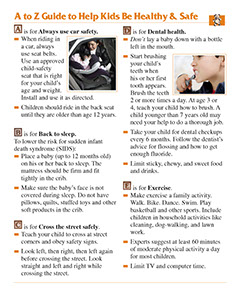
  • A To Z Guide To Help Kids Be Healthy & Safe

    Child Safety

    A is for Always use car safety.

    *  When riding in a car, always use seat belts. Use an approved child-safety seat that is right for your child’s age and weight. Install and use it as directed.

    *  Children should ride in the back seat until they are older than age 12 years.

    B is for Back to sleep.

    To lower the risk for sudden infant death syndrome (SIDS):

    *  Place a baby (up to 12 months old) on his or her back to sleep. The mattress should be firm and fit tightly in the crib.

    *  Make sure the baby’s face is not covered during sleep. Do not have pillows, quilts, stuffed toys and other soft products in the crib.

    C is for Cross the street safely.

    *  Teach your child to cross at street corners and obey safety signs.

    *  Look left, then right, then left again before crossing the street. Look straight and left and right while crossing the street.

    D is for Dental health.

    Don’t lay a baby down with a bottle left in the mouth.

    Start brushing your child’s teeth when his or her first tooth appears. Brush the teeth 2 or more times a day. At age 3 or 4, teach your child how to brush. A child younger than 7 years old may need your help to do a thorough job.

    Take your child for dental checkups every 6 months. Follow the dentist’s advice for flossing and how to get enough fluoride.

    Limit sticky, chewy, and sweet food and drinks.

    E is for Exercise.

    *  Make exercise a family activity. Walk. Bike. Dance. Swim. Play basketball and other sports. Include children in household activities like cleaning, dog-walking, and lawn work.

    *  Experts suggest at least 60 minutes of moderate physical activity a day for most children.

    *  Limit TV and computer time.

    F is for Feed your child healthy foods.

    G is for Give positive feedback.

    *  Praise good behaviors.

    *  Hug, read, and play together.

    H is for Hand washing.

    Teach your child to wash his or her hands often. Show them how to do it the right way. Use soap and running water. Take at least 20 seconds to wash the hands. This is the amount of time it takes to sing “Happy Birthday” two times. Dry the hands with clean paper towels that can be thrown away.

    Hand washing is important before your child eats and after he or she goes to the bathroom, plays, handles pets, and sneezes or coughs.

    I is for Install.

    *  Install smoke alarms. Install carbon monoxide detectors, too.

    *  Follow the rules of the city you live in.

    *  Check to see that they work well. Do this every month.

    *  Ask your local fire department for help, if you need it.

    J is for Join.

    Join your child in being physically active and in eating healthy foods. Join group activities as a family.

    K is for Keep harmful things out of children’s reach. These include:

    *  Medicines and vitamins. Store these in “child- safe” bottles.

    *  Bleach and other household products. Read labels to find out which ones can harm a child and for first aid information.

    *  Matches, lighters, guns and bullets.

    *  All knives and sharp utensils.

    L is for Listen and Learn.

    Listen to your child.

    Learn about your child’s interests. Learn who their friends are, too.

    Learn child first aid and CPR.

    M is for Medicine safety.

    *  When you give medicine to your child, make sure it is the right kind and dose for your child’s weight.

    *  Give medicine as advised by your child’s doctor.

    *  Do not give aspirin to anyone under 19 years of age due to its link to Reye’s Syndrome.

    N is for Never leave a baby, toddler, or young child unattended.

    *  Never leave a baby alone on a bed or table.

    *  It takes only seconds for a toddler or curious children to get into something they should not be into.

    *  Never leave a child alone in a bathtub or baby bath.

    *  Never leave a child alone in a car and around cars.

    O is for Obey traffic laws and other rules.

    *  Laws and rules are made to keep people safe. Teach your child to obey them.

    *  Set rules that your child needs to follow.

    P is for Poison Control Center hotline.

    This number is 800.222.1222. Keep it by each phone. Program it in your cell phone.

    Q is for Quit Smoking!

    *  Smoking and secondhand smoke are very harmful to you and your child.

    *  Don’t smoke. Don’t let your child smoke.

    *  Do not allow smoking in your home.

    *  If needed, get help to quit smoking. Get help from your doctor or from 800.QUIT.NOW (784.8669) andwww.smokefree.gov.

    R is for Role model.

    *  Children copy what they see.

    *  Eat healthy foods. Do regular exercise.

    S is for Safety-proof the house.

    *  Set the thermostat on your water heater to 120ºF or less.

    *  Put safety plugs in outlets.

    *  Teach your child to stay away from the stove.

    *  Keep guard rails around space heaters. Gate off unsafe areas.

    *  Do not let young children get toys or other things with small parts. They could choke on them.

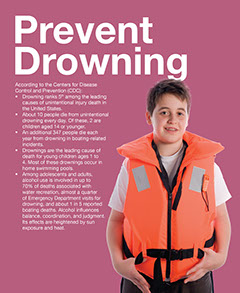
    *  Never leave a child alone near water. Wear life jackets when boating or near a lake. Empty buckets with water, etc. right away after use.

    *  Get more safety tips from Safe Kids Worldwide atwww.usasafekids.org.

    T is for Talk to your child.

    Talk about ways to be healthy and safe. Tell your child what you expect of him or her. Tell your child often that you love him or her.

    U is for Use products that are safety approved for kids.

    *  These include: Car seats, cribs, playpens, toys, and sleepwear.

    *  Find out if a product is safe or has been recalled from The U.S. Consumer Product Safety Commission atwww.cpsc.gov.

    V is for Vaccines.

    W is for Wear protective gear.

    *  Wear a helmet when riding a bike, rollerblading, skating, etc.

    *  Wear the right gear when practicing and playing team sports.

    *  Wear clothes or material that reflects the light when outdoors in the dark.

    X is for eXams from a health care provider.

    Children age 3 years and older should get a yearly checkup. Children under age 3 years need checkups when they are 1, 2, 4, 6, 9, 12, 15, 18, and 24 months old.

    Y is for Yearly flu vaccine.

    A yearly flu vaccine is the single best way to prevent getting the flu. All children ages 6 to 59 months should get a flu vaccine. So should others as advised by their doctors.

    Z is for ZZZZs (sleep).

    Get enough sleep each night:

    *  Adults need at least 7 to 9 hours.

    *  Teens need at least 8-1⁄2 to 9-1⁄2 hours.

    *  After 6 months of age, most children need 9 to 12 hours. Up to age 5 years, children may also take daytime naps for a total of 1⁄2 to 2 hours a day.
    Children's Self-Care book by the American Institute for Preventive Medicine. www.HealthyLife.com. All rights reserved.

    © American Institute for Preventive Medicine

  • Getting On With Your Life

    Home Safety

    Returning to normal routines after a crisis is easier said than done for many people. This section will make it easier to adjust to the changes in your life after a major crisis or trauma. You probably will never forget the traumatic event. You will be healthier, though, if you move on. The past can’t be changed, but the future can. Focus on creating a “new normal.” Use this time to determine your priorities and goals in life. Make a list of your goals. Write down, too, the steps you need to take to reach each goal.

    Balance Body, Mind, and Spirit

    *  Give yourself time to heal. Know that this will not be an easy time. Let yourself feel whatever you are feeling. Be patient with changes in your feelings.

    *  Stay involved with other people and activities. Be informed.

    *  Help others.

    *  Connect with people. Visit or call people who will support you. Rely on family, friends, co-workers, neighbors, and support groups.

    *  Think positively about challenges ahead.

    *  Get extra rest.

    *  Eat healthy foods.

    *  Exercise.

    *  Take extra care of yourself, even if you don’t feel like it.

    *  Plan your time. Stay busy. Work. Read. Play sports. Do hobbies.

    *  Express your thoughts and feelings about the event. Find good listeners. Talking about it lessens the power trauma has over you, clears your head, and calms you. It also helps you to heal and feel more in control. It helps to write down your thoughts and feelings, too.

    *  Find time to relax. Do things you enjoy. Breathe deeply. Meditate. Do yoga.

    *  Don’t use alcohol or drugs to feel better. You must deal with your emotions so you can heal. Numbing the feelings won’t help.

    *  Find healthy things to do that make you feel good about yourself or feel more in control.

    *  Limit TV watching of disasters.

    *  Don’t make big life decisions in haste.

    Spirituality Can Help You Cope

    During times of crisis, many people find a deep inner peace and strength through their faith. Faith can give deeper meaning to life and helps you focus on what really matters. Some people may question their faith as they search for meaning in a tragedy. Questions and doubts during hard times are normal. The benefits of spirituality come in many ways.

    *  Praying and meditating. Prayer vigils.

    *  Counting your blessings

    *  Forgiving and healing

    *  Practicing and receiving unconditional love

    *  Connecting to a higher power

    *  Reaching out to help others

    *  Attending a place of worship can provide a sense of community and shared purpose as well as support, reassurance, and understanding.

    Pastoral counselors can help with mental health and spiritual concerns. They are certified mental health professionals. They also have had in-depth training in religion and/or theology. You can choose one of your faith (e.g., Catholic, Jewish, Muslim, Protestant, etc.). Call 800.225.5603 or visitwww.aapc.org.

    Effects of the Media

    Having easy access to a world of information can be empowering and help allay fears by keeping us informed and connected to the world at large. On the other hand, newspaper and television, in particular, can overwhelm viewers and have a negative effect on many people. This includes increasing fear.

    Television’s immediate and powerful images can burn into your memory, especially if a traumatic event is watched over and over. How much is too much? The answer depends on the person. Here are some general tips:

    *  Control TV watching. Immediately after a crisis, it is natural to want to keep the TV or radio on for much of the day to stay informed. After a couple of days or if you feel anxious, turn it off. Do not expose children under the age of six to televised videotapes of attacks and disasters. Limit TV viewing for older children and watch it with them.

    *  Use the newspaper, radio, or internet to keep informed.

    *  Check in a few times a day in case something new has happened. Don’t leave the TV on all day. While TV can give a feeling of being connected, it is also emotionally draining. There is a time to just turn it off.

    *  Use the media in moderation. Spend time on other activities you enjoy.

    *  Watch cartoons, other funny shows and videos with your children.

    *  If waking up to the news from a clock radio every morning is draining, find a nice music station instead.

    *  Don’t read, watch, or listen to the news for at least an hour before bed.

    Helping Children Cope

    In the wake of crisis or disaster, helping children cope is a priority in the minds of parents and teachers. According to the American Counseling Association, after any disaster, children are most afraid of the following:

    *  That the event will recur

    *  That they or someone they love will be hurt or killed

    *  That they may be separated from those they love and will be left alone

    Things you say and do can help your children cope with a crisis.

    Talking with Children

    *  Comfort children. Let them know that you will keep them safe, that you are safe, and you will take care of them. Tell them how rare disasters are and about all the people who work to keep us safe. Tell them that good acts in the world outnumber the bad.

    *  Answer children’s questions honestly. Keep in mind their age and maturity when you respond. Give basic answers. Don’t give too much detail. Children will ask for more information if they want it.

    *  Find out what the child is concerned about. What have they seen? Heard? Experienced? Listen without judging.

    *  Allow children to express their feelings, but do not push them if they aren’t ready. If they can’t talk about their feelings, let them express feelings through drawing, play, etc.

    *  Encourage children to feel in control. Let them make choices about meals, clothing, etc.

    *  As children retell events, ask questions or play out the event. Many children need to hear the same thing over and over before they understand. Help young children to learn words that express their feelings. n Let children know it is normal to feel upset after something bad happens and that the traumatic event was not their fault.

    *  Remind children of times they have been brave before in a new or difficult situation.

    *  Do not criticize regressive behavior or shame the child with statements like, “You’re acting babyish.”

    *  Let children cry and be sad. Don’t expect them to be brave and tough.

    *  Don’t keep secrets. Children will imagine something much worse is going on or think they are to blame. Don’t be afraid to say, “I don’t know.”

    *  Tell them about the heroes involved in a tragedy, (e.g., firefighters, police, doctors, nurses, and ordinary people).

    *  Some children may express hate toward a large group of people. You may feel hate, as well. Let children know that you understand their anger toward specific people who may have caused harm. Help them to separate those feelings from prejudice toward a larger group. Remind them how prejudice causes many problems and that the world can be a better place by being good to others.

    Actions to Take to Help Children

    Above all, stay calm. Children look to us for how to respond.

    *  Try to return to normal routines (school, after- school activities, and play, etc.) as soon as possible.

    *  Make sure the child gets enough rest and eats healthy foods.

    *  Review family safety plans. This will help children feel prepared in the event an emergency situation occurs.

    *  Understand there may be a short, temporary decline in school performance. Talk to teachers, coaches, etc. to see how your children are doing in other settings. Let these same persons know how your child is doing at home.

    *  Spend extra time together as a family. Spend one-on- one time with each child. Give your children hugs and kisses.

    *  Be a role model for tolerance, understanding, and peace.

    *  Do things that show how one person can make a difference. Donate time. Send cards. n Don’t let children under age six watch or hear the news. Watch the news with older children and talk to them about it afterward.

    *  Do relaxing activities together. Read books. Listen to music. Draw or do other artwork. Take a walk, etc.

    *  Limit how much young children hear adults talking about the event.

    *  Avoid unnecessary separations from parents or other important caregivers.

    *  Allow time to cope. Be patient with angry outbursts. Give children a healthy outlet for anger, such as a pillow to punch.

    *  Tell and show children how much you love them. This is true at all times, but even more so after a crisis.

    *  If, after six weeks following a crisis, your child is not able to function normally at home, at school, or in play, seek help for your child from a mental health professional.

    What Really Matters

    After a crisis, many people decide what is truly important to them. You, too, may find yourself experiencing the following common reactions:

    *  You draw closer to loved ones. You tell them how we feel about them. You spend more time with family and friends.

    *  You become more spiritual. You look for deeper meaning in your life.

    *  You make decisions or do things you may have been putting off.

    *  You work less and play more.

    *  You slow down the pace of a hectic lifestyle.

    *  You become more informed about the world.

    *  You reach out to help others and strive to make the world a better place.

    *  Realizing how fragile life is, you learn to enjoy each moment more and fret less.

    *  You learn survival skills.

    *  Communities, nations, and the world unite.

    Take Charge, Coping with a Crisis book by the American Institute for Preventive Medicine. www.HealthyLife.com. All rights reserved.

    © American Institute for Preventive Medicine

  • Poison Control

    Home Safety

    Female wearing cleaning gloves, holding a cleaning bottle with the word "Toxic" on it and looking at her phone in the other hand.

    The National Poison Control Center is staffed 24 hours a day. Memorize the National Poison Control Number: 800.222.1222. Buy household products, vitamins, and medicines in child-resistant packaging. Keep items in original containers. Follow label warnings.

    Carbon monoxide (CO) has no odor or color. Symptoms of CO poisoning are like those of the flu, so you may not suspect CO poisoning. Install carbon monoxide detectors in your home and garage.

    Inhalants are gases or vapors from glues, paints, cooking sprays, and over 1,000 other common products that are used to get high.

    Every hour, five children are rushed to an emergency room due to a suspected medicine poisoning.

    A child can grab and swallow something that could be poisonous in the short time it takes to answer a doorbell or a phone call.

    Teach your children not to touch anything with a skull and crossbones on the label.

    A Year of Health Hints book by the American Institute for Preventive Medicine. www.HealthyLife.com. All rights reserved.

    © American Institute for Preventive Medicine

  • What To Do If Clothing Catches Fire

    Home Safety

    Image of mother and daughter.

    Few things are more terrifying than having your clothes catch fire. Teach your children and everyone else in your family this simple, lifesaving technique, known as stop, drop, and roll.

    Stop. Your natural inclination may be to run. But motion only fans the flames.

    Drop. Get to the ground, cover your face with your hands, and keep your face as far from the flames as possible. (If a blanket, rug, or coat is handy, use it to smother the flames. But doing so should never delay stop, drop, and roll.)

    Roll. Roll back and forth, again and again, until the flames go out.

    A Year of Health Hints book by the American Institute for Preventive Medicine. www.HealthyLife.com. All rights reserved.

    © American Institute for Preventive Medicine

  • Disinfecting Your Home Safely

    WELL-BEING

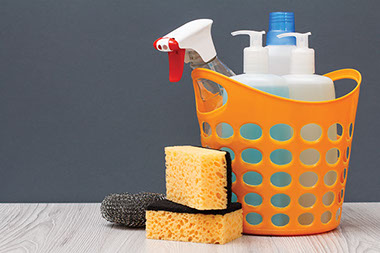
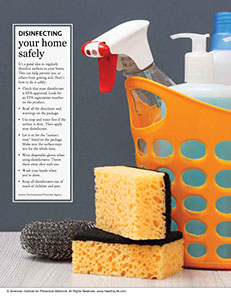
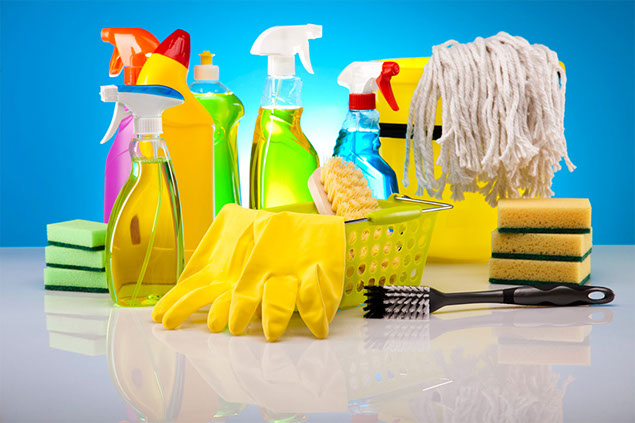
    Bucket with cleaning supplies.

    It’s a good idea to regularly disinfect surfaces in your home. This can help prevent you or others from getting sick. Here’s how to do it safely:

    *  Check that your disinfectant is EPA-approved. Look for an EPA registration number on the product.

    *  Read all the directions and warnings on the package.

    *  Use soap and water first if the surface is dirty. Then apply your disinfectant.

    *  Let it sit for the “contact time” listed on the package. Make sure the surface stays wet for the whole time.

    *  Wear disposable gloves when using disinfectants. Throw them away after each use.

    *  Wash your hands when you’re done.

    *  Keep all disinfectants out of reach of children and pets.

    Source: Environmental Protection Agency

    © American Institute for Preventive Medicine

  • Poison Prevention Starts At Home

    WELL-BEING

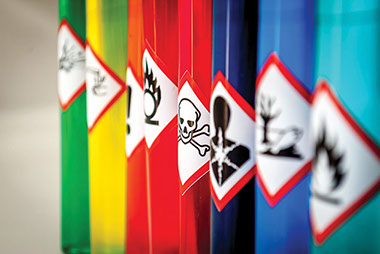
    Image of posion cans with warning labels.

    Did you know more than 90 percent of all poisonings happen at home? While children are affected the most, people of all ages can be harmed by poisoning. Here’s what to know to make your home safe.

    Caring for cleaners

    Do not mix household cleaners or other products. The chemicals in these products can create a toxic gas when mixed. Never mix bleach with ammonia products or other cleaners. Use only one product at a time.

    Keep cleaners, chemicals, medicines, and anything that could be poisonous locked up and put away.

    Mindful of medicines

    Never share prescription medicines with anyone. The other person may not be able to safely take your medicine. Or, they could be taking another medicine that isn’t safe when mixed with yours. Make sure your doctor or pharmacist knows about all medicines you are taking.

    Keep all medicines clearly labeled with the type of medicine and dosage. If you don’t understand your medicine or how much to take, ask your doctor or pharmacist.

    Don’t try to take medicines in the dark, because you could accidentally take the wrong one. Keep all medicines, even over-the-counter ones, put away and out of reach of children.

    Battery safety

    Treat batteries like poison. Keep them away from children.

    The small, round “button” batteries are especially dangerous because they are easy for children to swallow. A swallowed battery can cause permanent damage to the throat and even death within just a couple of hours.

    Beware of e-cigarettes

    E-Cigarettes are shaped like cigarettes but they contain a small heater and battery. The “juice” used inside these devices contains high levels of nicotine. Even a tiny amount of the juice from e-cigarettes can cause poisoning in a child. It can cause seizures and even death.

    Keep e-cigarettes away from children at all times. If you throw used e-cigarette juice in the trash, wrap it up and take it outside or someplace where a child cannot get to it.

    Know the number

    If you think you or someone else has been exposed to poison, call (800) 222-1222. This connects you to your local poison center. The call is free and confidential. They can tell you what to do next. Do not try to treat poisoning yourself with home remedies.

    © American Institute for Preventive Medicine

  • After-Dark Joggers, Heed This Advice

    Personal Safety

    Image of people walking/jogging in the dark.

    If you walk, run, or jog after sundown, the following tips help motorists spot you.

    *  Attach reflective tape to the front and back of your clothes.

    *  Carry a lit flashlight.

    *  Don’t use the road; stay on the shoulder, or preferably the sidewalk. Move against (facing) traffic if you must use the shoulder.

    *  Be aware of your surroundings and plan to jump to safety if a vehicle veers toward you.

    A Year of Health Hints book by the American Institute for Preventive Medicine. www.HealthyLife.com. All rights reserved.

    © American Institute for Preventive Medicine

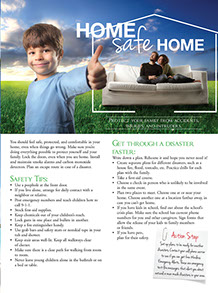
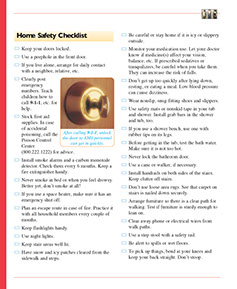
  • Home Safe Home

    Home Safety

    Protect your family from accidents, injuries, and intruders.

    You should feel safe, protected, and comfortable in your home, even when things go wrong. Make sure you’re doing everything possible to protect yourself and your family. Lock the doors, even when you are home. Install and maintain smoke alarms and carbon monoxide detectors. Plan an escape route in case of a disaster.

    Safety Tips:

    *  Use a peephole at the front door.

    *  If you live alone, arrange for daily contact with a neighbor or relative.

    *  Post emergency numbers and teach children how to call 9-1-1.

    *  Stock first-aid supplies.

    *  Keep chemicals out of your children’s reach.

    *  Lock guns in one place and bullets in another.

    *  Keep a fire extinguisher handy.

    *  Use grab bars and safety mats or nonskid tape in your tub and shower.

    *  Keep stair areas well-lit. Keep all walkways clear  of clutter.

    *  Make sure there is a clear path for walking from room to room.

    *  Never leave young children alone in the bathtub or on a bed or table.

    Ways to get through a disaster faster:

    Write down a plan. Rehearse it and hope you never need it!

    *  Create separate plans for different disasters, such as a house fire, flood, tornado, etc. Practice drills for each plan with the family.

    *  Take a first-aid course.

    *  Choose a check-in person who is unlikely to be involved in the same event.

    *  Plan two places to meet. Choose one at or near your home. Choose another one at a location farther away, in case you can’t get home.

    *  If you have kids in school, find out about the school’s crisis plan. Make sure the school has current phone numbers for you and other caregivers. Sign forms that allow the release of your kids to family members or friends.

    *  If you have pets, plan for their safety.

    Action Step

    Set up plans to be ready for weather disasters. Contact your cell phone carrier to see if you can get free Wireless Emergency Alerts.

    Ways to Well-Being book by the American Institute for Preventive Medicine. www.HealthyLife.com. All rights reserved.

    © American Institute for Preventive Medicine