Tag: fever

  • Major Illness Warning Signs

    Medical Care

    It is better to prevent an illness than to get it. The next best thing is to detect and treat an illness early.

    Prevention

    *  Maintain a healthy body weight.

    *  Do regular exercise.

    *  Eat healthy.

    – Eat 5 or more servings of fruits and vegetables a day. Eat whole-grain breads, cereals, and bran. Eat kidney and other beans, peas, and soy foods, such as tofu.

    – Have 20 to 35 grams of dietary fiber a day.

    – Follow a low saturated fat diet. Strictly limit trans fats.

    – Limit cholesterol to 300 milligrams per day.

    – Eat salt-cured, salt-pickled, and smoked foods only once in a while, if at all.

    *  Limit alcohol to 2 drinks per day for men; 1 drink per day for women and persons age 65 and older.

    *  Don’t smoke or use tobacco products. Avoid secondhand smoke.

    *  Limit exposure to cancer causing agents, such as asbestos, pesticides, etc.

    *  Have X-rays only when needed.

    *  Limit your exposure to the sun, sun lamps, and tanning booths. When you are in the sun, protect your skin.

    *  Manage stress.

    *  Take the medicines your doctor prescribes.

    *  Talk to your doctor about taking vitamins, minerals, and other supplements.

    *  Have regular health screenings.

    *  Ask your doctor if there are other things you can do to lower your risk for health problems, especially if you are at a high risk for them. Examples include:

    – Breast cancer

    – Diabetes

    – Heart disease

    – High blood pressure

    – Osteoporosis

    – Stroke

    * Adults should also be screened for alcohol misuse, depression, obesity, and tobacco use. If you are at an increased risk for an illness, tests may need to be done sooner. Extra tests, such as screenings for diabetes, may also be needed. Follow your doctor’s advice.

    1. Screening guidelines vary with different health groups. For ages 40-49 and 75+, discuss your risk for breast cancer and the pros and cons of screening with your doctor. If you are at a high risk for breast cancer, seek expert medical advice about screening and prevention.

    2. Prostate-specific antigen (PSA) blood test screening guidelines vary with different health groups. Ask your doctor if and at what age you should start discussing the benefits and risks of getting PSA blood tests.

    Cancer

    When cancer first develops, there may be no pain or other signs. That’s why screening tests are important. As different types of cancers grow, warning signs may be present. These signs may be due to problems other than cancer, too. See your doctor to find out. In many cases, the sooner cancer is found and treated, the better the chances for a full recovery.

    For Bladder Cancer

    *  Blood in the urine. The color of the urine can be deep red or it can be a faint rust or smokey color.

    *  Pain when you urinate.

    *  The need to urinate often or urgently.

    For Breast Cancer

    *  A lump or thickening: In the breast; in the surrounding area; along the collar bone and below the breast; or in the underarm area.

    *  A change in the size or shape of the breast.

    *  A nonmilky or bloody discharge from the nipple.

    *  A change in the color or feel of the skin of the breast, nipple, or areola (the brown or pink area around the nipple). Dimpled, puckered, or scaly skin.

    For Colon and Rectal Cancers

    *  A change in bowel habits.

    *  Constipation. Having stools more often and/or loose stools.

    *  A feeling that the bowel does not empty all the way.

    *  Blood in or on the stool. This can be bright red or very dark in color.

    *  Stools that are more narrow than usual.

    *  Stomach bloating, fullness, and/or cramps.

    *  Frequent gas pains.

    *  Weight loss for no known reason.

    *  Constant tiredness.

    For Kidney Cancer

    *  Blood in the urine.

    *  A lump or mass that can be felt in the kidney area.

    *  A dull ache or pain in the back or side.

    *  An unexplained cough for more than 3 weeks.

    For Lung Cancer

    *  A cough that doesn’t go away. This could be a “smoker’s cough” that gets worse.

    *  Constant chest pain. Back pain in some persons.

    *  Hoarseness.

    *  Shortness of breath and wheezing.

    *  Recurring pneumonia or bronchitis.

    *  Coughing up blood.

    *  Fatigue, appetite loss and weight loss.

    *  Weakness in your shoulder, arm, or hand.

    For Ovarian Cancer

    Often, there are no early symptoms. When symptoms appear, they include:

    *  Swelling, bloated feeling, or discomfort in the lower abdomen.

    *  Feeling full even after a light meal. Loss of appetite and weight.

    *  Gas. Indigestion. Nausea.

    *  Diarrhea, constipation, or frequent urination.

    *  Bleeding from the vagina.

    Often, the cancer has spread by the time it is found.

    For Prostate Cancer

    Early prostate cancer often does not cause symptoms. When symptoms occur, they may include:

    *  A need to pass urine often, especially at night.

    *  A hard time starting to urinate, holding back urine, or not being able to pass urine.

    *  Weak or interrupted flow of urine.

    *  Pain or burning feeling when you pass urine.

    *  Pain when you ejaculate.

    *  Blood in the urine or semen.

    *  Frequent pain or stiffness in the lower back, hips, or upper thighs.

    For Testicular Cancer

    *  A lump in a testicle

    *  A feeling of heaviness in the scrotum

    *  A dull ache in the lower abdomen or groin

    *  A sudden build up of fluid in the scrotum

    *  Pain or discomfort in a testicle or the scrotum

    *  Enlarged or tender breasts

    Males aged 15 and older should do a testicular self-exam (TSE) if and as often as advised by their doctors to look for any lumps or changes in the size or shape of a testicle.

    For Throat Cancer

    *  Hoarseness or other changes in the voice

    *  A lump on the neck or feeling of a lump in the throat

    *  A cough that doesn’t go away

    *  A hard time swallowing. A feeling of fullness, pressure, or burning when swallowing.

    *  Repeated cases of indigestion and heartburn. Frequent vomiting or choking on food.

    *  Pain behind the breastbone or in the throat

    Basal and Squamous Cell Cancers

    *  Basal cell. More than 90% of all skin cancers in the U.S. are this type. It grows slowly. It seldom spreads to other parts of the body.

    *  Squamous cell. This type of skin cancer spreads more often than the basal cell type. It is still rare for it to spread, though.

    Basal and squamous cell cancers are found mainly on areas of the skin that are exposed to the sun, like the head, face, neck, hands, and arms. These skin cancers can occur anywhere, though.

    Early Warning Signs of Basal and Squamous Cell Cancers

    Small, smooth, shiny, pale, or waxy lump.

    Firm red lump.

    A lump that bleeds or develops a crust.
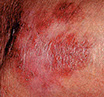
    A flat, red spot that is rough, dry, or scaly.

    Warning Signs of Melanoma

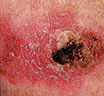
    The first sign can be a change in an existing mole or a new or “ugly-looking” mole. The letters “ABCDE” can identify signs.

    Skin Self-Exam

    *  Do an exam monthly, after a shower or bath. To check your skin, use:

    – A well-lit room

    – A full-length mirror

    – A hand-held mirror

    *  Locate your birthmarks, moles, and blemishes. Check for a change in the size, texture, or color of a mole. Check for a sore that does not heal.

    Check all areas.

    1.  Look at the front and back of your body in the mirror. Raise your arms and look at your left and right sides.

    2.  Bend your elbows and look carefully at the palms of your hands. Look at both sides of your forearms and upper arms.

    3.  Look at the back and front of your legs. Look between the buttocks and around the genital area.

    4.  Sit and closely examine your feet. Look at the soles and between the toes.

    5.  Look at your face, neck, and scalp. Use a comb to move your hair so you can see your scalp.

    See your doctor if you find anything unusual.

    Diabetes

    One in three people who have diabetes do not know they have it. See your doctor if you have one or more of the signs listed below.

    Signs of Diabetes:

    * Frequent urination

    * Excessive thirst

    * Extreme hunger

    * Unusual weight loss

    * Increased fatigue

    * Irritability

    * Blurry vision

    In type 1 diabetes, symptoms tend to come on quickly. With this type, the body either makes no insulin or only very small amounts.

    In type 2 diabetes, symptoms tend to come on more slowly. The body does not make enough insulin or can’t use it the right way. This type most often occurs in persons who are over age 40, are overweight, and who don’t exercise.

    Pre-diabetes occurs before type 2 diabetes. Getting diagnosed and treated for this can keep you from getting type 2 diabetes.

    Diabetes can be present without symptoms. Follow your doctor’s advice to screen for diabetes. Early detection and treatment lower the chances of diabetes complications.

    Heart Attack

    Heart Attack Warning Signs

    If heart attack warning signs occur, call 9-1-1 or your local rescue squad right away!

    See your doctor if you have one or more of these signs and symptoms:

    *  Chest discomfort. Most heart attacks involve discomfort in the center of the chest that lasts for more than a few minutes or goes away and comes back. The discomfort feels like pressure, fullness, squeezing or pain.

    *  Discomfort in other areas of the upper body. This can include pain or discomfort in one or both arms or in the back, neck, jaw, or stomach.

    *  Shortness of breath. Often, this comes with chest discomfort. But it can also come before the chest discomfort.

    *  Other symptoms. These can include breaking out in a cold sweat, nausea, or being lightheaded.

    The most common heart attack symptom for both men and women is chest pain or discomfort. But women are more likely than men to have some of the other common signs, especially shortness of breath, nausea or vomiting, and back or jaw pain.

    Lupus

    Lupus is an immune system disorder. It can affect the skin, joints, kidneys, and nervous system.

    Warning signs of lupus:

    *  Joints ache and swell for more than 3 months.

    *  Fingers get pale, numb, or ache in the cold temperatures.

    *  Mouth sores last for more than 2 weeks.

    *  Blood tests show: Anemia; low white cell count, or low platelet count; and/or protein in the urine.

    *  A rash occurs across the nose and cheeks. It lasts for more than 1 month.

    *  Skin rash (not sunburn) occurs after being in the sun.

    *  Pain lasts for more than 2 days when taking deep breaths.

    *  A seizure or convulsion occurs.

    Let your doctor know if you have or have had any of these warning signs. Having 3 or more of these signs may suggest lupus.

    Stroke

    Stroke Warning Signs

    *  Sudden numbness or weakness of the face, arm or leg, especially on one side of the body

    *  Sudden confusion, trouble speaking or understanding

    *  Sudden trouble seeing in one or both eyes

    *  Sudden trouble walking, dizziness, loss of balance or coordination

    *  Sudden severe headache with no known cause

    If stroke warning signs occur, call 9-1-1 or your local rescue squad right away!
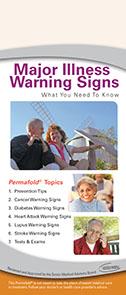
    Cover image to the Major Illness Warnings brochure by the American Institute for Preventive Medicine. www.HealthyLife.com. All rights reserved.

    © American Institute for Preventive Medicine
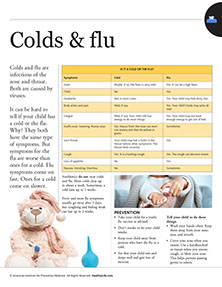
  • Colds & Flu

    Children’s Health

    Colds and flu are infections of the nose and throat. Both are caused by viruses.

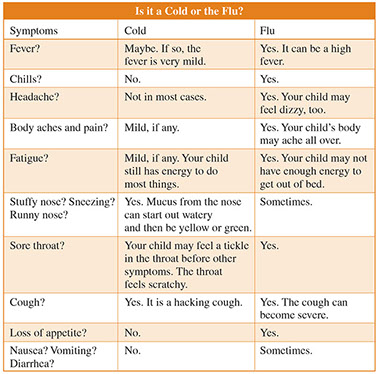
    It can be hard to tell if your child has a cold or the flu. Why? They both have the same type of symptoms. But symptoms for the flu are worse than ones for a cold. Flu symptoms come on fast. Ones for a cold come on slower.

    Signs & Symptoms

    Chart showing symptoms of a cold vs a flu.

    Prevention

    Antibiotics do not treat colds and flu. Most colds clear up in about a week. Sometimes, a cold lasts up to 2 weeks.

    Fever and most flu symptoms usually go away after 5 days, but coughing and feeling weak can last up to 2 weeks.

    To Help Prevent Colds and Flu

    *  Take your child for a yearly flu vaccine as advised.

    *  Don’t smoke or let your child smoke.

    *  Keep your child away from persons who have the flu or a cold.

    *  See that your child eats and sleeps well and gets lots of exercise.

    Tell your child to do these things:

    *  Wash your hands often. Keep them away from your nose, eyes, and mouth.

    *  Cover your nose when you sneeze. Use a handkerchief or tissues when you sneeze, cough, or blow your nose. This helps prevent passing germs to others.

    Questions to Ask

    Self-Care

    Have your child do these things:

    *  Rest.

    *  Drink lots of liquids. They help clear out the respiratory tract. This can help prevent other problems, like bronchitis.

    *  Eat chicken soup. It helps clear out mucus.

    If your child’s throat is sore, have him or her do these things:

    *  Gargle every few hours with 1/4 teaspoon of salt in 1/2 cup of warm water, if able to. (A child can usually do this starting at age 6.)

    *  Suck on a piece of hard candy or cough drop once in a while. (Don’t  give these to children under 5 years old.)

    Things you can do:

    *  Try to clear your child’s nose. This is very important in babies under 6 months old, because some can’t breathe through their mouths yet. Also, they can’t breast or bottle-feed if they can’t breathe through the nose. To clear your child’s nose:

    – Use an over-the-counter spray or drops for the nose made of salt and water. An example is Ocean® brand. Follow the label’s advice or that of your child’s doctor.

    – For a baby who can’t blow his or her nose, leave the salt drops in for 1 minute. Then use a soft rubber suction bulb to draw out the mucus. Lie the baby on his or her back. Aim the bulb straight down, not at an angle! (You can get a suction bulb at the drug store.) Or use a cotton swab to wipe the mucus out. Don’t put the suction bulb or cotton swab too far into the nose. You could cause a nosebleed.

    – For a child who can blow his or her own nose, have the child do it 1 minute after the salt drops are in.

    *  Put a cool-mist vaporizer or humidifier in your child’s room. Use distilled (not tap) water. Clean it every day.

    *  For fever and muscle aches, give your child acetaminophen or ibuprofen. Make sure you give the right kind and dose for your child’s weight. (Note: Do not give aspirin. Aspirin and other medicines that have salicylates have been linked to Reye’s Syndrome.

    *  Check with your child’s doctor about using over-the-counter medicines for colds and flu for children under  age 2.

    *  Call your child’s doctor if he or she gets a fever after a cold or after the flu has gone away.

    *  Washing the hands often helps stop spreading the flu. Have your child wash his or her hands:

    – After playing with others.

    – When he or she gets home from school.

    – After blowing his or her nose.

    – After touching toys or other people’s things.

    Signs of Reye’s Syndrome

    Be on the lookout for Reye’s Syndrome after the flu or chickenpox. Reye’s Syndrome does not happen very often. But you should know about it. Look for these signs:

    *  Vomiting over and over again. Or vomiting that does not stop.

    *  Loss of pep and energy.

    *  Acting very, very sleepy.

    *  Acting very, very cranky.

    *  Striking out at others.

    *  Acting strange.

    *  Convulsions.

    (Note: If your child shows signs of Reye’s Syndrome, get medical care fast!)

    Children's Self-Care book by the American Institute for Preventive Medicine. www.HealthyLife.com. All rights reserved.

    © American Institute for Preventive Medicine
  • Fever

    General Health Conditions

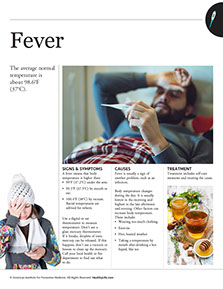
    The average normal temperature is about 98.6°F (37°C).

    Signs & Symptoms

    A fever means that body temperature is higher than:

    *  99°F (37.2°C) under the arm.

    *  99.5°F (37.5°C) by mouth or ear.

    *  100.4°F (38°C) by rectum. Rectal temperatures are advised for infants.

    Don’t use a glass mercury thermometer. If it breaks, droplets of toxic mercury can be released. If this happens, don’t use a vacuum or broom to clean up the mercury. Call your local health or fire department to find out what to do.

    Causes

    Fever is usually a sign of another problem, such as an infection.

    Body temperature changes during the day. It is usually lowest in the morning and highest in the late afternoon and evening. Other factors can increase body temperature. These include:

    *  Wearing too much clothing.

    *  Exercise.

    *  Hot, humid weather.

    *  Taking a temperature by mouth after drinking a hot liquid, like tea.

    Treatment

    Treatment includes self-care measures and treating the cause.

    Questions to Ask

    Self-Care / Prevention

    *  Drink lots of fluids, such as fruit juice, water, etc.

    *  Take a sponge bath with warm (about 70ºF) water. Don’t use cold or cool water. Don’t use rubbing alcohol.

    *  Take the right dose of an over-the-counter medicine to reduce fever, as directed.

    *  Rest.

    *  Don’t do heavy exercise.

    *  Don’t wear too many clothes. Don’t use too many blankets.

    Healthier at Home book by the American Institute for Preventive Medicine. www.HealthyLife.com. All rights reserved.

    © American Institute for Preventive Medicine
  • Pneumonia

    Respiratory conditions

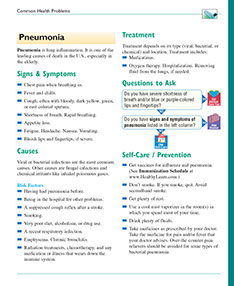
    Pneumonia is lung inflammation. It is one of the leading causes of death in the U.S., especially in the elderly.

    Signs & Symptoms

    *  Chest pain when breathing in.

    *  Fever and chills.

    *  Cough, often with bloody, dark yellow, green, or rust-colored sputum.

    *  Shortness of breath. Rapid breathing.

    *  Appetite loss.

    *  Fatigue. Headache. Nausea. Vomiting.

    *  Bluish lips and fingertips, if severe.

    Causes

    Viral or bacterial infections are the most common causes. Other causes are fungal infections and chemical irritants like inhaled poisonous gases.

    Risk Factors

    *  Having had pneumonia before.

    *  Being in the hospital for other problems.

    *  A suppressed cough reflex after a stroke.

    *  Smoking.

    *  Very poor diet, alcoholism, or drug use.

    *  A recent respiratory infection.

    *  Emphysema. Chronic bronchitis.

    *  Radiation treatments, chemotherapy, and any medication or illness that wears down the immune system.

    Treatment

    Treatment depends on its type (viral, bacterial, or chemical) and location. Treatment includes:

    *  Medications.

    *  Oxygen therapy. Hospitalization. Removing fluid from the lungs, if needed.

    Questions to Ask

    Self-Care / Prevention

    *  Get vaccines for influenza and pneumonia.

    *  Don’t smoke. If you smoke, quit. Avoid secondhand smoke.

    *  Get plenty of rest.

    *  Use a cool-mist vaporizer in the room(s) in which you spend most of your time.

    *  Drink plenty of fluids.

    *  Take medicines as prescribed by your doctor. Take the medicine for pain and/or fever that your doctor advises. Over-the-counter pain relievers should be avoided for some types of bacterial pneumonia.

    Healthier at Home book by the American Institute for Preventive Medicine. www.HealthyLife.com. All rights reserved.

    © American Institute for Preventive Medicine
  • West Nile Virus

    General Health Conditions

    Mosquito bites cause West Nile virus if the mosquito is infected with it.

    Signs & Symptoms

    Most people who get the virus will have no symptoms. About 1 in 5 persons will get mild ones (West Nile fever). Symptoms usually occur 3 to 14 days after being bitten by an infected mosquito. See doctor for the following:

    *  Fever.

    *  Headache.

    *  Body aches.

    *  Skin rash on the trunk of the body (sometimes).

    *  Swollen lymph glands (sometimes).

    About 1 in 150 persons get symptoms of a severe infection (West Nile encephalitis or meningitis). Get Immediate Care for the following:

    *  High fever.

    *  Stiff neck.

    *  Severe headache.

    *  Muscle weakness.

    *  Tremors. Confusion.

    *  Convulsions.

    *  Decreasing level of consciousness.

    *  Paralysis.

    Prevention

    Protect yourself from mosquito bites. Stay indoors at peak mosquito biting times (dawn, dusk, and early evening). Apply an insect repellent with DEET to clothing and exposed skin to last long enough for the times you will be outdoors. Wear long-sleeved shirts and long pants when you are outdoors.

    Resources

    Centers for Disease Control and Prevention

    www.cdc.gov

    Student Self-Care book by the American Institute for Preventive Medicine. www.HealthyLife.com. All rights reserved.

    © American Institute for Preventive Medicine

  • Is It The Flu?

    MEDICAL NEWS

    Image with the words "Fight the Flu" written in a banner.

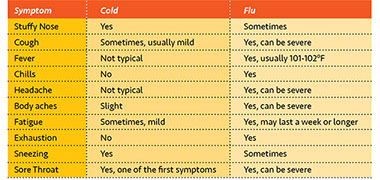
    Influenza, or the flu, circulates every winter and leaves thousands of people sick with a cough, aches, fever, and fatigue. The flu is much more serious than a cold: thousands of people die each year from flu-related complications. Unfortunately, many people don’t realize they have the flu until it’s too late. By then, they may have exposed people at work, school, or other public places. Here’s how to know if you have the flu, or just a cold:

    Chart showing symptoms of the cold vs the flu.

    When you come down with a cold, your symptoms usually appear very gradually over a few days. They often start with a sore throat followed by a runny nose. The flu often hits hard, very quickly. Symptoms appear suddenly and the exhaustion and aches can quickly become severe.

    If in doubt, try to stay home and stay away from others when you’re sick. In particular, try to avoid exposing young children and older adults, who may be more likely to suffer from flu-related problems. Wash your hands frequently and encourage others in your household to do the same.

    If you think you have the flu, call your doctor right away. You may be able to take an antiviral medication (brand name: Tamiflu), which can decrease your symptoms and the amount of time you are sick. Antiviral medications should be taken within 48 hours of the start of symptoms.

    Finally, talk to your doctor about getting a flu shot each year: it’s the number one way to help avoid getting – and spreading – the flu!

    Sources: Centers for Disease Control, U.S. Department of Veterans Affairs

    © American Institute for Preventive Medicine
  • Sick Kid?

    FAMILY LIFE

    Image of mother and child at the doctor's office.

    For many reasons, a child being home from school while sick can be stressful. Parents worry about the severity of their child’s illness and about the child missing school, all while trying to shuffle work schedules to be home.

    But when should kids stay home from school? Dr. Hannah Chow-Johnson, pediatrician at Loyola University Health System, gives some guidelines to help parents make that decision.

    Pinkeye.

    Extremely contagious and is usually caused by a virus. One of the first signs of pinkeye is discomfort. Other symptoms include a sticky discharge that can cause the eyelids to stick together, and the area around the eye can look red and swollen. Stay home until the redness is gone.

    Stomach problems.

    Gastroenteritis or the stomach flu can cause vomiting and diarrhea. Most often, it is caused by a virus. A child needs to rest and take gradual fluids to recover. Stay home until the vomiting and diarrhea are gone for 24 hours.

    Fevers.

    Most schools have a policy that a child can’t attend if they have a fever higher than 100 degrees F and the child needs to be fever-free for 24 hours before returning to school. Stay home and rest.

    Coughing.

    If a child has a steady cough, a hacking cough, or coughing fits, he or she should stay home. It’s also important for children and adults to be vaccinated against pertussis (whooping cough). Go back to school with a minor cough, but practice good coughing skills such as coughing into a tissue or elbow and washing hands often.

    Sore throat.

    Many parents think sore throat means strep throat, but in 70% of the cases the pain is caused by a virus. Symptoms of strep also include headache, stomachache, and fever. Sometimes there is a sunburn-like rash on the throat. Stay home if the doctor has given an antibiotic and the child has been on it for 24 hours. If the sore throat is viral, return to school when the child feels better.

    Lice.

    Unfortunately those stubborn bugs mean no school for kids. They can quickly spread through a classroom. Children need lice treatment and combing to remove all nits.

    © American Institute for Preventive Medicine
  • Too Sick For School?

    SELF-CARE CORNER

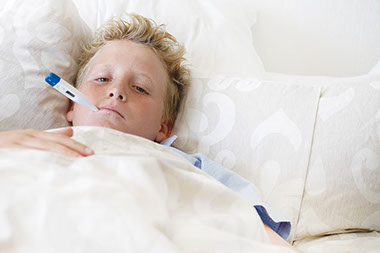
    Image of sick boy in bed.

    Colds? Flu? What to do? Sending a sick child to school can make matters worse and spread the illness to others. Follow these guidelines from pediatrician Dr. Jacqueline Kaari, University of Medicine and Dentistry of New Jersey, who said, “Parents need to be able to quickly assess their child and determine if he or she is well enough to go to school or needs to stay home, or if it’s time to call the pediatrician. Sometimes, parents will guess wrong, but if there’s one rule of thumb, it should be to always err on the side of caution.”

    Colds.What to do: Use over-the-counter saline nose drops or spray and a cool mist humidifier to relieve symptoms. Because colds are caused by viruses, antibiotics are not effective. Instead, the cold just needs to run its course until the child recovers. Contact your child’s doctor if a cough suddenly worsens or a fever develops.

    Fever.What to do: Give acetaminophen or ibuprofen for fevers. Encourage the child to drink lots of fluids and avoid fatty or fried foods that are hard to digest because fevers decrease stomach activity. Keep children at home if their fever is above 100.4ºF. Call a doctor if a high fever lasts more than 24 hours or does not respond to medication, or if the child’s condition worsens.

    Flu.Striking more suddenly and more intensely than a cold, the flu causes a sudden, high fever with body aches. What to do: Have your child vaccinated early in the flu season to protect against this illness. A child who comes down with the flu should stay home for several days, rest, and drink lots of fluids.

    Conjunctivitis (“pink eye”).A red, weeping eye(s) with a thick discharge that could become crusty when sleeping. What to do: Contact your child’s doctor for treatment, which may include antibiotic eye drops. Conjunctivitis can be highly contagious. Follow the doctor’s advice. Children can usually return to school 24 to 48 hours after treatment begins. Check with the school’s policy.

    Head lice.Tiny, crawling bugs that live on the scalp and feed on blood. Itching and sores on the scalp can be signs of head lice. The insects cannot jump or fly and are spread by human contact. What to do. Under bright light, check the entire scalp closely for lice or tiny white eggs (called nits), starting at the upper neck and behind the ears. Lotions and shampoos that can kill the lice are available at the drug store. Keep the child home from school until the lice have completely gone away.

    Sore throat.What to do: Have the child drink a few sips of water. If that relieves the symptoms, you are likely dealing with, at worst, a viral infection that will go away with a few days of rest, plenty of liquids, and pain relievers. If you suspect strep throat, follow the fever guidelines and contact your child’s doctor.

    Stomach ache.What to do: Keep children who have been vomiting home from school. Wait an hour after the child vomits and encourage small drinks of water. Gradually introduce clear liquids and bland foods throughout the day. Contact your doctor if vomiting lasts beyond 24 hours, occurs with worsening pain at the belly button or lower right abdomen, or if the child vomits blood or green or yellow matter.

    © American Institute for Preventive Medicine