Tag: Financial Wellness

  • Tips For A Healthy Budget

    FINANCIAL HEALTH

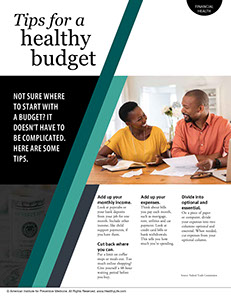
    Couple smiling going over budget.

    Not sure where to start with a budget? It doesn’t have to be complicated. Here are some tips.

    Add up your monthly income.

    Look at paystubs or your bank deposits from your job for one month. Include other income, like child support payments, if you have them.

    Cut back where you can.

    Put a limit on coffee stops or meals out. Too much online shopping? Give yourself a 48-hour waiting period before you buy.

    Add up your expenses.

    Think about bills you pay each month, such as mortgage, rent, utilities and car payment. Look at credit card bills or bank withdrawals. This tells you how much you’re spending.

    Divide into optional and essential.

    On a piece of paper or computer, divide your expenses into two columns: optional and essential. When needed, cut expenses from your optional column.

    Source: Federal Trade Commission
    © American Institute for Preventive Medicine

  • Prevent Burnout 2

    Work Life

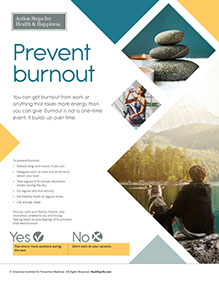
    Man sitting on roack along a lake with his dog.

    You can get burnout from work or anything that takes more energy than you can give. Burnout is not a one-time event. It builds up over time.

    To prevent burnout:

    *  Reduce long work hours, if you can.

    *  Delegate tasks at work and at home to lessen your load.

    *  Take regular 5-10 minute relaxation breaks during the day.

    *  Do regular physical activity.

    *  Eat healthy foods at regular times.

    *  Get enough sleep.

    *  Plan one or more vacations during the year.

    *  Don’t work on your vacation.

    Discuss, with your family, friends, and coworkers, problems you are having. Talking helps to ease feelings of frustration that feed burnout.

    ays to Well-Being book by the American Institute for Preventive Medicine. www.HealthyLife.com. All rights reserved.

    © American Institute for Preventive Medicine
  • How To Handle Criticism

    WORK LIFE

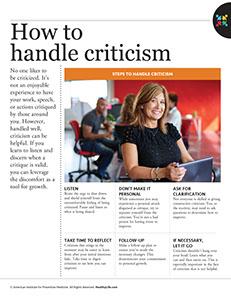
    Women at the office sitting in chair, smiling.

    No one likes to be criticized. It’s not an enjoyable experience to have your work, speech, or actions critiqued by those around you. However, handled well, criticism can be helpful. If you learn to listen and discern when a critique is valid, you can leverage the discomfort as a tool for growth.

    Steps to handle criticism

    Listen

    Resist the urge to shut down and shield yourself from the uncomfortable feeling of being criticized. Pause and listen to what is being shared.

    Don’t make it personal

    While sometimes you may experience a personal attack disguised as critique, try to separate yourself from the criticism. You’re not a bad person for having room to improve.

    Ask for clarification

    Not everyone is skilled at giving constructive criticism. You, as the receiver, may need to ask questions to determine how to improve.

    Take time to reflect

    Criticism that stings in the moment may be easier to learn from after your initial emotions fade. Take time to digest criticism to see how you can improve.

    Follow-up

    Make a follow-up plan to ensure you’ve made the necessary changes. This demonstrates your commitment to personal growth.

    If necessary, let it go

    Criticism shouldn’t hang over your head. Learn what you can and then move on. This is especially important in the face of criticism that is not helpful.

    © American Institute for Preventive Medicine

  • Tips For Filing Taxes

    FINANCIAL HEALTH

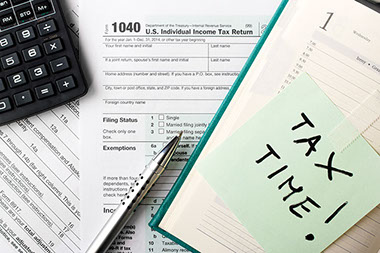
    Image of paper work for taxes.

    April 15 is Tax Day. Everyone must file their taxes by this day or file for an extension. Don’t get overwhelmed. These tips can help you get started.

    Get all your papers together

    You’ll need all your income records. This may include a W-2 from each employer, a 1099 for other income you made, and records of any other revenue even if you don’t have a form. You’ll also need all the paperwork that supports your tax deductions. Try to gather all these papers early so you have more time to get them in order before you file your taxes.

    Check IRS.gov

    The IRS website has help for people filing their taxes. There are FAQ’s, forms you may need, and helpful interactive tools.

    Double check

    If there’s a mistake on your taxes, your refund may be delayed. Double check social security numbers. The IRS says this is one of the most common mistakes.

    If you owe taxes, but can’t pay it all right now, don’t panic. Go toIRS.gov/payments. You may be able to set up a payment plan or ask the IRS to delay tax collection.

    © American Institute for Preventive Medicine
  • Prevent Musculoskeletal Disorders

    Work Life

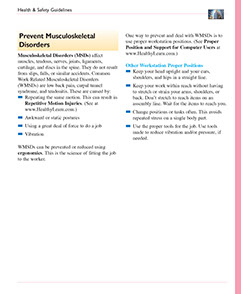
    Musculoskeletal Disorders (MSDs) affect muscles, tendons, nerves, joints, ligaments, cartilage, and discs in the spine. They do not result from slips, falls, or similar accidents. Common Work-Related Musculoskeletal Disorders (WMSDs) are low back pain, carpal tunnel syndrome, and tendonitis. These are caused by:

    *  Repeating the same motion. This can result in Repetitive Motion Injuries.

    *  Awkward or static postures

    *  Using a great deal of force to do a job

    *  Vibration

    WMSDs can be prevented or reduced using ergonomics. This is the science of fitting the job to the worker.

    One way to prevent and deal with WMSDs is to use proper workstation positions.

    Other Workstation Proper Positions

    *  Keep your head upright and your ears, shoulders, and hips in a straight line.

    *  Keep your work within reach without having to stretch or strain your arms, shoulders, or back. Don’t stretch to reach items on an assembly line. Wait for the items to reach you.

    *  Change positions or tasks often. This avoids repeated stress on a single body part.

    *  Use the proper tools for the job. Use tools made to reduce vibration and/or pressure, if needed.

    Healthier at Home book by the American Institute for Preventive Medicine. www.HealthyLife.com. All rights reserved.

    © American Institute for Preventive Medicine
  • Improve Your Home

    FINANCIAL HEALTH

    Couple looking at paint swatches.

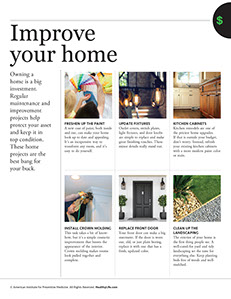
    Owning a home is a big investment. Regular maintenance and improvement projects help protect your asset and keep it in top condition. These home projects are the best bang for your buck.

    Freshen up the paint

    A new coat of paint, both inside and out, can make your home look up to date and appealing. It’s an inexpensive way to transform any room, and it’s easy to do yourself.

    Update fixtures

    Outlet covers, switch plates, light fixtures, and door knobs are simple to replace and make great finishing touches. These minor details really stand out.

    Kitchen cabinets

    Kitchen remodels are one of the priciest home upgrades.  If that is outside your budget, don’t worry. Instead, refresh your existing kitchen cabinets with a more modern paint color or stain.

    Install crown molding

    This task takes a bit of know-how, but it’s a simple cosmetic improvement that boosts the appearance of the interior. Crown molding makes rooms look pulled together and complete.

    Replace front door

    Your front door can make a big statement. If the door is worn out, old, or just plain boring, replace it with one that has a fresh, updated color.

    Clean up the landscaping

    The exterior of your home is the first thing people see. A well-cared-for yard and tidy landscaping set the tone for everything else. Keep planting beds free of weeds and well-mulched.

    © American Institute for Preventive Medicine

  • Why You Should Check Your Social Security Statement

    FINANCIAL HEALTH

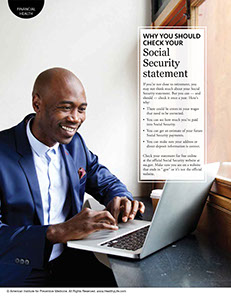
    Man smiling while using the computer.

    If you’re not close to retirement, you may not think much about your Social Security statement. But you can – and should – check it once a year. Here’s why:

    *  There could be errors in your wages that need to be corrected.

    *  You can see how much you’ve paid into Social Security.

    *  You can get an estimate of your future Social Security payments.

    *  You can make sure your address or direct deposit information is correct.

    Check your statement for free online at the official Social Security website atssa.gov. Make sure you are on a website that ends in “.gov” or it’s not the official website.

    © American Institute for Preventive Medicine
  • Prevent Injuries

    Work Life

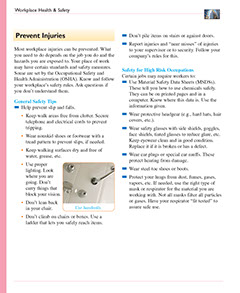
    Most workplace injuries can be prevented. What you need to do depends on the job you do and the hazards you are exposed to. Your place of work may have certain standards and safety measures. Some are set by the Occupational Safety and Health Administration (OSHA). Know and follow your workplace’s safety rules. Ask questions if you don’t understand them.

    General Safety Tips

    *  Help prevent slip and falls.

    – Keep walk areas free from clutter. Secure telephone and electrical cords to prevent tripping.

    – Wear nonskid shoes or footwear with a tread pattern to prevent slips, if needed.

    – Keep walking surfaces dry and free of water, grease, etc.

    – Use proper lighting. Look where you are going. Don’t carry things that block your vision.

    – Don’t lean back in your chair.

    – Don’t climb on chairs or boxes. Use a ladder that lets you safely reach items.

    *  Don’t pile items on stairs or against doors.

    *  Report injuries and “near misses” of injuries to your supervisor or to security. Follow your company’s rules for this.

    Safety for High Risk Occupations

    Certain jobs may require workers to:

    *  Use Material Safety Data Sheets (MSDSs). These tell you how to use chemicals safely. They can be on printed pages and in a computer. Know where this data is. Use the information given.

    *  Wear protective headgear (e.g., hard hats, hair covers, etc.).

    *  Wear safety glasses with side shields, goggles, face shields, tinted glasses to reduce glare, etc. Keep eyewear clean and in good condition. Replace it if it is broken or has a defect.

    *  Wear ear plugs or special ear muffs. These protect hearing from damage.

    *  Wear steel-toe shoes or boots.

    *  Protect your lungs from dust, fumes, gases, vapors, etc. If needed, use the right type of mask or respirator for the material you are working with. Not all masks filter all particles or gases. Have your respirator “fit tested” to assure safe use.

    Healthier at Home book by the American Institute for Preventive Medicine. www.HealthyLife.com. All rights reserved.

    © American Institute for Preventive Medicine

  • Keeping Cool When Work Heats Up

    WORK LIFE

    Image of a great of employees.

    Have you ever been in a tense situation at work? Perhaps two people were arguing or someone got angry with you.

    Though it’s hard to stay calm in these types of situations, it’s the best thing you can do. If you don’t react strongly, you can help defuse tension and find a helpful resolution.

    Focus on a solution

    It’s easy to get wrapped up in the problem, not the solution. Ask yourself, “what are we trying to accomplish?” Many workplace arguments start because two people have different ideas about what should be done. But, both people ultimately want to fix the same problem.

    Sometimes, an argument can be stopped if both parties remember what they both want: a good outcome. Talk about what you agree upon, and try to build from there.

    Take pause

    When something stressful is happening, your body immediately wants to respond. You may feel tense and anxious. You may also want to run from the situation or defend yourself. This is a normal “fight-or-flight” response that wants to protect you. But, this isn’t always the best way to react. Here’s how you can stay in control:

    *  Watch your breathing. Take deep, slow breaths to help calm your body’s natural response to stress. This can help you think more clearly and lower your anxious feelings.

    *  Think before you speak. It’s okay to pause before answering a question. Also, you can say, “Let me think about that for a moment.” This gives you time to come up with a professional response, rather than an angry one.

    *  Wait to hit “send.” Read emails out loud to yourself before you send them. Save the draft and wait before you send it if you’re angry. This can help avoid something you will later regret.

    © American Institute for Preventive Medicine
  • Refinancing Pros & Cons

    FINANCIAL HEALTH

    Couple sitting on floor with laptop.

    There are pros & cons to refinancing your home. It may not be the best choice for everyone, depending on their unique situation.

    Pros

    *  Lower interest rate: When refinancing at a lower rate, monthly payment decreases, and you’ll pay less over your mortgage life.

    *  Changing the term of your mortgage: When you refinance, you essentially take out a brand new mortgage. This allows you to set new terms, meaning you can either lengthen or shorten the term.

    *  Cashing out on home equity: If your home is worth more than the remaining mortgage, you may be able to do a cash-out refinancing.

    Cons

    *  Refinancing costs: There can be a lot of expenses involved in refinancing your home. Calculate whether the savings from a lower interest rate will balance out the fees.

    *  Prepayment penalties: Some lenders charge a penalty for paying off a loan early. Determine if any penalties apply and what they are, as that may add to refinancing costs.

    *  Refinancing restarts amortization: In the early years of a loan, you pay more on interest and less on principal. In later years, you pay more on principal and less on interest. Refinancing may set you back to paying more interest.

    © American Institute for Preventive Medicine