Tag: Financial Wellness

  • Beat Procrastination At Work

    WORK LIFE

    Illustration of man with head down on messy desk.

    Do you put off doing tasks and find yourself scrambling at the last minute? You could be procrastinating. Try the tips below to break the habit.

    Break large tasks down into smaller pieces.

    Rather than trying to do the entire project, start with one piece. This can make a large project less overwhelming and more realistic.

    Get motivated.

    Think about how pleased you’ll be when it’s done. Focus on the positive aspects of your job, and why you do what you do. This may help you get the energy to tackle difficult tasks.

    Try rewards.

    Commit to getting the project done a few days early. When you do, treat yourself after work. Examples of positive rewards may be your favorite meal or a fun activity you enjoy.

    Source: American Psychological Association

    © American Institute for Preventive Medicine

  • Is Multitasking Really Helpful?

    WORK LIFE

    Concept image of man running with laptop.

    It seems that today’s world is built for multitasking. With smartphones and tablets, you can check your email, surf the web, and chat from nearly anywhere. And at work, you may be typing while on a conference call or checking messages during a meeting.

    But the American Psychological Association (APA) says this culture of multitasking could actually be harmful, not helpful. The brain is only capable of doing one thing at a time, and therefore, multitasking in itself is not truly possible. Your brain actually switches back and forth between tasks when you think you’re multitasking, says the APA. This process of switching costs you time, and can make you less efficient.

    In addition, Harvard Medical School says multitasking leads to errors and mistakes at work. Maybe you’re shifting back and forth between activities or thinking about something else (like the dinging of your smartphone) while you’re supposed to be doing a task. As a result, you may be more likely to miss details or forget to do things.

    So how do you break the multitasking habit? Find your main sources of distraction and put them aside. If your smartphone is the problem, try putting it in the next room or out of sight while you work on a task. At the very least, silence alerts you don’t need right away such as emails and text messages.

    If the beeping of your email at work is keeping you from focusing on your task at hand, consider closing your email program and only checking it at designated times.

    Cutting out the main sources of distraction can help you stay focused and productive at work or at home.

    © American Institute for Preventive Medicine

  • Saving Food, Saving Money

    FINANCIAL HEALTH

    Image of couple at the grocery store.

    In the U.S., we throw out millions of tons of food each year. Most people have thrown out food that spoiled or was simply never eaten. This harms the environment because it adds up to more waste, and it’s also harmful to your budget. It’s a lot like throwing money in the garbage! In addition, some of that wasted food could have gone to people who don’t have enough to eat.

    Shopping, planning, saving

    The number one way to stop wasting food is to plan meals and shop for only those meals. You’ll need to make a shopping list and stick to it when you go to the store.

    Your list should have ingredients for all your meals, including main dishes, sides, drinks and snacks. Then, buy only what’s on the list. This requires some extra time and planning, but the savings can add up.

    Some people like to shop for the whole week, while others shop for only a few days at a time. This is up to you. No matter how you like to shop, having a list can save you money and cut down on food waste.

    In the end, your budget and the environment will thank you. As an added bonus, you will be eating healthier by planning your meals ahead of time.

    Keep the pantry organized

    Have you ever bought a can of beans, only to find that you already had three at home? Having an organized pantry can help avoid this.

    Try putting your pantry into sections. You may wish to divide up canned foods into categories like fruit, vegetables, beans and other foods. Have another section for pasta, one for rice and so on. Being able to quickly glance at the pantry when you’re making your shopping list can save time and prevent buying duplicates.

    Other tips to prevent food waste

    *  Buying bulk portions can be a big saving – but only if you eat it. Only buy these large portions if you plan to use or freeze it all before it expires.

    *  Eat leftovers! Have a leftover dinner night, rather than cooking another meal. Get creative and use leftovers to make a casserole, soup or sandwiches.

    *  Check your fridge first. Before you go shopping, see what you already have in your fridge. Eat what you have on hand before buying more.

    *  Ask local food banks about their needs. Donate food that you don’t think you will use instead of throwing it away.

    Source: Environmental Protection Agency

    © American Institute for Preventive Medicine

  • Tips To Survive The Workweek

    WORK LIFE

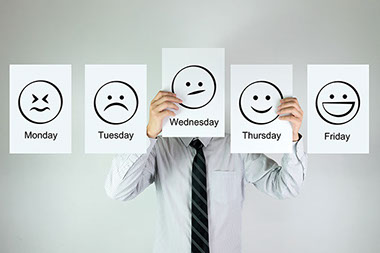
    Image of the days of the week on paper with emotion faces.

    When the workweek seems long, there are some things you can do to get through to the weekend. Try these tips to stay positive when you’re stressed or tired:

    *  Have something to look forward to. You can make your own “bright spot” each day that will help keep you motivated. For instance, take a walk at a favorite park. Find a quiet place to curl up with your book and a cup of herbal tea for 30 minutes. Keep this mini-goal in mind throughout your day.

    *  Do something nice for someone each day. It can be something as small as giving a compliment or letting someone go ahead of you in the lunch line. Studies show that doing nice things for others makes us feel good. And, it’ll make you want to continue that pattern. Over time, this can build better relationships at work and help you look forward to your job.

    *  Keep a routine. Plan your day with what you want to get done. Break the day into one or two-hour chunks devoted to each project. Schedule your breaks. This can help the day seem to go by faster. It’s more manageable than thinking of eight hours at a time.

    Finding meaning at work

    When you think about your job, it may be helpful to think about the bigger picture. For example, a janitor isn’t just cleaning; but is making sure the building is safe and enjoyable for the people in it. In other words, your job isn’t just day-to-day tasks. It’s about something more important. Keep that perspective when you go to work each day.

    Source: American Psychological Association

    © American Institute for Preventive Medicine

  • Beware Of “Free” Trials

    FINANCIAL HEALTH

    Image of the words "Scam Alert"

    We’ve all seen offers for “free trials” of products or services. It seems like a good idea because if you don’t like it, you can just end the trial and pay nothing, right?

    Not necessarily. Here are some of the ways dishonest companies may use these trial offers:

    *  They make it hard for the consumer (you) to cancel. Perhaps you need to call a phone number, but you can’t get anyone to answer or they put you on hold for long periods.

    *  They hide the terms and conditions in tiny type that’s hard to read.

    *  They use pre-checked boxes as the “default” setting online.

    *  They have extremely strict rules about returning and canceling something.

    *  They charge you for shipping and handling. This means they now have your credit card number, making it easy for them to charge you for something later.

    *  They automatically enroll you in a club or subscription that sends you things each month. Or, the subscription automatically renews without your consent.

    Even with honest and good business practices, you’ll still need to cancel or take some other action before the trial ends. If you don’t, the company may take this as a go-ahead to charge you for something you may not want.

    Avoiding Scams

    Not all free trials are scams. But, before you sign up for one, take these steps:

    *Research the company online.Look for customer complaints about their service or trial offers.

    *Read the terms and conditions.If you can’t find them, don’t sign up.

    *Beware of pop-ups.A pop-up on a website may be from a different company. Be sure you deal with the company you really want.

    *Watch out for pre-checked boxes.A little checkmark may give your consent to continue the offer past the free trial or to sign up for more products.

    *Mark your calendar.Be sure you are ready to cancel your trial before it expires. Plan to do this at least a couple of days in advance so you are well within the time limit.

    *Check your credit and debit card statements.If you see unknown charges, contact the company. If that doesn’t work, contact your credit card company to dispute the charge.

    If you’ve been wrongly charged for a free trial offer, report it to the Federal Trade Commission. You also can contact your local consumer protection agency, and file a complaint with the Better Business Bureau.

    Source: Federal Trade Commission

    © American Institute for Preventive Medicine

  • Is Your Job A Pain In The Neck?

    WORK LIFE

    Image of business man holding his neck.

    No, really, if you sit all day in front of a computer at work, your computer workstation may be the cause of your nagging neck and shoulder pain. And not surprising, said Dr. Vincent Fortanasce, a rehab specialist and author of End Back & Neck Pain, “The setup of your computer workstation can play a large factor in your ability to stay symptom free.” He and his coauthors point out 3 common workstation mistakes people make that lead to pain.

    *  Overreaching injuries occur because items on your desktop such as your keyboard or mouse, phone, documents, and other desk items are not on the same level surface. So you reach to grab that stapler or strain to pick up files.The solution: rearrange the desktop, adjust your chair, put the keyboard and mouse on the same surface, put things you use the most closest to you.

    *  Use of incorrect heights refers to the up and down motions and placement of items. Incorrect height occurs as a result of the positioning of the chair, including the armrests, seat back, seat pan, desktop where work is placed, monitor, and the surface holding the keyboard and mouse. Incorrect height may also refer to furniture and features of the work area that are not adjustable.The solution: a proper chair is of critical importance. Can you adjust it? Do you have to reach above your head to get items in shelves above your desk? Is the top line of the text displayed on your monitor at eye level?

    * Unbalanced work area refers to twisting motion you do to reach items. If you’re right handed, and you use your right hand for all desktop activities such as answering the phone, you may have pain on your right side. Do you twist to see your monitor?The solution: Place your monitor right in front of you. Are items you use directly ahead of you?

    Back, neck, and arm pain are often the result of repeated actions, over and over, over time. Assess what’s causing your pain and adjust your workstation.

    © American Institute for Preventive Medicine

  • Shopping Online Safely

    FINANCIAL HEALTH

    Image of couple shopping online.

    Using your computer, tablet or smartphone to shop can be quick and convenient. But, the internet is full of websites that aren’t trusted places to shop. To keep your personal information and money safe, follow these steps before you shop online:

    *Use major companies that you know.Look for a company address, phone number, and email. Read online reviews before buying.

    *Research the return policy.Can you get a full refund if you aren’t satisfied? What does it cost to send it back?

    *Know what shipping will cost.Be sure you know what the cost will be before you place the order. Shipping costs should be clearly listed on the website.

    *Never use cash.If you pay by credit card, your purchase is protected by the Fair Credit Billing Act. This means you can dispute charges you didn’t make. You may also be protected from having to pay for unauthorized charges if your card number is stolen.

    *Compare your credit card statement and your online receipt.Be sure the costs match.

    *Don’t use email for sending financial information.Email isn’t secure and someone could steal your information this way.

    Beware of fake online reviews

    You see a product online that has hundreds of glowing reviews. It must be great, right? Not necessarily. In fact, some companies have been sued by the FTC for providing fake online reviews. Some companies even pay people to write great reviews for their products, or delete negative reviews on their site.

    Take any online reviews with a grain of salt. If they seem too good to be true, they probably are. Almost any product will have some positive, neutral and negative opinions. If it doesn’t, this may be a red flag for a scam.

    Source: Federal Trade Commission

    © American Institute for Preventive Medicine

  • Use Mindfulness At Work

    WORK LIFE

    Concept image of co-workers with graphics above them.

    With mindfulness-being focused and fully present in the here and now-you can replace multitasking habits with more directed practices to reduce stress and increase productivity,” said Dr. Romie Mushtaq, a neurologist with expertise in mind-body medicine. The result? You’ll be sharper, more efficient, and more creative.

    To clear away distractions and live in the moment, Dr. Mushtaq offers these tips for practicing mindfulness in a multitasking business:

    Focus on a single task for an allotted amount of time.

    You might say, “For 15 minutes, I’m going to read through my emails, and then for one hour, I’m going to make my phone calls.” If your job comes with constant interruptions that demand your attention, take several deep breaths and then prioritize them. Resist the urge to answer the phone every time it rings-unless it’s your boss. If someone asks you to drop what you’re doing to help with a problem, it’s okay to say, “I’ll be finished with what I’m doing in 10 minutes, then I’m all yours.”

    When you get “stuck” in a task, change your physical environment to stimulate your senses.

    Sometimes we bounce from one task to another because we just don’t have the words to begin writing that strategic plan, or we’re staring at a problem and have no ideas for solutions. That’s the time to get up, take a walk outside and look at the flowers and the birds or turn on relaxing music. Offering your senses pleasant and different stimulation rewires your brain for relaxation and reduces the effects of stress hormones, which helps to unfreeze your creativity center.

    Delegate!

    We often have little control over the external stresses in our life, particularly on the job. Have compassion for yourself, and reach out for help. If you can assign a task to somebody else who’s capable of handling it, do so. If you need to ask a colleague to help you out, ask.

    © American Institute for Preventive Medicine

  • Difficult People In The Workplace

    WORK LIFE

    Image of a business man looking off the distance.

    A manager rushes into his employee’s office at 4:30 p.m., drops a pile of papers on her desk, and barks, “I need these read, edited, and finalized by 8:30 a.m.”

    A woman calls in sick. She is shivering, coughing, and has a fever.  Her supervisor screams, “I don’t care what illness you have. If you’re not in the office today, I’ll take it as your resignation!”

    These are real examples of workplace bullying that cause stress, depression, and anxiety. The National Mental Health Association estimates that each year more than one billion sick days can be due to mental health disorders caused by work stress. That’s $193 billion a year in lost earnings.

    Psychology Professor Katerina Bezrukova studies the psychological effect of workplace injustices and intergroup relations at Santa Clara University.

    She says there are 4 kinds of co-workers and supervisors to look out for:

    1.Narcissistic.These types have fragile self-esteem. They may become outraged when someone challenges them. Bezrukova says avoid criticizing them. Document your own work, too, so you have a record of everything you do.

    2.Aggressive.To them, everyone is a predator or prey. That’s why they like to intimidate others and even bully them. They also tend to act frantic when a project comes in or a deadline is fast approaching. Bezrukova advises victims to stay out of the way. If they can, show them how management-by-hysteria can be inefficient.

    3.Rigid.These types won’t try anything new. They manage with viewpoint of “It’s my way or the highway.” This stems from fears of being pushed around. Bezrukova says let them feel like they are a part of the decision.

    4.Impaired.These people have ADD, anxiety, depression, burnout, or substance abuse issues. They need professional help. Employee Assistance Programs or other kinds of intervention are best.

    “People, who suffer from a workplace injustice of some sort, develop anger, frustration, anxiety, insomnia, headaches. These relationships, coupled with the connection between long-term, chronic psychological distress and increased risk of physical health problems such as cardiovascular disease, make this a crucial dollars and cents issue for business,” says Bezrukova.

    © American Institute for Preventive Medicine

  • Learn How To Check Your Credit Report

    FINANCIAL HEALTH

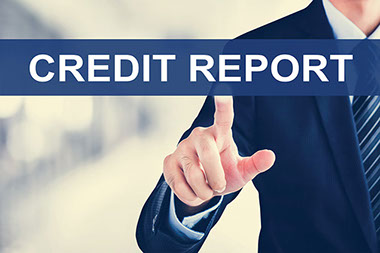
    Image of finger pointing to the words 'Credit Report'

    The Consumer Financial Protection Bureau says everyone should check their credit report at least once a year. The information on your credit report could affect your ability to get a mortgage, car loan, a credit card or other loans. It can also affect the interest rate you get. Usually, a higher credit score makes it easier for you to get a loan and a lower interest rate. Most credit scores range from 300-850.

    You are entitled by law to a free report from all three credit reporting agencies (Equifax, Experian and TransUnion) once every 12 months. Take advantage of it – and check it over carefully when you receive it.

    But what should you look for when you get your report? Errors can happen, so be on the lookout for:

    *  Wrong name, phone number or address

    *  Accounts that don’t belong to you (this can happen when two people have similar names, or as a result of identity theft)

    *  Closed accounts reported as open

    *  Being listed as owner of an account where you are only an authorized user

    *  Accounts incorrectly reported as late or delinquent

    *  Wrong dates of payments, when the account was open or delinquency dates

    *  Same loan or debt listed multiple times (possibly with different names)

    *  Past errors that were corrected that may show up again

    *  Incorrect current balance or credit limit

    *  Accounts that appear more than once with different creditors listed (especially in the case of delinquent accounts or accounts in collections)

    If you find errors, contact:

    *  The credit reporting company who sent you the report, or

    *  The creditor or company that provided the incorrect information. This is known as the “furnisher” of the information.

    Your credit report tells you how to dispute inaccurate information. Sample dispute letters are available atwww.consumerfinance.gov. Go to Consumer Tools, then click on Credit Reports and Scores. You can use these letters if you find something incorrect on your credit report.

    How do I get my report?

    Many websites claim to offer free credit reports. But, some of them are trying to sell other products or services. To get your free credit report authorized by federal law, visit:

    *  AnnualCreditReport.com, or

    *  Call 1-877-322-8228

    This website offers free reports only, not scores. Your credit score is available for a fee. You do not have to buy any products or services advertised onannualcreditreport.com.

    You can also contact the credit agencies directly if you have questions or problems with your report:

    *  Equifax: 1-866-349-5191

    *  Experian: 1-888-397-3742

    *  TransUnion: 1-800-916-8800

    © American Institute for Preventive Medicine