Tag: General Travel Guidelines

  • Immunizations: Your Best Shot Against Infectious Diseases

    Healthy Travel

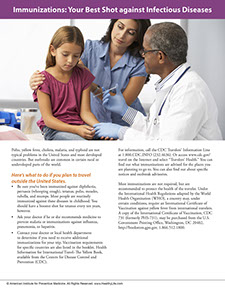
    Image of mother comforting young daughter as she gets a shot.

    Polio, yellow fever, cholera, malaria, and typhoid are not typical problems in the United States and most developed countries. But outbreaks are common in certain rural or undeveloped parts of the world.

    Here’s what to do if you plan to travel outside the United States.

    *  Be sure you’ve been immunized against diphtheria, pertussis (whooping cough), tetanus, polio, measles, rubella, and mumps. Most people are routinely immunized against these diseases in childhood. You should have a booster shot for tetanus every ten years, however.

    *  Ask your doctor if he or she recommends medicine to prevent malaria or immunizations against influenza, pneumonia, or hepatitis.

    *  Contact your doctor or local health department to determine if you need to receive additional immunizations for your trip. Vaccination requirements for specific countries are also listed in the booklet, Health Information for International Travel-The Yellow Book, available from the Centers for Disease Control and Prevention (CDC).

    For information, call the CDC Travelers’ Information Line at 1.800.CDC.INFO (232.4636). Or accesswww.cdc.gov/travelon the Internet and select “Travelers’ Health.” You can find out what immunizations are advised for the places you are planning to go to. You can also find out about specific notices and outbreak advisories.

    Most immunizations are not required, but are recommended to protect the health of the traveler. Under the International Health Regulations adapted by the World Health Organization (WHO), a country may, under certain conditions, require an International Certificate of Vaccination against yellow fever from international travelers. A copy of the International Certificate of Vaccination, CDC 731 (formerly PHS-731), may be purchased from the U.S. Government Printing Office, Washington, DC 20402,http://bookstore.gpo.gov, 1.866.512.1800.
    Page image from A Year of Health Hints book by the American Institute for Preventive Medicine. www.HealthyLife.com. All rights reserved.

    © American Institute for Preventive Medicine
  • Plane Travel For Those With Special Health Problems

    Healthy Travel

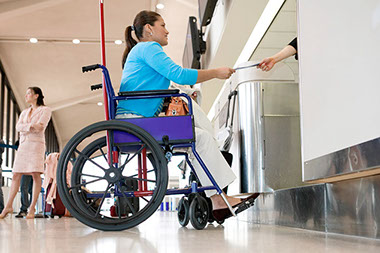
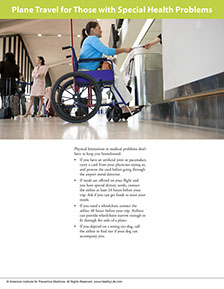
    Women in wheelchair at airport check-in counter.

    Physical limitations or medical problems don’t have to keep you homebound.

    *  If you have an artificial joint or pacemaker, carry a card from your physician saying so, and present the card before going through the airport metal detector.

    *  If meals are offered on your flight and you have special dietary needs, contact the airline at least 24 hours before your trip. Ask if you can get foods to meet your needs.

    *  If you need a wheelchair, contact the airline 48 hours before your trip. Airlines can provide wheelchairs narrow enough to fit through the aisle of a plane.

    *  If you depend on a seeing-eye dog, call the airline to find out if your dog can accompany you.

    Page image from A Year of Health Hints book by the American Institute for Preventive Medicine. www.HealthyLife.com. All rights reserved.

    © American Institute for Preventive Medicine
  • Your Pre-Vacation Checklist

    Healthy Travel

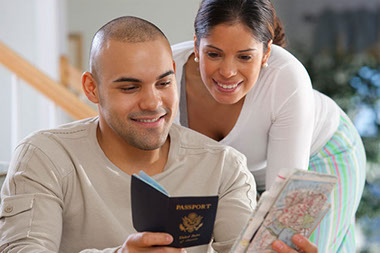
    Image of couple looking at passport and map.

    You’ll enjoy your trip much more if you don’t have to worry about how things are going back home while you’re away. Use this checklist of tasks before you travel. It can help give you peace of mind while you’re gone.

    *  Take care of any maintenance problems before you leave to prevent serious damage while you’re gone.

    *  Leave a house key with a neighbor, family member, or friend. Ask them to check your house both inside and out while you’re gone.

    *  If you’re going to be away for a month or more, contact your creditors and ask about arranging for your bills to be paid on schedule.

    *  Leave a copy of your itinerary and the name of your airline and flight numbers with family or friends, so they can locate you in the event of an emergency.

    Page image from A Year of Health Hints book by the American Institute for Preventive Medicine. www.HealthyLife.com. All rights reserved.

    © American Institute for Preventive Medicine
  • Campfire Safety

    WELL-BEING

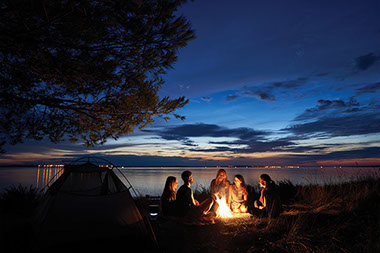
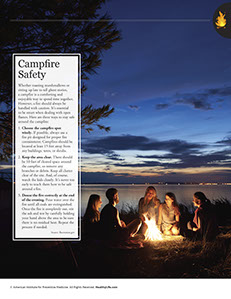
    Group of people sitting around a campfire and tent.

    Whether roasting marshmallows or sitting up late to tell ghost stories, a campfire is a comforting and enjoyable way to spend time together. However, a fire should always be handled with caution. It’s essential to be smart when dealing with open flames. Here are three ways to stay safe around the campfire:

    1.Choose the campfire spot wisely.If possible, always use a fire pit designed for proper fire containment. Campfires should be located at least 15 feet away from any buildings, tents, or shrubs.

    2.Keep the area clear.There should be 10 feet of cleared space around the campfire, so remove any branches or debris. Keep all clutter clear of the site. And, of course, watch the kids closely. It’s never too early to teach them how to be safe around a fire.

    3.Douse the fire correctly at the end of the evening.Pour water over the fire until all coals are extinguished. Once the fire is completely out, stir the ash and test by carefully holding your hand above the area to be sure there is no residual heat. Repeat the process if needed.

    Source: Recreation.gov

    © American Institute for Preventive Medicine
  • Safe Travels

    WELL-BEING

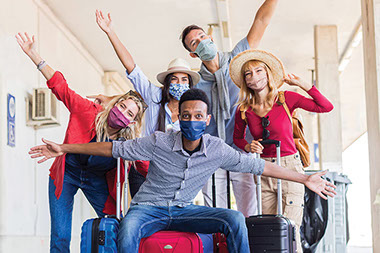
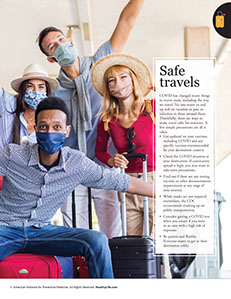
    Group of friends with luggage, wearing face masks, ready to travel.

    COVID has changed many things in recent years, including the way we travel. No one wants to end up sick on vacation or pass an infection to those around them. Thankfully, there are ways to make travel safer for everyone. A few simple precautions are all it takes.

    *  Get updated on your vaccines, including COVID and any specific vaccines recommended by your destination country.

    *  Check the COVID situation at your destination. If community spread is high, you may want to take extra precautions.

    *  Find out if there are any testing, vaccine, or other documentation requirements at any stage of your journey.

    *  While masks are not required everywhere, the CDC recommends masking up on public transportation.

    *  Consider getting a COVID test when you return if you were in an area with a high risk of exposure.

    *  Be patient and flexible. Everyone wants to get to their destination safely.

    © American Institute for Preventive Medicine
  • Secure Your Home For Vacation

    WELL-BEING

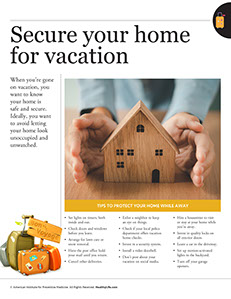
    Small wooden home on table with hands protecting it.

    When you’re gone on vacation, you want to know your home is safe and secure. Ideally, you want to avoid letting your home look unoccupied and unwatched.

    Tips to protect your home while away

    *  Set lights on timers, both inside and out.

    *  Check doors and windows before you leave.

    *  Arrange for lawn care or snow removal.

    *  Have the post office hold your mail until you return.

    *  Cancel other deliveries.

    *  Enlist a neighbor to keep an eye on things.

    *  Check if your local police department offers vacation home checks.

    *  Invest in a security system.

    *  Install a video doorbell.

    *  Don’t post about your vacation on social media.

    *  Hire a housesitter to visit or stay at your home while you’re away.

    *  Invest in quality locks on all exterior doors.

    *  Leave a car in the driveway.

    *  Set up motion-activated lights in the backyard.

    *  Turn off your garage openers.

    © American Institute for Preventive Medicine
  • Why You Need A Vacation

    WORK LIFE

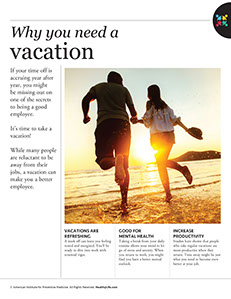
    Couple holding hands running into the ocean.

    If your time off is accruing year after year, you might be missing out on one of the secrets to being a good employee.

    It’s time to take a vacation! While many people are reluctant to be away from their jobs, a vacation can make you a better employee.

    Vacations are refreshing

    A week off can leave you feeling rested and energized. You’ll be ready to dive into work with renewed vigor.

    Good for mental health

    Taking a break from your daily routine allows your mind to let go of stress and anxiety. When you return to work, you might find you have a better mental outlook.

    Increase productivity

    Studies have shown that people who take regular vacations are more productive when they return. Time away might be just what you need to become even better at your job.

    © American Institute for Preventive Medicine
  • Check Your Health Insurance Coverage

    Healthy Travel

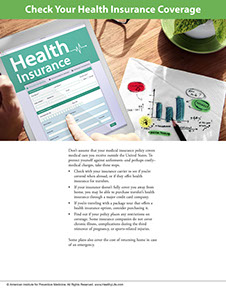
    Image of Health Insurance form on tablet.

    Don’t assume that your medical insurance policy covers medical care you receive outside the United States. To protect yourself against unforeseen-and perhaps costly-medical charges, take these steps.

    *  Check with your insurance carrier to see if you’re covered when abroad, or if they offer health insurance for travelers.

    *  If your insurance doesn’t fully cover you away from home, you may be able to purchase traveler’s health insurance through a major credit card company.

    *  If you’re traveling with a package tour that offers a health insurance option, consider purchasing it.

    *  Find out if your policy places any restrictions on coverage. Some insurance companies do not cover chronic illness, complications during the third trimester of pregnancy, or sports-related injuries.

    Some plans also cover the cost of returning home in case of an emergency.

    Page image from A Year of Health Hints book by the American Institute for Preventive Medicine. www.HealthyLife.com. All rights reserved.

    © American Institute for Preventive Medicine
  • Destination: Fun

    Healthy Travel

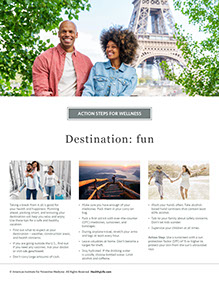
    Couple smiling, sitting in front of eiffel tower.

    Taking a break from it all is good for your health and happiness. Planning ahead, packing smart, and knowing your destination will help you relax and enjoy. Use these tips for a safe and healthy vacation.

    *  Find out what to expect at your destination – weather, construction areas, and health concerns.

    *  If you are going outside the U.S., find out if you need any vaccines. Ask your doctor or visitcdc.gov/travel.

    *  Don’t carry large amounts of cash.

    *  Make sure you have enough of your medicines. Pack them in your carry-on bag.

    *  Pack a first-aid kit with over-the-counter (OTC) medicines, sunscreen, and bandages.

    *  During airplane travel, stretch your arms and legs at least every hour.

    *  Leave valuables at home. Don’t become a target for theft.

    *  Stay hydrated. If the drinking water is unsafe, choose bottled water. Limit alcohol and caffeine.

    *  Wash your hands often. Take alcohol-based hand sanitizers that contain least 60% alcohol.

    *  Talk to your family about safety concerns. Don’t let kids wander.

    *  Supervise your children at all times.

    Action Step:Use a sunscreen with a sun protection factor (SPF) of 15 or higher to protect your skin from the sun’s ultraviolet rays.

    Page from HealthyLife Weigh book by the American Institute for Preventive Medicine. www.HealthyLife.com. All rights reserved.

    © American Institute for Preventive Medicine

  • How To Locate A Physician Away From Home

    Healthy Travel

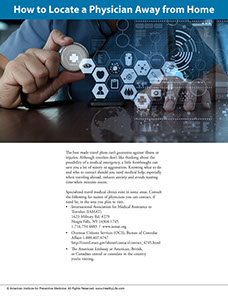
    Image of doctor with medical icons.

    The best made travel plans can’t guarantee against illness or injuries. Although travelers don’t like thinking about the possibility of a medical emergency, a little forethought can save you a lot of misery or aggravation. Knowing what to do and who to contact should you need medical help, especially when traveling abroad, reduces anxiety and avoids wasting time when minutes count.

    Specialized travel medical clinics exist in some areas. Consult the following for names of physicians you can contact, if need be, in the area you plan to visit.

    International Association for Medical Assistance to Traveler (IAMAT)

    1623 Military Rd. #279

    Niagra Falls, NY 14304-1745

    716.754.4883

    www.iamat.org

    Overseas Citizens Services (OCS), Bureau of Consular Affairs

    1.888.407.4747

    http://travel.state.gov/about/contact/contact_4745.html

    The American Embassy or American, British, or Canadian consul or consulate in the country you’re visiting.

    Page image from A Year of Health Hints book by the American Institute for Preventive Medicine. www.HealthyLife.com. All rights reserved.

    © American Institute for Preventive Medicine