Tag: goals

  • Want To Eat Healthier?

    HEALTHY EATING

    Image of family eating dinner at the kitchen table.

    Then cook meals at home

    People who frequently cook meals at home eat healthier and consume fewer calories than those who cook less, according to Johns Hopkins Bloomberg School of Public Health research.

    “When people cook most of their meals at home, they consume fewer carbohydrates, less sugar and less fat than those who cook less or not at all-even if they are not trying to lose weight,” according to a study in Public Health Nutrition.

    © American Institute for Preventive Medicine

  • Find Reasons To Care About Physical Activity

    Healthylife® Weigh

    Part 5

    Elderly couple jogging.

    Being physically active helps you manage your weight. When you engage in physical activity, you burn calories. The more intense the activity, the more calories you burn. However, all exercise boosts your metabolism. Exercise builds muscle, the biggest fat burner in the body. Even in a state of rest, muscle burns calories efficiently (you’ll still be experiencing the benefits of your morning workout in the afternoon). Losing weight can slow your metabolism, but exercise can balance this effect.

    There are many other reasons to be active that may motivate you. Being physically active may help you live out the values you identified in Part 1.

    © American Institute for Preventive Medicine

  • Set Fitness Goals

    Healthylife® Weigh

    Part 5

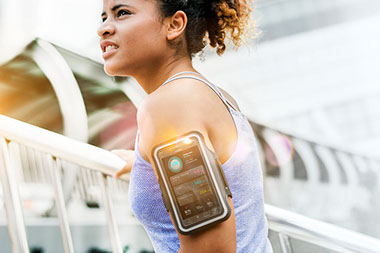
    Active women with armband to hold smartphone.

    Set your own fitness goals. Other people may have suggestions, but choose a goal that you want to go after. Other people’s fitness goals should not interfere with one you set for yourself.

    *  Write down your goals. This gives them more importance.

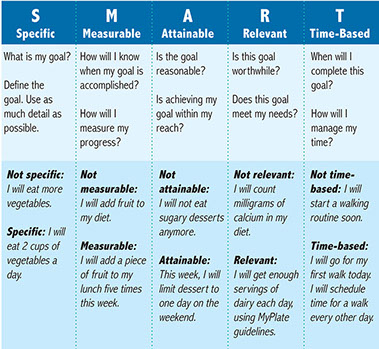
    *  Your goals should be within reach, but challenging. Make sure your goals are S.M.A.R.T. Does your goal meet the criteria?

    *  Know why you are setting each goal. For example, you may be doing this exercise for stress relief or to try something new. Or, you are meeting a friend and want to help them stick to their goal.

    *  Review and adjust your goals as needed. It takes practice to know how to set reasonable but challenging goals for yourself.

    *  Track your progress and reward yourself for successes.

    © American Institute for Preventive Medicine

  • Set Goals

    Healthylife® Weigh

    Part 3

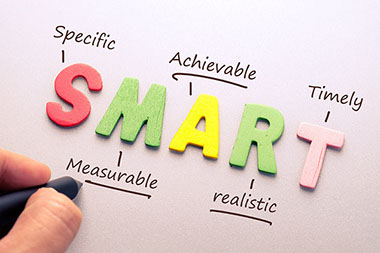
    The word Smart spelled out with wood lettering and hand writing definition for setting a smart goal.

    Think of the actions you take on a daily basis as small steps toward your bigger goal. This guide has already given you many ideas for small steps, such as making half of your plate fruits and vegetables and choosing fewer sugar-sweetened drinks. Identify your next step and use the S.M.A.R.T. tool to improve the chances of reaching your goal.

    Stay motivated with the small successes you achieve along the way. Use yourEating & Exercise Tracker™every day for feedback on the effect your actions have on your energy level, mood, and weight.

    S.M.A.R.T. chart.

    © American Institute for Preventive Medicine

  • 6 Tips To Become More Productive At Work

    WORK LIFE

    Image of women at work looking at notes posted on the wall.

    Productivity means you make the most of your time. You may get more done with less time or with fewer people. But it’s not just about being fast, it’s about maintaining quality too. Learning to be productive means you can showcase your talents and abilities by doing a great job with the resources and skills you have.

    Boosting productivity is often easier said than done. When you’re tired, distracted or simply don’t know how to organize your day, it can be hard to stay productive. Try these tips to make the most of your workday – and get more satisfaction out of your career while doing it!

    1.Break down big tasks.Large projects can be overwhelming, so we often put them off because we don’t know where to start. Instead of letting a large project sit on your to-do list, write down the first step you need to do to get it done. Make it something you know you can do, and set a deadline for yourself. Once that’s done, move on to the next step, and so on.

    2.Have real conversations instead of emailing.Email chains can become time-wasters and often lead to misunderstandings or missing information. When possible, talk to someone in person or on the phone instead of starting an email trail.

    3.Check email at set times.We can’t avoid email completely, but constant inbox chimes can quickly diminish your productivity. Instead of reading every email as it comes in, turn off your email program and only check it two to three times a day.

    4.Take quick breaks when you can.Back-to-back meetings or intense work sessions can drain you. But you don’t need to wait until your lunch hour to energize yourself. If you can, take a few moments to get up and walk around. Stretch at your desk or try deep-breathing exercises.

    5.Tackle those little things to clean up your to-do list.If you have a bunch of small, quick tasks nagging at you, set some time aside to get them done. Then you can focus on the bigger, more important things without other distractions.

    6.Set your own deadlines.If a task or project doesn’t have a due date, it’s easier to put off. Even if a specific deadline hasn’t been set, you can give yourself one. This helps you avoid hanging onto those things that sit undone for days or weeks.

    © American Institute for Preventive Medicine

  • Be Patient With Exercise Results

    BE FIT

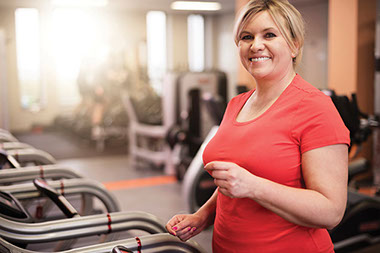
    Image of women using treadmill at a gym.

    Getting started with an exercise plan is a big step toward a healthier life. But, sticking with that exercise program can be tough when you’re not seeing results as quickly as you want. When many exercise plans promise fast, dramatic results, being patient can be frustrating.

    Some people may find that they work hard but aren’t seeing weight loss or feel like they aren’t getting as fit as they want. This can lead to exercise burnout and quitting. Don’t give up! Find ways to push through the tough times. If you keep it up, the benefits of exercise are worth the effort.

    Tip #1: Step off the scale.

    Although you may be losing some weight with exercise, it’s not always obvious right away. This can happen when someone gains muscle, which weighs more than fat. Instead of worrying about a number, look at how your clothes are fitting or how you are feeling overall. Weigh yourself once a week to check in, but don’t let it be the only way you are measuring your progress.

    Tip #2: Don’t compare.

    People gain and lose weight in different ways and at different rates. A friend may drop pounds or get fit faster than you. That can be upsetting if you’re working hard. Try not to worry about how much progress someone else has made. Focus on yourself and what you have accomplished each day.

    Tip #3: Track progress.

    Use a notebook or an app on your phone to record your positive changes, no matter how small. Perhaps you did two more pushups, or walked for 10 extra minutes. Maybe you felt more energy than usual today. Whatever it is, record it so you can go back and see all of the ways exercise is boosting your health.

    Tip #4: Be mindful of your diet.

    Exercise can increase your hunger. It can be easy to overeat after a workout and consume more calories than you burned. Prepare a healthy snack before you work out, such as a banana with peanut butter or yogurt and fresh fruit. Having something ready can reduce the chances of grabbing something quick but unhealthy.

    You may not see “instant” results from exercise. But, believe that you are doing something great for your body. With time, you will improve your health and well-being.

    © American Institute for Preventive Medicine

  • Better Health Is In Your Pocket

    SELF-CARE CORNER

    Image of doctor holding up a smart phone.

    Most people spend time every day on their smartphone or tablet. Why not put that time to good use by downloading an app that can help you improve your health? There are thousands of health apps available to suit many different health goals and personality types. Check out some of these health apps you can start using today:

    Relax Melodies by Ipnos Software(for iPhone and Android)

    Quality sleep and stress management are an important part of good health. This app lets you choose your favorite sounds to create a personalized relaxing song that helps you relieve stress and sleep better.

    Calorie Counter by MyFitnessPal(for Android)

    For those trying to make better food choices or lose weight, sometimes knowing how much you eat can make a big difference. This app allows you to track food intake and exercise with a large food database. Connect with other users for encouragement and support.

    Diet Controller by Margaret Dangerfield(for iPhone)

    This app can help you view your eating and fitness activities on your devices. Log and track your daily food intake with a USDA-based food database. Users also can create charts and reports while tracking nutrients, calories and exercise.

    Hydro Coach by Codium App Ideas(for Android) orWater App by Inspiring Life Technologies(for iPhone)

    Drinking water is an easy, healthy way to fight fatigue and may help you consume fewer calories. These apps are designed to help you track how much you’re drinking and to offer reminders when it’s time for another glass.

    Quitter’s Circle by Pfizer Inc. and the American Lung Association(for iPhone and Android)

    For those trying to quit smoking, this app allows you to create a personalized quit plan, connect with others for support, get quitting tips, and celebrate milestones.

    Hundreds of health-related apps are available today – and many of them cost less than $10. Try an app that suits your life for a high-tech way to be healthier!

    © American Institute for Preventive Medicine

  • Eat Right For Your Lifestyle

    HEALTHY EATING

    Image of two women eating lunch.

    What’s your lifestyle? Busy parent, jet-setting exec, student, athlete, or vegetarian? Or some combination of these? Jim White, spokesperson for the Academy of Nutrition and Dietetics, says one size doesn’t fit all nutritional needs. You have flexibility in making healthy eating choices. He offers some suggestions:

    *Career-minded.Busy work days. Business travel. Eating on the fly. Suggestions: Keep single-serve packages of crackers, fruit, peanut butter, low-sodium soup, and canned tuna in your desk. Tuck portable, nonperishable foods in your purse, briefcase, or backpack for a meal on the run. Try granola bars, peanut butter and crackers, fresh fruit, trail mix, and single-serve packs of whole-grain cereal or crackers.

    *Athletes.Even for the casual workout. Your body needs fuel to function, so eat a light breakfast or snack before you exercise. Try low-fat yogurt, graham crackers with peanut butter, a banana, or cereal with low-fat milk. Before, during, and after exercise, replace fluids with plenty of water or a sports drink.

    *Students.Ah, the fast-paced lifestyle on a low budget. Stock smart grab-and-go snacks that combine protein and carbs to fuel you, such as apples with peanut butter, carrots and hummus, hard cooked eggs and fruit, banana and yogurt, almonds with low-fat cheese or whole-grain cereal. In the cafeteria, choose the salad bar but go easy on cheese, bacon, high-calorie add-ons, and  salad dressings.

    *Families.Quick and nutritious can be done. Keep things simple. Build a collection of favorite recipes and choose ingredients that you can use in more than one meal. For example, cook extra grilled chicken for chicken salad or fajitas the next day.

    *Vegetarians.You can include nutrient-rich beans in vegetarian chili, a hummus-filled pita sandwich, or veggie burger. Make popular items vegetarian, such as veggie pizza and pasta primavera.

    © American Institute for Preventive Medicine