Tag: healing

  • Dating After Divorce

    FAMILY LIFE

    Couple on a date.

    If you’re a divorced parent with kids, you may be wondering how to handle future relationships. Kids often need some time to adjust to their parents’ separation.

    If you’re ready to begin a new romantic relationship after a divorce, keep these tips in mind:

    *  Consider waiting at least six months to help kids adjust to the divorce.

    *  Your child doesn’t need to meet everyone you date. Introduce them only if your relationship is becoming serious.

    *  Prepare for the first meeting with your significant other and child. Don’t expect the first meeting to be perfect.

    *  Help your child deal with negative feelings. Children often hold out hope that their parents will get back together. Seeing a new significant other in your life can be difficult for them. Be sure to tell them that you and your ex-spouse are not getting back together, but that you still love them and will be their parents no matter what.

    *  Understand if your child simply doesn’t like your new partner as much as their other parent. This is normal. With time, your child may develop their own special relationship with this person.

    *  Don’t ask them to keep secrets from their other parent. If you are dating, you may need to tell your ex-spouse about the person in case your child brings it up with them. Your child should not feel uncomfortable when they talk about it with your ex-spouse.

    *  Remember that your child is always watching. Be cautious about your behavior in front of your child, whether it’s public affection or things you say.

    Source: American Academy of Pediatrics

    © American Institute for Preventive Medicine
  • The Healing Touch

    Alternative Medicine

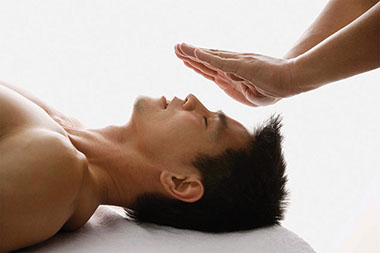
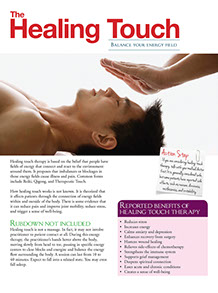
    Image of person having healing touch therapy.

    Balance your energy field

    Healing touch therapy is based on the belief that people have fields of energy that connect and react to the environment around them. It proposes that imbalances or blockages in those energy fields cause illness and pain. Common forms include Reiki, Qigong, and Therapeutic Touch.

    How healing touch works is not known. It is theorized that it affects patients through the connection of energy fields within and outside of the body. There is some evidence that it can reduce pain and improve joint mobility, reduce stress, and trigger a sense of well-being.

    Rubdown not included

    Healing touch is not a massage. In fact, it may not involve practitioner to patient contact at all. During this energy therapy, the practitioner’s hands hover above the body, moving slowly from head to toe, pausing in specific energy centers to clear blocks and energize and balance the energy flow surrounding the body. A session can last from 10 to 40 minutes. Expect to fall into a relaxed state. You may even fall asleep.

    Reported benefits of healing touch therapy

    *  Reduces stress

    *  Increases energy

    *  Calms anxiety and depression

    *  Enhances recovery from surgery

    * Hastens wound healing

    *  Relieves side-effects of chemotherapy

    *  Strengthens the immune system

    *  Supports grief management

    *  Deepens spiritual connection

    *  Eases acute and chronic conditions

    *  Creates a sense of well-being

    Action Step

    If you are considering healing touch therapy, talk with your medical doctor first. It is generally considered safe, but some patients have reported side effects, such as nausea, dizziness, restlessness, and irritability.

    Page from Ways to Well-Being book by the American Institute for Preventive Medicine. www.HealthyLife.com. All rights reserved.

    © American Institute for Preventive Medicine
  • Caring For Minor Burns

    SELF-CARE CORNER

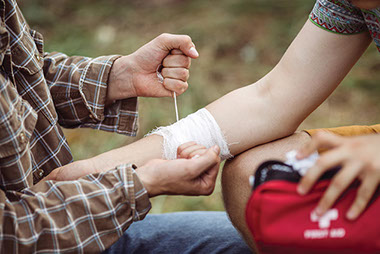
    Image of first aid on a burn to the arm.
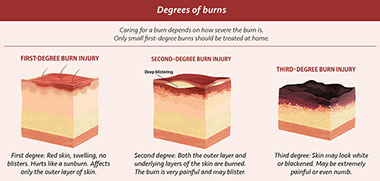
    Chart of degree of burns.

    Many people have experienced the pain that even a minor burn can cause. The home can have many burn hazards, such as touching a hot stove, getting splashed with hot water, or even biting into food with hot spots. Children, especially, can be prone to burns when they accidentally touch something hot. Adults need to be careful too: burns are painful – and possibly dangerous –  at any age.

    What to do after a burn

    If you do get a minor (first-degree) burn, know how to care for it at home so it heals as quickly as possible. If the skin isn’t broken, you should:

    *  Run cool water over the burn or soak it in cool water. Do not use ice: it’s too harsh. Keep the area under water for at least 5 minutes. You may also use a clean towel or cloth soaked in cold water.

    *  After soaking or rinsing the burn, cover it with a clean, dry bandage or gauze pad.

    *  Pain relievers like ibuprofen (e.g., Advil®) or acetaminophen (e.g., Tylenol®) can help if advised by a doctor.

    What not to do

    Treat burns with care. Do NOT:

    *  Use oil, ointment, butter or other greasy substances on the burn.

    *  Breathe or blow on the burn.

    *  Touch or pop blistered or dead skin.

    When it’s an emergency

    Always call 911 or seek emergency medical care if:

    *  You’re not sure how bad the burn is.

    *  A child gets burned.

    *  Burn is caused by chemicals or electricity.

    *  You think it might be a second or third-degree burn.

    *  It covers a large area of skin, bigger than 2 to 3 inches wide.

    *  The burn is on a hand, foot, face or genitals.

    Sources: American Academy of Family Physicians, American Academy of Pediatrics

    © American Institute for Preventive Medicine
  • Coping With The Loss Of A Spouse

    FAMILY LIFE

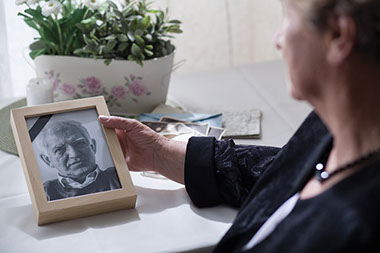
    Image of sad, older female sitting on couch.

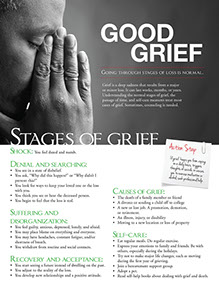
    Losing a husband or wife is devastating. A whirlwind of intense emotions-overwhelming sadness as well as shock, fear, guilt, anger, and numbness-make the days and weeks after a spouse’s death agonizing and confusing.

    It may be small comfort to know that these feelings are normal and will be temporary.

    “Sadness may never go away entirely,” said clinical psychologist Dr. Hayley Hirschmann of Morris Psychological Group, “but the pain of acute grief becomes less intense over time as the good days start to outnumber the bad.”

    Dr. Hirschmann offers this advice:

    *Accentuate the positive:Studies have shown that those who are able to draw on humor and pleasurable memories are happier and healthier than those whose thoughts of the deceased are mostly sad and focused on their loss.

    *Let others help:Don’t shy away from expressing your feelings to those close to you; you will feel less alone if you can share your grief with a sympathetic listener. Accept help with chores and legal and financial responsibilities. Consider joining a bereavement support group.

    *Take care of yourself:Eat well, exercise regularly, get enough sleep. Be alert to falling into bad habits.

    *Don’t make big changes right away:Wait a while before moving or changing jobs.

    © American Institute for Preventive Medicine
  • Soothe Sore Muscles After Exercise

    BE FIT

    Image of male jogging outside.

    Exercise can make you feel great. But after a hard workout, sore muscles can be uncomfortable. A little soreness is normal and healthy, especially after trying a new activity or pushing yourself a little harder.

    Don’t let post-exercise pain get you down! You can get through it and reach a new level of fitness with a few tips:

    *Warm up.Don’t jump right into exercise with cold muscles. Doing a lighter or slower version of your workout first will get muscles warm and increase blood flow. This can help avoid injury too.

    *Cool down and stretch.Don’t stop exercise abruptly. Instead, slow down your activity until your heart rate feels normal and you can talk easily. After you’ve exercised, stretch! This is the perfect time to increase flexibility and help lower the chance of soreness.

    *Drink water.It helps keep your joints and muscles hydrated and prevents cramps. Drink before, during and after your workout.

    *Give muscles a break.Give muscles about two days to rest and heal before you exercise them again. For instance, work leg muscles one day and arms the next. Don’t do the same exercise day after day. Muscles need about 48 hours to repair and heal.

    *Be sure you’re doing it right.If you’re new to certain exercises, don’t be afraid to ask someone who can help! Ask a fitness expert or personal trainer or watch videos. Exercise machines and routines can cause injuries if they’re not done properly.

    *Don’t push too hard.It’s easy to get caught up in a new exercise routine. You may want to get into shape as quickly as possible. But doing too much too quickly can mean lots of soreness and even an injury. If you think your exercise routine is too easy, increase the time or intensity slowly. Always ask your doctor about safe exercises you can do if you have any health conditions.

    Listen to your body!

    A lot of soreness or pain isn’t necessary or normal. If you think you have a strained or sprained muscle, tryRICE:

    Rest:Don’t use the sore muscles, if possible.

    Ice:Apply ice packs to the problem area for a few minutes at a time.

    Compression:Use sports bandages or wraps.

    Elevation:Raise the affected body part, such as a foot, up above your heart for two to three hours each day.

    See a doctor if the pain is extreme, gets worse or doesn’t go away after a week.

    Source: American Academy of Family Physicians

    © American Institute for Preventive Medicine