Tag: health

  • Turmeric

    HEALTHY EATING

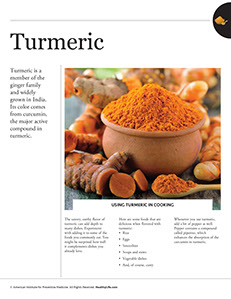
    Small bowl filled with turmeric spice.

    Turmeric is a member of the ginger family and widely grown in India. Its color comes from curcumin, the major active compound in turmeric.

    Using Turmeric In Cooking

    The savory, earthy flavor of turmeric can add depth to many dishes. Experiment with adding it to some of the foods you commonly eat. You might be surprised how well it complements dishes you already love.

    Here are some foods that are delicious when flavored with turmeric:

    *  Rice

    *  Eggs

    *  Smoothies

    *  Soups and stews

    *  Vegetable dishes

    *  And, of course, curry

    Whenever you use turmeric, add a bit of pepper as well. Pepper contains a compound called piperine, which enhances the absorption of the curcumin in turmeric.

    © American Institute for Preventive Medicine

  • Understanding Autoimmunity

    MEDICAL NEWS

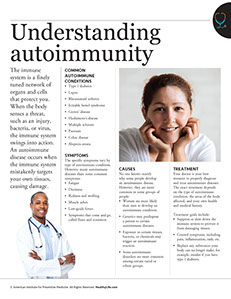
    Smiling female.

    The immune system is a finely tuned network of organs and cells that protect you. When the body senses a threat, such as an injury, bacteria, or virus, the immune system swings into action. An autoimmune disease occurs when the immune system mistakenly targets your own tissues, causing damage.

    Common autoimmune conditions

    *  Type 1 diabetes

    *  Lupus

    *  Rheumatoid arthritis

    *  Irritable bowel syndrome

    *  Graves’ disease

    *  Hashimoto’s disease

    *  Multiple sclerosis

    *  Psoriasis

    *  Celiac disease

    *  Alopecia areata

    Symptoms

    The specific symptoms vary by type of autoimmune condition. However, many autoimmune diseases share some common symptoms:

    *  Fatigue

    *  Dizziness

    *  Redness and swelling

    *  Muscle aches

    *  Low-grade fevers

    *  Symptoms that come and go, called flares and remission

    Causes

    No one knows exactly why some people develop an autoimmune disease. However, they are more common in some groups of people:

    *  Women are more likely than men to develop an autoimmune condition.

    *  Genetics may predispose a person to certain autoimmune diseases.

    *  Exposure to certain viruses, bacteria, or chemicals may trigger an autoimmune reaction.

    *  Some autoimmune disorders are more common among certain racial or ethnic groups.

    Treatment

    Your doctor is your best resource to properly diagnose and treat autoimmune diseases. The exact treatment depends on the type of autoimmune condition, the areas of the body affected, and your own health and medical history.

    Treatment goals include:

    *  Suppress or slow down the immune system to prevent it from damaging tissues.

    *  Control symptoms, including pain, inflammation, rash, etc.

    *  Replace any substances your body can no longer make, for example, insulin if you have type 1 diabetes.

    © American Institute for Preventive Medicine

  • 5 Reasons To Be Active

    Fitness

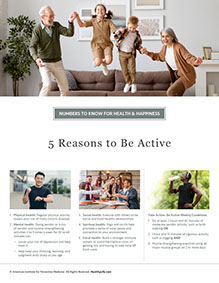
    Grandparents playing with their grandchildren.

    1.  Physical health: Regular physical activity lowers your risk of many chronic diseases.

    2.  Mental health: Doing aerobic or a mix of aerobic and muscle-strengthening activities 3 to 5 times a week for 30 to 60 minutes can:

    –  Lower your risk of depression and help treat it

    –  Help keep your thinking, learning, and judgment skills sharp as you age

    3.  Social health: Exercise with others to be social and build healthy relationships.

    4.  Spiritual health: Yoga and tai chi help promote a sense of inner peace and connection to your environment.

    5.  Fiscal health: Build a stronger immune system to avoid the medical costs of getting sick and having to take time off from work.

    Take Action: Be Active Weekly Guidelines

    1.  Do at least 2 hours and 30 minutes of moderate aerobic activity, such as brisk walkingOR

    2.  1 hour and 15 minutes of vigorous activity, such as joggingAND

    3.  Muscle strengthening exercises using all major muscle groups on 2 or more days.

    Page from HealthyLife Weigh book by the American Institute for Preventive Medicine. www.HealthyLife.com. All rights reserved.

    © American Institute for Preventive Medicine

  • 5 Reasons To Limit Alcohol

    Substance Use & Abuse

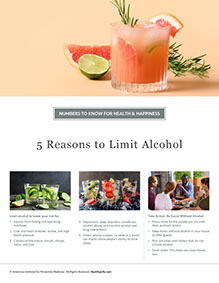
    Cocktail drink with slices of grapefruit and lime.

    Limit alcohol to lower your risk for:

    1.  Injuries from falling and operating machines

    2.  Liver and heart diseases, stroke, and high blood pressure

    3.  Cancers of the breast, mouth, throat, colon, and liver

    4.  Depression, sleep disorders, unsafe sex, alcohol abuse, and harmful alcohol and drug interactions

    5.  Motor vehicle crashes. As little as 2 drinks can impair some people’s ability to drive safely.

    Take Action: Be Social Without Alcohol

    *  Focus more on the people you are with than alcoholic drinks.

    *  Keep drinks without alcohol in your house to offer guests.

    *  Plan activities with others that do not include alcohol.

    *  Drink water. This helps you save money, too.

    Page from HealthyLife Weigh book by the American Institute for Preventive Medicine. www.HealthyLife.com. All rights reserved.

    © American Institute for Preventive Medicine

  • Reduce Environmental Risk Factors For Chronic Diseases

    Personal Safety

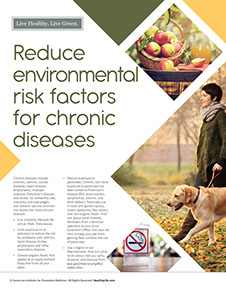
    Women walking dog.

    Chronic diseases include arthritis, asthma, cancer, diabetes, heart disease, emphysema, multiple sclerosis, Parkinson’s disease, and stroke. An unhealthy diet, inactivity and overweight, and tobacco use are common risk factors for many chronic diseases.

    *  Live a healthy lifestyle. Be active. Walk. Rake leaves.

    *  Limit exposure to air pollution to reduce the risk for problems with asthma, heart disease, stroke, emphysema and other respiratory diseases.

    *  Choose organic foods. Pick apples at an apple orchard. Enjoy the fruits of your labor.

    *  Reduce exposure to pesticides. Chronic, low-dose exposure to pesticides has been linked to Parkinson’s disease (PD), brain tumors, lymphomas, asthma, and birth defects. Pesticides are in lawn and garden sprays, insect repellants, flea collars, and non-organic foods. Find out about earth-friendly fertilizers from a fertilizer specialist at your local Extension Office. Ask your vet how to keep your pet from getting fleas without the use of pesticides.

    *  Use a digital or ear thermometer. Find out what to do about mercury spills, disposal, and cleanup fromepa.gov/mercury/spills/index.htm.

    A Year of Health Hints book by the American Institute for Preventive Medicine. www.HealthyLife.com. All rights reserved.

    © American Institute for Preventive Medicine

  • Home Safe Home

    Home Safety

    Protect your family from accidents, injuries, and intruders.

    You should feel safe, protected, and comfortable in your home, even when things go wrong. Make sure you’re doing everything possible to protect yourself and your family. Lock the doors, even when you are home. Install and maintain smoke alarms and carbon monoxide detectors. Plan an escape route in case of a disaster.

    Safety Tips:

    *  Use a peephole at the front door.

    *  If you live alone, arrange for daily contact with a neighbor or relative.

    *  Post emergency numbers and teach children how to call 9-1-1.

    *  Stock first-aid supplies.

    *  Keep chemicals out of your children’s reach.

    *  Lock guns in one place and bullets in another.

    *  Keep a fire extinguisher handy.

    *  Use grab bars and safety mats or nonskid tape in your tub and shower.

    *  Keep stair areas well-lit. Keep all walkways clear  of clutter.

    *  Make sure there is a clear path for walking from room to room.

    *  Never leave young children alone in the bathtub or on a bed or table.

    Ways to get through a disaster faster:

    Write down a plan. Rehearse it and hope you never need it!

    *  Create separate plans for different disasters, such as a house fire, flood, tornado, etc. Practice drills for each plan with the family.

    *  Take a first-aid course.

    *  Choose a check-in person who is unlikely to be involved in the same event.

    *  Plan two places to meet. Choose one at or near your home. Choose another one at a location farther away, in case you can’t get home.

    *  If you have kids in school, find out about the school’s crisis plan. Make sure the school has current phone numbers for you and other caregivers. Sign forms that allow the release of your kids to family members or friends.

    *  If you have pets, plan for their safety.

    Action Step

    Set up plans to be ready for weather disasters. Contact your cell phone carrier to see if you can get free Wireless Emergency Alerts.

    Ways to Well-Being book by the American Institute for Preventive Medicine. www.HealthyLife.com. All rights reserved.

    © American Institute for Preventive Medicine

  • Get Your Healthy Game Day On

    SELF-CARE CORNER

    Image of football field.

    The excitement of football, and even the activities and feelings of anticipation leading up to games, can be unhealthy in ways many do not realize, according to Jody Gilchrist, a cardiac nurse practitioner at the University of Alabama at Birmingham.

    Critical matchups, tight games, and crushing defeats can trigger adrenaline that reduces blood flow to the heart and other muscles and increases heart rate and blood pressure. Over time, these high levels of stress hormones can hurt your heart-even though a football game may be deemed good stress.

    Adding to the effects of stress on the body would be unhealthier foods at the tailgate party, and heavier eating and drinking during the game. Not a winning combination. Here are some tailgating tips:

    *  Help minimize stress by watching the game with people you enjoy.

    *  Knock out a few pushups and sit ups during commercial breaks.

    *  Chew gum or squeeze a stress ball to reduce anxiety and control your emotions.

    *  Take a brief walk at halftime, or if you are attending the game, take a walk around the stadium or to another section to meet a friend.

    *  Manage your net dietary intake by planning ahead and making healthier choices at other times of the day in anticipation of splurging a bit during the game.

    *  If tailgating at the stadium, try to conserve calories earlier in the day.

    *  If tailgating at home, consider using vegetables in place of chips for dips, and substitute Greek yogurt for sour cream or cream cheese dips.

    *  Because sodium causes fluid retention-something especially bad for heart patients-a good rule of thumb is to avoid foods that have more than 1 mg of sodium per calorie. At about 0.5 mg of sodium per calorie, natural foods such as fresh fruits and vegetables generally contain much less, so opt for them whenever possible.

    *  Do your best to avoid soft drinks, which are extremely high in sugar.

    In the end, your health will win-even if your team does not.

    © American Institute for Preventive Medicine