Tag: Healthcare

  • A Routine Checkup

    Medical Exams

    A routine checkup from a doctor or health care provider is a way to find out your health status. It allows you to ask questions, too. It also helps you find out if you have a health problem you don’t know about. Some diseases, such as high blood pressure and some cancers, may not have symptoms in the early stages. Tests and exams can help detect these.

    The Basic Parts of a Checkup

    *  A complete medical history. This includes family health history, past illnesses, and current problems.

    *  A check on how well your eyes, ears, heart, bowels, etc. function.

    *  A check of your blood pressure, pulse, temperature, etc.

    *  A medical exam.

    *  Possible routine tests for your conditions, gender, or age, such as blood tests or X-rays.

    *  A check of specific health concerns.

    *  Vaccinations, as needed.

    Page from the Healthier at Home book by the American Institute for Preventive Medicine. www.HealthyLife.com. All rights reserved.

    © American Institute for Preventive Medicine

  • Complementary & Integrative Health

    Alternative Medicine

    Image of complementary medicine.

    Complementary medicine is a non-mainstream practice used together with conventional medicine.

    Integrative medicine coordinates complementary approaches into mainstream medicine.

    Alternative medicine is non-mainstream medicine in place of conventional medicine.

    True alternative medicine is not common. Most people who use non-mainstream approaches use them with conventional treatment.

    The National Health Interview Survey (NHIS) found that 33.2% of adults in the U.S. used complementary health approaches.

    Natural products.

    These use substances found in nature, often sold as dietary supplements. Examples are:

    *  Herbs. Chemicals from herbs, plants, or plant parts act upon the body in a therapeutic way.

    * Vitamins and minerals. These are the most common dietary supplement used. About 40% of adults take a multivitamin and mineral (MVM).

    * Probiotics. These are defined as “live micro-organisms which, when given in adequate amounts, provide a health benefit on the host.”

    Mind and body practices

    These focus on the interactions among the brain, mind, body, and behavior. Some practices manipulate and/or move one or more body parts. Examples are:

    *  Acupressure. This applies pressure to certain places (acupoints) on the body by pressing on them with fingers or hands.

    *  Acupuncture. This uses needles that are inserted into the skin at certain points (acupoints).

    *  Chiropractic. This seeks to put the body into balance through manual realignment of the spine and other joints and muscles.

    *  Hypnotherapy. A person is put in a trance state to respond to suggestion to overcome a problem, such as a phobia, anxiety, or tobacco use.

    *  Meditation. This increases calmness and physical relaxation by using:

    – A quiet location that is free of or has few distractions.

    – A comfortable posture.

    – A specific focus on a word or sensation.

    – An openness to let distractions come and go without judging them.

    *  Massage therapy. This uses touching and rubbing techniques to relieve sore muscles and promote relaxation.

    *  Qi gong (“chee-GUNG”). This is part of traditional Chinese medicine. It uses movement, meditation, and controlled breathing to enhance the flow of “qi” in the body. (Qi is an ancient term for vital energy.)

    *  Relaxation therapies. These include breathing exercises, guided imagery, and progressive muscle relaxation.

    *  Tai chi. This is a series of postures and exercises of moving the body slowly and gently, and with awareness while breathing deeply.

    *  Yoga. A system of exercising using postures, breathing, and meditation.

    Page from the Healthier at Home book by the American Institute for Preventive Medicine. www.HealthyLife.com. All rights reserved.

    © American Institute for Preventive Medicine

  • Polypharmacy: What To Know

    MEDICAL NEWS

    Wooden spoon filled with variety of pills.

    Medications improve the quality of life for many people. When you have a medical condition, the right medication can make all the difference.

    Polypharmacy refers to the use of multiple medications, generally in the range of 5-10 each day. It is common in older adults; however, anyone who struggles with more than one chronic condition may be at risk.

    While taking medication to protect your health is essential, you should be aware of the danger associated with polypharmacy and how to prevent it.

    The danger of polypharmacy

    Every drug is studied to make sure it is safe and effective to treat the condition it is used for. But, once you start mixing multiple medications together, the side effects may be less known and hard to predict.

    Anyone taking more than five medications is at risk for:

    *  Adverse drug reactions

    *  Balance issues

    *  Cognitive impairment

    *  Harmful drug interactions

    *  Drug-disease interactions

    Taking a lot of different medications also creates a burden on you, the patient, to manage and keep track of everything you are taking.

    Ways to decrease your risk

    *  Keep an updated list of all your medications. Take it with you to every doctor’s appointment. If you see multiple doctors, this is especially critical.

    *  Talk to the pharmacist every time you are prescribed a new medication. Make sure to show them your medication list so they can check for any drug interactions.

    *  If possible, fill all your prescriptions at one pharmacy.

    *  Don’t stop taking a medication on your own. Always talk to your doctor if you are concerned about the amount of medicine you are taking.

    Questions to ask your doctor

    Your doctor is your best resource to decrease your risk of polypharmacy. Always review your medications with them at each visit and ask detailed questions. Here are some questions to ask:

    *  Is there one medication that could help with multiple conditions?

    *  Do the benefits of the drug outweigh the risks?

    *  Should I keep taking a medicine that doesn’t seem to be working?

    *  Can the dosage be adjusted to decrease the risk of side effects?

    *  Could a new symptom be a side effect of my medication?

    © American Institute for Preventive Medicine

  • A Dozen Rights Every Patient Should Expect

    Medical Care

    Image of doctor talking to patient.

    What rights and privileges can you expect from a hospital when you become a patient? According to the American Hospital Association (AHA), there are specific standards of care that all patients are entitled to. The AHA has developed a voluntary code-the Patient’s Bill of Rights-that presents guidelines for both staff and patients.

    1.  You have the right to considerate and respectful care.

    2.  You have the right to obtain from your physician complete, current information concerning your diagnosis, treatment, and prognosis in terms you can reasonably be expected to understand.

    3.  You have the right to receive from your physician information necessary to give informed consent prior to the start of any procedure and/or treatment.

    4.  You have the right to refuse treatment to the extent permitted by law, and to be informed of the medical consequences of your action.

    5.  You have the right to privacy concerning your own medical care program.

    6.  You have the right to expect that all communications and records pertaining to your care should be treated as confidential.

    7.  You have the right to expect that, within its capacity, a hospital must make a reasonable response to your request for services.

    8.  You have the right to obtain information about any relationship of your hospital to other health care and educational institutions insofar as your care is concerned.

    9.  You have the right to be advised if the hospital proposes to engage in or perform human experimentation affecting your care or treatment.

    10. You have the right to expect reasonable continuity of care.

    11. You have the right to examine and receive an explanation of your bill regardless of the source of payment.

    12. You have the right to know what hospital rules and regulations apply to your conduct as a patient.

    Page from A Year of Health Hints book by the American Institute for Preventive Medicine. www.HealthyLife.com. All rights reserved.

    © American Institute for Preventive Medicine

  • Making Medical Decisions

    Medical Care

    Describe the Problem

    Be Able to Answer These Questions About Your Current Problem and Complaints

    *  What do you think the problem is?

    *  Are you in pain? If yes:

    – What does the pain feel like? Is it a sharp, dull, and/or throbbing pain?

    – Where is the pain?

    *  When did the problem(s) start? Has it changed since then?

    *  What makes it go away?

    *  Have you felt like this before? Is so, when? What made it go away then?

    *  Have you had any other symptoms or signs lately? Examples are:

    – Fever.

    – Blood in the urine.

    – Shortness of breath.

    – Anxiety.

    – Insomnia.

    Be Able to Give This Information About Your Health

    *  Your medical history and your family’s medical history.

    *  Allergies you have.

    *  Medications you take.

    *  Your daily habits.

    *  Your work.

    *  Pressures you are under.

    Ask for a Diagnosis

    Your Doctor or Health Care Provider Makes a Diagnosis From

    *  Symptoms (things you feel, such as pain).

    *  Signs (things that can be seen or measured, such as swelling).

    *  Exams and tests.

    When Your Doctor or Health Care Provider Gives You A Diagnosis

    *  Ask him or her to explain the diagnosis in detail.

    *  Ask questions if you don’t understand. If you need to, bring a trusted family member or friend with you to help ask questions.

    *  Find out if your condition is chronic or acute. A chronic one lasts a long time. An acute one comes on suddenly and doesn’t last long. If your condition is chronic, find out how it will affect your life.

    *  Ask if the diagnosis increases your risk for any other problems. If so, find out what they are and what you can do to prevent them.

    Other Things to Ask

    *  Is my condition contagious? If so, how do I not spread it?

    *  Is my condition genetic? If so, what does this mean for others in my family?

    *  How certain are you about this diagnosis? Are there are other symptoms to look for that would help confirm or disprove the diagnosis?

    *  What books, pamphlets, and computer Web sites can I use to find out more about my condition? What organizations can I contact? Is there a support group in my area for this condition?

    Find Out About Treatment

    Ask your doctor or health care provider to state clearly and simply what the proposed treatment is. If medication is prescribed, ask these questions:

    *  What is the name of the medicine? Write down the name and dose.

    *  What will the medicine do?

    *  Is there a less expensive, generic form?

    *  When, how often, and for how long, should I take the medicine?

    *  Do I take this medicine until I feel better or until it is used up?

    *  When will the medicine start to work?

    *  Could there be side effects? What should I do if they occur? What side effects should I let you know about?

    *  Is this medicine okay to use with other medications I take?

    *  Is there anything else I should or should not do while taking the medicine?

    – Should I take this medicine with or without food?

    – Is there anything I should not eat or drink when I take this medicine? Can I take this medicine with grapefruit juice?

    – Can I have alcohol?

    – Do I need to stay out of the sun?

    *  What should I do if I miss a dose?

    If Surgery is Prescribed

    *  Find out about the alternatives to surgery.

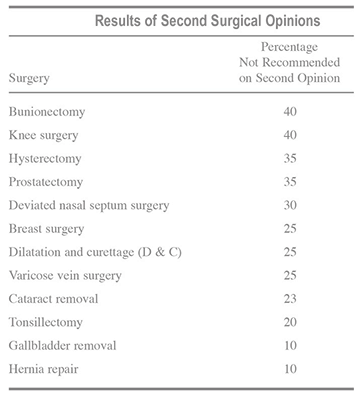
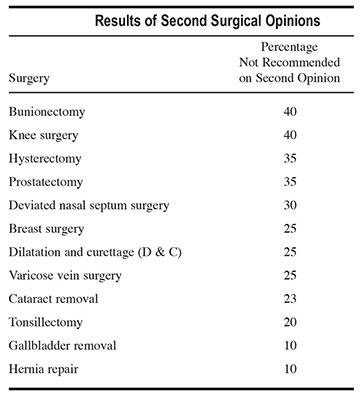
    *  Consider getting a second opinion. Your health insurance may require this.

    *  Find out if your health insurance plan will pay for the surgery.

    *  Ask what types of surgery there are for your condition.

    *  Ask for a step-by-step account of the procedure. Find out what you need to do before surgery. Find out what is done during and after surgery. This includes anesthesia and recovery.

    Questions to Ask if A Test is Prescribed

    *  What is the test called? How will it help tell what is wrong?

    *  Will it give specific or general information?

    *  If the answer is general, where do we go from here?

    *  How accurate and reliable is the test?

    *  Is the test invasive or noninvasive? Invasive means something, such as a catheter, chemical dye, etc., is inserted into the body. Nothing is inserted into the body with an noninvasive test. Examples are blood pressure readings and simple chest x-rays.

    *  What will I have to do to prepare for the test?

    *  Where do I go for the test?

    *  How and when will I get the test’s results?

    *  Will more tests be needed?

    Ask About Benefits

    Medical treatments change over time as researchers learn more and technology improves. Make certain that you and your health care provider have access to the latest and best information.

    *  Find out how the proposed treatment will improve your condition.

    – Will it cure the problem?

    – Will it help with symptoms?

    – Can it lead to other problems?

    *  Discuss with your health care provider what you expect the proposed treatment will do. Make sure you are being realistic about what you expect.

    *  Find out what will happen if you don’t have the treatment.

    A good rule of thumb is to make sure one strong reason can stand alone to justify going ahead with the treatment. In many cases, two or more not-so-strong reasons may not be enough. Discuss your concerns with your health care provider and loved ones.

    Ask About Risks

    If surgery is prescribed, ask about the risks for these things, during and after surgery:

    *  Pain.

    *  Anesthesia.

    *  Infection.

    *  Accidental injury.

    *  Heavy bleeding (hemorrhage).

    *  Another unplanned operation.

    *  Death.

    *  Weigh the risks versus the benefits before you decide to proceed with treatment. Discuss your concerns with your health care provider and others close to you.

    *  With your health care provider, chart the risks and benefits. On a sheet of paper, draw a line down the center. List the risks on one side. List the benefits on the other. Weigh each item on a scale from 1 to 5 (1 = not so important; 5 = very important). Add up the columns to see which one has a higher score.

    *  Ask about risks before you get any test or X-ray, no matter how minor it may be. If you are not asked about allergies, state them ahead of time. If you are female, tell your health care provider if you are or may be pregnant. If so, you should not get X-rays unless they are absolutely necessary.

    Find Out Costs

    *  What is the cost of the proposed treatment?

    *  Does this include the cost for follow-up? If so, how much is covered?

    *  Check with your insurance plan to see what it will pay and how much you will have to pay.

    *  Ask what you need to do to get maximum benefits. An example is pre-authorization for surgery. Find out if your health care provider and hospital accept your insurance.

    *  What related costs do I need to consider? Look into costs of medication, costs for time off work and child care and transportation costs.

    Find Out Success Rates

    The success rate is how often a treatment works compared to how many times it is done. For example, if a certain surgery has been done 100 times and was successful 80 times, it has a success rate of 80%.

    If surgery is prescribed, ask your health care provider and the medical facility where you will have the surgery these questions:

    *  What is the national success rate?

    *  What is the success rate at the hospital/medical facility where my treatment is planned?

    *  What is the surgeon’s success rate and experience with the surgery?

    *  How many procedures are the above success rates based on?

    *  Are there any personal factors that will affect my odds either way?

    *  How long will the results of my surgery/treatment last?

    According to several studies, you are less likely to die or suffer complications from surgery or other procedures if you go to an accredited hospital that performs a large number of that procedure each year. Some experts advise at least 200 surgeries. If you are given a success rate percentage, find out how many procedures the percentage is based on. A success rate of 80% doesn’t mean much if it is based on only 5 surgeries. For more information on hospital surgical success rates, read the book Best Medicine by Bob Arnot, M.D.

    Ask About Other Options

    Discuss other options that can diagnose and/or treat your condition. There is usually more than one option. Sometimes, the best choice at the time may be no choice. This is called “wait and see.” If this doesn’t work for you, make a list of other options. Ask your doctor or health care provider these questions:

    *  What might happen if I decide to do nothing?

    *  What are my other options?

    – Ask about options that don’t need surgery, such as lifestyle changes (diet, exercise, stopping smoking, etc.).

    – If surgery is proposed, ask about outpatient surgery, laser treatment, laporascopic surgery, and the newest ways to treat your condition.

    *  If you are not satisfied with your options, discuss this with your provider. If you are still not satisfied, consider consulting another health care provider.

    *  Look into every option in depth.

    Ask When Treatment Should Begin

    When you decide to go ahead with a treatment plan, ask these questions:

    *  When is the best time to get started with the plan?

    *  Do I have to undergo treatment right away? If not, how long can I safely wait? Don’t assume that it has to be done as soon as possible. You may be able to delay the treatment until a time that best fits your schedule.

    *  Decide the best time for you to begin the treatment.

    Make a Decision

    After you get the answers from steps 1 to 9, decide what to do.

    *  You can also decide to refuse treatment, but you should ask your health care provider what can happen if you do this.

    *  If you feel rushed or uncomfortable when you discuss your decision with your doctor or health care provider, tell him or her how you feel.

    *  Read about “Informed Consent” and “Advanced Directives” on the last 2 panels. If you have not already done so, consider writing a living will or signing a durable power of attorney for health care.

    Informed Consent

    Informed consent is a legal issue in medicine. It means that you agree to treatment only after it has been explained to you and that you understand it. You should know:

    *  The nature of the treatment.

    *  Its benefits and risks.

    *  The likelihood of the treatment’s success.

    *  If your treatment is experimental in nature.

    The physician should review any options you can get instead of surgery or other procedures. There are no guaranteed outcomes in medicine, but informed consent enables YOU to make a rational and educated decision about your treatment. It also promotes greater understanding and joint decision making between you and your health care provider. With informed consent:

    *  You cannot demand services that go beyond what are considered “acceptable” practices of medicine or that violate professional ethics.

    *  You must recognize that you may be faced with some uncertainties or unpleasantness.

    *  You should, if competent, be responsible for your choices. Don’t have others make decisions for you.

    *  You should also know about “Advance Directives.”

    Advance Directives

    Advance directives are a legal way for you to state your wishes to choose or refuse medical treatment. There are two types of advance directives:

    *  Durable Power of Attorney for Health Care – This document names a person(s) who would make treatment decisions for you if you are not able to make them yourself. This person would state your wishes. Your condition does not have to be terminal or irreversible to have someone speak on your behalf.

    *  Living Will – This written document states what medical treatment you would want or not want. A living will applies only when you can’t express your wishes on your own and you suffer from a terminal illness or condition and aren’t expected to survive.

    In writing, you may choose or refuse:

    *  Measures to Support Life, such as a respirator (a machine to breathe for you).

    *  Measures to Sustain Life, such as tube feedings and kidney dialysis (a machine that does the work of your kidneys).

    *  Measures to Enhance Life. These keep you comfortable, but don’t prolong life. Examples are pain medications and hospice care.

    Each state has its own laws on advance directives. Get forms for them from your lawyer, local hospital or library, or from your state’s Web site. You can also get forms and information from these Web sites:www.putitinwriting.organdwww.uslivingwillregistry.com.

    After you complete advance directives, discuss them with your family and close friends. Give your doctor a copy, too.

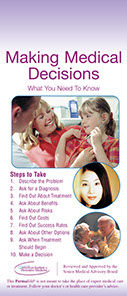
    Cover image to the Making Medical Decision brochure by the American Institute for Preventive Medicine. www.HealthyLife.com. All rights reserved.

    © American Institute for Preventive Medicine

  • Safe Use Of Medications

    Medication

    Image of man picking up medications.

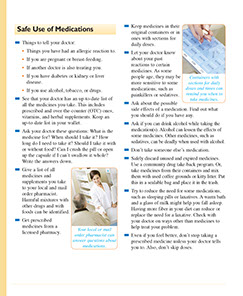
    *  Things to tell your doctor:

    – Things you have had an allergic reaction to.

    – If you are pregnant or breast-feeding.

    – If another doctor is also treating you.

    – If you have diabetes or kidney or liver disease.

    – If you use alcohol, tobacco, or drugs.

    *  See that your doctor has an up-to-date list of all the medicines you take. This includes prescribed and over-the-counter (OTC) ones, vitamins, and herbal supplements. Keep an up-to-date list in your wallet.

    *  Ask your doctor these questions: What is the medicine for? When should I take it? How long do I need to take it? Should I take it with or without food? Can I crush the pill or open up the capsule if I can’t swallow it whole? Write the answers down.

    *  Give a list of all medicines and supplements you take to your local and mail order pharmacist. Harmful mixtures with other drugs and with foods can be identified.

    *  Get prescribed medicines from a licensed pharmacy.

    *  Keep medicines in their original containers or in ones with sections for daily doses.

    *  Let your doctor know about your past reactions to certain medicines. As some people age, they may be more sensitive to some medications, such as painkillers or sedatives.

    *  Ask about the possible side effects of a medication. Find out what you should do if you have any.

    *  Ask if you can drink alcohol while taking the medication(s). Alcohol can lessen the effects of some medicines. Other medicines, such as sedatives, can be deadly when used with alcohol.

    *  Don’t take someone else’s medication.

    *  Safely discard unused and expired medicines. Use a community drug take-back program. Or, take medicines from their containers and mix them with used coffee grounds or kitty litter. Put this in a sealable bag and place it in the trash.

    *  Try to reduce the need for some medications, such as sleeping pills or laxatives. A warm bath and a glass of milk might help you fall asleep. Having more fiber in your diet can reduce or replace the need for a laxative. Check with your doctor on ways other than medicines to help treat your problem.

    *  Even if you feel better, don’t stop taking a prescribed medicine unless your doctor tells you to. Also, don’t skip doses.

    Resources

    U.S. Food and Drug Administration

    www.fda.gov

    Page from the Healthier at Home book by the American Institute for Preventive Medicine. www.HealthyLife.com. All rights reserved.

    © American Institute for Preventive Medicine

  • Use Your Benefits Before The Year Runs Out

    Medical Care

    Smiling female doctor.

    *  Schedule office visits, tests, and exams that you need, but have not yet had this year, especially if they are covered expenses or if you have met your deductible.

    *  If you have a flexible spending account (FSA), make sure to use it all by the yearly deadline date. You lose what you do not spend. Find out what your FSA covers. You may be able to use it for:

    –  Over-the-counter medications

    –  Contact lenses and solution

    –  Batteries for hearing aids

    –  A quit tobacco program

    *  Put timing for medical expenses on your side. For example, if the expected costs for dental care exceed your yearly limit, get as many visits this month that this year’s limit will cover. Schedule the rest for the beginning of next year when a new year of dental coverage begins.

    A Year of Health Hints book by the American Institute for Preventive Medicine. www.HealthyLife.com. All rights reserved.

    © American Institute for Preventive Medicine

  • Save Money On Prescriptions

    FINANCIAL HEALTH

    Pills dropping into bottle.

    FACT: New drugs are protected by patents. After the patent expires, other companies can make a generic version of the drug.

    Knowing about generic drugs can save you money on prescriptions. Tell your doctor or pharmacist you want a generic drug if possible.

    If your prescription is expensive, speak up. Sometimes there’s an alternative that costs less but is still safe.

    Be wary of places that promise free or cheap prescriptions. It may be a scam. Your doctor or pharmacist can tell you about free or low-cost prescription programs.

    © American Institute for Preventive Medicine

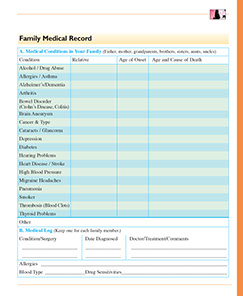
  • Family Medical Record

    Medical History

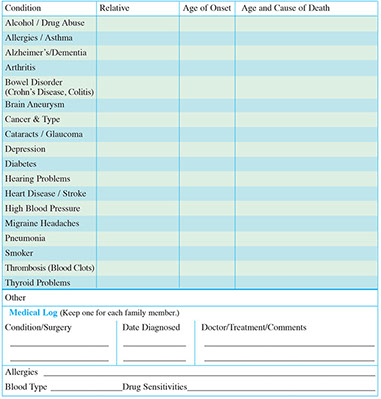
    Family medical record chart.
    Page from the Healthier at Home book by the American Institute for Preventive Medicine. www.HealthyLife.com. All rights reserved

    © American Institute for Preventive Medicine

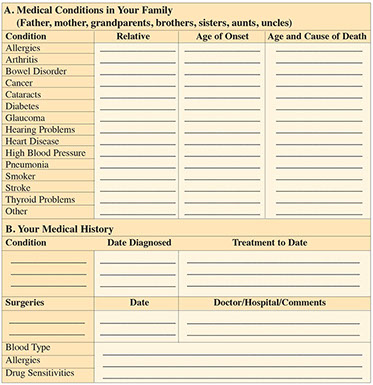
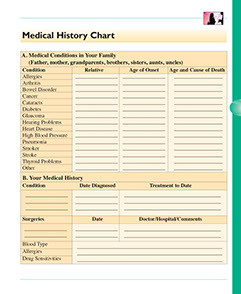
  • Medical History Chart

    Medical History

    Medical history chart.
    Page from the Health at Home Lifetime book by the American Institute for Preventive Medicine. www.HealthyLife.com. All rights reserved.

    © American Institute for Preventive Medicine