Tag: Healthcare

  • What Is Antibiotic Resistance?

    MEDICAL NEWS

    Image of doctor with child patient.

    Antibiotic resistance happens when bacteria change in a way that the antibiotics that used to treat them are less effective or not effective at all. As a result, stronger, more expensive antibiotics are needed to kill the same bacteria. People who develop antibiotic-resistant infections are more likely to need treatment in a hospital and are at increased risk for death. Using antibiotics the wrong way contributes to the rise in antibiotic-resistant infections.

    How do I use antibiotics the right way?

    Antibiotics treat infections caused by bacteria, not viruses. Do not ask for antibiotics for symptoms of colds and flu. These illnesses are caused by viruses. Often, antibiotics are not needed for ear infections, sore throats, and sinus infections because these can be viral infections, too.

    If your doctor does prescribe an antibiotic, take it as prescribed. Do not skip doses. Take the entire course to make sure that no pesky bacteria linger because this can lead to a more serious infection.

    Source: Association for Professionals in Infection Control and Epidemiology. Read more at www.cdc.gov/getsmart.

    © American Institute for Preventive Medicine

  • Better Health Is In Your Pocket

    SELF-CARE CORNER

    Image of doctor holding up a smart phone.

    Most people spend time every day on their smartphone or tablet. Why not put that time to good use by downloading an app that can help you improve your health? There are thousands of health apps available to suit many different health goals and personality types. Check out some of these health apps you can start using today:

    Relax Melodies by Ipnos Software(for iPhone and Android)

    Quality sleep and stress management are an important part of good health. This app lets you choose your favorite sounds to create a personalized relaxing song that helps you relieve stress and sleep better.

    Calorie Counter by MyFitnessPal(for Android)

    For those trying to make better food choices or lose weight, sometimes knowing how much you eat can make a big difference. This app allows you to track food intake and exercise with a large food database. Connect with other users for encouragement and support.

    Diet Controller by Margaret Dangerfield(for iPhone)

    This app can help you view your eating and fitness activities on your devices. Log and track your daily food intake with a USDA-based food database. Users also can create charts and reports while tracking nutrients, calories and exercise.

    Hydro Coach by Codium App Ideas(for Android) orWater App by Inspiring Life Technologies(for iPhone)

    Drinking water is an easy, healthy way to fight fatigue and may help you consume fewer calories. These apps are designed to help you track how much you’re drinking and to offer reminders when it’s time for another glass.

    Quitter’s Circle by Pfizer Inc. and the American Lung Association(for iPhone and Android)

    For those trying to quit smoking, this app allows you to create a personalized quit plan, connect with others for support, get quitting tips, and celebrate milestones.

    Hundreds of health-related apps are available today – and many of them cost less than $10. Try an app that suits your life for a high-tech way to be healthier!

    © American Institute for Preventive Medicine

  • Drugs That May Affect Your Driving

    MEDICAL NEWS

    Image of women at store reading the medicine label.

    Certain over-the-counter medicines, known as OTC or nonprescription drugs, may affect your ability to drive.

    Read the Drug Facts label and use the medicine exactly as directed, advises the FDA.

    Look for such statements as “you may get drowsy,” “marked drowsiness will occur,” “be careful when driving a motor vehicle or operating machinery,” or “do not drive a motor vehicle or operate machinery when using this product.”

    Some of these seemingly harmless drugs for allergies or an upset stomach are not harmless at all, even though you can buy them without a prescription.

    Certain medications may make you drowsy fairly quickly. Their effects can last several hours. Others may cause “hangover-like” effects, even the next day.

    Common OTC medicines that can cause drowsiness or impaired driving are antihistamines (often used for a runny nose or watery eyes), antidiarrheals (used to treat or control diarrhea), and anti-emetics (taken for nausea, vomiting, or dizziness).

    © American Institute for Preventive Medicine

  • Due Date

    SELF-CARE CORNER

    Image of pregnant women smiling.

    Although we think of pregnancy as lasting 9 months, in reality most pregnancies last nearly 10 months. Research shows that babies are born healthier if they have at least 39 weeks to grow in the womb.

    The NIH in Health offers these wise choices for a healthy pregnancy:

    *  See your doctor for regular care while you are pregnant.

    *  Talk to your doctor about the medicines you take. Some may not be safe during pregnancy.

    *  Follow a healthy diet.

    *  Take folic acid-at least 400 micrograms each day. This B vitamin can help prevent serious birth defects of the brain and spine. Make sure you take folic acid for at least one month before you get pregnant, too.

    *  Stay active. Ask your doctor which physical activity is safe for you.

    *  Avoid drinking alcohol and smoking (and being around anyone smoking).

    *  Control any existing conditions such as diabetes.

    *  If you have no medical reasons to deliver early, wait until at least 39 weeks for delivery. A woman’s body will go into labor when the baby is ready to enter the world.

    © American Institute for Preventive Medicine

  • Keeping Track Of Medicines

    WELL-BEING

    Close up image of hands holding medications.

    Did I take my medicine? If you find yourself asking that question often, try these tips to help you keep track.

    *Keep them in an accessible spot.As long as they’re out of reach of children or pets, the best place for your medicine is a place you’ll see it.

    *Write it down.Purchase a small notebook and write down each medicine as you take it. Be sure to record the date, time, and what you have taken.

    *Use technology.Today’s smartphones have alarms you can use to remember your medicines. Set separate alarms for each medicine and have them repeat daily. Don’t have a smartphone? Check out “talking” pill boxes. Take the medicine as soon as the alarm goes off. Don’t wait – or you may forget!

    *Know what to do if you miss a dose.Some medicines should be “made up” at the next dose, but others should not. It may be dangerous if you forget certain life-saving medicines.

    Medicines we use the most

    The most frequently prescribed medicines in the U.S. are:

    *  Pain relievers

    *  Lipid-lowering medicines (to lower cholesterol or triglycerides)

    *  Antidepressant medicines

    © American Institute for Preventive Medicine

  • Make The Most Of Your Health Care Dollars

    SELF-CARE CORNER

    Image of doctor taking a patient's blood pressure reading.

    So you’ve got that high deductible health plan or flexible spending account. How can you save money-and spend your dollars wisely? Blue Cross Blue Shield of Delaware offers these suggestions:

    *Stay in-network.Make sure your doctors, laboratory, and hospital are a part of your health plan’s provider network so you save on copays and coinsurance amounts.

    *Use alternatives to emergency services.A visit to the hospital ER is generally unnecessary for issues such as the flu, minor cuts and sprains, or urinary tract infections. Overall costs are usually lower at walk-in clinics and urgent care centers. Check your health plan’s provider directory for nearby centers.

    *Take the tests.Receive the screenings, tests, vaccines, and other care that your plan covers, as recommended by your doctor. When you and your family stay healthy, you can avoid doctor visits and time off from work.

    *Take your medicine.To receive the full benefit of your medicine, remember to take the recommended dosage for as long as your doctor prescribes it. People who take their medicine as prescribed need less health care-and less expensive care. If you don’t understand how to take your medicine, ask your doctor or pharmacist.

    *Find the best price for the medication you need.Always ask if a generic prescription drug or an over-the-counter (OTC) drug would be best for you. For any brand-name drug, research the manufacturer before you fill the prescription. Then check its website for any discount coupons or free copay programs that may be available for that drug.

    © American Institute for Preventive Medicine

  • Making Your Health Care Wishes Known

    WELL-BEING

    Image of doctor talking to patient.

    It’s a tough topic to think about, but also a necessary one. What are your wishes for your own health care if you were unable to communicate?

    Most people don’t think about this kind of scenario, especially if they are healthy. But if you are in a serious accident or become severely ill, you may not be able to tell your family what you want. This is when an “advance directive” can be very useful for you and your family.

    Advance directives: what are they?

    An advance directive is a document that states your desires about your care when you cannot speak for yourself. If you are admitted to the hospital, the doctor may ask if you have an advance directive. It may describe:

    *  Care you want if you have an illness that won’t get better.

    *  What you want if you are permanently in a coma or unconscious.

    *  Treatment that you don’t want to receive.

    *  Treatment you do want, regardless of how sick you are.

    Advance directives can have different parts that help in different ways. You may have one or more of these:

    *A living will.This is a written, legal document. It covers what treatment you want if you were terminally ill or would not wake up from a coma. It can list specific things you would like done depending on how sick you are.

    *Durable power of attorney (DPA).It names a person to make health care decisions for you. A DPA becomes active any time you cannot make medical decisions for yourself. Sometimes it is called a Medical Power of Attorney or health care proxy. Only use a DPA if you have someone you trust to make these decisions. Talk to your DPA about their role and your health care wishes.

    *Do not resuscitate order (DNR).If a person’s heart stops or they stop breathing, hospital staff will give CPR, or cardiopulmonary resuscitation. If you have a DNR, you are telling hospital staff that you do not want CPR given to you. You do not have to have a living will or DPA to have a DNR.

    Some states do not consider living wills or DPAs to be official legal documents. Even if it’s not legal, an advance directive or DPA can be very helpful. It can help your family and/or doctor make decisions you want so you get the care you desire. Your doctor or an attorney can tell you about your state’s laws. All states recognize and honor DNR orders that are in a patient’s medical record. An attorney does not have to do a DPA or living will. Many people fill them out themselves.

    What do I put in an advance directive?

    If you’re thinking about getting an advance directive, you may be wondering what it should say. Your doctor or an attorney can help you, and you may want to think about it for a while.

    Health care items that are often listed in a living will include:

    *  Ventilation (artificial breathing machines)

    *  Dialysis (machines that work for kidneys that are failing)

    *  Tube feeding (used when a person  cannot eat or drink)

    *  Palliative care (care that keeps you comfortable, such as pain relief measures)

    *  Organ donation or donating organs to be used for research

    Why do I need an advance directive?

    Most medical experts agree that an advance directive is helpful. It makes your preferences about medical care known before you become sick or injured. It means your loved ones will not have to make hard decisions about your care while you are sick.

    An advance directive can give you peace of mind. If you feel strongly about receiving certain treatments, an advance directive helps ensure that your wishes will be honored. It gives you more control over your own health care.

    Where do I start?

    An advance directive doesn’t have to be hard. It can be short and simple. You can:

    *  Get a form from your doctor.

    *  Write down your own wishes yourself.

    *  Discuss your wishes with your DPA.

    *  Meet with an attorney to write an advance directive.

    *  Get a form from your local health department or Area Agency on Aging in your area.

    It’s a good idea to have your doctor or an attorney look at your advance directive. This ensures your wishes are in line with state laws. It also gives you a chance to answer questions and make sure your wishes are understood. When you are done, have your advance directive notarized. Give copies to your family and your doctor.

    You can change or cancel your advance directive. This can be done when you are of “sound mind,” which means you are able to think and communicate clearly. Any changes you make must be signed and notarized according to the laws in your state. Make sure that your doctor and family members know about the changes.

    Sources: Medicare.gov, American Academy of Family Physicians

    © American Institute for Preventive Medicine

  • Navigate Open Enrollment

    WELL-BEING

    Image of 2 people talking.

    Make the most of your benefit plan, especially during open enrollment periods. Here are money-saving tips from HighRoads, a benefits management company.

    *Get your plan materials.Some companies are giving you a Summary Plan Description online, via mobile apps, as well as on paper. It’s good to know how you can access this information during open enrollment and throughout the year, in case you want to review it again when you are in need of a particular medical service. Take time to read the plan.

    *Calculate your costs.Many employers provide cost calculators to help project your total cost for the coming plan year. The total cost includes the premium you pay as well as your share of the deductible and coinsurance. Take the time during open enrollment to think through your potential medical needs and calculate your anticipated expenses before selecting a plan. It may save you hundreds in the long run.

    *Consider an account.Your employer may offer you the option of a health care account, whether it is a flexible spending account, a health reimbursement account, or a health savings account. These accounts can help you save money on qualified medical expenses that aren’t covered by your health care plan, such as deductibles and coinsurance. Each account has a different set of rules about how and when you can spend the money, but each is worth considering because the savings you’ll see can add up quickly.

    *Is prevention covered?One of the benefits of health care reform is an extended list of preventive care benefits that must be offered by new health care plans for free. Preventive services such as colonoscopy screenings, Pap smears and mammograms for women, well-child visits, and flu shots for all children and adults must be offered without out-of-pocket costs. However, these benefits are only for new health plans and don’t apply to “grandfathered” plans that haven’t significantly changed in a few years.

    *Use wellness incentives.More employers than ever before are offering incentives such as premium discounts, low deductibles, gym memberships, or prizes to employees and their family members for health improvement.

    *Know your deadlines.No matter what changes you may make, if any, during this year’s open enrollment period, don’t let your selection deadlines slip by without action.

    © American Institute for Preventive Medicine

  • Read The Labels, Again

    WELL-BEING

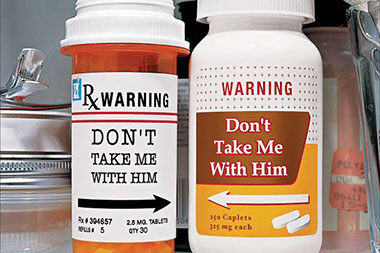
    Image of medicine bottles.

    Any box or bottle of over-the-counter (OTC) medicine lists its active ingredients prominently on the label. But are consumers using that information to make wise choices about taking two or more OTC drugs at the same time? Probably not, suggests a study in the Journal of Public Policy & Marketing.

    A consumer who takes a cold medicine containing, for instance, acetaminophen, may see nothing wrong with taking an additional medicine that also contains acetaminophen. In other words, the typical consumer, who is unlikely to have any medical expertise, may very well believe that there is no danger in taking any two OTC medications at the same time-even medications with the same active ingredients.

    Avoid double dosing. OTC drugs are not risk-free. Read labels.

    FYI

    According to the FDA, more than 600 OTC and prescription medicines contain the active ingredient acetaminophen. Taking acetaminophen is safe and effective when you follow the label information. But you can get severe liver damage if you take:

    *  More acetaminophen than directed

    *  More than one medicine that has acetaminophen

    *  3 or more alcoholic drinks every day while using acetaminophen

    For more information, ask your pharmacist, doctor, or nurse.

    © American Institute for Preventive Medicine