Tag: infection

  • Listen To Your Ears

    SELF-CARE CORNER

    Workers with safety gear protecting head, eyes and ears.

    It’s easy to take hearing for granted. But without proper care of your ears, you could end up with hearing loss or ear problems.

    Worried about wax

    Your body makes ear wax to protect your ears. Wax keeps dust and other particles from getting inside.

    Only clean the outside of your ears with a tissue, washcloth or cotton swab. Never stick anything, including a cotton swab, in your ear. This will push wax farther down into the ear and can create a harmful blockage.

    If you feel that there’s a lot of wax in the ear, you can safely try to soften it with a drop of mineral oil or glycerin. Your doctor can also remove ear wax blockages without damaging your ear.

    Saying no to noise

    One of the most common reasons people lose their hearing is exposure to loud noises. This can happen very quickly after a loud sound like an explosion. Or, it can happen over time if a person is exposed to loud sounds for months or years.

    You can help prevent noise-induced hearing loss with one simple tool: ear plugs. Wear them when going to a loud concert, watching fireworks or attending loud events. Wear them when mowing the lawn or using loud power equipment at home.

    If you have a job where you are exposed to noise, make sure you are using the right hearing protection. You may need something more powerful than ear plugs for certain jobs. Talk about this with your employer.

    Use headphones with care

    The World Health Organization says people should limit how much they use headphones. Don’t use them more than one hour a day. Keep the volume as low as possible, but no louder than 60 percent.

    Noise-cancelling headphones help you keep the volume low because they block out sounds around you. But, you should not use these when driving, cycling or walking because you won’t be able to hear possible dangers nearby.

    Talk to your doctor about your hearing health. Together, you can decide when you may need a hearing test.

    Sources: American Academy of Family Physicians, National Institute on Deafness and Other Communication Disorders

    © American Institute for Preventive Medicine

  • Sepsis: Spot It, Save A Life

    MEDICAL NEWS

    Women leaning on wall with chest pain and man helping her.

    Sepsis can happen when a person has an infection like pneumonia, an infected cut in the skin or a urinary tract infection. Then, the body’s immune system releases a strong response that can get out of control. This immune response is so powerful that it can damage the body’s organs and cause blood clots.

    Sepsis can cause blood pressure to get extremely low and heart rate to get faster. This can trigger septic shock. With septic shock, the body becomes starved for blood and oxygen. It is a life-threatening emergency.

    Most who get an infection will not get sepsis. But experts don’t know why some people get it and others don’t. It seems to affect older adults, babies and young children the most. People who have a weakened immune system or a long-term illness like diabetes, liver disease or cancer are also more likely to get it.

    Spot sepsis signs

    Sepsis can be hard to spot. At first, symptoms may look like a mild illness. Sometimes a person has an infection and doesn’t know it. Signs include:

    *  Fever or a low body temperature

    *  Chills

    *  Fast heartbeat

    *  Trouble breathing or  fast breathing

    *  Blotchy skin or rash

    *  Being confused

    *  Feeling faint or lightheaded

    Even if you don’t have an infection, or don’t think you have one, ask yourself:

    *  Was I recently around someone who was ill?

    *  Did I recently have surgery or a medical procedure?

    *  Do I have any cuts or breaks in the skin?

    Getting treatment

    If you think a person might have sepsis, it’s important to get them medical care right away. Doctors will look at symptoms and may order blood tests. Sometimes other tests, like an x-ray or CT scan, may be needed.

    Sepsis is serious, so doctors often treat it in the Intensive Care Unit (ICU) of a hospital. Treatment usually includes antibiotics and getting fluids.

    Fortunately, most people who recover from sepsis often contine to have a normal, healthy life.

    Sources: Centers for Disease Control and Prevention, National Institutes of Health, Sepsis Alliance

    © American Institute for Preventive Medicine

  • Antibiotic Resistance

    Medication

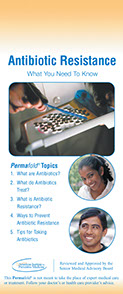
    Antibiotics are medicines that kill bacteria or prevent their growth. They are used for bacterial infections. They do not treat viral or other types of infections.

    Antibiotics Come in Many Forms

    *  Pills

    *  Topical ointments

    *  Injections

    *  Through IV’s

    There are many kinds of antibiotics. Some fight off many types of bacteria. These are broad-spectrum ones. Others target specific bacteria. These are narrow-spectrum ones. If you need an antibiotic, your doctor will prescribe one which works against the bacteria that causes the infection you have.

    What is Antibiotic Resistance?

    Some bacteria, which were once fought off by an antibiotic, have become stronger than the medicine. The antibiotic no longer works against them. This is called “antibiotic resistance.” The bacteria “resist” or don’t let the antibiotic do its job. This is not good!

    If your infection does not respond to an antibiotic, your illness may last longer. You may need a different antibiotic. You may need to get it through an IV in a hospital. You can also pass the resistant bacteria germs to other persons. This adds to the problem. Three out of four hospital-acquired infections are from drug resistant bacteria. These infections, such as one called MRSA, are getting harder and harder to treat.

    Certain bacteria have become so resistant that no antibiotic is able to fight them off. Bacterial resistance happens faster than new antibiotics can be developed. This presents a huge public health problem. Diseases that were once treated with antibiotics are now resistant to them. In some cases, an untreatable illness can lead to disability or even death.

    Overuse of Antibiotics Can Cause Resistance

    *  Taking antibiotics often. This allows bacteria to change forms and survive. Much overuse comes from taking antibiotics for viral infections, such as colds and the flu.  Antibiotics do not work against these. Researchers at the Centers for Disease Control estimate that one-third of outpatient prescriptions for antibiotics each year are not needed.

    *  Antibiotics are given to animals that humans eat. Antibiotic resistance may be transferred from animals to humans especially from eating raw and undercooked eggs, meats, fish, and shellfish. Antibacterials are also sprayed on fruit trees. People may pick up resistant bacteria on fruit if it is not washed before eaten.

    *  Antibacterials are added to many cleaning and other products. These include dishwashing liquids and liquid hand soaps. This is not needed. People are using antibacterials in healthy households. Frequent use of these make germs more drug-resistant.

    Misuse of Antibiotics Can Cause Resistance

    *  The biggest misuse is taking antibiotics for viral infections. In spite of this, persons ask for and sometimes demand antibiotics even when they will not help. Don’t do this!

    *  Not taking an antibiotic as prescribed. This can be from skipping doses. It can be from not taking the right dose at the right time. Often, it comes from not taking all of the antibiotic. These things allow the  bacteria to grow, change forms, and survive.

    *  Taking a broad-spectrum antibiotic that targets many bacteria instead of one that targets select types of bacteria. Discuss this with your doctor when he or she prescribes an antibiotic.

    Do Antibiotics Prevent Infections?

    Antibiotics may be prescribed to prevent or reduce the risk for some bacterial infections. This is only for certain reasons, though. Examples are:

    *  To prevent a bacterial infection of the valves of the heart. An antibiotic may be prescribed for persons with certain heart conditions who are having dental work.

    *  To reduce the risk of bacterial infections that comes with some surgeries. Antibiotics may be given before and/or after the surgery.

    For the most part, though, antibiotics should not be taken to prevent infections. Do not ask your doctor for an antibiotic for these reasons:

    *  To prevent getting colds

    *  To prevent getting the flu

    *  To keep from getting another infection when you have a cold or the flu. You may have asked your doctor for an antibiotic in the past for this. Don’t do it anymore.

    *  To prevent getting anthrax. The American Medical Association has advised doctors not to prescribe antibiotics to prevent anthrax or to have them on hand “just in case.” Antibiotics do not prevent anthrax. You should take them only after you are exposed to it.

    *  To prevent getting small pox. A virus causes this. An antibiotic will not treat it.

    When to Use Antibiotics

    Below is a list of conditions and when an antibiotic may or may not be needed.

    For Acne

    MAYBE. Antibiotics may be prescribed if self-care measures aren’t effective. See your doctor.

    For Bronchitis

    MAYBE. Most often, a virus, smoking, or secondhand smoke causes bronchitis and does not need an antibiotic. Bronchitis from a bacterial infection may need an antibiotic if you smoke, are older than 40 years of age, or if you have a condition or take medication that makes it hard for you to fight infections. See your doctor.

    For Common Cold

    NO. Viruses cause colds.

    For Cough

    MAYBE. Most often, coughs are due to cigarette smoke, cold and flu viruses, and allergies. Antibiotics are not needed for these. If the cough is a symptom of bacterial infection, such as pneumonia, an antibiotic is needed. See your doctor.

    For Earache / Ear Infection

    MAYBE. Some earaches and ear infections do not need antibiotics. Some do. See your doctor.

    For Flu

    NO. A virus causes the flu. It does not need an antibiotic. Consult your doctor if flu symptoms do not improve or if they get worse. This is important if you are elderly or have a condition or take medication that makes it hard for you to fight infections.

    For Lyme Disease

    YES. Lyme disease needs to be treated with an antibiotic.

    For Meningitis

    MAYBE. Meningitis can be viral or bacterial. Bacterial meningitis needs antibiotics (often given through an IV). Antibiotics do not treat viral meningitis. Meningitis needs immediate medical care.

    For Peptic Ulcer

    MAYBE. If H. pylori bacteria is the cause, antibiotic therapy is needed. If the cause is repeated use of aspirin, ibuprofen, and similar drugs, antibiotics are not needed.

    Pinkeye “Conjunctivitis”

    MAYBE. Conjunctivitis can be from bacteria, a virus, or an allergic response. A doctor may prescribe antibiotic eye drops for the bacterial and viral forms, since it is hard to tell the two apart. An antibiotic is not needed for an allergic response.

    For Pneumonia

    YES. A bacterial infection usually causes pneumonia.

    Scarlet Fever

    YES. This is a bacterial infection.

    Sexually Transmitted Infections (STIs)

    YES for syphilis, chlamydia, gonorrhea, and trichomoniasis. Antibiotics treat these infections.

    NO for genital herpes, human papillomavirus (HPV), hepatitis B, and HIV. Viruses cause these STDs. They do not need antibiotics.

    Sinus Infection

    MAYBE. Many sinus infections are caused by viruses or fungi. These do not need an antibiotic. Sinus infections caused by bacterial infections, especially ones that are severe and/or last longer than 2 weeks, may need an antibiotic.

    Skin Infection

    YES for bacterial infections, such as strep or staphylococcal ones.

    NO for fungal infections, such as athlete’s foot.

    Sore Throat

    MAYBE. Most sore throats and  bouts of tonsillitis are caused by viruses. These do not need an antibiotic. See your doctor to rule out a strep throat. A rapid strep test or throat culture diagnoses strep  throat, which needs an antibiotic.

    Stomach “Flu”

    MAYBE. Often the cause is a virus (Gastroenteritis) which does not need an antibiotic. If food poisoning is the cause and it comes from listeria, E. coli, or   salmonella bacteria, antibiotic therapy is needed.

    Sty (Eyelid Infection)

    NO. A sty does not need an antibiotic. It can be treated with self-care.

    Urinary Tract Infection (UTI)

    YES. This is a bacterial infection. A sample of your urine may be tested to find out which type of bacteria is the cause of the infection.

    Ways to Prevent Antibiotic Resistance

    Use Antibiotics the Right Way

    *  Follow your doctor’s advice on antibiotic use. Don’t ask your doctor to prescribe an antibiotic for a cold, the flu, or other viral illnesses. The fewer antibiotics you use, the less chance you will have of developing resistant bacteria.

    *  Ask your doctor if a shorter instead of longer course of an antibiotic will treat the infection.

    *  If you have an illness that does not need an antibiotic, ask your doctor what you can do to feel better sooner. You may be told to take medicines to relieve symptoms. These may include ones to help with fever and congestion. A bronchodilator may be prescribed for bronchitis. Ask about herbal medicines that would be helpful and safe for you to take. Find out reasons you should be seen again.

    *  Take a prescribed antibiotic as directed. Take the right dose. Use a medicine spoon for liquid medicines. Don’t skip doses. Ask how the medicine should be taken. With food? Between meals? With plenty of water? Read the directions on the label.

    *  Don’t stop taking an antibiotic if you feel better. Finish all of it. Don’t save pills for later use.

    *  Don’t take leftover antibiotics from a past infection. This can make it harder for your doctor to identify the cause of a current infection.

    *  Limit use of topical antibiotics, such as Neosporin®. Don’t use one for more than five days at a time, unless your doctor tells you to. Follow the directions given on the package.

    *  Don’t take someone else’s antibiotic.

    Stay Healthy to Reduce the Need for Antibiotics

    *  Wash your hands often. Wash them thoroughly with regular soap and water for 10 to 30 seconds. Wash them after you shake hands, before you eat, after you use the bathroom, etc.

    *  Use antibacterial soaps, detergents, mouthwashes, and toys with an antibacterial coating sparingly, if at all. These are not necessary.

    *  Get plenty of rest. Drink plenty of water.

    *  Get recommended vaccinations for your children and yourself. Follow your doctor’s or local health department’s advice.

    *  Don’t smoke. Avoid secondhand smoke. This lowers the risk of getting infections, such as ear infections.

    *  Thoroughly wash raw fruits and vegetables before you eat them to remove possible antibacterial residues.

    *  Store, handle, and prepare foods correctly. This helps to keep them safe from harmful bacteria. To learn more about this, accesswww.fightbac.org.

    *  Avoid close contact with persons who are sick. When you care for a person with an infection or who is ill, take measures to avoid picking up germs. Wash your hands often. Use a paper towel to dry your hands. Wear disposable gloves as advised.

    Tips for Taking Antibiotics

    Tips for Taking Antibiotics

    *  Find out how you should take the medicine. Ask questions if you don’t understand what you are told to do.

    *  Stop taking an antibiotic and get immediate medical care if you get signs of a severe allergic reaction.

    *  Let your doctor know if an antibiotic gives you troubling side effects, such as diarrhea, headaches, a vaginal yeast infection, etc. Tell your doctor right away if you vomit after taking the antibiotic.

    *  Before being prescribed medication, tell your doctor if you are allergic to penicillin, sulfa drugs, etc. Be able to state the name and dose of any prescribed antibiotic you have recently taken. Also, tell the doctor all other medicines, herbals, and vitamins that you take.

    *  Know that antibiotics can make birth control pills less effective. If you take birth control pills, use another birth control method, such as a diaphragm, condom, etc. while you take the antibiotic.

    *  Find out if you should stay out of the sun while you take the antibiotic.

    *  Use and store the antibiotic as advised. Some antibiotics will not work as intended if chewed or crushed. Some that come in capsules should not be opened and stirred into food. Some need to be stored in a cool place. Liquid forms may need to be kept in the refrigerator.

    *  Find out what foods and drinks you should avoid when you take an antibiotic. For example, some kinds of penicillin should not be taken with acidic foods or drinks. These include oranges, apple juice, colas, and alcohol.

    *  For females who get a vaginal yeast infection when taking an antibiotic, use an over-the-counter medicine, such as Monistat®. Or, take medicine as prescribed by your doctor. Also, eat yogurt with live cultures of “lactobacillus acidophilus.” This may prevent a vaginal yeast infection while you take an antibiotic.

    Signs of a Severe Allergic Reaction

    *  A hard time breathing or swallowing

    *  Severe swelling all over, or of the face, lips, tongue, and/or throat

    *  Severe skin rash or hives

    *  Increase in heart rate, dizziness, weakness

    What Do Antibiotics Treat?

    Some persons think that antibiotics “cure” most ailments. This is not true. Antibiotics treat only bacterial infections. They do not fight viruses, fungi, and other kinds of germs.

    Your doctor will diagnose what kind of infection you have. You should not take antibiotics for viral or fungal infections. This could increase the risk for antibiotic resistance.

    Resources

    Alliance for the Prudent Use of Antibiotics (APUA)

    www.tufts.edu/med/apua

    Centers For Disease Control and Prevention

    www.cdc.gov/drugresistance

    U.S. Food and Drug Administration (FDA)

    www.fda.gov

    Search for “Antibiotic Resistance.”

    Antibiotic Resistance brochure by the American Institute for Preventive Medicine. www.HealthyLife.com. All rights reserved.

    © American Institute for Preventive Medicine

  • How To Avoid Hospital Germs

    Medical Care

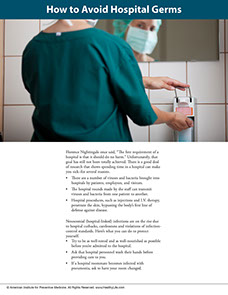
    Image of nurse using antibacterial dispenser.

    Florence Nightingale once said, “The first requirement of a hospital is that it should do no harm.”

    Unfortunately, that goal has still not been totally achieved. There is a good deal of research that shows spending time in a hospital can make you sick-for several reasons.

    *  There are a number of viruses and bacteria brought into hospitals by patients, employees, and visitors.

    *  The hospital rounds made by the staff can transmit viruses and bacteria from one patient to another.

    *  Hospital procedures, such as injections and I.V. therapy, penetrate the skin, bypassing the body’s first line of defense against disease.

    Nosocomial (hospital-linked) infections are on the rise due to hospital cutbacks, carelessness and violations of infection-control standards. Here’s what you can do to protect yourself.

    *  Try to be as well-rested and as well-nourished as possible before you’re admitted to the hospital.

    *  Ask that hospital personnel wash their hands before providing care to you.

    *  If a hospital roommate becomes infected with pneumonia, ask to have your room changed.

    Page from A Year of Health Hints book by the American Institute for Preventive Medicine. www.HealthyLife.com. All rights reserved.

    © American Institute for Preventive Medicine

  • Caring For Toe Injuries

    SELF-CARE CORNER

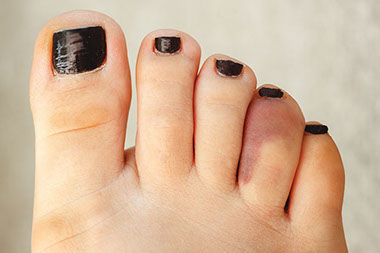
    Close up of injured toe.

    Toes are an important part of walking and balance. And their bones and ligaments are small, so they can be easily injured.

    Many people think doctors won’t do anything about an injured toe. This is not true. A broken or sprained toe may need medical attention. But minor toe injuries may get better with some simple home care.

    What to do if you hurt your toe

    *  If the pain is not severe, try putting ice on it for 10 minutes at a time. Be careful not to get the toe too cold.

    *  If needed, take an over-the-counter pain medicine.

    *  Stay off the foot if possible. Try to elevate it when sitting down.

    *  Look for signs of bruising and swelling, which could mean a possible sprain or broken toe.

    *  If the pain is severe, contact your doctor or seek urgent medical care.

    *  If pain and swelling don’t get better within two days, see a health care provider.

    *  Elevate the affected toe to help with swelling.

    Sprained vs. broken toe

    A sprain means that the ligaments in the toe have been injured. You can usually walk on a sprained toe, but it may still be very sore from swelling and bruising.

    Sprains may happen when you overstretch the toe during sports, running or jumping. “Turf toe” is a sprain of the big toe that is quite common in athletes.

    If you have a broken toe, you may not be able to move the toe or put weight on it. It may have a lot of swelling and bruising. The pain may not get better, even after a couple of days. Broken toes can happen during sports and activities. They also occur with falls and accidents or when you drop something heavy on your foot.

    Should you get medical care?

    Some minor toe injuries can be treated at home. But toe sprains and breaks can be more serious. Don’t ignore toe pain that lasts more than two days. See a health care provider if you think your toe is sprained or broken.

    If you have diabetes

    Always see a health care provider for any kind of foot or toe injury.

    Sources: American College of Foot and Ankle Surgeons, American Podiatric Medical Association

    © American Institute for Preventive Medicine

  • How To Treat Cat & Dog Bites

    SELF-CARE CORNER

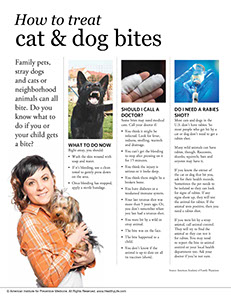
    Aggrestive dog barking while owner is holding it back.

    Family pets, stray dogs and cats or neighborhood animals can all bite. Do you know what to do if you or your child gets a bite?

    What to do now

    Right away, you should:

    *  Wash the skin wound with soap and water.

    *  If it’s bleeding, use a clean towel to gently press down on the area.

    *  Once bleeding has stopped, apply a sterile bandage.

    Should I call a doctor?

    Some bites may need medical care. Call your doctor if:

    *  You think it might be infected. Look for fever, redness, swelling, warmth and drainage.

    *  You can’t get the bleeding to stop after pressing on it for 15 minutes.

    *  You think the injury is serious or it looks deep.

    *  You think there might be a broken bone.

    *  You have diabetes or a weakened immune system.

    *  Your last tetanus shot was more than 5 years ago. Or, you don’t remember when you last had a tetanus shot.

    *  You were bit by a wild or stray animal.

    *  The bite was on the face.

    *  The bite happened to a child.

    *  You don’t know if the animal is up to date on all its vaccines (shots).

    Do I need a rabies shot?

    Most cats and dogs in the U.S. don’t have rabies. So most people who get bit by a cat or dog don’t need to get a rabies shot. Many wild animals can have rabies, though. Raccoons, skunks, squirrels, bats and coyotes may have it.

    If you know the owner of the cat or dog that bit you, ask for their health records. Sometimes the pet needs to be isolated so they can look for signs of rabies. If any signs show up, they will test the animal for rabies. If the animal tests positive, then you need a rabies shot.

    If you were bit by a stray animal, call animal control. They will try to find the animal so they can test it for rabies. You may need to report the bite to animal control or your local health department too. Ask your doctor if you’re not sure.

    Source: American Academy of Family Physicians

    © American Institute for Preventive Medicine

  • Sinus Problems

    Ear, Nose & Throat Conditions

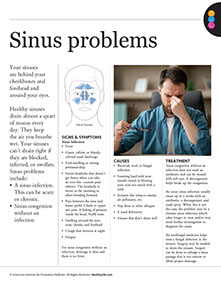
    Your sinuses are behind your cheekbones and forehead and around your eyes. Healthy sinuses drain almost a quart of mucus every day. They keep the air you breathe wet. Your sinuses can’t drain right if they are blocked, infected, or swollen. Sinus problems include:

    *  A sinus infection. This can be acute or chronic.

    *  Sinus congestion without an infection.

    Signs & Symptoms

    For a Sinus Infection

    *  Fever.

    *  Green, yellow, or bloody-colored nasal discharge.

    *  Foul-smelling or tasting postnasal drip.

    *  Severe headache that doesn’t get better when you take an over-the-counter pain reliever. The headache is worse in the morning or when bending forward.

    *  Pain between the nose and lower eyelid. Cheek or upper jaw pain.

    *  A feeling of pressure inside the head. Stuffy nose.

    *  Swelling around the eyes, nose, cheeks, and forehead.

    *  Cough that worsens at night.

    *  Fatigue.

    For sinus congestion without an infection, drainage is clear and there is no fever.

    Causes

    *  Bacterial, viral, or fungal infection. Sneezing hard with your mouth closed or blowing your nose too much with a cold.

    *  Irritants like tobacco smoke, air pollutants, etc. Hay fever or other allergies.

    *  A nasal deformity. Sinuses that don’t drain well.

    Treatment

    Sinus congestion without an infection does not need an antibiotic and can be treated with self-care. A decongestant helps break up the congestion.

    An acute sinus infection usually clears up in 2 weeks with an antibiotic, a decongestant, and nose drops or a nasal spray. When this is not the case, the problem may be a chronic sinus infection which takes longer to treat and/or may need further investigation to diagnose the cause.

    An antifungal medicine helps treat a fungal infection in the sinuses. Surgery may be needed to drain the sinuses. Surgery can be done to enlarge a sinus passage that is too narrow to allow proper drainage.

    Questions to Ask

    Self-Care / Prevention

    *  Use a cool-mist humidifier especially in the bedroom. Put a humidifier on the furnace.

    *  Put a warm washcloth, warm or cold compress over the sinus area of your face. Use the one that helps most for the pain.

    *  Drink plenty of liquids.

    *  Take an over-the-counter (OTC) medicine for pain as directed on the label.

    *  Take an OTC decongestant or an OTC pain reliever with a decongestant (e.g., Tylenol Sinus). {Note: Some persons should not take decongestants.}

    *  Use nose drops only for the number of days prescribed. Repeated use of them creates a dependency. Don’t share nose drops with others. Throw the drops away after treatment.

    *  Nasal washes with salt water. Find out about this technique from the National Jewish Health.

    Healthier at Home book by the American Institute for Preventive Medicine. www.HealthyLife.com. All rights reserved.

    © American Institute for Preventive Medicine

  • Sexually Transmitted Infections (Sti)

    Sexual Health

    Smiling couple.

    Sexually transmitted infections (STIs) are also called STDs. They are infections that pass from one person to another through sexual contact. STIs can be present without any symptoms.

    Latex and polyurethane condoms reduce the spread of HIV and other STIs. They do not get rid of the risk entirely. Use a condom correctly and every time you have vaginal, anal, or oral sex. Do this unless you have sex with only one partner and neither of you has an STI.

    Barriers made of natural membranes, such as lamb skin, do not give good protection against STIs. Buy condoms that state, “Protect against disease” on the package label. Also, do not use a male condom and a female condom at the same time.

    Oil-based or petroleum lubricants can damage latex condoms. If a lubricant is used for sex, use a water-based one, such as K-Y Brand products.

    If you are sexually active, talk to your doctor about screening tests for STIs.

    Health at Home Lifetime book by the American Institute for Preventive Medicine. www.HealthyLife.com. All rights reserved.

    © American Institute for Preventive Medicine

  • Urinary Problems

    Women’s Health

    Common urinary problems in women are urinary incontinence, overactive bladder (OAB), and urinary tract infections (UTIs).

    Signs & Symptoms

    Urinary incontinence means you lose bladder control or can’t store urine like you should. Although there are many types, the most common ones in women are stress incontinence and urge incontinence.

    For Stress Incontinence

    Urine leaks out with a sudden rise in pressure in the abdomen. This can occur when you cough, sneeze, lift, jump, run, or strain to pass stool.

    For Urge Incontinence

    Urine is released before you can get to the toilet due to a sudden and intense urge to urinate.

    For Overactive Bladder

    You urinate often (8 or more times during the day and at least 2 times during the night) and you have a sudden and urgent need to urinate.

    For Urinary Tract Infections

    Bladder Infection Symptoms

    *  You urinate more often than usual. It burns or stings when you urinate.

    *  Your urine is bloody or cloudy.

    *  You have pain in the abdomen or over your bladder.

    *  Confusion or other change in mental status, especially if you are over age 70.

    Kidney Infection Symptoms

    *  Fever and shaking chills. Nausea and vomiting

    *  Pain in one or both sides of your mid back.

    Sometimes, there are no symptoms with a UTI.

    Causes & Risk Factors

    For Urinary Incontinence

    Problems occur with bladder muscles and nerves that help you hold or release urine and structures that support the bladder. This can be due to many factors:

    *  Physical changes due to aging or injury.

    *  Pregnancy and childbirth.

    *  Menopause.

    *  Multiple sclerosis.

    *  Spinal cord injury.

    For Overactive Bladder

    Abnormal nerves send signals to the bladder at the wrong time. This causes spasms in the bladder muscles to squeeze without warning.

    For Urinary Tract Infections

    Bacteria infect any part of the urinary tract – the kidneys, bladder, and ureters (tubes that connect the kidneys to the bladder).

    Treatment

    For Incontinence:

    *  Bladder training, pelvic floor muscle training, or Kegel exercises.

    *  Medications.

    *  Medical treatment, such as an electric or magnetic stimulation device.

    *  Surgical procedures.

    For Overactive Bladder

    Medications that help relax muscles of the bladder and prevent bladder spasms.

    For Urinary Tract Infections

    An antibiotic is prescribed to treat the specific infection. Pain relievers are taken as needed.

    Questions to Ask

    Self-Care / Prevention

    For Urinary Tract Infections (UTIs)

    *  Drink at least 8 glasses of water a day. Drink juice made from unsweetened cranberry juice concentrate. Take cranberry tablets.

    *  For pain, take acetaminophen, ibuprofen, naproxen sodium, or Uristat®, an over-the-counter medicine for bladder infection pain.

    *  Wear cotton underwear and loose-fitting slacks.

    *  Avoid alcohol, caffeine, and spicy foods.

    For Urinary Incontinence

    *  Avoid caffeine. Limit or avoid fluids 2 to 3 hours before bedtime.

    *  Limit carbonated drinks, alcohol, citrus juices, greasy and spicy foods, and artificial sweeteners.

    *  Empty your bladder before you leave the house, take a nap, or go to bed.

    *  Try to urinate often, even if you don’t feel the urge. When you urinate, empty your bladder as much as you can. Relax for a minute and try to go again.

    *  Keep a diary of when you leak urine. If you do this every 3 hours, empty your bladder every 2 hours. Use an alarm clock or wristwatch with an alarm to remind you.

    *  Wear absorbent pads or briefs, as needed.

    *  Ask your doctor if your type of incontinence could be managed by using self-catheters. These help to empty your bladder all the way. A doctor needs to prescribe self-catheters.

    Kegel Exercises

    Kegel exercises are pelvic floor exercises. These help treat or cure stress incontinence. Follow these steps:

    1.  Start to urinate, then hold back and try to stop. If you can slow the stream of urine, even a little, you are using the right muscles. You should feel muscles squeezing around the anus and the urethra (the tube through which urine is passed).

    2.  Relax your body. Close your eyes. Imagine that you are going to pass urine and then hold back from doing so. You should feel the muscles squeeze like you did in step 1.

    3.  Squeeze the muscles for 3 seconds. Then relax them for 3 seconds. When you squeeze and relax, count slowly. Start out doing this 3 times a day. Gradually work up to 3 sets of 10 contractions. Hold each one for 10 seconds at a time. You can do Kegel exercises when you lie down, sit, and/or stand.

    4.  When you do these exercises do not: Tense the muscles in your belly or buttocks; hold your breath; clench your fists or teeth; or make a face.

    5.  Squeeze your pelvic floor muscles right before and during whatever it is (jumping, etc.) that causes you to leak urine. Relax the muscles once the activity is over.

    6.  You can also use pelvic weights prescribed by your doctor. You insert a weighted cone into the vagina and squeeze the correct muscles to keep it from falling out.

    Do pelvic floor muscles daily. It may take several months to benefit from them. Get help to do them from:www.medicinenet.com/kegel_exercises_for_women/article.htm.

    FYI: Interstitial Cystitis (IC)

    Note: Symptoms of a condition called Interstitial Cystitis (IC) mimic those of an acute UTI. Intense pain and pressure in the lower abdomen come with the need to urinate. (This can be more than 50 times a day.) Nine out of 10 persons who have IC are women. Antibiotics do not give relief, because bacteria is not present with IC. This condition needs medical diagnosis and treatment.

    Resources

    National Institute of Diabetes and Digestive and Kidney Diseases (NIDDK)

    www2.niddk.nih.gov

    National Association for Continence (NAFC)

    800.BLADDER (252.3337)

    www.nafc.org

    Women's Self-Care book by the American Institute for Preventive Medicine. www.HealthyLife.com. All rights reserved.

    © American Institute for Preventive Medicine

  • Vaginal Infections

    Women’s Health

    Vaginal infections are the most common reason American females see their doctors. Vaginal infections result in vaginitis (swelling of the vagina).

    Signs, Symptoms & Causes

    For Bacterial Vaginosis (BV)

    Nearly half of females with clinical signs of BV report no symptoms. When present, symptoms include:

    *  A thin, gray, or milky white vaginal discharge. This has a fishy odor, which is more noted after intercourse.

    *  Mild vaginal irritation or burning.

    Bacterial vaginosis results when certain bacteria outnumber normal and protective bacteria in the vagina. The exact cause is not known.

    Risk factors for BV include douching, using an IUD, and a change or an increase in sexual partners.

    For Vaginal Yeast Infections

    Vaginal yeast infections are also called Monilia, Candida, and fungal infections. Signs and symptoms range from mild to severe. They include:

    *  Thick, white vaginal discharge that looks like cottage cheese and may smell like yeast.

    *  Itching, irritation, and redness around the vagina.

    *  Burning and/or pain when urinating or with sex.

    Vaginal yeast infections result from the overgrowth of the fungus Candida. This is normally present in harmless amounts in the vagina, digestive tract, and mouth.

    Risk Factors for Vaginal Yeast Infections

    *  Hormonal changes that come with pregnancy or monthly periods. Taking hormones or birth control pills.

    *  Antibiotic use, especially “broad spectrum” ones. Corticosteroid medicine use.

    *  High blood sugar. This can occur when diabetes is not controlled.

    *  Sex that irritates the vagina a lot.

    *  Using douches. Using feminine hygiene sprays.

    *  Using hot tubs and jacuzzis a lot.

    Chronic vaginal yeast infections can be one of the first signs of diabetes, STIs, and HIV.

    Diagnosis

    Different vaginal infections have the same symptoms. This makes it hard to tell one from another. A doctor may need to diagnose the cause. A sample of vaginal fluid is taken and tested. Often, this takes less than 3 minutes.

    Treatment

    For Bacterial Vaginosis

    Prescribed antibiotic creams, gels, or pills are needed. Male sex partner(s) may also need treatment. Feminine hygiene sprays that mask vaginal odor should not be used. Nor should OTC medications, such as ones for vaginal yeast infections. These do not treat BV.

    For Vaginal Yeast Infections

    Prescribed and OTC vaginal creams or suppositories get rid of the Candida overgrowth. Oral medicines, such as Diflucan®, may be prescribed.

    Questions to Ask

    Self-Care / Prevention

    *  Take medications, as prescribed.

    *  For a repeat vaginal yeast infection, use an over-the-counter (OTC) antifungal vaginal medication, such as Monistat. Use it as directed. {Note: Stop using any OTC product for a vaginal yeast infection at least 24 hours before a vaginal exam.}

    *  Ask your pharmacist about an OTC cream for itching and burning to help with symptoms during treatment.

    *  Bathe or shower often. Clean the inside folds of the vulva. Dry the vaginal area well.

    *  Wipe from front to back after using the toilet.

    *  If your vagina is dry, use a water soluble lubricant, such as K-Y Liquid®, when you have sex.

    *  Wear all-cotton underwear. Don’t wear garments that are tight in the crotch. Change underwear and workout clothes as soon as possible after you sweat.

    *  Don’t use bath oils, bubble baths, feminine hygiene sprays, or perfumed or deodorant soaps.

    *  Don’t sit around in a wet bathing suit. Shower after you swim in a pool to remove the chlorine from your skin. Dry the vaginal area well.

    *  Eat well. Limit sugar and foods with sugar. Eat foods, such as yogurt, that contain live cultures of “lactobacillus acidophilus.” If you can’t tolerate yogurt, take an OTC product that has this.

    *  Let your doctor know if you are prone to getting yeast infections whenever you take an antibiotic. You may be told to also use a vaginal antifungal product.

    *  If you still menstruate, use unscented tampons or sanitary pads and change them often.

    Women's Self-Care book by the American Institute for Preventive Medicine. www.HealthyLife.com. All rights reserved.

    © American Institute for Preventive Medicine