Home Safety
General Home Safety
Food Safety
Home Security
Prepare for Disasters
Prevent Choking, Suffocation, & Drowning
Prevent Falls
© American Institute for Preventive Medicine


Home Safety
General Home Safety
Food Safety
Home Security
Prepare for Disasters
Prevent Choking, Suffocation, & Drowning
Prevent Falls
© American Institute for Preventive Medicine


Home Safety

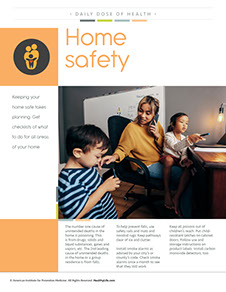
Keeping your home safe takes planning. Get checklists of what to do for all areas of your home.
The number one cause of unintended deaths in the home is poisoning. This is from drugs, solids and liquid substances, gases and vapors, etc. The 2nd leading cause of unintended deaths in the home or a group residence is from falls.
To help prevent falls, use safety rails and mats and nonskid rugs. Keep pathways clear of ice and clutter.
Install smoke alarms as advised by your city’s or county’s code. Check smoke alarms once a month to see that they still work.
Keep all poisons out of children’s reach. Put child-resistant latches on cabinet doors. Follow use and storage instructions on product labels. Install carbon monoxide detectors, too.
Work Life
Most workplace injuries can be prevented. What you need to do depends on the job you do and the hazards you are exposed to. Your place of work may have certain standards and safety measures. Some are set by the Occupational Safety and Health Administration (OSHA). Know and follow your workplace’s safety rules. Ask questions if you don’t understand them.
General Safety Tips
* Help prevent slip and falls.
– Keep walk areas free from clutter. Secure telephone and electrical cords to prevent tripping.
– Wear nonskid shoes or footwear with a tread pattern to prevent slips, if needed.
– Keep walking surfaces dry and free of water, grease, etc.
– Use proper lighting. Look where you are going. Don’t carry things that block your vision.
– Don’t lean back in your chair.
– Don’t climb on chairs or boxes. Use a ladder that lets you safely reach items.
* Don’t pile items on stairs or against doors.
* Report injuries and “near misses” of injuries to your supervisor or to security. Follow your company’s rules for this.
Safety for High Risk Occupations
Certain jobs may require workers to:
* Use Material Safety Data Sheets (MSDSs). These tell you how to use chemicals safely. They can be on printed pages and in a computer. Know where this data is. Use the information given.
* Wear protective headgear (e.g., hard hats, hair covers, etc.).
* Wear safety glasses with side shields, goggles, face shields, tinted glasses to reduce glare, etc. Keep eyewear clean and in good condition. Replace it if it is broken or has a defect.
* Wear ear plugs or special ear muffs. These protect hearing from damage.
* Wear steel-toe shoes or boots.
* Protect your lungs from dust, fumes, gases, vapors, etc. If needed, use the right type of mask or respirator for the material you are working with. Not all masks filter all particles or gases. Have your respirator “fit tested” to assure safe use.

FAMILY LIFE

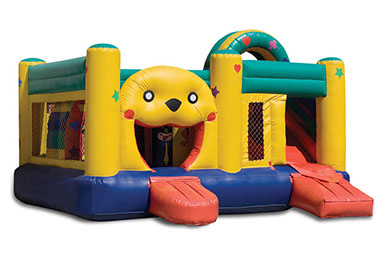
If your kids like to moonwalk and jump in those ever-present birthday-party experiences called bounce houses, know about these dangers. A child goes to the ER every 45 seconds because of bouncing injuries.
Researchers at Nationwide Children’s Hospital say inflatable bouncers are the cause of a 15-fold increase in injuries to kids-mostly broken bones, strains and sprains but also head and neck injuries. The findings were published in Pediatrics.
Injury patterns for inflatable bouncers are similar to those the docs see on trampolines, which have national safety guidelines. Bounce houses have no guidelines. So set your own rules.
The researchers suggest parents should consider the risks before allowing their children to use an inflatable bouncer.If you allow your child to use an inflatable bouncer, limit use to children 6 years of age and older. Make sure an adult is there to supervise while the bouncer is in use and allow only one child on the bouncer at a time. If more than one child will be on the bouncer at the same time, the children should be about the same age and size.