
Tag: lifestyle

  • Men’S Health

    Men’s Health

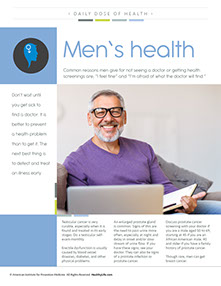
    Older man smiling.

    Common reasons men give for not seeing a doctor or getting health screenings are, “I feel fine” and “I’m afraid of what the doctor will find.”

    Don’t wait until you get sick to find a doctor. It is better to prevent a health problem than to get it. The next best thing is to detect and treat an illness early.

    Testicular cancer is very curable, especially when it is found and treated in its early stages. Do a testicular self-exam monthly.

    Erectile dysfunction is usually caused by blood vessel diseases, diabetes, and other physical problems.

    An enlarged prostate gland is common. Signs of this are the need to pass urine more often, especially at night and delay in onset and/or slow stream of urine flow. If you have these signs, see your doctor. They can also be signs of a prostate infection or prostate cancer.

    Discuss prostate cancer screening with your doctor if you are a male aged 50 to 69; starting at 45 if you are an African American male; 40 and older if you have a family history of prostate cancer.

    Though rare, men can get breast cancer.
    Health at Home Lifetime book by the American Institute for Preventive Medicine. www.HealthyLife.com. All rights reserved.

    © American Institute for Preventive Medicine

  • Take Control Of Your Blood Pressure

    General Health Conditions

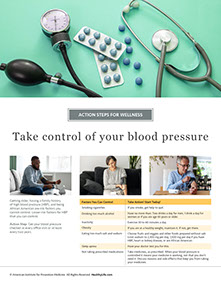
    Part of a blood pressure cuff and medications.

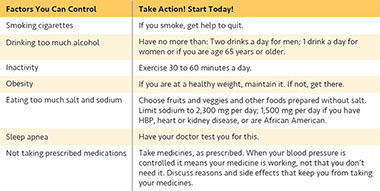
    Getting older, having a family history of high blood pressure (HBP), and being African American are risk factors you cannot control. Lower risk factors for HBP that you can control.

    Action Step:Get your blood pressure checked at every office visit or at least every two years.

    Health at Home Lifetime book by the American Institute for Preventive Medicine. www.HealthyLife.com. All rights reserved.

    © American Institute for Preventive Medicine
  • Look Beyond Your Weight Goal

    Healthylife® Weigh

    Part 7

    Apples, measuring tape, dumbbells and banana assembled into a smiling face.

    A healthy lifestyle is not just about the number on the scale. Reflect on what got you motivated to lose weight and got you over hurdles. Strengthen your values by connecting more to the world around you.

    Share your story.Share your struggles, your ideas, and your motivation. Share through your words and actions. You may have inspired someone already. Post to social media or comment on another post. Start a blog about your journey as you continue to learn and manage new challenges.

    Say thank youto those who have helped you along the way and who continue to help you. This may be your healthcare professionals, health coach, coworkers, friends, family, or the stranger who makes your coffee every day. Let people know how much they mean to you. It could be the boost that person needs today.

    Address hunger in your community.Millions of people worldwide struggle with food insecurity. Someone who is food insecure doesn’t know where their next meal is coming from. Many are children. It may be you. Food banks, soup kitchens, homeless shelters, and other community organizations appreciate volunteers or donations. Volunteer to teach a cooking class or lead a grocery store tour. Share your strengths.

    Care for the environment.The global food system depends on a healthy planet. It is also one of the biggest contributors of greenhouse gases and global warming. Choose local, sustainably produced food when possible. In general, the negative environmental impact increases with how far the food traveled, how long it was stored, and how many chemicals were sprayed on it. Buy enough, but not too much, to reduce waste. Use reusable containers for eating and transporting meals and snacks.

    © American Institute for Preventive Medicine
  • 8 Commandments For Living Long And Living Well

    WELL-BEING

    Image of a group of people with exercise balls.

    You won’t live forever, but you can’t live like there’s no tomorrow, because tomorrow is coming. You can prepare for tomorrow today by making smart lifestyle choices or changing poor health habits-it’s never too late to do that, says Dr. Edward Creagan in his book How Not to Be My Patient: A Physician’s Secrets for Staying Healthy and Surviving Any Diagnosis. Here are Dr. Ed’s eight commandments:

    1. Form stable long-term relationships.

    2. Maintain ideal body weight.

    3. Eat a plant-based diet.

    4. Be active.

    5. No smoking.

    6. Use alcohol in moderation, if at all.

    7. Foster a sense of spirituality and a sense of connectedness to nature or your higher power or force.

    8. Find meaning and purpose in life.

    © American Institute for Preventive Medicine

  • Age Successfully

    SELF-CARE CORNER

    Image of older couple.

    Successful aging means more than good health. It means taking charge of your personal well-being so that you can continue to live a vibrant, independent life, regardless of your age, according to Dr. Terri Ginsberg of the Institute for Successful Aging at the University of Medicine and Dentistry of New Jersey.

    “Successful aging isn’t difficult, but it does require a personal commitment to active living,” says Ginsberg. To help them age successfully, Ginsberg recommends that adults of all ages follow these “10 Resolutions for Healthy Aging:”

    1.Sleep at night.Avoid frequent daytime naps, late night snacks or watching television in bed.

    2.Eat lots of colors.Vibrantly colored fruits and vegetables on your plate mean a healthy diet that keeps your body moving.

    3.Get checked out.Catch up on any health screenings your doctor has recommended and don’t forget eye and dental check-ups.

    4.Worry less.It really is possible to “worry yourself sick.” Excessive worrying can lead to high blood pressure, digestive problems, chronic headaches and unhealthy weight gain.

    5.Stay in touch.Living alone doesn’t mean being alone. Reach out to friends, neighbors and relatives.

    6.Move more.Exercise improves heart health, and good heart health helps prevent a range of related disorders, including blood clots and depression.

    7.Read more.You can “exercise your brain” with newspapers, books, magazines or puzzles.

    8.Laugh and sing.Is there a better way to enjoy life? And both will help you to worry less.

    9.Take control.Be proactive about your own health. Ask your doctor questions about your health and for advice on positive lifestyle changes.

    10.Get involved.Local organizations of all types need volunteers. Helping others is the best tonic for feeling good about yourself.

    © American Institute for Preventive Medicine
  • Choosing A Family Pet

    FAMILY LIFE

    Image of Hispanic family with a pet dog.

    Pets aren’t just for kids. Owning a pet can improve your family’s health in many ways, according to the Centers for Disease and Prevention (CDC). Pets can lower blood pressure and cholesterol, and offer companionship to all members of your household. Before you choose one, think about these factors.

    All pets need daily care.They need attention, food, and a place to sleep. Dogs need to be walked and taken outside daily. Cats need a clean litter box. Veterinary visits and vaccines are important. Look into the pet you want, and make sure you’re ready to do everything it takes to keep the pet healthy. It’s a daily commitment that you’ll need to stick with for many years.

    Make sure everyone in the family is ready.Caring for a pet is best done with everyone’s help. Are your kids ready to help feed a dog and walk it? Are the parents ready for veterinary costs, cleaning up after the pet, and arranging for pet care during vacations?

    With certain reptiles, small animals and birds, proper hygiene is very important.Some pets, such as birds, reptiles and amphibians, can spread illness to humans. Visitwww.cdc.gov/healthypetsfor information about preventing illness.

    As long as you carefully consider all the care your pet will need, you can make an informed choice about your next furry friend.

    Source: American Humane Association

    A heart for dogs

    One study looked at 421 adults who’d had heart attacks. A year later, dog owners were much more likely to still be alive than were those who did not own dogs, regardless of the severity of the heart attack.

    Source: National Institutes of Health

    © American Institute for Preventive Medicine
  • Men’S Health 2

    MEDICAL NEWS

    Image of oler man at the doctor's office.

    Increasing awareness of health problems that can be prevented among men and encourage men and boys to get early detection and treatment of disease and injury.

    6 health tests men need

    Here are 6 essential screening tests all men should receive during their lifetime, according to pathologist and men’s health expert Dr. Thomas Wheeler, Baylor College of Medicine.

    1.Prostate cancer:The prostate specific antigen (PSA) test was developed to help detect prostate cancer in men, but experts now disagree about treating the cancer if detected. Men, starting at age 50, should speak with their docs about the pros and cons of screening. For those in high-risk categories, this conversation should begin at age 45 or earlier.

    2.Blood pressure:It’s a simple and painless test for the “silent killer.” Why? Because high blood pressure has no symptoms. Often, simple diet changes and regular exercise can lower blood pressure. If not, the medications to control blood pressure are well tolerated and do not cost a lot.

    3.Cholesterol:A cholesterol test also is a simple screening test and is advised for men at least every 5 years, or yearly if abnormal.

    4.Colon cancer:This is the third most common cancer in Americans. Beginning at age 50, men should be screened for precancerous polyps and colon cancer. Screening tests include the fecal occult blood test, flexible sigmoidoscopy and colonoscopy.

    5.Skin cancer:Limiting sun exposure and receiving regular check-ups can help men avoid this common cancer including melanoma – a potentially deadly form.

    6.Diabetes:Men 45 years and older should be tested for type 2 diabetes every 3 years. Common screening blood tests are fasting glucose and hemoglobin A1c. Diabetes can be detected early before complications of more advanced disease set in.

    © American Institute for Preventive Medicine
  • New You

    WELL-BEING

    Image of smiling man.

    Why wait to create a new you? Live your best life now. This advice comes from researchers at Washington University:

    *Learn something new.Take a class in a subject you enjoy or are curious about. Check your community colleges for noncredit continuing education classes. Rekindle your love of learning.

    *Volunteer.It’s good for your physical and mental health whether you’re building a house for someone, ladling out soup for the homeless, or collecting canned goods. You’ll make valuable community connections.

    *Get your social media house in order.The Internet and social media have opened up exciting new avenues to connect with others and new vistas to share preferences in films, books, and music. Have fun. But be cautious. Check your default privacy settings. Log out and see what your profile looks like to the outside world. Make sure passwords are complex – Use upper and lowercase letters and a special character, such as $. Don’t use the same password for all social media accounts.

    *Rediscover the library.The digital revolution has changed your local library. You can often download books online. Consider how much your library offers: novels and nonfiction works for all ages, how-to books, music CDs, movies on DVD or videotape, maps and reference works. Read the latest magazines or journals.

    *Step away from your desk.Physical activity improves health, lowers stress, and increases productivity. And if those weren’t reasons enough, research shows that exercise reduces the risk of diseases such as breast cancer, colon cancer, and Alzheimer’s.

    *Pay down your credit card debt.Put extra money toward the loans with the highest interest rates. Consolidate several small debts.

    *Use your smartphone to quit smoking.You can tap into apps for messages of support and access websites that give step-by-step encouragement.

    *Kick the car habit.Leave the SUV in the garage and try alternate means of transportation such as the bus or train, bicycling, walking, or park-and-ride commuting.

    *Parents:Make every day count. Happy, well-adjusted children need happy, well-adjusted parents.

    *Get more sleep.

    *Consume more culture.The arts not only educate and entertain, they help us to better understand ourselves and others. Visit your local museums, galleries, theaters, dance companies, and music halls.

    © American Institute for Preventive Medicine