
Tag: men

  • Erectile Dysfunction Facts

    MEDICAL NEWS

    Older couple cuddling with a blanket.

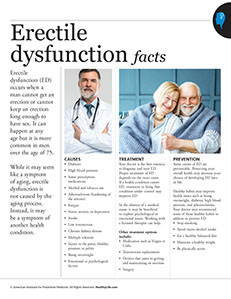
    Erectile dysfunction (ED) occurs when a man cannot get an erection or cannot keep an erection long enough to have sex. It can happen at any age but it is more common in men over the age of 75.

    While it may seem like a symptom of aging, erectile dysfunction is not caused by the aging process. Instead, it may be a symptom of another health condition.

    Causes

    *  Diabetes

    *  High blood pressure

    *  Some prescription medications

    *  Alcohol and tobacco use

    *  Atherosclerosis (hardening of the arteries)

    *  Fatigue

    *  Stress, anxiety, or depression

    *  Stroke

    *  Low testosterone

    *  Chronic kidney disease

    *  Multiple sclerosis

    *  Injury to the penis, bladder, prostate, or pelvis

    *  Being overweight

    *  Emotional or psychological factors

    Treatment

    Your doctor is the best resource to diagnose and treat ED. Proper treatment of ED depends on the exact cause. If a health condition causes ED, treatment to bring that condition under control may improve ED.

    In the absence of a medical cause, it may be beneficial to explore psychological or emotional issues. Working with a licensed therapist can help.

    Other treatment options include:

    *  Medication such as Viagra or Cialis

    *  Testosterone replacement

    *  Devices that assist in getting and maintaining an erection

    *  Surgery

    Prevention

    Some causes of ED are preventable. Protecting your overall health may decrease your chance of developing ED later in life.

    Healthy habits may improve health issues such as being overweight, diabetes, high blood pressure, and atherosclerosis. Your doctor may recommend some of these healthy habits to address or prevent ED.

    *  Stop smoking

    *  Avoid excess alcohol intake

    *  Eat a healthy, balanced diet

    *  Maintain a healthy weight

    *  Be physically active
    © American Institute for Preventive Medicine

  • Health Screenings For Men

    SELF-CARE CORNER

    Blue stethoscope on a blue table.

    Men can face health challenges at each stage of life. A yearly visit with a primary care doctor ensures access to the appropriate screenings. While some screenings are a standard part of routine medical care, a doctor may recommend additional screenings specific to a man’s health and family history.

    Men aged 18 to 39

    *  Blood pressure

    *  Cholesterol and heart disease screening

    *  Physical exam

    *  Diabetes screening

    *  Eye exam

    *  Dental exam

    *  Infectious disease screening, including STIs

    *  Immunizations

    *  Skin self-exam

    *  Testicular exam

    Men aged 40 to 64

    *  Blood pressure

    *  Cholesterol and heart disease screening

    *  Physical exam

    *  Diabetes screening

    *  Eye exam

    *  Dental exam

    *  Infectious disease screening, including STIs

    *  Immunizations

    *  Skin self-exam

    *  Testicular exam

    *  Colon cancer screening

    *  Lung cancer screening

    *  Osteoporosis screening

    *  Prostate cancer screening

    Men aged 65 and over

    *  Blood pressure

    *  Cholesterol and heart disease screening

    *  Physical exam

    *  Diabetes screening

    *  Eye exam & hearing test

    *  Dental exam

    *  Infectious disease screening, including STIs

    *  Immunizations

    *  Skin exam

    *  Colon cancer screening

    *  Lung cancer screening

    *  Osteoporosis screening

    *  Prostate cancer screening

    *  Abdominal aortic aneurysm screening

    © American Institute for Preventive Medicine

  • Men’S Health

    Men’s Health

    Older man smiling.

    Common reasons men give for not seeing a doctor or getting health screenings are, “I feel fine” and “I’m afraid of what the doctor will find.”

    Don’t wait until you get sick to find a doctor. It is better to prevent a health problem than to get it. The next best thing is to detect and treat an illness early.

    Testicular cancer is very curable, especially when it is found and treated in its early stages. Do a testicular self-exam monthly.

    Erectile dysfunction is usually caused by blood vessel diseases, diabetes, and other physical problems.

    An enlarged prostate gland is common. Signs of this are the need to pass urine more often, especially at night and delay in onset and/or slow stream of urine flow. If you have these signs, see your doctor. They can also be signs of a prostate infection or prostate cancer.

    Discuss prostate cancer screening with your doctor if you are a male aged 50 to 69; starting at 45 if you are an African American male; 40 and older if you have a family history of prostate cancer.

    Though rare, men can get breast cancer.

    Health at Home Lifetime book by the American Institute for Preventive Medicine. www.HealthyLife.com. All rights reserved.

    © American Institute for Preventive Medicine

  • Important Health Screenings For Men

    WELL-BEING

    Image of male doctor.

    Even if you feel fine, you should see your doctor for regular health screenings. Many health conditions cause no symptoms in their earliest stages. Screenings can help you get earlier treatment and a better outcome. The National Institutes of Health recommends the following tests for men:

    Abdominal aortic aneurysm:

    Adults ages 65 to 75 who have smoked may need this screening once. Others should consult with their doctor.

    Blood pressure:

    Every one to two years, depending on your risk factors or health conditions.

    Cholesterol:

    Beginning at age 35, every five years if levels are normal. Men with high blood pressure, other risk factors for heart disease or certain health conditions may need to get screened sooner or more often.

    Colon cancer:

    Screening may begin at age 50, or earlier, if you have a family history of the disease, certain risk factors or certain health conditions.

    Diabetes:

    Every three years beginning at age 45. Earlier and/or more frequent testing may be advised if you have certain risk factors.

    Eyes:

    Every one to two years, or more often if you have glaucoma, have certain eye conditions or if your doctor recommends it.

    Hearing:

    Adults over age 65 may need a hearing test if signs of hearing loss are present.

    Lung cancer:

    Annual screening may be recommended for adults aged 55 to 80 years who have a 30 pack-year (smoke one pack per day for 30 years) smoking history AND currently smoke or have quit within the past 15 years.

    Osteoporosis:

    Discuss screening with your doctor if you are over age 50.

    Physical exam:

    Height, weight and Body Mass Index (BMI) should be measured at well visits.

    Prostate cancer:

    Discuss screening with your doctor. Men with certain risk factors may need screenings beginning at age 45.

    Sexually transmitted infections:

    Depending on age, lifestyle and medical history, you may need to discuss with your doctor about getting tested for chlamydia, syphilis, HIV and other infections.

    Men of all ages and health statuses need regular health screenings. Call your doctor to schedule your well visit!

    © American Institute for Preventive Medicine

  • Men’S Health 2

    MEDICAL NEWS

    Image of oler man at the doctor's office.

    Increasing awareness of health problems that can be prevented among men and encourage men and boys to get early detection and treatment of disease and injury.

    6 health tests men need

    Here are 6 essential screening tests all men should receive during their lifetime, according to pathologist and men’s health expert Dr. Thomas Wheeler, Baylor College of Medicine.

    1.Prostate cancer:The prostate specific antigen (PSA) test was developed to help detect prostate cancer in men, but experts now disagree about treating the cancer if detected. Men, starting at age 50, should speak with their docs about the pros and cons of screening. For those in high-risk categories, this conversation should begin at age 45 or earlier.

    2.Blood pressure:It’s a simple and painless test for the “silent killer.” Why? Because high blood pressure has no symptoms. Often, simple diet changes and regular exercise can lower blood pressure. If not, the medications to control blood pressure are well tolerated and do not cost a lot.

    3.Cholesterol:A cholesterol test also is a simple screening test and is advised for men at least every 5 years, or yearly if abnormal.

    4.Colon cancer:This is the third most common cancer in Americans. Beginning at age 50, men should be screened for precancerous polyps and colon cancer. Screening tests include the fecal occult blood test, flexible sigmoidoscopy and colonoscopy.

    5.Skin cancer:Limiting sun exposure and receiving regular check-ups can help men avoid this common cancer including melanoma – a potentially deadly form.

    6.Diabetes:Men 45 years and older should be tested for type 2 diabetes every 3 years. Common screening blood tests are fasting glucose and hemoglobin A1c. Diabetes can be detected early before complications of more advanced disease set in.

    © American Institute for Preventive Medicine