Tag: pain

  • What To Do About Varicose Veins

    SELF-CARE CORNER

    Doctor and patient talking.

    Do you have bulging veins on your legs? The veins may be blue, purple or red in color. If so, you may have varicose veins.

    What are varicose veins?

    Your heart is always pumping blood out to your organs. Then, the blood goes back to the heart through the veins. Veins have special valves that push the blood back toward the heart.

    Sometimes these valves stop working correctly. This may happen if valves get weaker over time. Then the blood pools in the vein, unable to move. Blood that is pooling in a vein may cause the bulge or bump of a varicose vein.

    Not just cosmetic

    Some people don’t like the look of varicose veins. But they can also cause other problems. Varicose veins may itch or cause pain, swelling or heaviness in the legs.

    They can also continue to weaken the vein over time. This can cause skin changes like open sores or hard, thick areas of skin.

    Medical options

    Ask your doctor about medical procedures that can help. Options may include:

    *  Lasers that heat the vein and close it off

    *  Injections that seal the vein closed

    *  Surgery to remove the vein if non-invasive options don’t work

    Helping at home

    If varicose veins bother you, there are some things you can do.

    *  First, work toward a healthy weight. Being overweight puts more pressure on the veins.

    *  Be active. Exercise gets your blood pumping. This helps move blood out of the veins.

    *  Ask your doctor about compression stockings. These can help relieve pain and heaviness for some people. These are available at drug stores and online without a prescription if your doctor gives you the okay to wear them.

    *  Put your legs up. When possible, keep your legs up above your heart.

    *  Don’t wear clothes that are very tight around the waist or upper thighs.

    Source: National Heart, Lung and Blood Institute, National Institutes of Health

    © American Institute for Preventive Medicine

  • Caring For Toe Injuries

    SELF-CARE CORNER

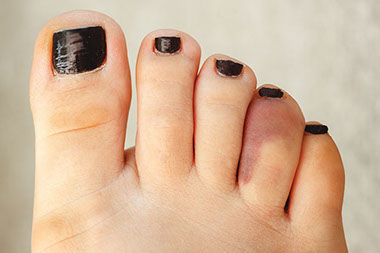
    Close up of injured toe.

    Toes are an important part of walking and balance. And their bones and ligaments are small, so they can be easily injured.

    Many people think doctors won’t do anything about an injured toe. This is not true. A broken or sprained toe may need medical attention. But minor toe injuries may get better with some simple home care.

    What to do if you hurt your toe

    *  If the pain is not severe, try putting ice on it for 10 minutes at a time. Be careful not to get the toe too cold.

    *  If needed, take an over-the-counter pain medicine.

    *  Stay off the foot if possible. Try to elevate it when sitting down.

    *  Look for signs of bruising and swelling, which could mean a possible sprain or broken toe.

    *  If the pain is severe, contact your doctor or seek urgent medical care.

    *  If pain and swelling don’t get better within two days, see a health care provider.

    *  Elevate the affected toe to help with swelling.

    Sprained vs. broken toe

    A sprain means that the ligaments in the toe have been injured. You can usually walk on a sprained toe, but it may still be very sore from swelling and bruising.

    Sprains may happen when you overstretch the toe during sports, running or jumping. “Turf toe” is a sprain of the big toe that is quite common in athletes.

    If you have a broken toe, you may not be able to move the toe or put weight on it. It may have a lot of swelling and bruising. The pain may not get better, even after a couple of days. Broken toes can happen during sports and activities. They also occur with falls and accidents or when you drop something heavy on your foot.

    Should you get medical care?

    Some minor toe injuries can be treated at home. But toe sprains and breaks can be more serious. Don’t ignore toe pain that lasts more than two days. See a health care provider if you think your toe is sprained or broken.

    If you have diabetes

    Always see a health care provider for any kind of foot or toe injury.

    Sources: American College of Foot and Ankle Surgeons, American Podiatric Medical Association

    © American Institute for Preventive Medicine

  • Slouching Harms Your Health

    WORK LIFE

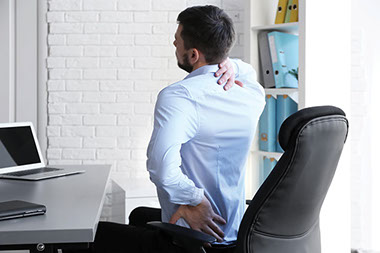
    Man sitting on chair at desk stretching his back.

    Many people sit at a desk for hours each day. And the way you sit can affect your health.

    Muscles & bones

    Your musculoskeletal system includes your bones, joints and muscles. These parts of the body work together to provide support and stability. They allow you to move around.

    The musculoskeletal system has to change and adapt to your life. The type of shoes you wear, how you walk and even how you use devices can affect your musculoskeletal system.

    The way you sit at your desk affects this system too. Slouching can cause wear and tear on the spine. This makes it more likely that you will hurt your back. It can also lead to neck or shoulder pain.

    Having bad posture at your desk can lower your flexibility. It can make it harder for your joints to move, too.

    Un-learning bad posture

    Many people slouch without thinking about it. It becomes a habit. But there are ways to fix it and prevent more injury to your back.

    Researchers think that yoga could have positive benefits for posture and health. Some evidence suggests that it could help with hyperkyphosis in older people. Hyperkyphosis is a condition that causes the spine to curve forward, giving a “hunched” appearance.

    To be safe, people should talk with their doctor before doing yoga or any exercise program.

    Other ways to improve posture include:

    *  Be aware of your posture. Set alarms or reminders that tell you to sit up straight.

    *  Think about your posture when you stand and walk. This can carry over to better sitting posture.

    *  Make sure your keyboard and computer are working for you. You shouldn’t be slouching to reach the keyboard or see the screen.

    *  Change positions often. Don’t sit all day with one leg crossed or your feet tucked under your chair.

    *  Get up for breaks. Don’t spend breaks at your desk. Take a walk or gently stretch. Don’t eat at your desk.

    *  Work toward a healthy weight. Extra weight around the belly can weaken abdominal muscles. This can lead to back pain.

    Talk to your doctor if you have back, shoulder or neck pain. Ask them about the best exercise options for you or a possible referral to physical therapy. Exercise can help you support your body and boost your overall health, whether you’re sitting or not.

    Source: National Institutes of Health

    © American Institute for Preventive Medicine

  • Ingrown Toenails

    Skin Conditions

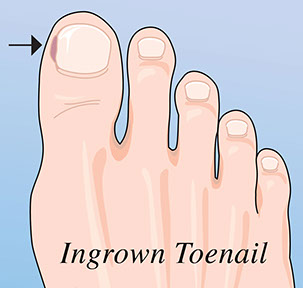
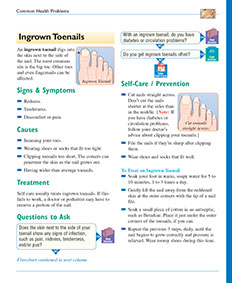
    An ingrown toenail digs into the skin next to the side of the nail. The most common site is the big toe. Other toes and even fingernails can be affected.

    Signs & Symptoms

    *  Redness.

    *  Tenderness.

    *  Discomfort or pain.

    Illustration of an ingrown toenail.

    Causes

    *  Jamming your toes.

    *  Wearing shoes or socks that fit too tight.

    *  Clipping toenails too short. The corners can penetrate the skin as the nail grows out.

    *  Having wider-than-average toenails.

    Treatment

    Self-care usually treats ingrown toenails. If this fails to work, a doctor or podiatrist may have to remove a portion of the nail.

    Questions to Ask

    Self-Care / Prevention

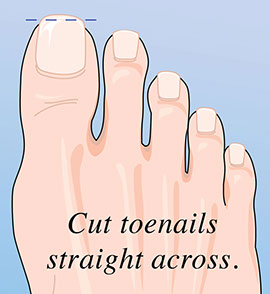
    *  Cut nails straight across. Don’t cut the nails shorter at the sides than in the middle. {Note: If you have diabetes or circulation problems, follow your doctor’s advice about clipping your toenails.}

    *  File the nails if they’re sharp after clipping them.

    *  Wear shoes and socks that fit well.

    To Treat an Ingrown Toenail

    *  Soak your foot in warm, soapy water for 5 to 10 minutes, 1 to 3 times a day.

    *  Gently lift the nail away from the reddened skin at the outer corners with the tip of a nail file.

    *  Soak a small piece of cotton in an antiseptic, such as Betadine. Place it just under the outer corners of the toenails, if you can.

    *  Repeat the previous 3 steps, daily, until the nail begins to grow correctly and pressure is relieved. Wear roomy shoes during this time.

    Illustration on cutting toenails straight across to prevent ingrown toenails.

    Resources

    American Academy of Dermatology

    866.503.SKIN (503.7546)

    www.aad.org

    Healthier at Home book by the American Institute for Preventive Medicine. www.HealthyLife.com. All rights reserved.

    © American Institute for Preventive Medicine

  • Eye Irritations & Injuries

    Eye Conditions

    As you age, your eyes can get irritated more easily because they make less tears. Poorer vision increases the risk for eye injuries.

    Signs & Symptoms

    You feel burning, dryness, itching, and/or pain and swelling in one or both eyes.

    Causes

    For Eye Irritation:

    Causes include particles in the eye; too much sun exposure, low humidity; strong wind; and scratches from contact lenses. Other causes are allergies, infections, and conditions that make your eyes dry.

    For Eye Injuries:

    Causes include a physical blow to the eye; harsh chemicals; and a foreign body that is stuck in the eye.

    Mild eye irritations and injuries can be treated with self-care. More serious problems need medical care.

    Treatment

    *  Wear safety glasses for activities that expose your eyes to sawdust, etc.

    *  When using harsh chemicals, wear rubber gloves and protective glasses. Don’t rub your eyes if you’ve touched harsh chemicals. Turn your head away from chemical vapors.

    *  To help prevent dry eyes, use a humidifier and limit exposure to smoke, dust, and wind. Avoid alcohol.

    *  Use artificial tear drops with your doctor’s okay.

    *  Don’t stare directly at the sun, especially during a solar eclipse.

    *  Wear sunglasses that block UV rays.

    *  Don’t use eye makeup when an allergy or chemical irritant bothers your eye(s).

    Self-Care / Prevention

    To Ease the Discomfort of Dry Eyes:

    With your doctor’s okay, use over-the-counter artificial tear drops, such as Ocu-Lube. Read the label. Refrigerate the solution, if needed. Wash your hands before using.

    To Treat an Insect Bite Without a Severe Allergic Reaction:

    *  Wash the eye(s) with warm water.

    *  Take an antihistamine if okay with your doctor.

    To Remove a Foreign Particle On the White of the Eye or Inside the Eyelids:

    *  Do not remove an object imbedded in the eye, a metal chip, or a foreign body over the colored part of the eye. (See “First Aid for Foreign Body Sticking Into the Eye” on this page.)

    *  Wash your hands.

    *  If the foreign object is under the upper lid, have the person look down and pull the upper lid away from the eyeball by gently grabbing the eyelashes. Press a cotton-tipped swab down on the skin surface of the upper eyelid and pull it up and toward the brow. The upper lid will invert. Touch and remove the debris with the tip of the tissue.

    *  Twist a piece of tissue, moisten the tip with tap water (not saliva) and gently try to touch the speck with the tip. Carefully pass the tissue over the speck, which should cling to the tip.

    *  Do not rub the eye or use tweezers or anything sharp to remove a foreign object.

    *  Gently wash the eye with cool water.

    To Treat a Bruise from a Minor Injury that Surrounds the Eye but Does Not Damage the Eye Itself:

    *  Put a cold compress over the injured area right away. Keep doing this for 15 minutes, every hour, for 48 hours.

    *  Take an over-the-counter medicine

    *  After 48 hours, put a warm compress over the injured area.

    *  Seek medical attention if these measures do not help.

    First Aid for Foreign Body Sticking Into the Eye Before Immediate Care:

    *  Do not remove the object.

    *  Don’t press on, touch, or rub the eye.

    *  Cover the injured eye with a paper cup or other clean object that will not touch the eye or the foreign object. Hold the paper cup in place with tape without putting pressure on the eye or the foreign object.

    *  Gently cover the uninjured eye with a clean bandage and tape, too, to keep the injured eye still.

    First Aid for Harmful Chemicals in the Eye(s) Before Immediate Care:

    *  Flush the eye(s) with water immediately!

    *  Hold the injured eye open with your thumb and forefinger.

    *  At the faucet or with a pitcher or other clean container, flush the eye with a lot of water. Start at the inside corner and pour downward to the outside corner. This lets the water drain away from the body and keeps it from getting in the other eye.

    *  Keep pouring the water for 10 to 30 or more minutes. Flush the eye with water until you get medical help.

    *  If both eyes are injured, pour water over both eyes at the same time or quickly alternate the above procedure from one eye to another. Or, place the victim’s face in a sink or container filled with water. Tell the victim to move his or her eyelids up and down and remove the face from the water at intervals in order to breathe. Use this method on yourself if you are the victim and are alone.

    *  Loosely bandage the eye with sterile cloth and tape. Don’t touch the eye.

    When to Seek Medical Care

    Contact Doctor When:

    You have any of these problems:

    *  Eye pain with eye irritation

    *  An eye that is red and/or swollen

    *  Yellow-green pus is under the eyelid or drains from the eye.

    Get Immediate Care When:

    *  Harmful chemicals have gotten into the eye(s). {Note: Before you get immediate care, give “First Aid for Harmful Chemicals in the Eye(s) Before Immediate Care” on this page.}

    *  A foreign body sticks into the eye. {Note: See “First Aid for Foreign Body Sticking Into the Eye Before Immediate Care” on this page.}

    *  A cut to the eye or eyelid occurs.

    *  Any of these problems occurs with a blow to the eye or other eye injury:

    – Loss of vision

    – Blurred or double vision

    – Blood in the pupil

    Healthier at Home book by the American Institute for Preventive Medicine. www.HealthyLife.com. All rights reserved.

    © American Institute for Preventive Medicine

  • Ovarian Cysts & Cancer

    Women’s Health

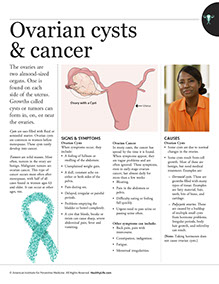
    The ovaries are two almond-sized organs. One is found on each side of the uterus. Growths called cysts or tumors can form in, on, or near the ovaries.

    Cysts are sacs filled with fluid or semisolid matter. Ovarian cysts are common in women before menopause. Rarely are these cysts cancer.

    Tumors are solid masses. Most often, tumors in the ovary are benign. Malignant tumors are ovarian cancer. This type of cancer occurs most often between the ages of 50 and 75. It can occur at other ages, too.

    Signs & Symptoms

    For Ovarian Cysts

    When symptoms occur, they include:

    *  A feeling of fullness or swelling of the abdomen.

    *  Weight gain.

    *  A dull, constant ache on either or both sides of the pelvis.

    *  Pain during sex.

    *  Delayed, irregular, or painful periods.

    *  Growth of facial hair.

    *  A cyst that bleeds, breaks, or twists can cause sharp, severe abdominal pain, fever, and vomiting.

    For Ovarian Cancer

    In many cases, the cancer has spread by the time it is found. When symptoms appear, they are vague problems and are often ignored. These symptoms, even in early-stage ovarian cancer, last almost daily for more than a few weeks:

    *  Bloating.

    *  Pain in the abdomen or pelvis.

    *  Difficulty eating or feeling full quickly.

    *  Urgent need to pass urine or passing urine often.

    Other symptoms can include:

    *  Back pain. Pain with intercourse.

    *  Constipation. Indigestion.

    *  Fatigue.

    *  Menstrual irregularities.

    Causes & Risk Factors

    For Ovarian Cysts

    *  Some cysts are due to normal changes in the ovaries.

    *  Some cysts result from cell growth. Most of these are benign, but need medical treatment. Examples are:

    – Dermoid cysts. These are growths filled with many types of tissue. Examples are fatty material, hair, teeth, bits of bone, and cartilage.

    – Polycystic ovaries. These are caused by a buildup of multiple small cysts from hormone problems. Irregular periods, body hair growth, and infertility can result.

    {Note: Taking hormones does not cause ovarian cysts.}

    Risk Factors for Ovarian Cysts

    *  Being between the ages of 20 and 35.

    *  Endometriosis. Pelvic inflammatory disease (PID). The eating disorder bulimia.

    *  Obesity.

    Risk Factors for Ovarian Cancer

    *  Not having children. Having children at an older age.

    *  Not ever taking birth control pills.

    *  Menopause after age 55.

    *  Family history of ovarian, colon, breast, prostate, or lung cancer.

    *  Personal history of breast, uterine, colon, or rectal cancer.

    *  Being Caucasian.

    *  Increasing age.

    Treatment

    Growths on ovaries are diagnosed with a pelvic exam and medical tests. Ways to detect growths include yearly pelvic and rectal exams and an ultrasound. No completely reliable test exists for ovarian cancer. A CA-125 blood test can detect the progression of ovarian cancer. It is not a reliable screening test.

    For Ovarian Cysts

    Treatment depends on the size and type of cyst(s); how severe symptoms are; the woman’s health status; and her desire to have children.

    Some cysts resolve without any treatment in 1 to 2 months. For others, hormones in birth control pills may suppress the cyst. Sometimes, surgery may be needed to remove it. The ovary and fallopian tube may need to be removed, too.

    For Ovarian Cancer

    The sooner the cancer is found and treated, the better the chance for recovery. Treatment includes:

    *  Surgery. The ovaries, uterus, and fallopian tubes are removed. If the cancer has spread, the surgeon removes as much of the cancer as possible.

    *  Chemotherapy.

    *  Radiation therapy.

    *  Clinical trials.

    Questions to Ask

    Self-Care / Prevention

    For Ovarian Cysts

    *  Limit caffeine.

    *  Have regular pelvic exams, as advised by your doctor.

    *  Take an over-the-counter medicine for pain as directed.

    For Ovarian Cancer

    *  Medical care, not self-care, is needed. Follow your doctor’s advice.

    *  Ask your doctor for advice if you have a family history of ovarian cancer.

    Resources

    National Women’s Health Information Center

    www.womenshealth.gov

    Women's Self-Care book by the American Institute for Preventive Medicine. www.HealthyLife.com. All rights reserved.

    © American Institute for Preventive Medicine

  • Sexual Concerns

    Sexual Health

    Signs & Symptoms

    A lot of people have concerns about their sex life. Common concerns and problems that affect one or both sex partners include:

    *  Little or no desire for sexual relations

    *  Different levels of desire for sex between partners

    *  Disgust or distress with having sex or even thinking about it

    *  Failure to become aroused before sex and/or the inability to stay aroused until the sex act is completed

    *  Impotence in males. This means not being able to sustain an adequate erection.

    *  Premature ejaculation in males. Ejaculation comes too quickly and both partners are not satisfied.

    *  Delay in or absence of orgasm in either the female or male

    *  Pain during intercourse

    *  Painful, sustained erection

    Psychological factors.

    *  Sexual trauma from things, such as rape, incest, past sexual embarrassments or failures

    *  Worry or anxiety about sexual performance

    *  Guilt or inner conflicts about sex, such as when a person’s sexual needs, wishes or thoughts go against family, religious or cultural teachings

    *  Depression

    *  Relationship problems and/or lack of communication of wants and needs between sex partners

    Physical conditions that affect a person’s sexual response. Examples include disorders that involve:

    *  The heart and blood vessels. Less blood can flow to the genitals. Even the arteries and veins in the penis can be involved.

    *  The nervous system, with a condition like multiple sclerosis

    *  The body’s glands, such as with diabetes and/or any that alter the making or release of sex hormones

    *  The use of any substance that alters the sexual response. These include some medications including some anti-depressants, drugs, alcohol and/or smoking. For example, some anti-depressants may lead to impotence or failure to achieve orgasm.

    *  Surgery. For example, prostate surgery can  result in impotence.

    *  Injuries, such as ones that cause damage to nerves used in the sexual response or that result in scar tissue that interferes with sensations felt during sex.

    Treatment

    A medical evaluation is the first step. It can determine if physical conditions, medications, etc. are the cause of the problem(s). A physical exam and certain tests can be done. These include:

    *  Hormonal studies

    *  Ones that check for neurological problems

    *  Ones that measure the flow of blood and the conditions of the veins and arteries in the penis

    *  Blood and urine tests to detect diabetes, urinary tract infections, etc.

    *  X-rays and/or ultrasound, if needed, which can help detect endometriosis, vaginal scar tissue, ovarian tumors, etc. in women

    When a physical condition is found that causes the sexual concern or problem, treating it can get rid of or help with the problem. For example, several treatments exist for impotence. These include:

    *  Oral medications, such as Viagra, Levitra, and Cialis

    *  Special vacuum devices

    *  Self-injections of a prescription medicine and penile implant surgery for men

    If no physical condition is found to be at fault, measures to deal with psychological causes can help. These include therapies of many kinds:

    *  Individual counseling

    *  Counseling with both partners

    *  Sex therapy

    Questions to Ask: MEN ONLY

    Questions to Ask: WOMEN ONLY

    Questions to Ask: MEN & WOMEN

    Self-Help

    *  Follow your doctor’s advice for a chronic illness, if you have one, to help prevent possible problems with sexual satisfaction.

    *  Practice safe sex to prevent sexually transmitted diseases.

    *  Limit alcohol and other drugs. A little alcohol can act as an aphrodisiac. Too much, however, can lead to unsafe sex, an inability to become aroused, violent behavior, etc.

    The following things can help enhance the desire for sex. This is especially important for couples who both work outside the home and also have children. By the time they get into bed each night, sex seems like too much bother.

    *  Make a point to spend at least 15 minutes of uninterrupted time with your partner each day. If you can’t meet face to face, call each other on the telephone.

    *  Remember to express your affection for each other every day.

    *  Plan to spend part of a day alone together at least once a week. Make a date to take a walk in the park, go out for dinner or share other activities you both enjoy.

    *  Schedule a weekend away together every two months or so.

    *  Go to bed together at the same time. Tell yourself that what you haven’t accomplished by 11:00 p.m. can wait until the next day.

    *  Relax by giving each other a massage or taking a shower together.

    *  Keep the television out of the bedroom. Watching TV can be sexual suicide.

    Don’t worry if your sexual encounters occasionally fail. Fatigue and stress are known to cause temporary impotence, a decrease in vaginal lubrication or the inability to have an orgasm. Don’t let yourselves become preoccupied with performance; just take pleasure in being together. Enjoy hugging, kissing and caressing.

    For Premature Ejaculation

    *  The squeeze technique. If a man feels he’s about to ejaculate prematurely, he firmly pinches the penis directly below the head using the thumb and first two fingers of one hand and squeezes for 3 to 4 seconds.

    *  The start/stop method. The couple should abstain from intercourse for two weeks, but focus on touching. The man concentrates on the sensations in his penis as his partner touches his genitals and brings him to an erection. The man asks his partner to stop just before ejaculation. After a few minutes, his partner continues to arouse him, then stops again. This sequence is repeated two more times with ejaculation occurring the fourth time. Then each time the couple has sex, foreplay is prolonged.

    For Lack of Sexual Response in Women

    Couples can practice certain techniques to address sexual unresponsiveness in a woman. A few simple methods follow:

    *  For the first week, limit lovemaking to cuddling, kissing and nuzzling. Don’t touch the genitals or breasts.

    *  During the second week, the partner should gently touch the female’s vaginal area during lovemaking, but stop before she reaches orgasm to increase vaginal lubrication.

    *  During the third week, repeat the first two phases, then proceed with intercourse. If the vagina isn’t adequately lubricated, apply a water-soluble lubricant, such as K-Y Jelly to the penis to facilitate penetration. (Penetration may also be easier if the woman is on top.)

    If a tight vaginal opening still makes penetration painful or impossible, the following exercise may help:

    *  The woman should gently place the tip of her partner’s little finger against her vagina and gently push his finger into her vagina. If this feels uncomfortable, she should stop and wait a few minutes.

    *  The couple should continue this exercise until the partner can insert two fingers in their partner’s vagina without causing pain or discomfort. (It may take several attempts over a period of weeks for this technique to work.)

    (Note: The above techniques do not guarantee success. If they do not help improve your sexual concerns, consider professional help from a sex therapist.)

    Minding Your Mental Health Book. Published by the American Institute for Preventive Medicine. www.HealthyLife.com. All rights reserved.

    © American Institute for Preventive Medicine

  • Put Your Tennis Elbow On Ice

    Bone & Muscle Problems

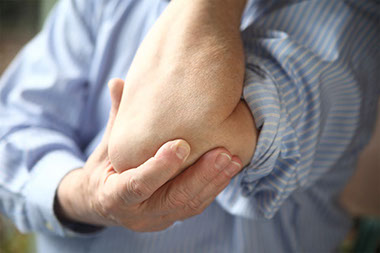
    Close up image of elbow.

    If you’re a tennis player with a hard, single-handed backhand shot, you can end up with a painful condition known as tennis elbow. Pain originates in the outer portion of the elbow and works its way down the forearm. Tennis players who are new to the game or use their forearms instead of the force of their whole bodies to swing the racket are most vulnerable.

    Other factors that contribute to the problem include:

    *  Using a racket that’s too heavy.

    *  Using a racket that’s too tightly strung.

    *  Using played out, deflated tennis balls or ones that are wet and heavy.

    *  Using an improper grip.

    *  Trying to put spin on the ball with improper wrist action.

    *  Using poor backhand technique.

    Continuing to use the arm aggravates the situation. Even several weeks of rest won’t prevent repeat episodes. The best game plan is to rest, then strengthen your forearm muscles and get coaching to improve your skill level.

    To relieve tennis elbow pain:

    *  Apply ice for the first two or three days.

    *  Take an over-the-counter medicine to reduce pain and inflammation. Examples are aspirin, ibuprofen, and naproxen sodium. Take as directed.

    If you still have pain after three weeks, see a doctor for proper diagnosis and treatment.

    To prevent repeat bouts of tennis elbow:

    *  Wait until the pain is gone and your grip strength is normal before resuming play.

    *  Wear an elastic bandage or counter-force brace around the forearm,  as directed.

    *  To strengthen your forearm muscles, lift small 1- to 2-pound weights by alternately flexing and extending your wrists with the palms facing down and your forearms resting on a flat surface. Start with 10 repetitions and work up to 40, three or four times a week.

    A Year of Health Hints book by the American Institute for Preventive Medicine. www.HealthyLife.com. All rights reserved.

    © American Institute for Preventive Medicine

  • Arthritis

    Bone & Muscle Problems

    Arthritis refers to over 100 disorders that affect the joints or areas around the joints. It is a common chronic health problem and occurs in people of all ethnic groups. In the U.S., arthritis is the most common cause of disability.

    The risk for arthritis increases with aging. More than 1 in 5 adults has arthritis, but 300,000 children have some form of it, too. Arthritis is more common in women than men.

    Rheumatoid Arthritis (RA)

    This type is chronic disease that affects the linings of the joints. Most often, RA affects many joints. The disease may also attack tissues in the skin, lungs, eyes, and blood vessels. Persons of all ages, including children, can have RA. It is much more common in women than in men. For some people, symptoms of RA are constant. For others, symptoms are mild sometimes, but get worse (flare up) at other times.

    Signs & Symptoms

    Warmth, redness, pain, and swelling around the joints. Often, the swelling affects the wrist and finger joints closest to the hand.

    *  Joint swelling sometimes affects other joints, such as the neck, shoulders, elbows, hips, knees, ankles, and feet.

    *  Swelling of the joints occurs on both sides of the body, such as both wrists.

    *  Pain and stiffness last for more than 30 minutes in the morning or after a long rest.

    *  Fatigue and not feeling well in general

    *  Fever occurs sometimes.

    Anxiety, depression, and feeling helpless are common problems for people with RA.

    Causes

    With RA, the body’s immune system attacks its own joints and sometimes other body organs. What causes this abnormal response is not known. Things that may contribute to RA include:

    *  Family history of the disease

    *  Factors in the environment. An example is heavy smoking.

    *  Hormones. In women with RA, it is common for the disease to go into remission during pregnancy. Symptoms increase, though, after the baby is born. It is also more likely for women to develop RA in the year after a pregnancy.

    *  An infection from a virus or bacteria, but no single organism has been found to be the cause.

    Osteoarthritis

    This is the most common type. It is also called “wear and tear” arthritis. With this type, the cartilage in joints gets worn out. Chips and cracks form in the cartilage. This allows the ends of bones to rub together. Growths called spurs also form. This type of arthritis is common in joints that bear weight (knees and hips).

    Signs & Symptoms

    Joint pain and stiffness, especially after being inactive or overusing a joint

    *  Knobby growths on finger joints

    *  Loss of motion in joints

    *  Joint tenderness and swelling can occur.

    Causes

    *  Aging joints

    *  Wear and tear on joints. Also, people who are more than 10 pounds overweight put greater stress on joints that bear weight (knees and hips).

    *  Joint injury and overuse

    *  Family history of arthritis

    Juvenile Rheumatoid Arthritis (JRA)

    This type affects persons age 16 and younger. With JRA, joint stiffness and swelling (that causes soreness, redness, warmth, and/or pain) last 6 weeks or longer.

    There are 3 kinds of JRA:

    *  The most common kind is one in which 4 or fewer joints are affected. These are usually large joints, such as the knees. Eye problems are also common with this type of JRA. Some children outgrow joint problems by the time they become adults, but may continue to have eye problems.

    *  A second kind affects 5 or more joints. These are usually small joints, such as ones in the hands and feet and the same ones on both sides of the body. Large joints can also be affected.

    *  A third kind affects joints and internal organs, such as the heart, liver, lymph nodes, and spleen. A skin rash and a fever are also present.

    Gout

    Gout is most common in men over 30 years of age. Less common in women, it usually occurs after menopause.

    Signs & Symptoms

    *  Sudden, intense pain in a joint, usually in a big toe, wrist, knee, or elbow

    *  Swollen joint

    *  The joint area is red or purple in color, feels warm, and is tender to the touch.

    *  Sometimes, fever and chills

    Symptoms can last many hours to a few days.

    Causes

    Gout occurs when crystals from high blood uric acid (a body waste product) deposit in joints and/or soft tissues. The body’s immune system treats these crystals like a foreign substance. This leads to swelling and pain.

    Ankylosing Spondylitis (AS)

    This type of arthritis is more common in men than in women. It usually begins between the ages of 17 and 35.

    Signs & Symptoms

    *  Early signs are stiffness and a dull pain in the lower back and buttocks.

    *  Mild fever and general ill feeling may occur.

    *  Over time, the stiffness and pain become chronic and spread up the spine and into the neck. The shoulders, hips, and other areas of the body can also be affected.

    *  In some persons, joints fuse together. This causes a stiff, bent posture.

    *  Red, painful, and watery eyes. Blurred vision can occur and eyes can be sensitive to bright lights.

    Causes

    Genetic factors play a big role. Having frequent gastrointestinal infections or an inflammatory bowel disease, such as Crohn’s disease or ulcerative colitis, is also a factor.

    How It Is Diagnosed

    To diagnose arthritis, your doctor or health care provider does these things:

    *  Asks you to describe your symptoms and does a physical exam.

    *  Asks if you have had any physical stresses or injuries.

    *  Examines joints and areas around them.

    The tests below may also be needed.

    *  Blood and urine tests.

    *  X-rays and MRIs.

    *  Taking a fluid sample from a joint. The fluid is examined.

    Tests also help diagnose or rule out other arthritis-related problems. Examples are:

    *  Lyme disease. This is an infection from a deer tick bite.

    *  Other auto-immune diseases, such as fibromyalgia and lupus (the systemic kind).

    Self-Care

    Exercise

    Exercise has many benefits:

    *  It increases energy, flexibility, and stamina.

    *  It helps protect joints from further stress.

    *  It improves posture.

    *  It keeps muscles and bones strong.

    *  It improves general health and promotes a sense of well-being.

    The type and amount of exercise you should do depends on the type of arthritis you have and your needs. Follow your doctor’s or health care provider’s advice. {Note: You can find exercise programs recommended by the Arthritis Foundation fromwww.arthritis.org/programs.php.}

    In general, you will be advised to do three types of exercise:

    1.  Stretching Exercises. Examples are reaching exercises, tai chi, and yoga. These loosen up stiff joints and make them more flexible. They improve or maintain range of motion.

    2.  Mild Strengthening Exercises. Examples are lifting 1 to 2 pound weights and using an exercise resistance band. These help build or keep muscle strength. Strong muscles help support and protect joints. Joint movement improves as muscles get stronger.

    3.  Low-Impact Aerobics. Examples are walking, biking, swimming, and water aerobics. These exercises strengthen the heart and lungs and help control weight. They also give you more energy and build your ability to be active longer.

    After a few months of regular exercise, most people have less pain. In time, people who exercise daily find it easier to move their joints without pain.

    Exercise Tips

    *  Discuss exercise plans with your doctor or health care provider. He or she may refer you to an exercise specialist.

    *  Do exercises you like.

    *  Choose exercises that use all affected joints.

    *  Choose a regular time and place to exercise.

    *  Your exercise routine does not have to be a formal one. Try to fit more activity into your daily routine. If you can, take the stairs, not the elevator. Walk or ride a bike instead of driving.

    *  Start your program slowly. Progress slowly, too.

    *  Keep movements slow and gentle.

    *  Do shorter exercise sessions throughout the day.

    *  Start each exercise period with a 5-minute warm-up. End each session with a 5-minute cool-down.

    *  You should be able to speak and not be out of breath while you exercise.

    *  Stop exercising if a joint is swollen, painful, or red.

    *  It may help to apply heat to sore joints before you exercise and cold packs after.

    *  Be careful to avoid injury.

    *  Rest when you need to. Rest your joints after activities.

    *  Focus on freedom of movement.

    *  Be patient.

    Ways to Relieve Pain

    *  Apply moist heat for 15 to 20 minutes, 3 times a day. Use warm towels or hot packs or take warm baths or showers.

    *  Use cold treatment 10 to 15 minutes at a time. This helps stop pain and reduces swelling. Use ice packs, cold packs, or frozen vegetables wrapped in a towel.

    If you have Raynaud’s disease, you should not use cold treatment. Cold makes this condition worse.

    *  Use water therapy to decrease pain and stiffness.

    – Pool exercises. Find out if local pools and health centers have water exercise classes for people with arthritis.

    – Whirlpool baths

    *  Do relaxation exercises to release the tension in your muscles. Doing this helps reduce pain.

    *  Apply over-the-counter creams and lotions that block the pain. Use one with capsaicin. Ones with methyl salicylate should be used with your doctor’s guidance. Using too much can lead to a salicylate overdose.

    *  Take medications as prescribed.

    Medical Care

    Reasons to Call Doctor/ Provider

    *  A joint is painful, tender, red, or warm.

    *  You can’t move a joint normally.

    *  Joints are very stiff, especially in the morning.

    *  A fever, chills, severe sweating, or a rash occurs with other arthritis symptoms.

    *  You can’t use one or more joints.

    *  Severe pain occurs in the big toe or severe pain and swelling occur in one or more joints.

    *  Joint pain or stiffness keeps you from doing normal activities or your arthritis worsens.

    Medicines

    *  Over-the-counter or prescribed pain relievers. These include acetaminophen and nonsteroidal anti-inflammatory drugs (NSAIDs). NSAIDs reduce inflammation, too. Your doctor may prescribe an NSAID cream.

    *  Over-the-counter supplements. Examples are glucosamine and chondroitin. Follow your doctor’s advice about using these.

    *  Corticosteroids. These slow down the immune system. They help a lot with swelling, but have many side effects. They can be given in pill form, in an IV, or injected right into the affected joint area.

    *  Medicines to treat gout. One type lowers the amount of uric acid the body makes. Another type gets the kidneys to excrete more uric acid.

    *  Hyaluronic acid injections. These can relieve pain for osteoarthritis of the knee. They may be given if other treatments don’t help.

    *  Biologic agents. These block steps in the body’s inflammation process. They help stop arthritis from getting worse.

    *  Disease modifying antirheumatic drugs (DMARDs) may be prescribed for rheumatoid arthritis. These reduce inflammation and slow down or suppress the immune system. They can help relieve pain, too.

    *  Other medicines as needed. Examples are ones for depression, anxiety, osteoporosis and/or to assist with sleep.

    Splints

    Your health care provider may have you wear a splint over the affected joint(s). This helps rest the joint.

    Mobilization Therapies

    *  Traction (gentle, steady pulling)

    *  Massage

    *  Manipulation (using the hands to restore normal movement to stiff joints)

    When done by someone trained in these methods, these can help control pain and increase joint motion and muscle and tendon flexibility.

    Acupuncture

    A person trained in this medical field places special needles in certain sites. The needles stimulate deep sensory nerves that tell the brain to release natural painkillers (endorphins).

    Surgery

    In most cases, surgery is not needed. Damaged joints can be repaired or be replaced with joints made from plastic and metal. Total hip and knee replacements are examples. Surgery can also remove damaged tissue in a joint.

    Resources

    Arthritis Foundation

    800.283.7800

    www.arthritis.org

    National Institute of Arthritis and Musculoskeletal and Skin Diseases (NIAMS)

    877.22.NIAMS (226.4267)

    www.niams.nih.gov

    Arthritis brochure by the American Institute for Preventive Medicine. www.HealthyLife.com. All rights reserved.

    © American Institute for Preventive Medicine

  • Testicle Problems

    Men’s Health

    The testicles (also called testes) are two oval shaped organs that make and store sperm. They also make male sex hormones. The testicles are inside the scrotum. This sac of skin hangs under the penis. The scrotum can swell or be painful without a testicle problem. An example of this is an inguinal hernia.

    Problems that affect the testicles include: Injury, swelling and infection; torsion; undescended testicles; and cancer.

    Signs & Symptoms

    For Injury, Swelling, and/or Infection

    *  Pain and swelling in the scrotum.

    *  Feeling of heaviness in the scrotum.

    For Torsion of a Testicle

    *  Sudden and severe pain in the scrotum.

    *  Swelling. Most often, this occurs in one testicle.

    *  Fever.

    *  Abdominal pain. Nausea. Vomiting.

    For Undescended Testicles

    *  In baby boys, testicles do not descend into the scrotum from the abdomen before birth or within months of birth like they should.

    For Cancer of a Testicle

    In the early stages, there may be no symptoms. When symptoms occur, they include:

    *  A lump on a testicle, epididymis, or vas deferens.

    *  An enlarged testicle.

    *  A heavy feeling, pain or discomfort in the testicle or scrotum.

    *  A change in the way a testicle feels.

    *  A dull ache in the lower abdomen or groin.

    *  Enlarged or tender breasts.

    *  Sudden pooling of fluid in the scrotum.

    Causes

    For Injury, Swelling, and Infection

    *  Trauma to the testicles from being hit, kicked, struck, etc. Often, this occurs during sports. Though rare, trauma to the abdomen can cause the testicles to move outside the scrotum.

    *  Orchitis. With this, a testicle is inflamed. Often it is due to an infection, such as mumps or chlamydia. The epididymis can also be inflamed from an infection.

    For Torsion of a Testicle

    When the spermatic cord twists, a testicle rotates. This cuts off blood supply to and from the testicle.

    *  This usually occurs in males under age 30, most often between the ages of 12 and 18.

    *  Symptoms often occur after physical activity or during sleep.

    *  Symptoms may occur for no known reason.

    For Undescended Testicles

    Testicles fail to drop from inside the pelvic area down into the scrotum before birth or within a year of birth.

    For Cancer of a Testicle

    The cause is not known. Risk factors include:

    *  Undescended testicles that are not corrected in infants and young children. Parents should see that their infant boys are checked at birth for this problem.

    *  Having cancer of a testicle in the past.

    *  A family history of cancer of a testicle, especially in an identical twin.

    *  Injury to the scrotum.

    Treatment

    For Injury, Swelling, and/or Infection

    *  Pain from a minor injury to a testicle usually goes away on its own.

    *  Antibiotics treat bacterial infections. Untreated infections can cause infertility.

    For Torsion of a Testicle

    Emergency medical care is needed. The testicle may be untwisted by hand. If not, surgery is needed to restore blood flow to the testicle.

    For Undescended Testicles

    Surgery is done to bring the testicles down into the scrotum.

    For Cancer of a Testicle

    This kind of cancer is almost always curable if it is found and treated early. Surgery is done to remove the testicle. Other things can further treat the disease:

    *  Chemotherapy.

    *  Radiation therapy.

    *  If needed, lymph nodes are removed by surgery.

    Questions to Ask

    Self-Care / Prevention

    To Avoid Injury to the Scrotum

    *  Wear protective gear and clothing during exercise and sports.

    *  Wear an athletic cup to protect the testicles.

    To Help Prevent Infections

    *  See that your children get vaccines for measles, mumps, and rubella (MMR) as advised by their doctor.

    *  To help prevent STDs, follow “Safer Sex” guidelines.

    To Treat Infections

    *  Take medication as prescribed.

    *  Take an over-the-counter medicine for pain and swelling, if needed. Follow directions.

    *  Rest.

    *  Apply cold compresses or an ice pack to painful, swollen area.

    Testicular Self-Exam

    Talk to your doctor about doing testicular self-exams (TSEs). If you choose to do TSEs, follow your doctor’s advice.

    The best time to do a TSE is after a warm bath or shower. This relaxes the scrotum, allows the testicles to drop down, and makes it easier to find anything unusual. Doing a TSE is easy and takes only a few minutes.

    1.  Stand in front of a mirror. Look for any swelling on the skin of the scrotum.

    2.  Examine each testicle with both hands. Place your index and middle fingers underneath the testicle and your thumbs on top. Gently roll one testicle then the other between your thumbs and fingers. One testicle may be larger. This is normal. Examine each testicle for any lumps. These are usually painless and about the size of a pea.

    3.  Find the epididymis. This is the comma-shaped cord behind the testicle. It may be tender to the touch. Check it for lumps.

    4.  Examine the vas deferens. This is the tubelike structure at the back of each testicle. Check it for lumps.

    Resources

    National Cancer Institute

    800.4.CANCER (422.6237)

    www.cancer.gov

    Healthier at Home book by the American Institute for Preventive Medicine. www.HealthyLife.com. All rights reserved.

    © American Institute for Preventive Medicine