Tag: Parenting

  • Solve The Homework Hassle

    FAMILY LIFE

    Image of father helping son with homework.

    Do you dread those long nights of homework hassle-for parents and students? Homework does not have to be a time of great stress for families, according to Paula Kramer, chair and professor of occupational therapy at University of the Sciences. Dr. Kramer suggests the following ways to help avoid arguments over turning off the TV and hitting the books:

    *  Come to an understanding with your child that homework is a necessity-and must be done every day.

    *  Communicate (in person and by email) with the teachers and find out how much time the student is expected to devote to homework each night. Setting expectations and time limits will make the child more productive.

    *  Allow for active playtime before homework. If the child does not have an after-school activity such as a sport or dance class, provide 45 minutes to an hour for the child to engage in active behavior prior to homework. The physical activity will help the child burn off energy, settle the nervous system, and refocus mentally for homework.

    *  Create a designated area for homework and studying-desk in a bedroom or the kitchen table. Just keep the homework spot the same, quiet, and free from distractions.

    *  Create charts to track homework progress. The chart will not only set a schedule that visibly shows that homework needs to be done every night, but will also allow the child to track progress. Rewards can be given for homework completed successfully a few nights in a row.

    *  Use positive praise to encourage good homework and study habits.

    *  Be a role model for the child. School cannot teach everything. Responsibility for successful behavior also lies at home. Parents need to take an active role in their child’s education and should check in on the child during homework to make sure it is completed properly.

    © American Institute for Preventive Medicine

  • Choosing A Family Pet

    FAMILY LIFE

    Image of Hispanic family with a pet dog.

    Pets aren’t just for kids. Owning a pet can improve your family’s health in many ways, according to the Centers for Disease and Prevention (CDC). Pets can lower blood pressure and cholesterol, and offer companionship to all members of your household. Before you choose one, think about these factors.

    All pets need daily care.They need attention, food, and a place to sleep. Dogs need to be walked and taken outside daily. Cats need a clean litter box. Veterinary visits and vaccines are important. Look into the pet you want, and make sure you’re ready to do everything it takes to keep the pet healthy. It’s a daily commitment that you’ll need to stick with for many years.

    Make sure everyone in the family is ready.Caring for a pet is best done with everyone’s help. Are your kids ready to help feed a dog and walk it? Are the parents ready for veterinary costs, cleaning up after the pet, and arranging for pet care during vacations?

    With certain reptiles, small animals and birds, proper hygiene is very important.Some pets, such as birds, reptiles and amphibians, can spread illness to humans. Visitwww.cdc.gov/healthypetsfor information about preventing illness.

    As long as you carefully consider all the care your pet will need, you can make an informed choice about your next furry friend.

    Source: American Humane Association

    A heart for dogs

    One study looked at 421 adults who’d had heart attacks. A year later, dog owners were much more likely to still be alive than were those who did not own dogs, regardless of the severity of the heart attack.

    Source: National Institutes of Health

    © American Institute for Preventive Medicine

  • Stepping Into The Stepparent Role

    FAMILY LIFE

    Image of husband and wife and two children.

    Stepfamilies face unique challenges and situations, especially when the family is newly blended. If you’re just getting to know your new stepfamily, it may take some time for everyone to feel comfortable with the new situation, says the National Stepfamily Resource Center. The organization offers this advice for new stepparents:

    *Understand that bonding takes time.Children of any age may need to get used to their new family. Try not to get discouraged if things don’t go smoothly right away.

    *Communication is key.All families need good communication. This means listening to each other and addressing problems and arguments calmly and directly.

    *Show interest in your stepchildren.Attend their activities, listen to their opinions, and ask them specific questions about their day. Try new family activities together such as walks in the park, bike rides, or something everyone will enjoy.

    *Use compromise to solve problems.Don’t use a “my way or the highway” approach, or the stepchild may become distant or show difficult behavior.

    *See a family counselor or therapistif you need extra help.

    © American Institute for Preventive Medicine

  • Choosing Quality Child Care

    FAMILY LIFE

    Image of Asian baby.

    Today, more children than ever live in households where both parents work. As a result, child care is a necessity for many families. You can make an informed choice with a little homework and preparation.

    First, think about the type of care you’d like.

    In general, your choices will include daycare centers, family child care homes and in-home care like a nanny, babysitter or au pair. There is no right or wrong answer, and no one option works for everyone. Consider your and your child’s personalities, as well as the cost of each choice.

    See it for yourself.

    If you’re considering a child care center or family home, ask about coming in for a visit. Seeing the environment yourself can often give you a better feel for the caregivers and the atmosphere. Do the children get constant supervision? Do they receive positive discipline?

    Look at group size.

    Each state has required caregiver/child ratios. See if you’re comfortable with the size of the group and ask about their typical ratios. Infants need one caregiver per four children at a minimum. The ratios get higher as the children get older.

    If you’re looking for a nanny or au pair, prepare for interviews.

    You should talk with each candidate to get a feel for their personality, child care philosophy and their training and education. You may wish to write a list of questions in advance, and take notes during each interview so you can refer to them later.

    Check health and safety guidelines.

    Caregivers should be up-to-date on CPR certifications. Ask about smoke and carbon monoxide detectors and childproofing all areas for safety.

    Discuss illness prevention.

    Find out whether policies are in place to prevent the spread of illness. This may include requiring children to be fever-free for 24 hours before returning to care, as well as other policies on specific symptoms and illnesses. Caregivers should thoroughly wash their hands after each diaper change  or using the bathroom, and before  preparing any food.

    The ultimate goal for any child care is to find one that keeps your child safe, healthy and happy.

    Source: U.S. Department of Health and Human Services, Child Care Aware

    © American Institute for Preventive Medicine

  • Strike The Right Cord

    FAMILY LIFE

    Image of young smiling family.

    Children can be strangled by window cords on blinds and curtains. In fact, such tragedies are among the top hazards in American homes. Infants and children die each year from accidental strangling in the cords.

    The Consumer Product Safety Commission recommends that only cordless window coverings or those with unreachable cords be used in homes with young children. They are available today in the marketplace and will prevent window blind strangulations.

    In addition, the Window Covering Safety Council encourages parents, grandparents and caregivers to follow these basic cord-safety precautions:

    *  Move all furniture, cribs, beds, and climbable surfaces away from windows.

    *  Keep all window shades, blinds, and drapery cords well out of the reach of children.

    *  Install only cordless window coverings in homes with young children.

    © American Institute for Preventive Medicine

  • Forget Shouting

    WELL-BEING

    Image of 2 men talking.

    While many people try to steer clear of arguments with family members, two Vanderbilt University philosophy professors offer a better solution.

    Scott F. Aikin and Robert B. Talisse co-wrote Why We Argue (and How We Should): A Guide to Political Disagreement. The trend to avoid arguments with loved ones has more to do with how bad we are at arguing than how strong our beliefs are, according to Aikin. “The better solution would be to improve our skill at making arguments in ways that allow for better, more reasoned exchange.”

    Aikin and Talisse suggest the following:

    *  Remember that reasonable and intelligent people disagree about important matters. Keep this in mind even when your relative says something appalling.

    *  When arguing, be sure to acknowledge your family member’s good points.

    *  Be prepared to say what it would take for you to change your mind. Consider what evidence would make your view wrong.

    *  Know the weak points about your view. Be able to articulate what the best arguments against your view are.

    “Acknowledging the opposition’s good points and seeing troubles for your own side are too often taken to be a sign of weakness,” Aikin said. “But it’s that attitude that actually makes us bad at argument and makes argumentative exchange so unpleasant and dogmatic. Instead, these habits make exchanges more reasonable and productive.”

    © American Institute for Preventive Medicine

  • Summer With Less Screens

    FAMILY LIFE

    Image of grandparents playing basketball with grandkids.

    When the kids are home from school for the summer, it can be hard to avoid technology. Kids (and adults) are used to constant entertainment from the television, computer, smartphones and tablets. But, reducing screen time can have many benefits for families:

    *  Boredom is a great way for kids to learn to be creative. If they’re always entertained by a screen, kids don’t have a chance to be bored and to learn how to entertain themselves.

    *  Sitting in front of a screen means time not spent getting exercise.

    *  Some studies suggest that too much screen time can lead to behavior problems, lack of good thinking skills, and sleep problems.

    It’s not always realistic to avoid screens completely. If you can’t, look for ways to limit screen time. Try these tips:

    *  Choose certain times of day to be screen-free. For instance, you can choose to let kids have 30 minutes of screens after lunch, but morning is for screen-free play.

    *  Watch the clock. Decide on a daily limit of screen time, such as two hours, and stick with it. Consistent rules help kids know what they can expect each day, so there is less complaining.

    *  Visit the library. If you can get kids to read books they like, they won’t miss screens as much.

    *  When you do watch TV, watch shows together as a family. Choose educational shows when possible.

    Have a plan

    A family media plan can help you stay on track with screen time. Create yours atwww.healthychildren.org/English/media.

    © American Institute for Preventive Medicine

  • Forget The Ipad, Let Kids Play In Sand Or With Blocks

    FAMILY LIFE

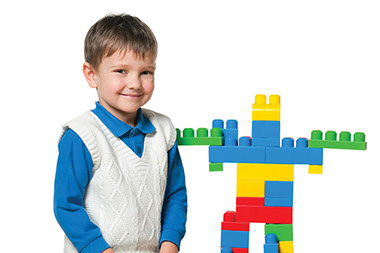
    Image of young boy playing with blocks.

    When it comes to finding toys to encourage a child’s interest in science, sometimes simpler can be better and yet more sophisticated.

    Creighton University professor of physics Dr. Gintaras Duda suggests looking at toys with a tactile, kinesthetic component that can help illustrate scientific principles while allowing a child to come up with new ways to play.

    “If you can get kids to be creative, that’s the main thing,” Dr. Duda said. “Let them sort of figure out how these things work. It’s great scientific learning. Yes, kids love to play with the iPad, but if you dump a bin of Legos out in front of them and let them go, you’ll always be surprised at what they come up with.”

    Hands-on building blocks, tower sets, and a strangely behaving substance known as kinesthetic sand, which shares certain properties with regular sand but performs differently as it’s being molded, have all captured children’s attention and imagination.

    © American Institute for Preventive Medicine

  • Talking To Teens About Alcohol

    FAMILY LIFE

    Image of mother talking to her teen daughter.

    It’s not always easy, but it’s important to talk to your teenage children about the dangers of underage drinking. It can result in violence, sexual assault, brain development problems and even serious injury or death.

    According to the National Institute on Alcohol Abuse and Alcoholism, 35 percent of 15-year-olds have had at least one drink in their lives. Even if your child has never tried alcohol, many teens deal with peer pressure and need to know how to say no. Talking with your child may help prepare them to deal with these situations.

    The National Institutes of Health recommends the following tips for talking with your teen about drinking:

    *  Have open conversations about alcohol. Remain calm and answer questions honestly.

    *  Anytime the subject of alcohol comes up, use it as a chance to talk about it again. The message to avoid alcohol needs to be repeated.

    *  Tell your child about the dangers of alcohol. These include harming the body and brain and putting them in dangerous situations. Tell them underage drinking is against the law.

    *  Try “what if” situations. Ask them, “What if James asks you to try just a sip of beer?” Have them practice their response.

    *  Stress they should never get in a car with a person who has been drinking, even if they “just had one drink.” Alcohol affects teens differently than adults.

    © American Institute for Preventive Medicine

  • Getting Kids To Donate Old Toys

    FAMILY LIFE

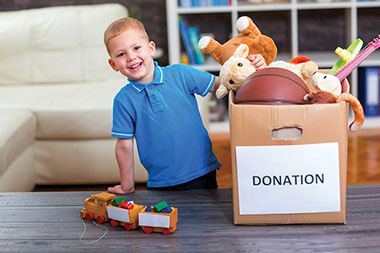
    Image of happy child placing toys in donation box.

    After the holidays, many families find their house overrun with toys. If your kids received new toys as gifts and have old toys they don’t use anymore, consider donating the toys to families in need.

    Unfortunately, it’s not always easy to do this. Many parents find that children struggle to give up old toys. Even if they haven’t touched it in months, they may be unwilling to give the toy away.

    The American Academy of Pediatrics suggests these tips to get kids on board:

    *Make giving a part of family life.Try volunteering for a local charity as a family throughout the year. Talk to the kids about causes you support.

    *Talk to the kids about ways to give.Talk to your child about local charities that could use their old toys. A church nursery, children’s shelters, a child care center, and children’s hospitals are just a few options.

    *Ask for the kids’ help.Take some time to sort through old toys with your child. Try the “give one, keep one” approach so they can decide for themselves what stays and what goes.

    *Only donate toys that are safe, not broken, and clean.

    Tips for teaching gratitude to kids

    *Do small things for friends or neighbors.Have your children bring fresh food to a neighbor who lives alone, or help them rake leaves without asking for anything in return.

    *Talk to them about what they are thankful for each day.This can help parents too.

    *Say “thank you” to others whenever appropriate.This helps them learn by following your example.

    *Send thank-you notesand teach kids to send them after receiving birthday or holiday gifts.

    *Have them do age-appropriate chores.This gives kids an idea of all the work it takes to keep a household running.

    © American Institute for Preventive Medicine