
Tag: Parenting

  • Power Down At Night

    FAMILY LIFE

    Image of family playing a game of chess.

    Make the hour before bed a no-electronics zone, said Dr. Jill Creighton, pediatrician at Stony Brook Children’s Hospital. Powering down makes bedtime easier because kids need to relax before going to sleep.

    Most school-age kids (ages 6 to 17) have at least one device; a smartphone, video games, iPad or computer in their bedrooms while sleeping, according to a National Sleep Foundation survey. And children who leave those devices on at night sleep less-up to one hour less on average per night. Dr. Creighton makes a few more observations for your kids (and maybe for you as well):

    *  Ban hand-held devices from the bedroom. “The burst of light from a phone (even if it’s just to check the time) can break a sleep cycle,” she said. “A regular alarm clock is best.”

    *  If your child has a slight addiction to technology and is resistant about turning off a device, try dialing down the screen time. “Reduce screen time by 30 minutes or more each week until you reach your goal,” said Dr. Creighton. “A good rule of thumb is try to limit recreational screen time to 60 minutes every day. And for every 30 minutes of screen time, make sure your kids get 30 minutes of physical activity.”

    *  Try to replace screen time with an activity. “It’s sometimes hard to get kids off the couch and get them moving,” said Dr. Creighton. “Parents, get creative and make moving fun for kids.” Some ideas: a 20-minute family walk, 20 minutes of shooting hoops outside, walking the dog, going bike riding and doing chores (with the promise of an allowance) such as vacuuming, putting away laundry, raking leaves, shoveling snow and helping with the garbage/recycling.

    © American Institute for Preventive Medicine

  • Should Kids Have Caffeine

    FAMILY LIFE

    Image of boy drinking water standing next to his bike.

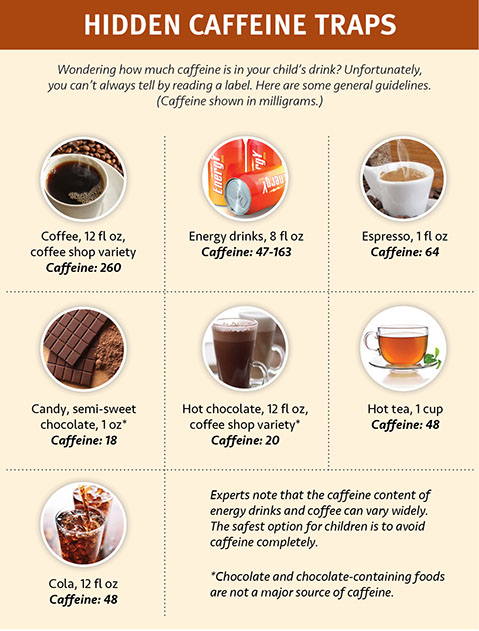
    Many kids love the sugary sweet taste of soda, sports drinks and energy drinks. And, many of these drinks also contain various amounts of caffeine. Is it okay for your child to consume these drinks?

    No, says the American Academy of Pediatrics (AAP). Because these drinks can actually be harmful, the AAP says children and teens should avoid them. Here’s why:

    *  Caffeine can be harmful to a child’s developing brain and heart, according to the AAP.

    *  Soda contains extra sugar and calories that can lead to weight gain and tooth decay.

    *  Energy drinks contain caffeine and other stimulants which can be harmful to children. Often, the caffeine content is not listed and can be higher than a cup of coffee.

    *  Water is a better option for kids playing sports. Sports drinks are usually not needed and often contain extra calories. Only children who exercise very hard for long periods may need a sports drink to replenish lost electrolytes, such as sodium and potassium.

    The Academy of Nutrition and Dietetics (AND) agrees. Caffeine can interfere with a child’s sleep. The AND adds that caffeine can lead to a cycle of lack of sleep and consuming more caffeine to get through the day. If your child is low on energy, the AND recommends a short nap or getting to bed earlier at night.

    © American Institute for Preventive Medicine
  • Single Parents: Strategies For Success

    FAMILY LIFE

    Image of father and young daughter.

    Being a single parent can be stressful. After all, raising a child is tough work! Without someone else to share the load, things may feel twice as hard.

    The U.S. Census Bureau says 11 million households with kids under age 18 have a single parent. These tips can help you and your children lead happy and healthy lives, together:

    *  Let your kids talk. Have a family meal or some time each day to talk with your kids. Ask them about school and activities. Young children may appreciate some quiet playtime with you or reading a book together. Let them talk about their feelings, both positive and negative ones.

    *  Get support. Family, friends and support groups can be very helpful for single parents. Talking to other adults is a great way to get helpful advice and lower your stress level.

    *  Don’t worry about buying “things” for your kids. Most kids just want time with their parent. Your attention is one of the best gifts you can give them.

    *  Find good child care. You may need some time for yourself, away from your kids. A reliable babysitter or daycare is a great way to give you a break from caring for your kids. Try a new hobby, take a walk, or go out with a friend when you get the chance.

    *  Keep a schedule. As much as possible, keep each day close to the same schedule. A consistent bedtime, wake time and meal times can help kids feel secure. Kids like routine because they know what happens next.

    *  Don’t turn to your kids for support. It can be hard when you feel like you need to talk to someone about your feelings. You may be tempted to say things to your kids about work stress or your former spouse or partner. Avoid this, as it adds stress and worry to a child’s mind. Try to keep it to yourself and “vent” to an adult friend instead.

    *  Work on discipline with your former spouse or partner. Having the same rules and parenting strategy is important if kids spend time at more than one house. Try to talk with your child’s other parent about ways you can work together to raise healthy and confident kids.

    *  Keep an eye on your mental well-being. If you are feeling helpless or hopeless, or if you have anxiety or panic attacks, talk to your doctor. Your mental health is an important part of taking on the stress of being a single parent.

    Source: American Academy of Pediatrics

    © American Institute for Preventive Medicine