Tag: pregnancy

  • Want To Have A Baby? Try This

    Pregnancy & Prenatal Care

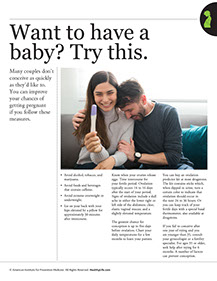
    Image of happy couple looking at positive pregnancy test, while male is making a phone call.

    Many couples don’t conceive as quickly as they’d like to. You can improve your chances of getting pregnant if you follow these measures.

    *  Avoid alcohol, tobacco, and marijuana.

    *  Avoid foods and beverages that contain caffeine.

    *  Avoid extreme overweight or underweight.

    *  Lie on your back with your hips elevated by a pillow for approximately 30 minutes after intercourse.

    *  Know when your ovaries release eggs. Time intercourse for your fertile period. Ovulation normally occurs 14 to 16 days after the start of your period. Signs of ovulation include a dull ache in either the lower right or left side of the abdomen; clear, elastic vaginal mucus; and a slightly elevated temperature.

    You can buy an ovulation predictor kit at most drugstores. The kit contains sticks which, when dipped in urine, turn blue if you’re ovulating.

    Or you can keep track of your fertile days with a special basal thermometer, also available at drugstores. Having intercourse when your temperature drops approximately 0.4ºF increases your chances of conception.

    If you fail to conceive after one year of trying, consult your gynecologist or a fertility specialist. A number of factors can prevent conception.
    A Year of Health Hints book by the American Institute for Preventive Medicine. www.HealthyLife.com. All rights reserved.

    © American Institute for Preventive Medicine
  • Smart Ways To Exercise During Pregnancy

    Pregnancy & Prenatal Care

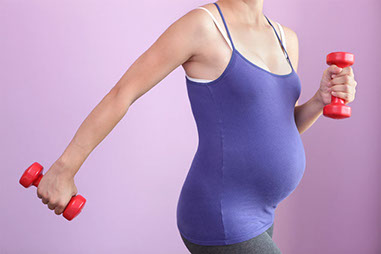
    Image of pregnant women exercising with dumb bells.

    Exercise can help ease muscular aches and pains and other discomforts women sometimes experience during their pregnancies. Yoga, walking, swimming, and other forms of low-impact or stretching exercises are best.

    Follow your health care provider’s advice for exercising during your pregnancy. General guidelines for exercising during pregnancy follow:

    *  You can usually do the same forms of exercise you did before your pregnancy, but don’t go to extremes.

    *  Check your pulse when you exercise. In general, your heart rate should stay below 140 beats a minute.

    *  Avoid any sport or activity with the risk of a hard fall, such as horseback riding and water skiing.

    *  Don’t do exercises that involve jumping, twisting, or bouncy motions.

    *  Don’t become overheated. Drink water before, during, and after you exercise. Make sure you get an extra 4 to 8 ounces of water for every 15 minutes of active exercise. Drink more fluids in warm weather or if you sweat a lot.

    *  After the 20th week of pregnancy, avoid exercises in which you lie flat on your back.

    A Year of Health Hints book by the American Institute for Preventive Medicine. www.HealthyLife.com. All rights reserved.

    © American Institute for Preventive Medicine
  • Due Date

    SELF-CARE CORNER

    Image of pregnant women smiling.

    Although we think of pregnancy as lasting 9 months, in reality most pregnancies last nearly 10 months. Research shows that babies are born healthier if they have at least 39 weeks to grow in the womb.

    The NIH in Health offers these wise choices for a healthy pregnancy:

    *  See your doctor for regular care while you are pregnant.

    *  Talk to your doctor about the medicines you take. Some may not be safe during pregnancy.

    *  Follow a healthy diet.

    *  Take folic acid-at least 400 micrograms each day. This B vitamin can help prevent serious birth defects of the brain and spine. Make sure you take folic acid for at least one month before you get pregnant, too.

    *  Stay active. Ask your doctor which physical activity is safe for you.

    *  Avoid drinking alcohol and smoking (and being around anyone smoking).

    *  Control any existing conditions such as diabetes.

    *  If you have no medical reasons to deliver early, wait until at least 39 weeks for delivery. A woman’s body will go into labor when the baby is ready to enter the world.

    © American Institute for Preventive Medicine

  • Ectopic Pregnancies

    Pregnancy & Prenatal Care

    An ectopic pregnancy is when an embryo starts to develop outside the uterus. (Ectopic means out of place.) This happens less than 2 percent of the time.

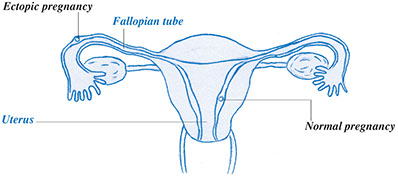
    In normal pregnancies, an egg travels from a woman’s ovary to the uterus. It travels down the fallopian tube to get there. Somewhere along the way, the egg gets fertilized by a male sperm. Once inside, the egg attaches to the wall of the uterus. It becomes an embryo and then a fetus. Nine months later, a baby is born.

    In ectopic pregnancies, the fertilized egg does not reach the uterus. It starts to grow somewhere else. Most often, that’s in the fallopian tube.

    The embryo can’t survive for long outside the uterus. But it can put the mother in danger if it gets too big. It can rupture an organ or cause internal bleeding. Medical steps must be taken right away.

    Symptoms

    Some women may have no symptoms. They may not even know that they are pregnant. When there are symptoms, they usually come within 8 weeks of conception. Symptoms may include:

    *  Pain in the lower belly

    *  Pain on one side of the body

    *  Vaginal spotting and bleeding

    *  Pain in the rectum (rear end) or shoulder

    *  Feeling like throwing up

    *  Throwing up

    *  Feeling weak

    *  Fainting

    Diagnosis

    Ultrasound can sometimes locate the embryo. Laparoscopy is another option. That’s when a tiny camera with a light is put in the mother’s body. It goes in through a very small incision (cut).

    Illustration of normal vs ectopic pregnancy.

    Causes

    There are many causes for ectopic pregnancies:

    *  Damage to the ovary or fallopian tube

    *  Scarring of the ovary or fallopian tube. Scarring can result from endometriosis, pelvic inflammatory disease or an STD.

    Also, the risk for an ectopic pregnancy is higher for women who:

    *  Have had an ectopic pregnancy in the past

    *  Have had fallopian tube surgery

    *  Have had problems getting pregnant

    *  Have used an IUD for birth control

    These women should call their health care provider when they miss a menstrual period.

    Treatment

    Medicines may be used. But if some time has passed, surgery may be needed. The embryo is removed. Any damage to the mother’s body is repaired. In some rare cases, a fallopian tube or ovary must be removed. But women have another set of these. So the mother may become pregnant again.

    Questions to Ask

    Self-Care / Prevention

    Tips to Lower the Risk of an Ectopic Pregnancy

    *  Talk to your health care provider about your risks for damage to your fallopian tubes from:

    – STDs

    – Pelvic Inflammatory Disease

    – Endometriosis

    *  Ask if you need to get tested for these and how often. Find out, too, if your health plan pays for these tests.

    *  Schedule any tests needed with your health care provider.

    Prenatal Self-Care book by the American Institute for Preventive Medicine. www.HealthyLife.com. All rights reserved.

    © American Institute for Preventive Medicine

  • Gbs: Get Tested, Get Treated

    MEDICAL NEWS

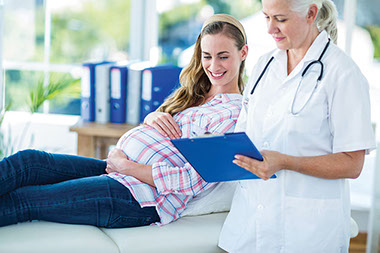
    Image of pregnant women at the doctors office.

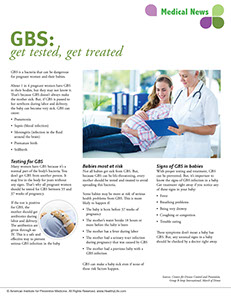
    GBS is a bacteria that can be dangerous for pregnant women and their babies.

    About 1 in 4 pregnant women have GBS in their bodies, but they may not know it. That’s because GBS doesn’t always make the mother sick. But, if GBS is passed to her newborn during labor and delivery, the baby can become very sick. GBS can cause:

    *  Pneumonia

    *  Sepsis (blood infection)

    *  Meningitis (infection in the fluid around the brain)

    *  Premature birth

    *  Stillbirth

    Testing for GBS

    Many women have GBS because it’s a normal part of the body’s bacteria. You don’t get GBS from another person. It may live in the body for years without any signs. That’s why all pregnant women should be tested for GBS between 35 and 37 weeks of pregnancy.

    If the test is positive for GBS, the mother should get antibiotics during labor and delivery. The antibiotics are given through an IV. This is a safe and effective way to prevent serious GBS infection in the baby.

    Babies most at risk

    Not all babies get sick from GBS. But, because GBS can be life-threatening, every mother should be tested and treated to avoid spreading this bacteria.

    Some babies may be more at risk of serious health problems from GBS. This is more likely to happen if:

    *  The baby is born before 37 weeks of pregnancy

    *  The mother’s water breaks 18 hours or more before the baby is born

    *  The mother has a fever during labor

    *  The mother had a urinary tract infection during pregnancy that was caused by GBS

    *  The mother had a previous baby with a GBS infection

    GBS can make a baby sick even if none of these risk factors happen.

    Signs of GBS in babies

    With proper testing and treatment, GBS can be prevented. But, it’s important to know the signs of GBS infection in a baby. Get treatment right away if you notice any of these signs in your baby:

    *  Fever

    *  Breathing problems

    *  Being very drowsy

    *  Coughing or congestion

    *  Trouble eating

    These symptoms don’t mean a baby has GBS. But, any unusual signs in a baby should be checked by a doctor right away.

    Sources: Centers for Disease Control and Prevention, Group B Strep International, March of Dimes

    © American Institute for Preventive Medicine
  • Gestational Diabetes

    Pregnancy & Prenatal Care

    A pregnant woman can have diabetes. If she didn’t have it before the pregnancy, it’s called gestational diabetes. (Gestational refers to pregnancy.) It can begin any time during pregnancy. It usually begins in the last half, though. It goes away after the baby is born. But the woman has a greater risk of getting diabetes later.

    Symptoms

    *  Feeling very tired

    *  Rapid weight gain

    *  Feeling very thirsty

    *  Having to pass urine often

    Also, a sign for gestational diabetes is when the baby gets too big during the pregnancy.

    All pregnant women should be screened for diabetes. Screening happens through urine and blood tests. Those are part of routine prenatal health care visits.

    Causes

    Any pregnant woman can develop gestational diabetes. But risk factors may be:

    *  Obesity before pregnancy

    *  High blood pressure before pregnancy

    *  Having a baby that weighed more than 9 pounds at birth in the past

    *  Having a stillbirth in the past

    *  Having a child with a birth defect in the past

    *  Being older than 25

    *  Being pregnant with more than one baby

    Treatment

    Special problems can be avoided with treatment. Without treatment, the baby can get too big. The mother may not be able to have a vaginal birth. Other problems are preeclampsia and preterm birth. Preterm birth is when the baby is born 3 or more weeks before the due date. There can also be delivery problems. But a woman with gestational diabetes can have a healthy baby. She needs proper medical care, though.

    Blood sugar must be controlled. This is done through:

    *  Special diet from the health care provider

    *  Exercises from the health care provider

    *  Insulin shots, in some cases, when diet and exercise are not enough. Insulin is a hormone. Among other things, it keeps blood sugar from getting too high. The provider teaches how to do the shots. The provider teaches the mother how to check her own blood sugar. It is important to do what the provider requests.

    *  Having prenatal visits more often. The provider checks the mother’s daily blood sugar record. Tests are done to see how the baby is doing.

    *  Extra care at delivery

    {Note: The baby should be checked for low blood sugar a day or so after birth.}

    Questions to Ask

    Self-Care / Prevention

    If you get diabetes during pregnancy:

    *  Follow the diet and exercise plan your health care provider or dietitian gives you.

    *  Drink at least 8 to 10 cups of fluids a day. Drink enough for your thirst. Limit ones with a lot of sugar. Examples: all kinds of sodas, fruit drinks and juices.

    *  Get plenty of rest when you feel tired.

    *  If you are told to do so, test your blood sugar levels at home. Your health care provider will tell you how. Keep a daily record of the results.

    *  After you have your baby, get your blood sugar checked when your doctor tells you to.

    {Note: Some pregnant women need to give themselves insulin shots at home. If your provider says you need to, you will be shown how. Be sure to give the insulin correctly. It’s an important way of taking care of yourself and your baby.}

    Prenatal Self-Care book by the American Institute for Preventive Medicine. www.HealthyLife.com. All rights reserved.

    © American Institute for Preventive Medicine
  • Smoking And Pregnancy

    MEDICAL NEWS

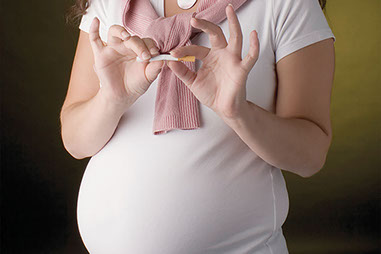
    Image of pregnant women breaking a cigarette in half.

    According to researchers at the Moffitt Cancer Center in Tampa, nearly 50% of pregnant women who smoke will quit during their pregnancies, but more than half of those will start smoking again after they give birth.

    Not only is smoking harmful for new mothers, but their babies could also be exposed to dangerous secondhand smoke or thirdhand smoke which is left on clothing, furniture, curtains and there surfaces.

    © American Institute for Preventive Medicine
  • Getting Ready For Childbirth

    Pregnancy & Prenatal Care

    What to Do First

    *  Choose where you want to have your baby.

    *  Choose a health care provider.

    How to Get Ready

    *  Read books on pregnancy and childbirth.

    *  Take a childbirth class, if you can.

    *  Get regular prenatal care from your health care provider.

    Childbirth Classes Do These Things

    *  Tell you what happens when you give birth

    *  Show you and your partner (or other “coach”) what to do during labor and delivery

    *  Help lessen the fear of giving birth

    *  Help explain what happens with a Cesarean section (C-section). Knowing what to expect is helpful when a C-section is planned. It is helpful, too, if it is not planned, but needs to be done for the safety of you and your baby.

    *  Teach you how to work with the natural birthing process. You can do this through:

    – Exercises that make the muscles used in childbirth stronger

    – Massage

    – Focusing the mind

    – Relaxing and breathing methods

    You can find out about childbirth classes from:

    *  Your health care provider

    *  The maternity department of local hospitals

    *  Local education programs

    *  Local March of Dimes

    Prenatal Self-Care book by the American Institute for Preventive Medicine. www.HealthyLife.com. All rights reserved.

    © American Institute for Preventive Medicine
  • Thinking About Getting Pregnant?

    WELL-BEING

    Image of couple looking at the results of a pregnancy test.

    A healthy pregnancy starts with these steps, according to the CDC:

    *  Take a vitamin with 400 micrograms (mcg) folic acid every day. Read the label.

    *  Avoid alcohol, tobacco, and street drugs.

    *  Keep hands clean by washing them often with soap and water to prevent infections.

    *  See a health care professional regularly. Talk about any medical problems (such as obesity, diabetes, seizures) and medicine use (both prescription and over-the-counter).

    *  Ask about avoiding any substances at work or at home that might be harmful to a developing baby.

    *  Eat a healthy, balanced diet.

    *  Avoid unpasteurized (raw) milk and foods made from it.

    *  Avoid eating raw or undercooked meat.

    *  While pregnant, get early prenatal care and go to every appointment.

    © American Institute for Preventive Medicine