Tag: Respiratory Health

  • Covid-19, Cold, Flu, Or Allergy?

    SELF-CARE CORNER

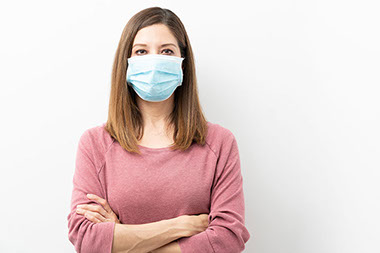
    Women wearing a face mask.

    Know the difference

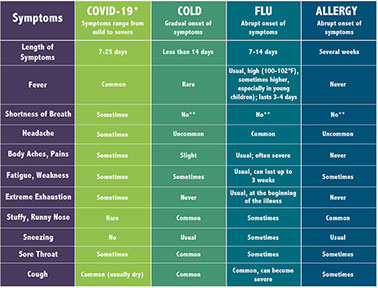
    You’re feeling pretty lousy. You’ve got sniffles, sneezing, and a sore throat. Is it COVID-19, a cold, flu, or allergies? It can be hard to tell them apart because they share so many symptoms. But understanding the differences will help you choose the best treatment.

    Comparison chart of symptoms between COVID-19, Cold, Flu and Allergies.

    © American Institute for Preventive Medicine

  • Cystic Fibrosis Awareness

    MEDICAL NEWS

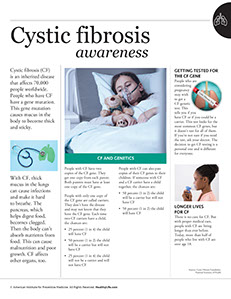
    Girl in bed with breathing mask on while holding a teddy bear.

    Cystic fibrosis (CF) is an inherited disease that affects 70,000 people worldwide. People who have CF have a gene mutation. This gene mutation causes mucus in the body to become thick and sticky.

    With CF, thick mucus in the lungs can cause infections and make it hard to breathe. The pancreas, which helps digest food, becomes clogged. Then the body can’t absorb nutrients from food. This can cause malnutrition and poor growth. CF affects other organs, too.

    CF and genetics

    People with CF have two copies of the CF gene. They get one copy from each parent. Both parents must have at least one copy of the CF gene.

    People with only one copy of the CF gene are called carriers. They don’t have the disease and may not know that they have the CF gene. Each time two CF carriers have a child, the chances are:

    *  25 percent (1 in 4) the child will have CF

    *  50 percent (1 in 2) the child will be a carrier but will not have CF

    *  25 percent (1 in 4) the child will not be a carrier and will not have CF

    People with CF can also pass copies of their CF genes to their children. If someone with CF and a CF carrier have a child together, the chances are:

    *  50 percent (1 in 2) the child will be a carrier but will not have CF

    *  50 percent (1 in 2) the child will have CF

    Getting tested for the CF gene

    People who are considering pregnancy may wish to get a CF genetic test. This tells you if you have CF or if you could be a carrier. This test looks for the most common CF genes, but it doesn’t test for all of them. If you’re not sure if you need the test, ask your doctor. The decision to get CF testing is a personal one and is different for everyone.

    Longer lives  for CF

    There is no cure for CF. But with proper medical care, people with CF are living longer than ever before. Today, more than half of people who live with CF are over age 18.

    Sources: Cystic Fibrosis Foundation, National Institutes of Health

    © American Institute for Preventive Medicine

  • Flu Shot Faqs

    MEDICAL NEWS

    Flu vaccine in bottle.

    Every year, millions of people get the flu. Some get very sick and need to be hospitalized. Thousands of people die from the flu every year.

    This year as we battle COVID-19, getting a flu shot is more important than ever. Flu shots decrease the chance that you will be hospitalized or die from the flu. This helps ensure that hospitals will not become overwhelmed with flu and COVID-19 patients.

    Won’t last year’s shot help me?

    Everyone needs to get a flu shot every year. There are two reasons why:

    *  Your immune system’s protection from the shot gets weaker over time.

    *  Flu viruses are always changing, so you need a shot that has this year’s flu strains in it.

    Will a flu shot increase my risk of getting COVID-19?

    No. Studies have shown that a flu vaccine will not put you at risk for COVID-19. But it will help protect you from the flu, which also protects your loved ones and people around you!

    Will the flu shot give me the flu?

    The flu shot is made from inactivated flu virus. An inactivated virus cannot give you the flu. Some people notice side effects from the shot like aches or a mild fever. These side effects last only a day or two. This is much milder than getting the flu, where fever, aches and other symptoms last a week or longer.

    What if I’m not high risk?

    Everyone 6 months of age and older should get the flu shot, even if they have no health problems. Even young, healthy people – including children – can become very sick with the flu.

    When more people get the flu shot, we help protect people who are high risk, including babies, older adults and people who are allergic to the shot.

    Is it too late to get a flu shot?

    Even if you haven’t gotten your flu shot yet, it’s not too late. After getting the shot, you won’t have immunity right away. It takes about two weeks for your body to develop antibodies to the flu.

    Source: Centers for Disease Control and Prevention, World Health Organization

    © American Institute for Preventive Medicine

  • Stop The Spread Of Respiratory Infections

    MEDICAL NEWS

    Women sitting with a portable oxygen mask.

    The winter months are a peak time for the spread of infectious respiratory diseases. Cold weather often keeps people indoors, where it is easier for infections to spread.

    Infectious respiratory diseases include the common cold, as well as other respiratory illnesses that can be more serious. Some people may be at increased risk of severe side effects from respiratory disease, including the elderly, children, and the immunocompromised.

    Preventing the spread of respiratory disease helps keep everyone in your family and community safe. A few simple precautions can make all the difference. Once you know how these diseases are spread, you can take steps to contain them and make this winter a healthy one.

    Airborne transmission

    The most common way infectious respiratory diseases spread is by small aerosols that become airborne when an ill person coughs, laughs, talks, or sneezes. These tiny aerosols can hang in the air for hours and easily travel to the lungs when inhaled.

    Surface transmission

    Contact with a surface that is contaminated with droplets from an infected person is another route of transmission. If you touch something that has saliva or mucus on it and then later touch your mouth or face, you can become infected with the virus.

    Close contact transmission

    Being in close contact with someone infected with a virus can result in exposure to large virus-laden respiratory droplets. In contrast to the tiny aerosols that can hang in the air for an extended period, larger droplets fall quickly and most likely to spread when people are less than 3 feet apart.

    Types of infectious respiratory viruses

    *  Chickenpox

    *  Coronavirus infections (including SARS-CoV and MERS-CoV)

    *  Diphtheria

    *  Influenza (flu)

    *  Legionnaires’ disease

    *  Measles

    *  Middle East Respiratory Syndrome (MERS)

    *  Mumps

    *  Pneumonia

    *  Pneumococcal meningitis

    *  Rubella (German measles)

    *  Severe Acute Respiratory Syndrome (SARS)

    *  Tuberculosis

    *  Whooping cough

    Prevent the spread

    *  Minimize close contact with ill people.

    *  Wash your hands regularly with soap and water.

    *  Don’t share personal items such as food and utensils.

    *  Ask your doctor which vaccines are recommended for you, including the flu and COVID vaccines.

    *  Cover coughs and sneezes with your elbow and tissues (not your hands!).

    *  Stay home if you are ill.

    © American Institute for Preventive Medicine

  • Take A Shot At Allergies

    SELF-CARE CORNER

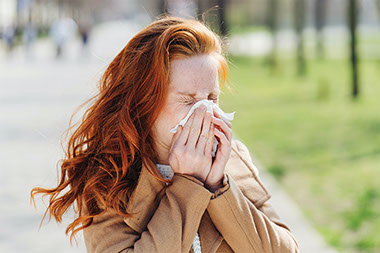
    Women outside using a tissue while sneezing.

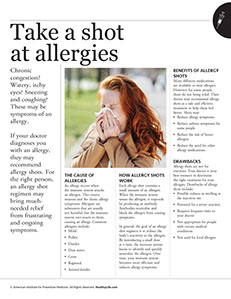
    Chronic congestion? Watery, itchy eyes? Sneezing and coughing? These may be symptoms of an allergy.

    If your doctor diagnoses you with an allergy, they may recommend allergy shots. For the right person, an allergy shot regimen may bring much-needed relief from frustrating and ongoing symptoms.

    The cause of allergies

    An allergy occurs when the immune system attacks an allergen. This creates mucous and the classic allergy symptoms. Allergens are substances that are usually not harmful, but the immune system over-reacts to them, causing an allergy. Common allergens include:

    *  Mold

    *  Pollen

    *  Dander

    *  Dust mites

    *  Grass

    *  Ragweed

    *  Animal dander

    How allergy shots work

    Each allergy shot contains a small amount of an allergen. When the immune system senses the allergen, it responds by producing an antibody. Antibodies neutralize and block the allergen from causing symptoms.

    In general, the goal of an allergy shot regimen is to reduce the body’s reactivity to the allergen. By introducing a small dose at a time, the immune system learns to identify and quickly neutralize the allergen. Over time, your immune system becomes more efficient and reduces allergy symptoms.

    Benefits of allergy shots

    Many different medications are available to treat allergies. However, for some people, those do not bring relief. Their doctor may recommend allergy shots as a safe and effective treatment to help them feel better. Shots may:

    *  Reduce allergy symptoms

    *  Reduce asthma symptoms for some people

    *  Reduce the risk of future allergies

    *  Reduce the need for other allergy medications

    Drawbacks

    Allergy shots are not for everyone. Your doctor is your best resource to determine the right treatment for your allergies. Drawbacks of allergy shots include:

    *  Possible redness or swelling at the injection site

    *  Potential for a severe reaction

    *  Requires frequent visits to your doctor

    *  Not appropriate for people with certain medical conditions

    *  Not used for food allergies

    © American Institute for Preventive Medicine

  • The Causes Of Coughing

    SELF-CARE CORNER

    Man holding his throat and head.

    It’s the season for colds and flu – and that means coughing. Coughing is an important function in your body. It helps clear your airways. Many times, a mild cough will go away on its own. But when should you see a doctor about a cough?

    Common cold

    A common cold may cause some coughing. When you have a runny nose, the fluids drain down your throat. This causes your cough reflex to kick in. It’s a way your body protects your lungs. Although a cough from a cold can be annoying, it usually goes away quickly. Antibiotics won’t help with a cough related to a cold.

    Bronchitis

    Bronchitis is an inflammation in the tiny tubes in the lungs. These tubes are called bronchioles. Viruses and bacteria can get into the bronchioles and make you sick. Chemicals and toxins like tobacco smoke can also invade the bronchioles and lead to bronchitis.

    Symptoms of bronchitis include:

    *  Coughing, especially with mucus

    *  Wheezing or feeling short of breath

    *  Low fever

    *  Chest pain

    Bronchitis is most often caused by a virus so antibiotics will not help. Rest, drinking more fluids and a humidifier can help you feel better.

    Pneumonia

    Pneumonia is an infection in the air sacs inside the lungs. These sacs are called alveoli. Pneumonia can range from mild to serious. If you have pneumonia, you may notice:

    *  Cough with greenish, yellow or bloody mucus

    *  Fever, sweating and chills

    *  Trouble breathing

    *  Stabbing chest pain that hurts when you cough or take a deep breath

    *  Loss of appetite

    *  Feeling weak or tired

    *  Nausea and vomiting (common in small children)

    Many times, a doctor will give you antibiotics for pneumonia. Be sure to take them exactly as your doctor tells you. Pneumonia can be life-threatening if it is not treated effectively.

    Pertussis (Whooping cough)

    Pertussis is very contagious. It may seem like a cold at first. People may have a runny nose or mild cough.

    As it gets worse, pertussis causes a severe cough that can last weeks or even months. The cough makes a high-pitched “whoop” sound. It’s especially dangerous for babies and people with weak immune systems.

    The best way to protect against pertussis is to get vaccinated. If you aren’t sure whether you’re vaccinated, ask your doctor. Pertussis is treated with antibiotics.

    Sources: American Lung Association, Centers for Disease Control and Prevention, National Heart, Lung, and Blood Institute
    © American Institute for Preventive Medicine

  • Bad Air Day

    MEDICAL NEWS

    Image of women sneezing.

    Ozone. It’s an invisible gas but it pollutes the air and may make it harder for you to breathe.

    Ozone is created when sunlight triggers a chemical reaction between oxygen-containing molecules and pollution that comes from cars, power plants, factories, and other sources, says the NIH News in Health. Hot weather is one of the triggers for the creation of ozone. It’s not as much of a problem in winter, say the NIH scientists.

    High levels of ozone might cause you to cough or have throat irritation. Your eyes might water, and you may have trouble breathing. The ozone irritates the lining of your airways and lungs. If you have a lung condition such as asthma, the damage can be greater.

    Adjust your activities on a bad air day to reduce your exposure to air pollution and stay indoors. Limit outdoor activities. Even if you’re in good health, mow the lawn or take a run or walk later in the evening or first thing in the morning. Ozone levels tend to peak between mid-afternoon and early evening. You can track air quality atwww.airnow.gov.

    © American Institute for Preventive Medicine

  • Cold, Flu, Or Allergy?

    SELF-CARE CORNER

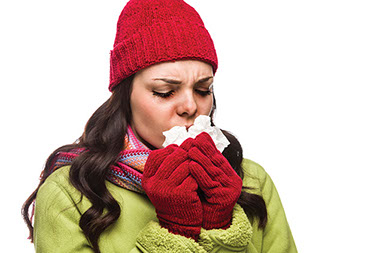
    Image of young women dressed warmly coughing into a tissue.

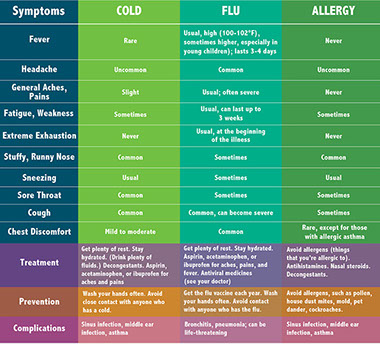
    You’re feeling pretty lousy. You’ve got sniffles, sneezing, and a sore throat. Is it a cold, flu, or allergies? It can be hard to tell them apart because they share so many symptoms. But understanding the differences will help you choose the best treatment, advises the NIH News in Health.

    Chart showing symptoms of a cold vs the flu vs an allergy.

    © American Institute for Preventive Medicine

  • Is It The Flu?

    MEDICAL NEWS

    Image with the words "Fight the Flu" written in a banner.

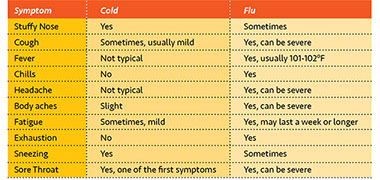
    Influenza, or the flu, circulates every winter and leaves thousands of people sick with a cough, aches, fever, and fatigue. The flu is much more serious than a cold: thousands of people die each year from flu-related complications. Unfortunately, many people don’t realize they have the flu until it’s too late. By then, they may have exposed people at work, school, or other public places. Here’s how to know if you have the flu, or just a cold:

    Chart showing symptoms of the cold vs the flu.

    When you come down with a cold, your symptoms usually appear very gradually over a few days. They often start with a sore throat followed by a runny nose. The flu often hits hard, very quickly. Symptoms appear suddenly and the exhaustion and aches can quickly become severe.

    If in doubt, try to stay home and stay away from others when you’re sick. In particular, try to avoid exposing young children and older adults, who may be more likely to suffer from flu-related problems. Wash your hands frequently and encourage others in your household to do the same.

    If you think you have the flu, call your doctor right away. You may be able to take an antiviral medication (brand name: Tamiflu), which can decrease your symptoms and the amount of time you are sick. Antiviral medications should be taken within 48 hours of the start of symptoms.

    Finally, talk to your doctor about getting a flu shot each year: it’s the number one way to help avoid getting – and spreading – the flu!

    Sources: Centers for Disease Control, U.S. Department of Veterans Affairs

    © American Institute for Preventive Medicine

  • Keeping Asthma Under Control

    SELF-CARE CORNER

    Image on women holding an inhaler.

    According to the CDC, 25 million Americans have asthma today, including 10 percent of all children. Although it’s common, it should not be taken lightly. Asthma can severely affect quality of life, and can be deadly.

    Asthma attacks occur when a person with asthma comes into contact with an asthma “trigger.” A trigger causes inflammation and narrowing of your lungs’ airways. This can lead to coughing, wheezing and can limit or even prevent breathing. Asthma attacks require rescue medicines and can be a medical emergency.

    If you or your child has asthma, the most important thing you can do is keep it under control to avoid attacks. The keys to good asthma control are to:

    Have regular asthma checkups with your doctor.

    Working with your doctor to develop an asthma action plan plays a key role in good asthma control. Keep a diary of your asthma triggers and symptoms such as wheezing, coughing and shortness of breath. Discuss these with your doctor to find better ways to control your asthma. The goal is to minimize asthma attacks and take medicines, as needed.

    Use your asthma control medicines as prescribed.

    Control medicines are taken regularly, usually every day. These medicines help you avoid an asthma attack by minimizing inflammation. They do not help during an asthma attack.

    Know your asthma triggers and avoid them.

    Each person’s asthma triggers are different. They may include irritants, like cigarette smoke or chemical fumes, or they may be allergens such as dust, mold or pollen. You and your doctor should discuss your asthma triggers and how they can be avoided.

    © American Institute for Preventive Medicine