Tag: signs

  • Sepsis: Spot It, Save A Life

    MEDICAL NEWS

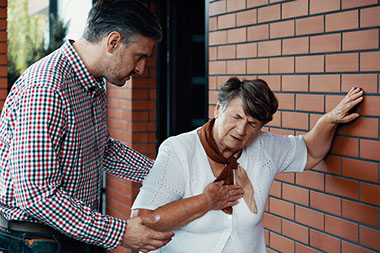
    Women leaning on wall with chest pain and man helping her.

    Sepsis can happen when a person has an infection like pneumonia, an infected cut in the skin or a urinary tract infection. Then, the body’s immune system releases a strong response that can get out of control. This immune response is so powerful that it can damage the body’s organs and cause blood clots.

    Sepsis can cause blood pressure to get extremely low and heart rate to get faster. This can trigger septic shock. With septic shock, the body becomes starved for blood and oxygen. It is a life-threatening emergency.

    Most who get an infection will not get sepsis. But experts don’t know why some people get it and others don’t. It seems to affect older adults, babies and young children the most. People who have a weakened immune system or a long-term illness like diabetes, liver disease or cancer are also more likely to get it.

    Spot sepsis signs

    Sepsis can be hard to spot. At first, symptoms may look like a mild illness. Sometimes a person has an infection and doesn’t know it. Signs include:

    *  Fever or a low body temperature

    *  Chills

    *  Fast heartbeat

    *  Trouble breathing or  fast breathing

    *  Blotchy skin or rash

    *  Being confused

    *  Feeling faint or lightheaded

    Even if you don’t have an infection, or don’t think you have one, ask yourself:

    *  Was I recently around someone who was ill?

    *  Did I recently have surgery or a medical procedure?

    *  Do I have any cuts or breaks in the skin?

    Getting treatment

    If you think a person might have sepsis, it’s important to get them medical care right away. Doctors will look at symptoms and may order blood tests. Sometimes other tests, like an x-ray or CT scan, may be needed.

    Sepsis is serious, so doctors often treat it in the Intensive Care Unit (ICU) of a hospital. Treatment usually includes antibiotics and getting fluids.

    Fortunately, most people who recover from sepsis often contine to have a normal, healthy life.

    Sources: Centers for Disease Control and Prevention, National Institutes of Health, Sepsis Alliance

    © American Institute for Preventive Medicine
  • Recognize Addiction

    Substance Use & Abuse

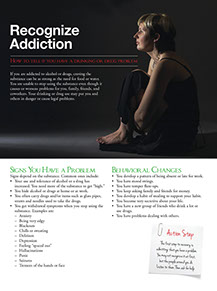
    How to tell if you have a drinking or drug problem.

    If you are addicted to alcohol or drugs, craving the substance can be as strong as the need for food or water. You are unable to stop using the substance even though it causes or worsens problems for you, family, friends, and coworkers. Your drinking or drug use may put you and others in danger or cause legal problems.

    Signs You Have a Problem:

    Signs depend on the substance. Common ones include:

    *  Your use and tolerance of alcohol or a drug has increased. You need more of the substance to get “high.”

    *  You hide alcohol or drugs at home or at work.

    *  You often carry drugs and/or items such as glass pipes, straws and needles used to take the drugs.

    *  You get withdrawal symptoms when you stop using the substance. Examples are:

    – Anxiety

    – Being very edgy

    – Blackouts

    – Chills or sweating

    – Delirium

    – Depression

    – Feeling “spaced out”

    – Hallucinations

    – Panic

    – Seizures

    – Tremors of the hands or face

    Behavioral Changes:

    *  You develop a pattern of being absent or late for work.

    *  You have mood swings.

    *  You have temper flare-ups.

    *  You keep asking family and friends for money.

    *  You develop a habit of stealing to support your habit.

    *  You become very secretive about your life.

    *  You have a new group of friends who drink a lot or  use drugs.

    *  You have problems dealing with others.

    Action Step

    The first step to recovery is admitting that you have a problem. You may not recognize it at first, but the people around you do. Listen to them. Then ask for help.

    Page from Ways to Well-Being book by the American Institute for Preventive Medicine. www.HealthyLife.com. All rights reserved.

    © American Institute for Preventive Medicine

  • Identify Disordered Eating

    Healthylife® Weigh

    Part 5

    Sad young women.

    Disordered eating can be hard on your body and your mind. Follow the guidelines in this book to develop a realistic, patient approach to managing weight. Be self-kind, not   self-critical.

    Eating Disorders

    If you are concerned that you may have an eating disorder (e.g., anorexia nervosa, bulimia nervosa, or a binge eating disorder), contact your doctor immediately, as these are serious medical conditions. You can also find more information here:

    National Eating Disorders Association (NEDA)

    www.nationaleatingdisorders.org

    Helpline: 800-931-2237

    National Institute of Mental Health

    www.nimh.nih.gov/health/topics/eating-disorders/index.shtml

    © American Institute for Preventive Medicine
  • How To Recognize And Report Abuse

    FAMILY LIFE

    Image of the word "Help" spelled out on a green chalk board.

    Child and elder abuse is a serious problem that affects people from all walks of life. One of the most important ways to protect victims from abuse is by making sure they get the help they need and by reporting cases to the authorities. Here’s how to recognize the different types of abuse and what to do in case you know someone who is a victim. This advice is from the General Services Administration of the U.S. government (www.USA.gov).

    Child Abuse

    Children who are victims of physical or emotional abuse often display mental and social development problems. In most cases, the abuse comes from their own parents or caretakers. Here are some of the signs of abuse:

    *Physical abuse:A child who suffers from physical abuse might have bruises, burn marks, broken bones and scars. They are often fearful of adults or certain people.

    *Sexual abuse:Victims of sexual abuse are forced to have sexual relations or engage in inappropriate physical contact with adults. Signs include feeling uncomfortable when changing clothes.

    *Emotional abuse:Children who experience emotional abuse are often victims of private or public humiliation and neglect. A child might show sudden changes in behavior and act violently.

    *Neglect:Children who are physically neglected show signs of lack of personal hygiene and bad health due to malnutrition, among other things.

    If you know or suspect that a child is a victim of abuse and is in immediate danger, call 911. To report a case of child abuse, call the National Child Abuse Hotline at 1-800-422-4453.

    Elder Abuse

    Elder abuse can occur in the victim’s home or at places such as assisted living facilities. People who abuse the elderly are usually people who know or take care of the victims. There are several types of abuse and all of them can have a profound negative impact on a person’s physical and mental health.

    *Physical abuse:As with child abuse, elders who suffer from physical abuse also might show bruises or other signs of injury on their bodies.

    *Sexual abuse:Elders who suffer from sexual abuse might become withdrawn.

    *Emotional abuse:This occurs when the victim is humiliated and treated with disrespect. The victim might feel useless or inferior and might suffer from depression.

    *Neglect:Elders show signs of physical neglect when caretakers fail to help them with their personal hygiene, food, clothing, and medications.

    *Financial abuse:Elders are often targets of financial fraud. This usually happens when people who take care of elders steal their retirement.

    If you know or suspect an elder is a victim of abuse and is in immediate danger, call 911. To report a case of elder abuse, call 1-800-677-1116 or visit the National Center on Elder Abuse atwww.ncea.aoa.gov.

    © American Institute for Preventive Medicine
  • Know The Signs Of Autism

    MEDICAL NEWS

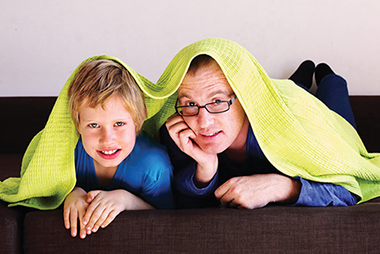
    Image of father and young son.

    Autism affects about 1 in 68 children in our country today, according to the CDC. Autism is a developmental disability that can affect how a person interacts with others, learns, and behaves. For some people, the symptoms are severe. Others can lead fairly normal, independent lives.

    Although experts don’t know what causes autism in many cases, they do know that treating it early can help improve symptoms. Many children with autism show some signs between one and two years of age.

    Now is a great time to learn the early signs of autism and talk to your child’s physician if needed. Some signs to watch for are if your child:

    *  Doesn’t respond to his or her name

    *  Doesn’t point, wave, or gesture

    *  Doesn’t look people in the eye or respond to facial expressions

    *  Doesn’t like physical contact with others

    *  Repeats words or phrases over and over, often without knowing what they mean

    *  Performs repeated body movements such as rocking, spinning, or twirling hands or fingers

    *  Has obsessive interests in only a few activities

    *  Gets very upset with change or differences in routines

    *  Is very interested in organization, such as lining things up in a certain way

    *  Talks in a “robot-like” voice with no emotion or change in tone

    If your child has one of these signs or you notice any unusual behavior, it doesn’t mean your child has autism. But, you should talk with your child’s doctor if you are concerned or have questions about your child’s well-being.

    © American Institute for Preventive Medicine

  • Ovarian Cancer: Know The Signs

    MEDICAL NEWS

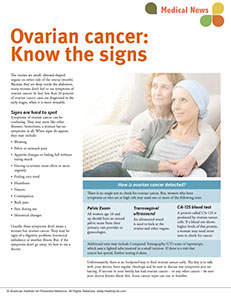
    Image of women holding cancer patient.

    The ovaries are small, almond-shaped organs on either side of the uterus (womb). Because they are deep inside the abdomen, many women don’t feel or see symptoms of ovarian cancer. In fact, less than 20 percent of ovarian cancer cases are diagnosed in the early stages, when it is more treatable.

    Signs are hard to spot

    Symptoms of ovarian cancer can be confusing. They may seem like other illnesses. Sometimes, a woman has no symptoms at all. When signs do appear, they may include:

    *  Bloating

    *  Pelvic or stomach pain

    *  Appetite changes or feeling full without eating much

    *  Having to urinate more often or more urgently

    *  Feeling very tired

    *  Heartburn

    *  Nausea

    *  Constipation

    *  Back pain

    *  Pain during sex

    *  Menstrual changes

    Usually, these symptoms don’t mean a woman has ovarian cancer. They may be signs of a digestive problem, hormonal imbalance or another illness. But, if the symptoms don’t go away, it’s best to see a doctor.

    How is ovarian cancer detected?

    There is no single test to check for ovarian cancer. But, women who have symptoms or who are at high risk may need one or more of the following tests:

    *  Pelvic Exam: All women age 18 and up should have an annual pelvic exam from their primary care provider or gynecologist.

    *  Transvaginal ultrasound: An ultrasound wand is used to look at the ovaries and other organs.

    *  CA-125 blood test: A protein called CA-125 is produced by ovarian cancer cells. If a blood test shows higher levels of this protein, a woman may need more tests to check for cancer.

    Additional tests may include Computed Tomography (CT) scans or laproscopy, which uses a lighted tube inserted in a small incision. If there is a risk that cancer has spread, further testing is done.

    Unfortunately, there is no foolproof way to find ovarian cancer early. The key is to talk with your doctor, have regular checkups and be sure to discuss any symptoms you are having. If anyone in your family has had ovarian cancer – or any other cancer – be sure your doctor knows about this. Some cancer types can run in families.

    © American Institute for Preventive Medicine
  • Stroke Signs

    MEDICAL NEWS

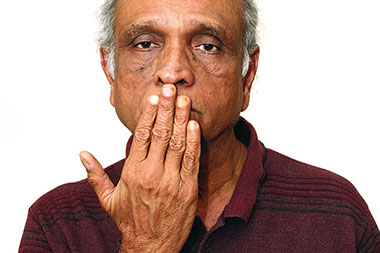
    Image of elderly man with stroke symptoms.

    Seek immediate medical care for someone who shows one or more of the following warning signs: sudden numbness or weakness of the face, arm or leg, especially on one side of the body; sudden confusion, trouble speaking or understanding; sudden trouble seeing in one or both eyes; sudden trouble walking, dizziness, loss of balance or coordination; or sudden, severe headache with no known cause.

    To remember the signs of stroke, the National Stroke Association recommends using the acronymFAST:

    Face:Ask the person to smile. Does one side of the face droop?

    Arms:Ask the person to raise both arms. Does one arm drift downward?

    Speech:Ask the person to speak. Does the person have slurred speech or trouble speaking?

    Time:If you observe any of these signs, call 9-1-1.

    © American Institute for Preventive Medicine