Tag: supervision

  • A Parents Guide To Gaming

    FAMILY LIFE

    Father and son playing virtual games.

    Gaming is a popular past-time among this generation of kids. As a parent, here are some things to know to keep gaming safe.

    *  Moderation is key. Set healthy limits on how much video game time you allow your kids.

    *  Know what they’re playing. Some games are better than others. If your kid struggles with mental health, help them find better games.

    *  Prioritize sleep. It’s common for gaming to interfere with healthy sleep habits. Set boundaries that prioritize sleep.

    *  Take breaks. Teach your kids to schedule regular breaks into their gaming time. Stepping away is good for mental health.

    *  Stay connected off-line. Keep your kids grounded in the real world by engaging in screen-free activities together.

    *  Game with your kids. Get involved with your kids’ interests by gaming with them (in moderation!).

    © American Institute for Preventive Medicine

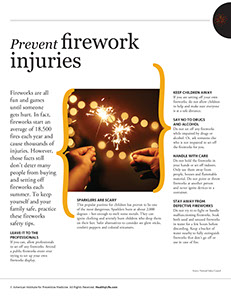
  • Prevent Firework Injuries

    WELL-BEING

    Two hands holding sparklers.

    Fireworks are all fun and games until someone gets hurt. In fact, fireworks start an average of 18,500 fires each year and cause thousands of injuries. However, those facts still don’t deter many people from buying and setting off fireworks each summer. To keep yourself and your family safe, practice these fireworks safety tips.

    Leave it to the professionals

    If you can, allow professionals to set off any fireworks. Attend a public fireworks event over trying to set up your own fireworks display.

    Keep children away

    If you are setting off your own fireworks, do not allow children to help and make sure everyone is at a safe distance.

    Say no to drugs and alcohol

    Do not set off any fireworks while impaired by drugs or alcohol. Or, ask someone else who is not impaired to set off the fireworks for you.

    Handle with care

    Do not hold the fireworks in your hands or set off indoors. Only use them away from people, houses and flammable material. Do not point or throw fireworks at another person and never ignite devices in a container.

    Stay away from defective fireworks

    Do not try to re-light or handle malfunctioning fireworks. Soak both used and unused fireworks in water for a few hours before discarding. Keep a bucket of water nearby to fully extinguish fireworks that don’t go off or use in case of fire.

    Sparklers are scary

    This popular pastime for children has proven to be one of the most dangerous. Sparklers burn at about 2,000 degrees – hot enough to melt some metals. They can ignite clothing and severely burn children who drop them on their feet. Safer alternatives to consider are glow sticks, confetti poppers and colored streamers.

    Source: National Safety Council

    © American Institute for Preventive Medicine

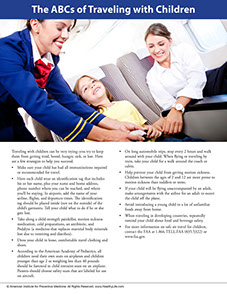
  • The Abcs Of Traveling With Children

    Healthy Travel

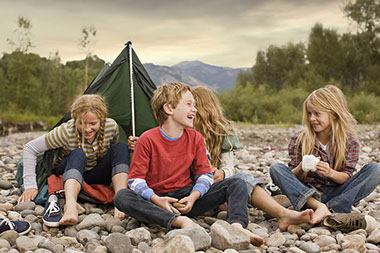
    Image of kids hanging around a camp site.

    Traveling with children can be very trying-you try to keep them from getting tired, bored, hungry, sick, or lost. Here are a few strategies to help you succeed.

    *  Make sure your child has had all immunizations required or recommended for travel.

    *  Have each child wear an identification tag that includes his or her name, plus your name and home address, phone number where you can be reached, and where you’ll be staying. In airports, add the name of your airline, flights, and departure times. The identification tag should be placed inside (not on the outside) of the child’s garments. Tell your child what to do if he or she gets lost.

    *  Take along a child-strength painkiller, motion sickness medication, cold preparations, an antibiotic, and Pedalyte (a medicine that replaces essential body minerals lost due to vomiting and diarrhea).

    *  Dress your child in loose, comfortable travel clothing and shoes.

    *  According to the American Academy of Pediatrics, all children need their own seats on airplanes and children younger than age 2 or weighing less than 40 pounds should be fastened in child restraint seats on an airplane. Parents should choose safety seats that are labeled for use on aircraft.

    *  On long automobile trips, stop every 2 hours and walk around with your child. When flying or traveling by train, take your child for a walk around the coach or cabin.

    *  Help prevent your child from getting motion sickness. Children between the ages of 2 and 12 are more prone to motion sickness than toddlers or teens.

    *  If your child will be flying unaccompanied by an adult, make arrangements with the airline for an adult to escort the child off the plane.

    *  Avoid introducing a young child to a lot of unfamiliar foods away from home.

    *  When traveling in developing countries, repeatedly remind your child about food and beverage safety.

    *  For more information on safe air travel for children, contact the FAA at 1.866.TELL.FAA (835.5322) orwww.faa.gov.

    Page image from A Year of Health Hints book by the American Institute for Preventive Medicine. www.HealthyLife.com. All rights reserved.

    © American Institute for Preventive Medicine

  • Infant Safety

    Child Safety

    Young baby wearing blue hat and wrapped in blue blanket.

    Infants depend on their families to keep them safe. While all babies are unique, there are some safety issues that apply to all infants.

    Never leave a baby or young child alone near any water, such as a bathtub, a toilet, a bucket with water, etc., not even to answer a telephone or the door.

    Do not leave a baby alone on a changing table, bed, sofa or chair.

    Sudden Infant Death Syndrome (SIDS) is the leading cause of death among babies between 1 month and 1 year old. To reduce the risk, place a baby to sleep on its back with a wearable blanket on a flat, sleep surface, covered only with a fitted sheet. Do not use a blanket, pillow, or add toys.

    From infancy on, ask your child’s doctor to check your child’s vision at regular exams. In general, children should start getting vision screening exams starting at age 3.

    A Year of Health Hints book by the American Institute for Preventive Medicine. www.HealthyLife.com. All rights reserved.

    © American Institute for Preventive Medicine

  • Pedaling Safely With Your Toddler

    Child Safety

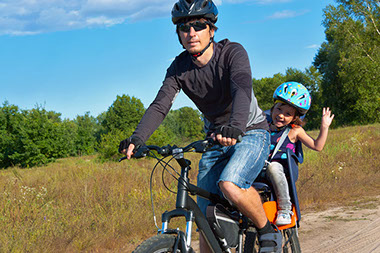
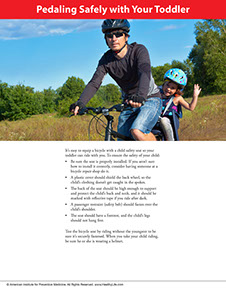
    Image of father and daughter on a bike.

    It’s easy to equip a bicycle with a child safety seat so your toddler can ride with you. To ensure the safety of your child:

    *  Be sure the seat is properly installed. If you aren’t sure how to install it correctly, consider having someone at a bicycle repair shop do it.

    *  A plastic cover should shield the back wheel, so the child’s clothing doesn’t get caught in the spokes.

    *  The back of the seat should be high enough to support and protect the child’s back and neck, and it should be marked with reflective tape if you ride after dark.

    *  A passenger restraint (safety belt) should fasten over the child’s shoulder.

    *  The seat should have a footrest, and the child’s legs should not hang free.

    Test the bicycle seat by riding without the youngster to be sure it’s securely fastened. When you take your child riding, be sure he or she is wearing a helmet.

    A Year of Health Hints book by the American Institute for Preventive Medicine. www.HealthyLife.com. All rights reserved.

    © American Institute for Preventive Medicine

  • Traffic Tips For Tots

    Child Safety

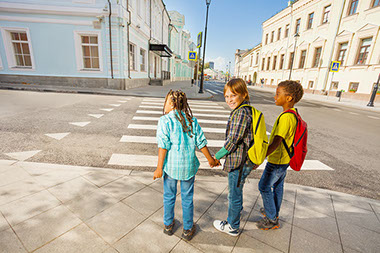
    Image of three children at a cross walk.

    Young children often don’t realize busy streets or highways are dangerous. You have to either look out for them yourself or, if your children are old enough, teach them to get around safely. Here are some pointers.

    *  Never leave children unguarded or out of your sight near parked or moving cars.

    *  Never summon children from across the street; go over and get them. Always hold a child’s hand when you cross the street together.

    *  When exiting a parked car, have your child exit on the curb side.

    A Year of Health Hints book by the American Institute for Preventive Medicine. www.HealthyLife.com. All rights reserved.

    © American Institute for Preventive Medicine

  • Bounce House Dangers

    FAMILY LIFE

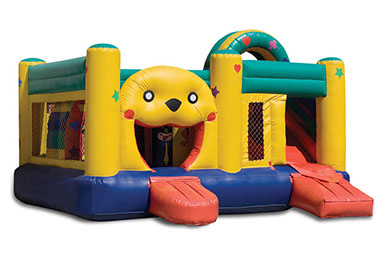
    Image of a bounce house.

    If your kids like to moonwalk and jump in those ever-present birthday-party experiences called bounce houses, know about these dangers. A child goes to the ER every 45 seconds because of bouncing injuries.

    Researchers at Nationwide Children’s Hospital say inflatable bouncers are the cause of a 15-fold increase in injuries to kids-mostly broken bones, strains and sprains but also head and neck injuries. The findings were published in Pediatrics.

    Injury patterns for inflatable bouncers are similar to those the docs see on trampolines, which have national safety guidelines. Bounce houses have no guidelines. So set your own rules.

    The researchers suggest parents should consider the risks before allowing their children to use an inflatable bouncer.If you allow your child to use an inflatable bouncer, limit use to children 6 years of age and older. Make sure an adult is there to supervise while the bouncer is in use and allow only one child on the bouncer at a time. If more than one child will be on the bouncer at the same time, the children should be about the same age and size.

    © American Institute for Preventive Medicine

  • Shopping Cart Spills Can Be Prevented

    FAMILY LIFE

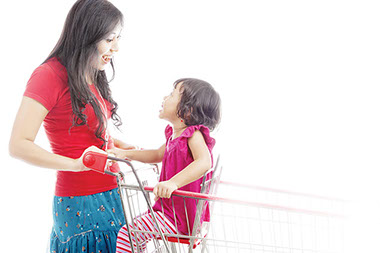
    Image of mother with toddler sitting in a shopping cart.

    Kids dangling over shopping carts reaching for candy, standing up, and riding underneath. Every 22 minutes a child goes to the ER with a shopping cart-related injury. A study in Clinical Pediatrics found that falls from a shopping cart accounted for the majority of injuries for children up to 4 years old, followed by running into/falling over the cart, cart tipovers, and entrapment of arms, legs, and fingers in the cart. The kids suffered concussions and other head injuries.

    Dr. Gary Smith, director of the Center for Injury Research and Policy at Nationwide Children’s Hospital, said parents need to understand the dangers. He suggests these strategies:

    *  Always use the shopping cart safety straps. Be sure your child is snugly secured in the straps and that the child’s legs are placed through the leg openings. If parts of the cart restraint system are missing or are not working, choose another cart.

    *  Use a cart that has a child seat that is low to the ground, if one is available.

    *  Make sure your child remains seated. Stay with the cart and your child at all times.

    *  Avoid placing infant carriers on top of shopping carts. If your child is not old enough to sit upright in the shopping cart seat, consider other options such as leaving your child at home with another adult while you are at the store, using in-store child care areas, using a front- or back-pack carrier, or using a stroller.

    © American Institute for Preventive Medicine

  • Water Safety Tips You Need To Know

    SELF-CARE CORNER

    Image of mother and young child in the pool.

    When the summer sun beats down, many people flock to water for cooling relief and fun. Swimming, boating and water activities are a favorite pastime for many Americans. But, it’s important to know the dangers of water and how to keep yourself and your loved ones safe.

    The Centers for Disease Control and Prevention says more than 3,500 people DROWN in the U.S.  each year in swimming (non-boating) related accidents.

    Most of these are children under the age of 14.

    And according to the U.S. Coast Guard,

    hundreds more die in boating-related accidents

    each year – and the majority of them are DUE TO DROWNING.

    Most drownings are preventable –

    so here’s what you should do any time you’re around water:

    *Keep pools gated and locked.Home pools should be enclosed with a locked fence that’s at least 4 feet high.

    *Always supervise.Children drown within seconds, not minutes. And, there’s typically no screaming, splashing, or other noise. Keep your eyes on children in the water at all times. Don’t turn your back, even for “just a minute.”

    *Wear life jackets.Many boating-related deaths could be avoided if all passengers wore U.S. Coast Guard-approved life jackets. Children should also wear them when swimming.

    *Consider swimming lessons.Children and adults can benefit from knowing how to swim, and it can reduce the risk of drowning.

    *Learn CPR.Giving cardiopulmonary resuscitation (CPR) can save lives if given quickly after a water accident.

    *Stay sober.Alcohol and water don’t mix – so don’t drink if you’re boating, swimming or supervising children in the water.

    *Watch the weather.If there’s a chance of strong winds or a thunderstorm, stay out of the water.

    *Watch for rip currents in natural bodies of water.A rip current is a powerful current that you can’t see, but can quickly take even a grown adult underwater. If you feel one pull you down, swim parallel to the shore until you get free. Don’t try to fight it or swim toward the shore.

    *Know the boating laws.There are state and federal laws that boaters must follow. Learn about them atwww.uscgboating.org. You can also look into boating safety courses and safety checks for your boat on this website.


    © American Institute for Preventive Medicine