Tag: support

  • How To Help A Heavy Child Lose Weight

    Weight Control

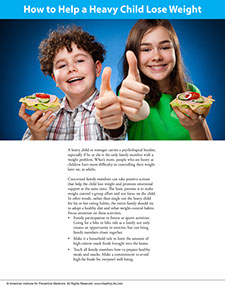
    Image of 2 kids holding a healthy snack in one hand and a thumbs up with the other hand.

    A heavy child or teenager carries a psychological burden, especially if he or she is the only family member with a weight problem. What’s more, people who are heavy as children have more difficulty in controlling their weight later on, as adults.

    Concerned family members can take positive actions that help the child lose weight and promote emotional support at the same time. The basic premise is to make weight control a group effort and not focus on the child. In other words, rather than single out the heavy child for his or her eating habits, the entire family should try to adopt a healthy diet and other weight-control habits. Focus attention on these activities.

    *  Family participation in fitness or sports activities. Going for a hike or bike ride as a family not only creates an opportunity to exercise, but can bring family members closer together.

    *  Make it a household rule to limit the amount of high-calorie snack foods brought into the home.

    *  Teach all family members how to prepare healthy meals and snacks. Make a commitment to avoid high-fat foods for everyone’s well-being.

    Page from A Year of Health Hints book by the American Institute for Preventive Medicine. www.HealthyLife.com. All rights reserved.

    © American Institute for Preventive Medicine

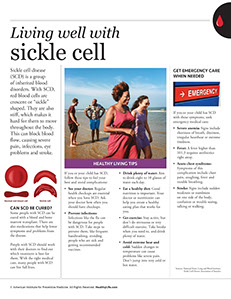
  • Living Well With Sickle Cell

    MEDICAL NEWS

    Two couples walking and laughing along the beach.

    Sickle cell disease (SCD) is a group of inherited blood disorders. With SCD, red blood cells are crescent or “sickle” shaped. They are also stiff, which makes it hard for them to move throughout the body. This can block blood flow, causing severe pain, infections, eye problems and stroke.

    Can SCD be cured?

    Some people with SCD can be cured with a blood and bone marrow transplant. There are also medications that help lower symptoms and problems from the disease.

    People with SCD should work with their doctors to find out which treatment is best for them. With the right medical care, many people with SCD can live full lives.

    Healthy living tips

    If you or your child has SCD, follow these tips to feel your best and avoid complications:

    *  See your doctor: Regular health checkups are essential when you have SCD. Ask your doctor how often you should have checkups.

    *  Prevent infections: Infections like the flu can be dangerous for people with SCD. Take steps to prevent them, like frequent handwashing, avoiding people who are sick and getting recommended vaccines.

    *  Drink plenty of water: Aim to drink eight to 10 glasses of water each day.

    *  Eat a healthy diet: Good nutrition is important. Your doctor or nutritionist can help you create a healthy eating plan that works for you.

    *  Get exercise: Stay active, but don’t do strenuous or very difficult exercise. Take breaks when you need to, and drink plenty of water.

    *  Avoid extreme heat and cold: Sudden changes in temperature can cause problems like severe pain. Don’t jump into very cold or hot water.

    Get emergency care when needed

    If you or your child has SCD with these symptoms, seek emergency medical care:

    *  Severe anemia: Signs include shortness of breath, dizziness, irregular heartbeat or extreme tiredness.

    *  Fever: A fever higher than 101.3 requires antibiotics right away.

    *  Acute chest syndrome: Symptoms of this complication include chest pain, coughing, fever and trouble breathing.

    *  Stroke: Signs include sudden weakness or numbness on one side of the body, confusion or trouble seeing, talking or walking.

    Sources: National Heart, Lung and Blood Institute, Sickle Cell Disease Association of America

    © American Institute for Preventive Medicine

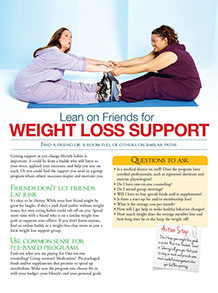
  • Lean On Friends For Weight Loss Support

    Weight Control

    Find a friend or a room full of others on similar paths.

    Getting support as you change lifestyle habits is important. It could be from a buddy who will listen to your woes, applaud your successes, and help you stay on track. Or you could find the support you need in a group program where others’ successes inspire and motivate you.

    Friends don’t let friends eat junk.

    Image of two friends eating healthy.

    It’s okay to be choosy. While your best friend might be great for laughs, if she’s a junk food junkie without weight issues, her own eating habits could rub off on you. Spend more time with a friend who is on a similar weight loss path or supports your efforts. If you don’t know anyone, find an online buddy in a weight-loss chat room or join a local weight loss support group.

    Use common sense for fee-based programs.

    Find out what you are paying for. One-on-one counseling? Group sessions? Medication? Pre-packaged foods and/or supplements that promise to speed up metabolism. Make sure the program you choose fits in with your budget, your lifestyle, and your personal goals.

    Questions to ask:

    *  Is a medical doctor on staff? Does the program have certified professionals, such as registered dietitians and exercise physiologists?

    *  Do I have one-on-one counseling?

    *  Do I attend group meetings?

    *  Will I have to buy special foods and/or supplements?

    *  Is there a start-up fee and/or membership fees?

    *  What is the average cost per month?

    *  How will I get help to make healthy behavior changes?

    *  How much weight does the average member lose and how long does he or she keep the weight off?

    Action Step

    Don’t keep your weight loss goals a secret. Post it on Facebook. Tweet it. Sharing will give you that push to stay on track and provide some much needed encouragement when you feel like quitting.

    Page from Ways to Well-Being book by the American Institute for Preventive Medicine. www.HealthyLife.com. All rights reserved.

    © American Institute for Preventive Medicine

  • It Takes A Village

    Healthylife® Weigh

    Part 4

    Three friends at the beach.

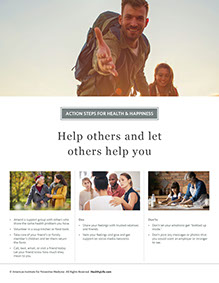
    Build support around you. Support from others can help:

    *  Motivate you and lift you up when you stumble.

    *  Hold you accountable.

    *  Give you new ideas and inspiration.

    *  Make activities more fun.

    Start With One Person

    Find someone you know and trust. This could be anybody-a family member, friend, or coworker. Perhaps this person already motivates you to make positive changes in your life.

    1. Let them know what you are trying to do.

    2. Ask them if they would be willing to support you.

    3. If “yes,” say “thank you!”

    4. Let them know how to help you. This may change over time.

    5. Thank this person often. Let them know the impact they are having on your lifestyle change.

    Let Others Know How to Help You

    Even when someone wants to help you, they may not know how. You have probably experienced this already, like when someone gives you cliché advice or gives you a sweet treat to cheer you up.

    Be specific when you tell others how to help you. Here are a few ideas.

    *  Remind you of your strengths and talents.

    *  Share healthy recipes for easy meals and snacks.

    *  Plan social times that don’t involve food. For example, go for a walk or go to the same exercise class.

    *  Give you non-food gifts only.

    *  Take care of your children so you can do your planned exercise. Or, plan an event where your families can be active together.

    © American Institute for Preventive Medicine

  • How To Be A Team Player At Work

    WORK LIFE

    Concept drawing on table to being a team palyer at work.

    You’re bound to run into many different personality types at the workplace. And when you’re working as a team, it can be challenging to adjust to different work styles.

    The American Management Association says teamwork leads to better problem solving and productivity. But it’s not as simple as just saying you’re part of a team. Here are some tips to help you achieve the best possible outcome with your group:

    *Use your strengths.People have different talents and skills that make them who they are. Offer to use your unique strengths to help get things done. Don’t wait to be asked; volunteer to help when you can.

    *Don’t place blame.When things don’t go well, it’s usually not helpful to blame someone else. Instead, look at the problem and work together to find ways to solve it.

    *Listen without talking.When others have ideas or opinions, listen to their side before jumping in with your thoughts. Listen with the goal of understanding their point, not adding your own.

    *Be aware of different work styles.You may be on a team with someone who does things differently than you. Instead of trying to correct them, see if you can learn something from their way of doing things.

    *Be dependable.The best team players are those who get things done on time. Missing deadlines could cause trouble for others on your team or jeopardize your project.

    *Communicate.If you’re running into problems or have too much on your plate, tell your team about it. Someone else may be able to help so you can keep the project running smoothly. People may have no idea you’re struggling – unless you speak up and tell them.

    © American Institute for Preventive Medicine