Skin Conditions
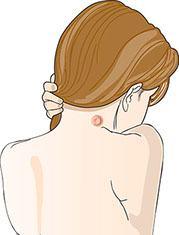
Boils are common, but usually minor, skin problems. Most often, they occur in areas where the skin becomes chaffed and where there are hair follicles. This includes the neck, buttocks, armpits, and genitals. A boil can range in size from that of a pea to a ping pong ball.
Signs & Symptoms
* A round or cone-shaped lump or pimple that is red, tender, painful, or throbs.
* Pus may be visible under the skin’s surface after several days.
* The boil usually bursts open on its own after 10 to 14 days.
Causes
Boils are caused when a hair follicle or oil gland becomes infected with staph bacteria. Boils can be very contagious. Risk factors that make them more likely to occur include:
* Poor hygiene.
* Overuse of corticosteroid medicine.
* Diabetes.
* Short, curly hair that has a tendency to grow back down into the skin.
Treatment
Self-care treats boils. If this is not enough, your doctor may need to lance and drain the boil and prescribe an antibiotic.
Questions to Ask
Self-Care / Prevention
* Don’t scratch, squeeze, or lance boils.
* Put a hot water bottle over a damp washcloth and place it on the boil.
* Soak in a warm tub. Use an antibacterial soap. If boil is ready to burst open, take warm showers instead.
* Take an over-the-counter medicine for pain and swelling as directed.
* Wash your hands after contact with a boil. Keep clothing and other items that were in contact with the boil away from others.
* Once the boil begins to drain, keep it dry and clean. Loosely cover the boil with a sterile gauze dressing. Use first-aid tape to keep it in place. Replace the dressing if it gets moist.
* Wash bed linens, towels, and clothing in hot water. Do not share towels, sports equipment, etc.
* Don’t wear tight-fitting clothes over a boil.
© American Institute for Preventive Medicine