Tag: treatment

  • Face Facts About Acne

    SELF-CARE CORNER

    Image of young women washing her face.

    Acne. It’s embarrassing. It’s annoying. And it’s the most common skin condition in the U.S. Fortunately, acne can often be reduced with simple changes to your skin care routine, say experts from the American Academy of Dermatology.

    For clearer skin, follow these tips:

    *  Wash twice a day and after sweating. Perspiration, especially when wearing a hat or helmet, can make acne worse, so wash your skin as soon as possible after sweating.

    *  Use your fingertips to apply a gentle, non-abrasive cleanser. Using a washcloth, mesh sponge, or anything else can irritate the skin. Do not use skin care products that irritate the skin, which may include astringents, toners, and exfoliants. Dry, red skin makes acne appear worse.

    *  Rinse with lukewarm water.

    *  Shampoo regularly. If you have oily hair, shampoo daily.

    *  Let your skin heal naturally. If you pick, pop or squeeze your acne, your skin will take longer to clear and you increase your risk of getting acne scars.

    *  Keep your hands off your face. Touching your skin throughout the day can cause flare-ups.

    *  Stay out of the sun and tanning beds. Tanning damages your skin. In addition, some acne medications make the skin very sensitive to ultraviolet (UV) light, which you get from both the sun and indoor tanning devices.

    *  See a skin specialist for the most current treatments.

    © American Institute for Preventive Medicine

  • Understanding Enlarged Prostate

    MEDICAL NEWS

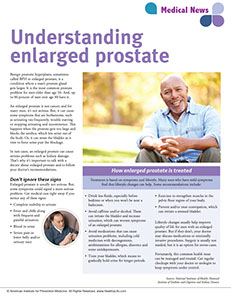
    Image of older male smiling.

    Benign prostatic hyperplasia, sometimes called BPH or enlarged prostate, is a condition where a man’s prostate gland gets larger. It is the most common prostate problem for men older than age 50. And, up to 90 percent of men over age 80 have it.

    An enlarged prostate is not cancer, and for many men, it’s not serious. But, it can cause some symptoms that are bothersome, such as urinating too frequently, trouble starting or stopping urinating and incontinence. This happens when the prostate gets too large and blocks the urethra, which lets urine out of the body. Or, it can stress the bladder as it tries to force urine past the blockage.

    In rare cases, an enlarged prostate can cause serious problems such as kidney damage. That’s why it’s important to talk with a doctor about enlarged prostate and to follow your doctor’s recommendations.

    Don’t ignore these signs

    Enlarged prostate is usually not serious. But, some symptoms could signal a more serious problem. Get medical care right away if you notice any of these signs:

    *  Complete inability to urinate

    *  Fever and chills along with frequent and painful urination

    *  Blood in urine

    *  Severe pain in lower belly and/or urinary tract

    How enlarged prostate is treated

    Treatment is based on symptoms and lifestyle. Many men who have mild symptoms find that lifestyle changes can help. Some recommendations include:

    *  Drink less fluids, especially before bedtime or when you won’t be near a bathroom.

    *  Avoid caffeine and/or alcohol. These can irritate the bladder and increase urination, which can worsen symptoms of an enlarged prostate.

    *  Avoid medications that can cause urination problems, including cold medicines with decongestants, antihistamines for allergies, diuretics and some antidepressants.

    *  Train your bladder, which means to gradually hold urine for longer periods.

    *  Exercises to strengthen muscles in the pelvic floor region of your body.

    *  Prevent and/or treat constipation, which can irritate a stressed bladder.

    Lifestyle changes usually help improve quality of life for men with an enlarged prostate. But if they don’t, your doctor may discuss medications or minimally invasive procedures. Surgery is usually not needed, but it is an option for severe cases.

    Fortunately, this common health issue can be managed and treated. Get regular checkups with your doctor or urologist to keep symptoms under control.

    Sources: National Institutes of Health, National Institute of Diabetes and Digestive and Kidney Diseases

    © American Institute for Preventive Medicine

  • Gbs: Get Tested, Get Treated

    MEDICAL NEWS

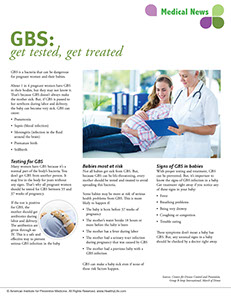
    Image of pregnant women at the doctors office.

    GBS is a bacteria that can be dangerous for pregnant women and their babies.

    About 1 in 4 pregnant women have GBS in their bodies, but they may not know it. That’s because GBS doesn’t always make the mother sick. But, if GBS is passed to her newborn during labor and delivery, the baby can become very sick. GBS can cause:

    *  Pneumonia

    *  Sepsis (blood infection)

    *  Meningitis (infection in the fluid around the brain)

    *  Premature birth

    *  Stillbirth

    Testing for GBS

    Many women have GBS because it’s a normal part of the body’s bacteria. You don’t get GBS from another person. It may live in the body for years without any signs. That’s why all pregnant women should be tested for GBS between 35 and 37 weeks of pregnancy.

    If the test is positive for GBS, the mother should get antibiotics during labor and delivery. The antibiotics are given through an IV. This is a safe and effective way to prevent serious GBS infection in the baby.

    Babies most at risk

    Not all babies get sick from GBS. But, because GBS can be life-threatening, every mother should be tested and treated to avoid spreading this bacteria.

    Some babies may be more at risk of serious health problems from GBS. This is more likely to happen if:

    *  The baby is born before 37 weeks of pregnancy

    *  The mother’s water breaks 18 hours or more before the baby is born

    *  The mother has a fever during labor

    *  The mother had a urinary tract infection during pregnancy that was caused by GBS

    *  The mother had a previous baby with a GBS infection

    GBS can make a baby sick even if none of these risk factors happen.

    Signs of GBS in babies

    With proper testing and treatment, GBS can be prevented. But, it’s important to know the signs of GBS infection in a baby. Get treatment right away if you notice any of these signs in your baby:

    *  Fever

    *  Breathing problems

    *  Being very drowsy

    *  Coughing or congestion

    *  Trouble eating

    These symptoms don’t mean a baby has GBS. But, any unusual signs in a baby should be checked by a doctor right away.

    Sources: Centers for Disease Control and Prevention, Group B Strep International, March of Dimes

    © American Institute for Preventive Medicine

  • Working Through Cancer

    WORK LIFE

    Image of co-workers hugging.

    A person is considered a cancer survivor from the minute he or she is diagnosed with the disease. Staying at work during treatment or going back to work after treatment can pose challenges along with fighting the disease.

    Employers are required to support a survivor’s decision to work, said Teri Hoenemeyer, director of education and supportive services at the University of Alabama at Birmingham Comprehensive Cancer Center.

    “Cancer is classified as a disability, and working survivors have protections and rights under the Americans with Disabilities Act, so employers will need to provide time for doctors’ appointments and treatments that may go above and beyond Family Medical Leave,” she said.

    Whether it’s a work colleague, family member, or yourself, this advice may help, say survivors:

    *  Take it all in one bit at a time-one day, one treatment, one surgery, one radiation.

    *  Though it can be difficult, stay positive.

    *  Understand that cancer will take away your hair, your energy, and control of your schedule, but it will give back many new things such as supportive friends and coworkers, notes of encouragement, and a new outlook on life.

    Hoenemeyer said once back in the workplace following a diagnosis, survivors must take special care of themselves.

    “Extra rest, a healthy diet, physical activity, and low stress are all important factors to the survivor at work,” Hoenemeyer said. “Take time out of the day to do something that focuses on managing stress and anxiety; it could be meditation, sitting still with some music or taking a walk.”

    © American Institute for Preventive Medicine

  • Gluten-Free Diet Is Treatment, Not Trend

    MEDICAL NEWS

    Image of various breads with the words "Gluten Free" written in powedered white flour.

    You’d never suspect it from the growing number of gluten-free items on supermarket shelves, but only one in about every 133 people has celiac disease. This genetic autoimmune disorder causes the body to react negatively to the intake of gluten, a protein found in wheat, rye, barley, and their byproducts.

    It is estimated that more than 80% of the Americans whose systems can’t tolerate gluten are either not diagnosed or misdiagnosed. And the average time a person waits for a correct diagnosis is more than 10 years. A prime reason is that the symptoms of gluten-related problems vary widely-from migraine headaches and diarrhea to joint pain and skin rashes-and are common to numerous other conditions and disorders.

    When a person with celiac disease consumes gluten, the protein triggers an immune response that damages part of the small intestine called villi, which interferes with the absorption of nutrients from the food. This can cause malnutrition, trigger other health problems-among them cancer, osteoporosis, and infertility-and open the door to other autoimmune disorders.

    “There’s greater awareness of celiac disease, we have better tests, and we know more about who should be screened, but we’re still seeing only the tip of the iceberg,” said  Dr. Anca M. Safta, a gastroenterologist at Wake Forest Baptist Medical Center and director of its Gluten & Allergic Digestive Disorders Program.

    A simple antibody blood test can screen for celiac disease. And because the disease is inherited, there’s also genetic testing. But while these tests can eliminate the possibility of celiac disease, they can’t confirm its presence. That usually has to be done with an endoscopic biopsy. This procedure examines the small intestine and removes tissue samples for analysis.

    If the biopsy results are positive for celiac disease, the only way to repair existing damage to the small intestine and prevent reoccurrence is for the person to adopt a strict gluten-free diet.

    That’s also the treatment for people with non-celiac gluten sensitivity. This has symptoms much like those of celiac disease but doesn’t cause the same intestinal damage and can’t be identified through blood or tissue testing.

    Steering completely clear of gluten can be tricky. Gluten isn’t just in grain-based products such as bread, cereal, cookies, pastry, pasta, and beer. It also can be found in candy, ice cream, lunch meats, cooking oil, salad dressing, condiments, instant coffee, soup mixes, and a host of other processed foods. Vitamins, toothpaste, and lipstick can also contain gluten.

    Gluten-free products are more plentiful than ever, but they’re also costly-nearly 250% more expensive than their conventional counterparts. And because even small amounts of gluten can produce negative effects, cross-contamination-when gluten-free foods come into contact with or are prepared with gluten products-is a threat, especially when eating outside the home.

    Is going gluten-free good for everybody? In a word, no.

    “It’s not necessarily a healthier diet if you don’t need it,” Dr. Safta said.

    Any time you restrict your diet, you have a greater chance of not getting all the nutrients you need. You risk developing a nutrient or vitamin deficiency because gluten-free products aren’t fortified or enriched like most regular bread and cereal products are.

    Going gluten-free is not the best way to shed excess pounds. Weight loss is generally due to eating fewer processed foods and more fruits and vegetables, not shunning gluten. And gluten-free foods can contain as many calories as standard products, or even more.

    © American Institute for Preventive Medicine

  • Breast Cancer

    Cancer

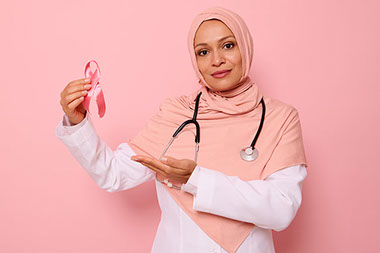
    Female doctor holding a pink ribbon for breast cancer awareness.

    The pink ribbon is the symbol of breast cancer awareness.

    If you are due for a mammogram, and have not yet scheduled one this year, do it today.

    Schedule a mammogram. This X-ray of the breasts can help detect breast cancer early, when it is easier to treat successfully.

    Women are advised to get a mammogram every 1 to 2 years starting at age 40. Women at a higher risk for breast cancer should seek expert medical advice about getting mammograms.

    Ask your doctor about your risk for breast cancer. You can also use the Breast Cancer Risk Assessment Tool atcancer.gov/bcrisktool.

    Health at Home Lifetime book by the American Institute for Preventive Medicine. www.HealthyLife.com. All rights reserved.

    © American Institute for Preventive Medicine

  • Hard To Pronounce, Painful Foot Pain

    SELF-CARE CORNER

    Illustration of an inflammed plantar fascia.

    Ouch! That heel pain you feel when you first get up in the morning has a name.

    Plantar fasciitis(PLAN-ter fash-ee-EYE-tus). An inflammation of the fibrous band of tissue that connects your heel bone to the base of your toes along the bottom of your foot. The condition usually starts with pain the morning after a day of increased physical activity. You may not remember a specific injury.

    Ice the sore area for 20 minutes two times a day, after dinner and before bedtime, to relieve symptoms. Ask your doctor about taking nonsteroidal anti-inflammatory pain relievers, suggest experts at the American Orthopaedic Foot & Ankle Society.

    Stretching the plantar fascia with these exercises (www.aofas.org/footcaremd/conditions/ailments-of-the-heel/Pages/Plantar-Fasciitis.aspx) is the best treatment after the initial inflammation has gone down.

    For longer-term problems and pain that won’t go away, some injections are available, and shock wave therapy is an option. Surgery may be a final solution.

    © American Institute for Preventive Medicine

  • Colorectal Cancer

    Cancer

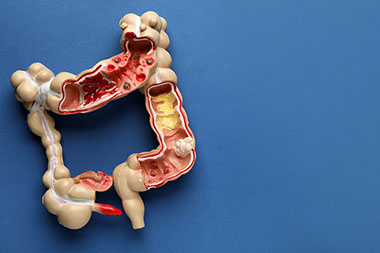
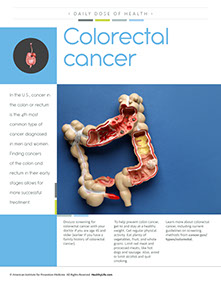
    Plastic model colon showing parts of the inside of the colon.

    In the U.S., cancer in the colon or rectum is the 4th most common type of cancer diagnosed in men and women. Finding cancers of the colon and rectum in their early stages allows for more successful treatment.

    Discuss screening for colorectal cancer with your doctor if you are age 45 and older (earlier if you have a family history of colorectal cancer).

    To help prevent colon cancer, get to and stay at a healthy weight. Get regular physical activity. Eat plenty of vegetables, fruit, and whole grains. Limit red meat and processed meats, like hot dogs and sausage. Also, avoid or limit alcohol and quit smoking.

    Learn more about colorectal cancer, including current guidelines on screening methods fromcancer.gov/types/colorectal.

    Health at Home Lifetime book by the American Institute for Preventive Medicine. www.HealthyLife.com. All rights reserved.

    © American Institute for Preventive Medicine

  • Hope For Migraine Headaches

    SELF-CARE CORNER

    Image of man with a migraine.

    Migraine headaches are more than an inconvenience. Migraine pain is severe and can interfere with a person’s life. Fortunately, today’s migraine treatments can help many people get the relief they need.

    There are two types of medicines for migraines: abortive and preventive.

    Abortive medicines

    Abortive medicines, also referred to as acute, are designed to stop, or abort, a migraine. They should be taken as early as possible when a person feels a migraine starting. Some of these medicines include:

    *  Pain relievers. Aspirin, ibuprofen, and other common pain relievers can be used to treat mild migraines. But, for many people, these aren’t enough to get rid of a migraine. Experts say people shouldn’t take these medicines more than twice a week. Overusing these medicines can lead to stomach problems and can even cause more headaches.

    *  Prescription migraine medicines. Your doctor may prescribe special medicines that are designed to relieve migraine pain and other symptoms, such as nausea. These may work well for people who don’t find relief from over-the-counter pain relievers.

    Preventing migraines

    Some of the medicines available today are used to prevent migraines before they happen. These are called preventive treatments. These types of medicines are recommended for people who:

    *  Get four or more migraines a month

    *  Have migraines that last 12 hours or longer

    *  Haven’t found relief with  abortive medicines

    *  Can’t take abortive medicines

    There are different types of preventive medicines available. Sometimes a person needs to try several different medicines before finding the one that works best for them. Keeping track of how many migraines you have and their severity can help you see how well a medicine is working.

    In addition to medicines, you and your doctor may discuss migraine triggers and how to avoid them. Certain foods, stress, lack of sleep, hormonal changes, and many other things can cause migraines. Learning your own triggers and how to avoid them is an important part of preventing migraines.

    What makes a migraine

    Migraines usually have the following symptoms:

    *  Severe pain and intense pounding in the head that makes it impossible to do daily tasks

    *  Nausea and/or vomiting

    *  Sensitivity to light or sound

    Some migraines also start with an aura. An aura may be vision changes, like seeing flashes of light or lines. Some people have trouble seeing clearly and cannot focus on objects. An aura may also cause tingling in an arm or leg. Only about 20 percent of people who get migraines will have an aura.

    © American Institute for Preventive Medicine

  • Fibroids

    Women’s Health

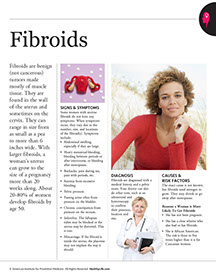
    Fibroids are benign (not cancerous) tumors made mostly of muscle tissue. They are found in the wall of the uterus and sometimes on the cervix. They can range in size from as small as a pea to more than 6 inches wide. With larger fibroids, a woman’s uterus can grow to the size of a pregnancy more than 20 weeks along. About 20% to 25% of women over the age of 35 get fibroids.

    Signs & Symptoms

    Some women with uterine fibroids do not have any symptoms. When symptoms occur, they vary due to the number, size, and locations of the fibroid(s). Symptoms include:

    *  Abdominal swelling, especially if they are large.

    *  Heavy menstrual bleeding, bleeding between periods or after intercourse, or bleeding after menopause.

    *  Backache, pain during sex, pain with periods, etc.

    *  Anemia from excessive bleeding.

    *  Pelvic pressure.

    *  Passing urine often from pressure on the bladder.

    *  Chronic constipation from pressure on the rectum.

    *  Infertility. The fallopian tubes may be blocked or the uterus may be distorted.

    *  Miscarriage. If the fibroid is inside the uterus, the placenta may not implant the way it should.

    Diagnosis

    Fibroids are diagnosed with a medical history and a pelvic exam. Your doctor can also do other tests, such as an ultrasound and hysteroscopy to confirm their presence, location, and size.

    Causes & Risk Factors

    Reasons a Woman is More Likely To Get Fibroids

    *  She has not been pregnant.

    *  She has a close relative who also had or has fibroids.

    *  She is African American. The risk is three to five times higher than it is for Caucasian women.

    The exact cause is not known, but fibroids need estrogen to grow. They may shrink or go away after menopause.

    Treatment

    “Watchful waiting”

    Your doctor will “watch” for any changes and may suggest “waiting” for menopause, since fibroids often shrink or disappear after that time. If you have problems during this “waiting” period, you may decide that you do not want to “wait” for menopause, but choose to have something done to treat your fibroids. Problems include: Too much pain; too much bleeding; an abdomen that gets too big; the need to take daily iron to prevent anemia; and other abdominal problems.

    Medication

    One type is called GnRH agonists. These block the production of estrogen by the ovaries. This shrinks fibroids in some cases, but is not a cure. The fibroids return when the medicine is stopped. Shrinking the fibroids might allow a minor surgery (with less blood loss) to be done instead of a major one. GnRH agonists are taken for a few months, but not more than six, because their side effects mimic menopause and may lead to osteoporosis. In some cases, GnRH agonists can be used longer with “Add Back Therapy.” This uses low dose estrogen to make side effects milder.

    Surgery Methods Include:

    *  Myomectomy. The fibroids are removed. The uterus is not. This can be done using a laparoscope and a laser (laparoscopy). The fibroids could also be cut out using a resectoscope (hysteroscopy). Fibroids can be removed under direct vision during abdominal surgery (laparotomy). Myomectomy methods may allow fibroids to grow back. The more fibroids there are to begin with, the greater the chance they will grow back.

    *  Procedures to destroy the uterine lining. These do not remove fibroids or the uterus, but stop or lighten menstrual flow from then on. The uterine lining can be destroyed using a laser, heat, or ultra cold.

    *  Uterine artery embolization. A catheter is inserted in a large blood vessel in the groin and sent to the level of the uterine arteries. A substance is given that blocks blood flow to the uterine arteries that nourish the fibroids. This treatment shrinks the fibroids.

    *  Hysterectomy. This surgery removes the uterus and the fibroids with it. This method is advised when the fibroid is very large or when other treatments don’t stop severe bleeding. It is the only way to get rid of fibroids for sure. A women can no longer get pregnant after the surgery. This treatment is also advised if the fibroid is cancerous. This rarely occurs.

    Questions to Ask

    Self-Care / Prevention

    *  Take medications as advised.

    *  Maintain a healthy body weight. Follow a diet low in fat. The more body fat you have, the more estrogen your body is likely to have. This promotes fibroid growth.

    *  Do regular exercise. This may reduce your body’s fat and estrogen levels.

    Resources

    National Women’s Health Information Center

    www.womenshealth.gov

    Women's Self-Care book by the American Institute for Preventive Medicine. www.HealthyLife.com. All rights reserved.

    © American Institute for Preventive Medicine