Tag: vacation

  • Secure Your Home For Vacation

    WELL-BEING

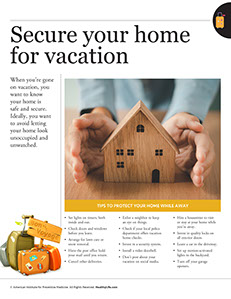
    Small wooden home on table with hands protecting it.

    When you’re gone on vacation, you want to know your home is safe and secure. Ideally, you want to avoid letting your home look unoccupied and unwatched.

    Tips to protect your home while away

    *  Set lights on timers, both inside and out.

    *  Check doors and windows before you leave.

    *  Arrange for lawn care or snow removal.

    *  Have the post office hold your mail until you return.

    *  Cancel other deliveries.

    *  Enlist a neighbor to keep an eye on things.

    *  Check if your local police department offers vacation home checks.

    *  Invest in a security system.

    *  Install a video doorbell.

    *  Don’t post about your vacation on social media.

    *  Hire a housesitter to visit or stay at your home while you’re away.

    *  Invest in quality locks on all exterior doors.

    *  Leave a car in the driveway.

    *  Set up motion-activated lights in the backyard.

    *  Turn off your garage openers.

    © American Institute for Preventive Medicine

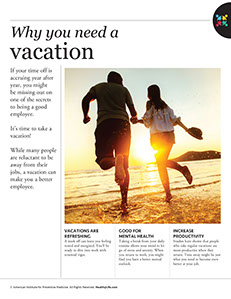
  • Why You Need A Vacation

    WORK LIFE

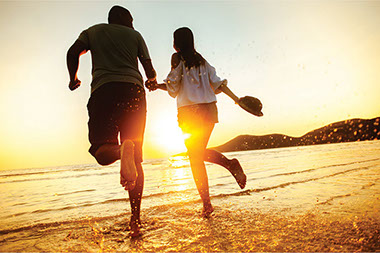
    Couple holding hands running into the ocean.

    If your time off is accruing year after year, you might be missing out on one of the secrets to being a good employee.

    It’s time to take a vacation! While many people are reluctant to be away from their jobs, a vacation can make you a better employee.

    Vacations are refreshing

    A week off can leave you feeling rested and energized. You’ll be ready to dive into work with renewed vigor.

    Good for mental health

    Taking a break from your daily routine allows your mind to let go of stress and anxiety. When you return to work, you might find you have a better mental outlook.

    Increase productivity

    Studies have shown that people who take regular vacations are more productive when they return. Time away might be just what you need to become even better at your job.

    © American Institute for Preventive Medicine

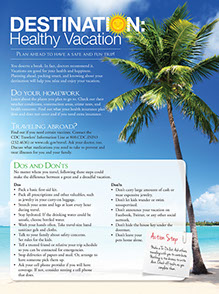
  • Destination: Healthy Vacation

    Healthy Travel

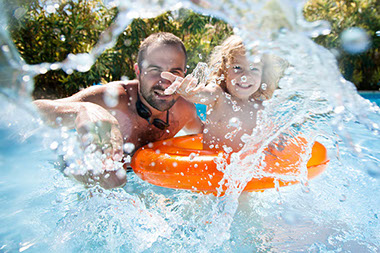
    Image of father and child playing in the pool.

    Plan ahead to have a safe and fun trip!

    You deserve a break. In fact, doctors recommend it. Vacations are good for your health and happiness. Planning ahead, packing smart, and knowing about your destination will help you relax and enjoy.

    Do your homework.

    Learn about the places you plan to go to. Check out their weather conditions, construction areas, crime rates, and health concerns. Find out what your health insurance plan does and does not cover and if you need extra insurance. No matter where you travel, following these steps could make the difference between a great and a dreadful vacation.

    Dos

    *  Pack a basic first-aid kit.

    *  Pack all prescriptions and other valuables, such as jewelry in your carry-on luggage.

    *  Stretch your arms and legs at least every hour during travel.

    *  Stay hydrated. If the drinking water could be unsafe, choose bottled water.

    *  Wash your hands often. Take travel-size hand sanitizer gels and cloths.

    *  Talk to your family about safety concerns. Set rules for the kids.

    *  Tell a trusted friend or relative your trip schedule so you can be contacted for emergencies.

    *  Stop deliveries of papers and mail. Or, arrange to have someone pick them up.

    *  Ask your cell phone provider if you will have coverage. If not, consider renting a cell phone that does.

    Don’ts

    *  Don’t carry large amounts of cash or wear expensive jewelry.

    *  Don’t let kids wander or swim unsupervised.

    *  Don’t announce your vacation on Facebook, Twitter, or any other social network.

    *  Don’t hide the house key under the doormat.

    *  Don’t leave your pets home alone.

    Traveling abroad?

    Find out if you need certain vaccines. Contact the CDC Travelers’ Information Line at 800.CDC.INFO (232.4636) orwww.cdc.gov/travel. Ask your doctor, too. Discuss what medications you need to take to prevent and treat illnesses for you and your family.

    Action Step

    Make a To-Do list. Ask others traveling with you to contribute. Nothing is too obvious to write down. Check off tasks as you complete them.

    Page image from Ways to Well-Being book by the American Institute for Preventive Medicine. www.HealthyLife.com. All rights reserved.

    © American Institute for Preventive Medicine

  • Preparing For A Vacation From Work

    WORK LIFE

    Image of family looking out of an airport window.

    To help make the most of your time off, be sure you’ve prepared for your absence at work. These steps can help you get ready for your well-deserved break:

    *Give people advance notice.As soon as you have plans, tell your supervisor and colleagues. If you have key clients or customers, be sure to tell them too.

    *Set up an out-of-office reply and voicemail.These basics let everyone know when you’ll get back with them. If possible, list a colleague’s name and number for urgent needs, but ask them first if this is okay.

    *Make a list of important tasks to complete before you leave.Then, stick to the list and make sure you get it done. This will help your colleagues and you’ll be able to rest easier on vacation.

    *Decide how you can be reached and let people know.If you don’t want phone calls or emails, let co-workers know. Some people want to take a complete break from work, while others like checking in. Or, you may tell people to call only if it’s urgent. It may depend on your job responsibilities and your preference.

    Traveling and spending

    In 2016, people in the U.S. spent $836.6 billion on domestic travel. This made up 84 percent of all travel expenditures. The money spent on travel in the U.S. directly supported over 7 million American jobs.

    Travelers spent $248.5 billion on food services. This accounted for 25 percent of travel expenses. It surpassed lodging expenses, which were 21.3 percent, or $210.8 billion, of total travel expenses.

    Source: U.S. Travel Association

    © American Institute for Preventive Medicine

  • Tips To Save On Your Summer Vacation

    FINANCIAL HEALTH

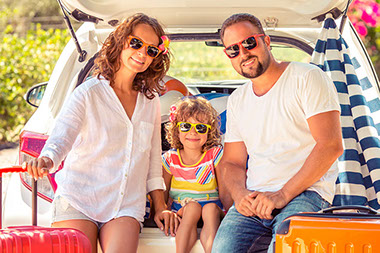
    Image of family about to go on a road trip.

    You want your vacation to be memorable, but you probably don’t want to remember spending a lot of money. With some advanced planning, you can save a good amount of your travel and vacation expenses. Here’s what travel experts recommend:

    *Don’t pick prime times for flights.If you’re flying, you’ll usually pay less for airline tickets during off-peak times. This means flying during the middle of the week, early in the morning or late at night.

    *Be flexible.When booking airline tickets, choose the flexible dates option to find the lowest price for airfare. Sometimes, the savings can be substantial.

    *Visit during the off-season.Many people travel to warm, tropical destinations during the winter months. Try going during the late fall or early spring instead.

    *Check out renting a house.Many destinations offer houses for rent at about the same price per night as hotels but with much more space. When you share with another family, you split the cost for even more savings.

    *Look for online deals & coupons.Look online for local activities you want to do, such as visiting museums or scuba diving excursions. Many places offer deals or coupons if you book in advance. You may also be able to avoid lines for buying tickets.

    *Don’t forget your discounts.Companies like AARP and AAA often have discount rates for members. Some employers have discounts available to employees for car rentals and other vacation items.

    *Pack snacks.Pack healthy snacks in a cooler for a car trip like fresh-cut fruits and vegetables. For flights, bring your own food to the airport and eat before getting on the plane. Keep in mind liquids more than 3.4 ounces can’t be taken through the security checkpoints.

    *Get a kitchen.Look for hotel rooms that have a full kitchen so you can store food and beverages, cook your own meals and avoid the higher costs of eating out.

    *Try camping.Instead of traditional hotels, look for campsites. Camping often costs a fraction of what a hotel costs, as long as you have a tent, mats to sleep on and a few more basic camping supplies.

    *Look nearby.If the prices of airline tickets and hotels aren’t in your budget, look for daytrip options. Destinations within 2 hours of home are often doable for families and can be just as fun as a longer trip.

    © American Institute for Preventive Medicine