Tag: Weight Control

  • Rethink Your Drink

    Weight Control

    Avoid liquids that fill you up and out.

    That grande (16 oz.) peppermint chocolate mocha you grabbed before work might have perked you up, but it added 400 calories to your diet. With another 250 calories from the 20 oz. cola you drank with lunch, and the 300 calories from the two 12 oz. beers that helped you unwind after work, it’s no wonder you’re having trouble maintaining or losing weight. Your drinks alone account for about 1,000 calories of what should be a 1,500 (women) or 2,000 (men) calorie daily diet.

    Sweet tea guzzlers, don’t smirk. One 32 oz. drink from McDonald’s contains 280 calories. And a Long Island iced tea packs a whopping 532 calories in one 16 oz. bottle.

    Did You Know?

    Having two 12-ounce regular sodas a day could add 30 pounds of weight in a year. Having water instead of these sodas can help you shed 30 pounds a year!

    Healthy Drinking Tips

    *  Drink coffee black with a small amount of nonfat milk or unsweetened soy milk.

    *  Give your water some flavor with a squeeze of lemon, lime, or orange. Or, add a fresh strawberry or slice of cucumber or melon. Herbs such as ginger, cinnamon, or mint can also add flavor.

    *  Opt for caffeine-free herbal teas.

    *  Get the added benefit of antioxidants with fresh or low-sodium canned vegetable juices.

    *  Make homemade smoothies using fresh or frozen fruits and vegetables, protein powder, and soy or rice milk.

    *  Mix one part fruit juice to three parts water or sparkling water.

    *  Drink wine in moderation. It has about 125 calories per 4-5 ounces.

    *  If beer is your alcohol of choice, try “lite” beer, but check out the calories per serving. Some light beers have almost as many calories as regular beer. Limit beer to one or two per day.

    *  Nix the cocktails with high-calorie mixers, such as soda, juice, and cream.

    *  Save the sports drinks for high intensity workouts as they have about 100 calories per 8 oz. serving. Lower the calories by mixing 4 oz. of water with 4 oz. of the sports drink.

    Do diet drinks make a difference?

    Ideally, diet soft drinks help keep calories down, but research shows that people who drink diet sodas tend to be heavier than those who pass on carbonated drinks altogether. Why? Diet drinkers give themselves permission to eat more food.

    Action Step

    Every day, drink plenty of water and other refreshing low-calorie beverages, such as unsweetened iced tea with lemon.
    Page from Ways to Well-Being book by the American Institute for Preventive Medicine. www.HealthyLife.com. All rights reserved.

    © American Institute for Preventive Medicine

  • Avoid Drowsy Driving 2

    SleepWell® Program

    Week 2

    Image of a drowsy driver.

    Driving while sleepy can severely impair your driving and cause an accident. Studies have linked sleepiness and fatigue to decreases in reaction time, decision making, and mind and body coordination. All of these factors are very important for safe driving.

    According to estimates from the American Automobile Association (AAA), one out of every five deadly traffic accidents is due to drowsy driving. More than one-quarter of drivers admitted to driving in the past month while having trouble keeping their eyes open. (Source: AAA, 2014.)

    Drive when you feel alert. On long drives, plan 15 minute breaks to get out and stretch your legs every two hours.

    Closing your eyes for even a second (called microsleep) can be enough to travel blindly far down the road (or off the road). If you drive while you are fatigued, you and anyone around you is at serious risk.

    Signs of fatigue:

    *  You can’t stop yawning

    *  You have trouble keeping your head up

    *  Your eyes close for a moment or go out of focus

    *  You have wandering, disconnected thoughts

    *  You have no memory of driving the last few miles

    *  You miss seeing a sign or your exit

    *  You slow down when you don’t mean to or break suddenly or too late

    *  You drift across the road or veer off onto rumble strips

    What to do:

    *  Pull to the side of the road or go to a rest stop

    *  Take a 15-20 minute nap. If you can, have 250-300 mg caffeine (amount in 2 cups of coffee) before the nap.

    *  Get a non-drowsy person to drive or find some way of getting home without driving yourself

    *  Drive to a motel or place where you can sleep

    © American Institute for Preventive Medicine
  • Busting Diet Myths

    HEALTHY EATING

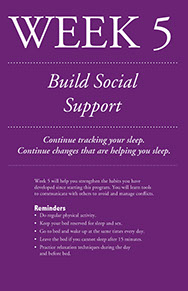
    Salad bowl.

    Losing weight can be challenging. It means you have to change your eating and exercise habits. But does it mean you have to give up all the foods you love?

    Many myths about a healthy diet can make the task harder than it needs to be. But the truth is, you can change your diet for the better and still enjoy your food.

    Learn to recognize these common diet myths. You can make a healthy change to your eating habits.

    Myth:Dieting means I can’t eat my favorite foods.

    Fact:You can use moderation to still enjoy your favorite foods. Moderation means you can have a small amount once in a while. It means you may have to cut back, but you don’t have to give it up.

    Having your favorite high-calorie foods in small amounts can be fine for most people. A small piece of cake at a birthday party or a little piece of dark chocolate can still fit into your healthy eating plan.

    Myth:To lose weight, you have to give up breads, pasta and other grains.

    Fact:Many grains can be part of your healthy diet. You should limit refined, processed grains like white bread and white pasta. But whole grains contain fiber and nutrients you need. Examples of healthy grains include:

    *  Whole wheat bread and pasta

    *  Brown rice

    *  Quinoa

    *  Oats

    Read the nutrition label on whole grain products to help avoid high-calorie choices and added sugars.

    Myth:Gluten-free foods are healthier options for weight loss.

    Fact:Only people who have celiac disease or sensitivities to gluten need to avoid gluten.

    Just because a food says it is “gluten-free” does not mean it’s healthier or has fewer calories than a food that contains gluten. In fact, if you avoid gluten, you could miss out on important nutrients. See a doctor if you think you have a gluten sensitivity.

    Myth:You should avoid fat to lose weight.

    Fact:Some fat in your food is necessary and healthy. Try to eat foods that contain healthy monounsaturated or polyunsaturated fats. Eating small amounts of healthy fat can even help you feel full.

    These foods contain healthy fats that are important for overall health:

    *  Olive oil

    *  Avocadoes

    *  Nuts

    *  Seeds

    *  Eggs

    *  Salmon, trout

    Source: National Institute of Diabetes and Digestive and Kidney Diseases

    © American Institute for Preventive Medicine
  • Healthy Weight

    Weight Control

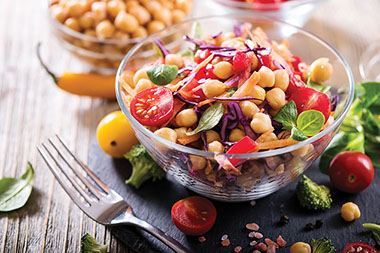
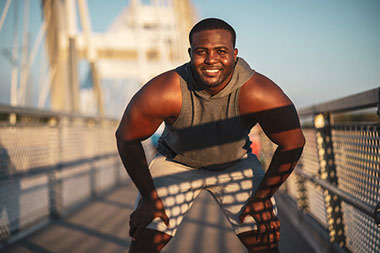
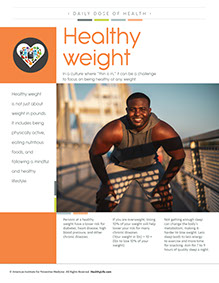
    Smiling man outside exercising.

    In a culture where “thin is in,” it can be a challenge to focus on being healthy at any weight.

    Healthy weight is not just about weight in pounds. It includes being physically active, eating nutritious foods, and following a mindful and healthy lifestyle.

    Persons at a healthy weight have a lower risk for diabetes, heart disease, high blood pressure, and other chronic diseases.

    If you are overweight, losing 10% of your weight will help lower your risk for many

    chronic diseases.

    (Your weight in lbs) ÷ 10 =

    (lbs to lose 10% of your weight)

    Not getting enough sleep can change the body’s metabolism, making it harder to lose weight. Less sleep leads to less energy to exercise and more time for snacking. Aim for 7 to 9 hours of quality sleep a night.

    Page from HealthyLife Weigh book by the American Institute for Preventive Medicine. www.HealthyLife.com. All rights reserved.

    © American Institute for Preventive Medicine
  • Reward Yourself For Weight Loss

    Weight Control

    When a behavior is followed by a reward, the behavior is more likely to be repeated. So the more you are rewarded for your weight-loss efforts, the more likely you’ll continue to succeed.

    But you don’t have to wait until you lose weight to reward yourself Rewards should begin the very first day of your diet. (Of course, food should not be a reward.)

    Here are just a few examples of the kinds of rewards that can help you to adhere to your weight-control plan.

    *  Buy yourself a bouquet of flowers.

    *  Call a friend long-distance.

    *  Give yourself some special “me” time.

    *  Try a new cologne.

    *  Get your car washed.

    *  Have a low-calorie picnic. (The picnic is the reward, not the food.)

    *  Treat yourself to a movie.

    *  Keep a diary of all the improvements you notice while dieting (more stamina, feeling attractive, fitting into smaller-size clothing).

    Page from A Year of Health Hints book by the American Institute for Preventive Medicine. www.HealthyLife.com. All rights reserved.

    © American Institute for Preventive Medicine
  • Be Assertive 3

    SleepWell® Program

    Week 5

    Image of man practicing speech in mirror.

    Passive

    *  You lack expression for yourself.

    *  You do not stand up for your rights and needs.

    Result: You usually do not achieve your goal.

    Aggressive

    *  You stand up for your rights and needs, but at the expense of someone else.

    Result: You usually put down or hurt someone else. You gain no respect.

    Assertive

    *  You stand up for your rights and needs without putting down or hurting someone else.

    *  You increase the chance of achieving your goals.

    *  You express your feelings without becoming victim to them.

    Result: You build self-respect and feel good about yourself.

    What Assertive Looks Like

    Body Posture: Be relaxed and natural. Avoid slouching, putting your hands in your pockets, and facing away from the person you are speaking with.

    Eye Contact: Good eye contact is vital to convey self-confidence and interest. Don’t stare at the other person; this comes across as a challenge.

    Voice, Tone, and Quality: Use a strong, varied tone. Speak clearly and firmly. Don’t shout or speak too softly. Don’t whine.

    Distance from the Person: Don’t position yourself too far or too close.

    Facial Expression: Let your face convey the same message as what you are saying.

    Content: Use short sentences. Be specific, clear, and firm.

    Benefits of Being Assertive

    *  You can feel comfortable saying “no.”

    *  You have more confidence to ask others for help.

    *  You gain more respect from others.

    *  You feel less angry with yourself and with others.

    *  You feel justified to say what you want to say.

    *  You feel comfortable to request clarification.

    *  You accept compliments graciously.

    *  You can change your mind without feeling guilty.

    Practice First

    Plan or write down what you want to say. Have responses ready ahead of time to deal with questions and comments. Reinforce your remarks by saying what positive outcomes will occur for you and the other person. Practice in front of a mirror or with a friend.

    Use the L.A.D.D.E.R. Technique

    This is a step-by-step way to be more assertive.

    *Look at your needs, wants, rights, and feelings about the situation.

    *Arrange a meeting that is convenient for you and the other person to talk.

    *Define the problem or issue clearly to the other person.

    *Describe your feelings using “I messages.” I messages let you take charge of your feelings.

    *Express your needs and desires in an assertive manner using a few clear sentences. Be aware of your eye contact, hand gestures, posture, voice and facial expression.

    *Reinforce your remarks by saying what positive outcomes will occur for you and the other person.

    Example:

    L – I wish my partner would help with household chores so I don’t stay up so late at night finishing what needs to get done.

    A – I’ll plan to talk with him or her after dinner tomorrow.

    D – Tell your partner, “When I stay up late doing household chores, I do not get enough sleep at night. I don’t have enough energy to be alert and productive at work the next day.”

    D – “I feel I could get more sleep with your help.”

    E – “I would like to divvy up household to-dos between us. I know we are each better at different tasks.

    R – “This change would help me get more sleep at night and I will have more energy when we spend time together.”

    © American Institute for Preventive Medicine
  • Diet Changes: Simple And Doable

    HEALTHY EATING

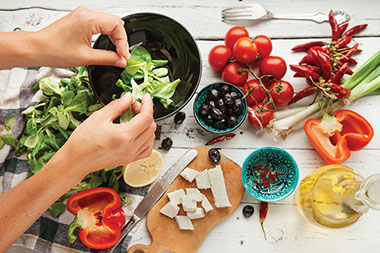
    Hand over table with bowls of different, healthy ingredients.

    If you try a complete diet overhaul at once, you may get overwhelmed. You can make it easier by not doing too much at once. Focus on one or two things you want to change and stick with those.

    Keep comfort foods, but tweak them

    Many people think they must give up all their favorite foods to be healthy. But if you have comfort foods you enjoy, this can cause even more stress. Here’s how to keep them while eating healthy:

    *Eat them less often.Aim to eat your comfort food once a week, rather than every day. Come up with healthier options to replace the comfort food.

    *Take a smaller portion.Put a smaller portion on your plate and eat it slowly. Enjoy the smell and taste of each bite, truly savoring it.

    *Modify the recipe.Switch out high fat and high calorie ingredients in your recipes. Use low-fat or fat-free dairy products instead of whole milk and cream. Use vegetable noodles instead of white pasta. All those little changes add up.

    Keep it simple

    If you’re already under stress, following an extreme diet plan could backfire. It could cause more stress, which could lead to frustration and more stress.

    Instead, celebrate one or two small victories each day. Write down when you snacked on fresh carrots instead of potato chips. Or you had a glass of water instead of soda. Whatever you did to make your diet a little bit better is a step in the right direction.

    Looking at the positive things you have accomplished may be the boost you need during times of stress. When you have slip-ups or bad days, don’t view it as a “failure.” It doesn’t mean all your healthy eating plans are over. Instead, forgive the mistake and look forward to a better and healthier day tomorrow.

    Source: Centers for Disease Control and Prevention

    © American Institute for Preventive Medicine
  • How To Help A Heavy Child Lose Weight

    Weight Control

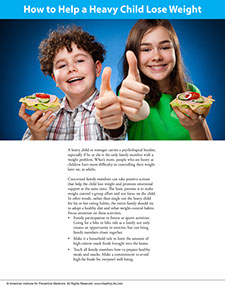
    Image of 2 kids holding a healthy snack in one hand and a thumbs up with the other hand.

    A heavy child or teenager carries a psychological burden, especially if he or she is the only family member with a weight problem. What’s more, people who are heavy as children have more difficulty in controlling their weight later on, as adults.

    Concerned family members can take positive actions that help the child lose weight and promote emotional support at the same time. The basic premise is to make weight control a group effort and not focus on the child. In other words, rather than single out the heavy child for his or her eating habits, the entire family should try to adopt a healthy diet and other weight-control habits. Focus attention on these activities.

    *  Family participation in fitness or sports activities. Going for a hike or bike ride as a family not only creates an opportunity to exercise, but can bring family members closer together.

    *  Make it a household rule to limit the amount of high-calorie snack foods brought into the home.

    *  Teach all family members how to prepare healthy meals and snacks. Make a commitment to avoid high-fat foods for everyone’s well-being.

    Page from A Year of Health Hints book by the American Institute for Preventive Medicine. www.HealthyLife.com. All rights reserved.

    © American Institute for Preventive Medicine
  • Step-By-Step

    Weight Control

    Walk off extra weight and improve health problems.

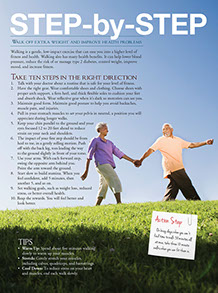
    Walking is a gentle, low-impact exercise that can ease you into a higher level of fitness and health. Walking also has many health benefits. It can help lower blood pressure, reduce the risk of or manage type 2 diabetes, control weight, improve mood, and increase fitness.

    Take ten steps in the right direction:

    1.  Talk with your doctor about a routine that is safe for your level of fitness.

    2.  Have the right gear. Wear comfortable shoes and clothing. Choose shoes with proper arch support, a firm heel, and thick flexible soles to cushion your feet and absorb shock. Wear reflective gear when it’s dark so motorists can see you.

    3.  Maintain good form. Maintain good posture to help you avoid backaches, muscle pain, and injuries.

    4.  Pull in your stomach muscles to set your pelvis in neutral, a position you will appreciate during longer walks.

    5.  Keep your chin parallel to the ground and your eyes focused 12 to 20 feet ahead to reduce strain on your neck and shoulders.

    6.  The impact of your first step should be from heel to toe, in a gently rolling motion. Push off with the back leg, toes leading the way to the ground slightly in front of your torso.

    7.  Use your arms. With each forward step, swing the opposite arm behind you. Point the arm toward the ground.

    8.  Start slow to build stamina. When you feel confident, add 5 minutes, then another 5, and so on.

    9.  Set walking goals, such as weight loss, reduced stress, or better overall health.

    10. Reap the rewards. You will feel better and look better.

    Tips

    *  Warm Up: Spend about five minutes walking slowly to warm up your muscles.

    *  Stretch: Gently stretch your muscles, including calves, quadriceps, and hamstrings.

    *  Cool Down: To reduce stress on your heart and muscles, end each walk slowly.

    Action Step

    On busy days when you can’t find time to walk 30 minutes all at once, take three 10-minute walks when you can fit them in.

    Page from Ways to Well-Being book by the American Institute for Preventive Medicine. www.HealthyLife.com. All rights reserved.

    © American Institute for Preventive Medicine
  • Create Self-Enhancing Feelings 2

    SleepWell® Program

    Week 5

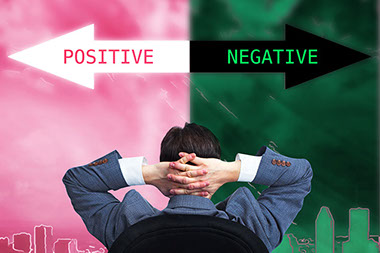
    Split image with arrows, one pointing to positive side and the other to a negative side.

    Take responsibility for your thoughts, feelings, and actions. You will feel better about yourself and your life. Blaming others is a natural, child-like reaction. It is more adult-like to figure out the amount of control you have in a given situation and respond to it in a mature way. You may not have control in every situation, but you can choose how you respond to others.

    One reason to become more accountable for your responses is that a “victim” response forms negative, draining feelings. Self-responsibility creates positive energy. With it you can manage every event in a more positive, self-nurturing manner. One way to do this is to look at your language and see if you use “victim” or “accountability” phrases.

    Example “victim” phrase:

    I can’t improve my sleep until my boss gives me a better work shift.

    Example “accountability” phrase:

    I can schedule a meeting with my boss to discuss my shift and my sleep needs.

    The Power of a Phrase

    Fill in after the victim phrase with something you have caught yourself saying or are feeling right now. Use an accountability phrase to re-write this statement.

    Victim Phrase

    *  I can’t…

    *  It’s useless…

    *  I have to…

    *  Why am I always the one who…

    Accountability Phrase

    *  I can…

    *  There’s always a chance…

    *  I choose to…

    *  I’ll be the one who…

    © American Institute for Preventive Medicine