Tag: Weight Control

  • Limit Calories From Alcohol

    Weight Control

    Sparkling water with lemon slices.

    If you drink alcohol, you could be taking in hundreds of empty calories every week, leading to a steady, unhealthy weight gain.

    Healthy, low-calorie:Drink more non-alcoholic, low-calorie beverages (e.g., sparkling water with lemon).

    Drink “spacers”:Space out alcoholic drinks to make every other one a non-alcoholic drink.

    The company you keep:Try to avoid or limit being around people who drink a lot of alcohol.

    Helpful distractions:Find a healthy, distracting activity to do like a hobby or physical activity, if you get the urge to drink.

    Page from HealthyLife Weigh book by the American Institute for Preventive Medicine. www.HealthyLife.com. All rights reserved.

    © American Institute for Preventive Medicine

  • Get Enough Sleep 2

    Healthylife® QuitWell™

    Part 5

    Women sleeping.

    Not getting enough sleep can affect nearly every aspect of your day:

    *  Less energy and desire to work on your goals

    *  Feeling down, anxious, or other negative feelings

    *  Decreased creativity, making it harder to solve problems or imagine doing things differently

    *  Increased cravings for tobacco/nicotine to stay alert

    *  More unstable blood sugar levels, leading to less healthy eating and stronger cravings for nicotine

    Tips for Improving Sleep

    *  Get to bed a little earlier than normal when quitting. This may help cut out an evening cigarette and can help your body recover.

    *  Create a comfortable place to sleep. Make sure your bed, pillows, and bedding are comfortable.

    *  Maintain a slightly cooler temperature in the bedroom.

    *  Avoid looking at a screen (TV, laptop, smartphone, tablet, etc.) 30 minutes before bed.

    *  Create a bedtime and waketime routine.

    *  Reserve the bed for sleep and sex. Avoid doing other activities in bed, like work or having a tough discussion.

    *  Have a small snack before bed if you are hungry.

    * Avoid foods high in sugar or refined carbohydrates just before bed. The rise in blood sugar can provide a burst of energy that keeps you alert and makes it difficult to fall asleep.

    *  Avoid foods that are likely to cause acid reflux (heartburn), gas, cramping, or indigestion if you are prone to these problems. Fatty or spicy foods, beans, garlic, peanuts, and dairy cause discomfort for some people.

    What action can you take tonight to improve your sleep?

    © American Institute for Preventive Medicine

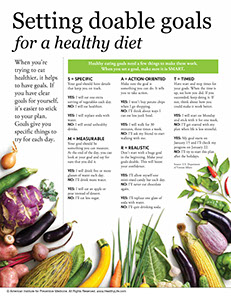
  • Setting Doable Goals For A Healthy Diet

    HEALTHY EATING

    A variety of vegetables.

    When you’re trying to eat healthier, it helps to have goals. If you have clear goals for yourself, it’s easier to stick to your plan. Goals give you specific things to try for each day.

    Healthy eating goals need a few things to make them work. When you set a goal, make sure it is SMART.

    S = Specific

    Your goal should have details that keep you on track.

    Yes: I will eat one extra serving of vegetables each day.

    No: I will eat healthier.

    Yes: I will replace soda with water.

    No: I will avoid unhealthy drinks.

    M = Measurable

    Your goal should be something you can measure. At the end of the day, you can look at your goal and say for sure that you did it.

    Yes: I will drink five or more glasses of water each day.

    No: I’ll drink more water.

    Yes: I will eat an apple or pear instead of dessert.

    No: I’ll eat less sugar.

    A = Action-oriented

    Make sure the goal is something you can do. It tells you to take action.

    Yes: I won’t buy potato chips when I go shopping.

    No: I’ll think about ways I can eat less junk food.

    Yes: I will walk for 30 minutes, three times a week.

    No: I’ll ask my friend to start walking with me.

    R = Realistic

    Don’t start with a huge goal in the beginning. Make your goals doable. This will boost your confidence.

    Yes: I’ll allow myself one mini-sized candy bar each day.

    No: I’ll never eat chocolate again.

    Yes: I’ll replace one glass of soda with water.

    No: I’ll quit drinking soda.

    T = Timed

    Have start and stop times for your goals. When the time is up, see how you did. If you succeeded, keep doing it. If not, think about how you could make it work better.

    Yes: I will start on Monday and stick with it for one week.

    No: I’ll get started with my plan when life is less stressful.

    Yes: My goal starts on January 15 and I’ll check my progress on January 22.

    No: I’ll try to start this plan after the holidays.

    Source: U.S. Department of Veteran Affairs

    © American Institute for Preventive Medicine

  • Mind Your Mindless Munching 2

    Weight Control

    Eating when you are distracted can pack on pounds.

    To lose weight, you need to make a conscious effort to watch what you eat. No more of that “it doesn’t count because it’s not on my plate” logic. Calories from mindless munching in front of the TV, at your desk, or in the car add up quickly.

    Lower the need for munching & snack attacks.

    Image of teenage boys eating out of big bag of chips.

    *  Eat meals at regular times. Have breakfast every day.

    *  Eat when you feel hungry.

    *  Set a timer for 20 minutes and make your meal last that long.

    *  Chew foods slowly. Sip; don’t gulp.

    *  Savor a food’s flavor.

    *  Put your fork or spoon down between bites.

    *  If your stomach feels satisfied, stop eating.

    Identify what, where, and why you eat between meals.

    When you keep your daily activity diary, highlight all the extras – the mindless munchies – and add up just those calories. Note the places and activities you are doing and how you are feeling.

    Substitute a healthier activity for munching.

    *  Instead of eating when you watch TV, exercise or work on a craft to keep your hands busy.

    *  Do you eat when you are nervous, on a deadline, or upset? Go for a short walk instead.

    *  Do you treat yourself every time you pass the jar of candy or nuts at work? Walk around it or look the other way.

    *  Do you order the large popcorn at the movies and munch for 90 minutes straight? Take a couple of hard candies in your pocket. Pop these into your mouth instead.

    *  Lunch at your desk again? Stop multi-tasking and focus on your food.

    *  TV dinners common in your house? Clear the clutter off the dining room table and enjoy an easily prepared home cooked meal.

    *  Are you an appetizer addict? Learn to say “No” to tortilla chips or any other pre-meal snacks. Drink a glass of water or chew sugarless gum while you are waiting for your meal.

    Action Step

    Fill your time with activities you like to do that do not involve eating. Go for a walk. Do a home improvement project. Volunteer to help others. Take up a new hobby or renew an old one.

    Page from Ways to Well-Being book by the American Institute for Preventive Medicine. www.HealthyLife.com. All rights reserved.

    © American Institute for Preventive Medicine

  • Mindfulness 2

    Healthylife® QuitWell™

    Part 2

    Image of man walking his dog.

    Mindfulness means you are fully aware of what you are sensing in the current moment. Mindfulness can help you get through a stressful or uncomfortable time without your usual tobacco/nicotine use. It can also:

    *  Give your mind a chance to think creatively and come up with the answers to tough questions.

    *  Help you gently pull yourself back to the present when your mind wants to go somewhere else.

    *  Exercise greater control over your actions and your energy.

    *  Understand yourself more.

    *  Lower inflammation in the body.

    *  Activate areas in the brain that give you feelings of calmness.

    Mindfulness Exercise

    Practice mindfulness while you listen to music, walk, run, eat, or sit in traffic. You can also try this the next time you feel the desire to have a cigarette, dip, or puff from your vape:

    *  Try to physically pause your body. Sit or stand still. Maybe you can lean against the back of a chair or a wall. Get comfortable.

    *  Focus on your breathing or anything in the present, such as the sounds you hear or an object in your sight.

    *  As thoughts pop up in your mind, notice them without judging them. Picture your thoughts like clouds floating by-let them go by. Return your focus to what you see, hear, and feel.

    *  Notice the feelings you have about smoking/your habit and what may be making you feel that way. Be aware of what is helping you do what you want and what is not helping.

    *  When your mind starts to drift, imagine gently guiding it back to the present, as if you’re helping a child that has strayed off the path.

    The craving may have gone away or is now much less. If this is the case, try to do something else while the craving continues to fade.
    © American Institute for Preventive Medicine

  • Signs Of A Fad Diet

    HEALTHY EATING

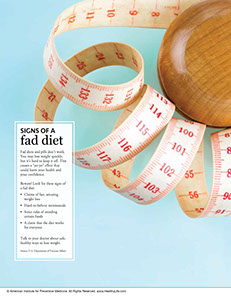
    Tape measure.

    Fad diets and pills don’t work. You may lose weight quickly, but it’s hard to keep it off. This causes a “yo-yo” effect that could harm your health and your confidence.

    Beware! Look for these signs of a fad diet:

    *  Claims of fast, amazing weight loss

    *  Hard-to-believe testimonials

    *  Strict rules of avoiding certain foods

    *  A claim that the diet works for everyone

    Talk to your doctor about safe, healthy ways to lose weight.

    Source: U.S. Department of Veterans Affairs

    © American Institute for Preventive Medicine
  • Modify Ingredients In Recipes 2

    Nutrition

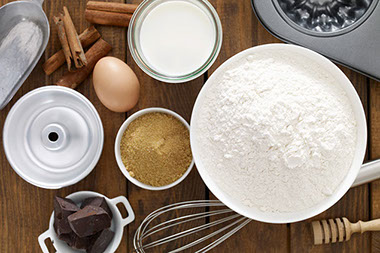
    Image of different ingredients.

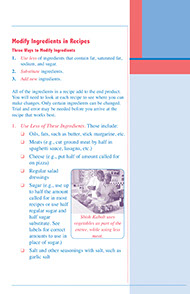
    Three Ways to Modify Ingredients

    1. Use less of ingredients that contain fat, saturated fat, sodium, and sugar.

    2. Substitute ingredients.

    3. Add new ingredients.

    All of the ingredients in a recipe add to the end product. You will need to look at each recipe to see where you can make changes. Only certain ingredients can be changed. Trial and error may be needed before you arrive at the recipe that works best.

    1. Use Less of These Ingredients

    These include:

    *  Oils, fats, such as butter, stick margarine, etc.

    *  Meats (e.g., cut ground meat by half in spaghetti sauce, lasagna, etc.)

    *  Cheese (e.g., put half of amount called for on pizza)

    *  Regular salad dressings

    *  Sugar (e.g., use up to half the amount called for in most recipes or use half regular sugar and half sugar substitute. See labels for correct amounts to use in place of sugar.)

    *  Salt and other seasonings with salt, such as garlic salt

    2. Substitute Ingredients

    * Diet margarine’s high water content may alter the texture of baked products. It works well, though, in sauces, as spreads, and for sauteing vegetables.

    ** When using yogurt for sour cream in heated sauces, mix 1 Tbsp. of cornstarch with 1 Tbsp. of the yogurt then add to the rest of the yogurt. Stir over medium heat until sauce thickens. This will prevent the yogurt from separating.

    3. Add New Ingredients

    Here are some examples:

    *  Vanilla and other flavor extracts. Adding vanilla or adding extra vanilla can make foods taste sweeter than they are.

    *  Vegetables to casseroles, stews, soups, etc. that are not in the original recipe. For example, add mushrooms and green pepper to lasagna and pizza and cut down on or don’t use any meats.

    *  Spices and herbs to add or enhance flavor. For example:

    – Sprinkle dill weed or tarragon on baked or broiled fish along with the lemon juice the recipe may call for.

    – Put pumpkin pie spice on cooked winter squash.

    – Add fresh ripe fruit or mashed cooked vegetables to muffins and quick breads for added flavor, moistness, and nutrients.

    *  Garnish dishes with fresh fruit slices and cut-up vegetables.

    *  Add grains, pastas, starchy vegetables, (potatoes, etc.) legumes (beans, peas, lentils) to thicken soups.

    *  Practice with changing recipes. The savings in total fat, saturated fat, trans fat, sodium, sugar, and calories can be great.

    Modify ingredients in the example below to lower fat, sugar, sodium, and calories.

    Resources

    American Heart Association

    www.heart.org/HEARTORG

    Search for “Nutrition Center.”

    National Heart, Lung, and Blood Institute (NHLBI)

    www.nhlbi.nih.gov

    Search for “Healthy Recipes.”

    NUTRITION.GOV

    www.nutrition.gov

    Search for “Healthy Eating.”

    Page from HealthyLife Weigh book by the American Institute for Preventive Medicine. www.HealthyLife.com. All rights reserved.

    © American Institute for Preventive Medicine

  • Review And Prepare 7

    Healthylife® QuitWell™

    Part 4

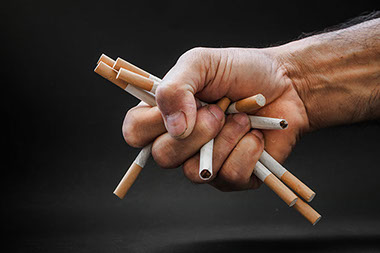
    Image of hand crushing a bunch of cigarettes.

    This section provided strategies to manage urges that you have for tobacco/nicotine. You also learned tools to manage yourself in a demanding, often stressful world.

    *  Which urge tamers and other strategies have you practiced already?

    *  Which tools have worked well for you? Add these to your quit plan.

    *  What gaps do you have in your quit plan? What is still a big challenge?

    Review this section often. What may have helped you get started may not be what takes you all the way to quitting completely. You may need to use new strategies as your life changes, new stressors arise, or new people enter your life. As you feel more and more ready to take action, strengthen your action plan by assigning urge tamers to triggers.

    © American Institute for Preventive Medicine

  • Mind Your Mindless Munching

    Weight Control

    Women in kitchen, writing in a journal.

    *  Calories from snacking throughout the day add up quickly.

    *  To find out how many calories you get from snacks, keep a food journal.

    *  Use a tracking tool, such as smartphone apps like MyFitness Pal.

    *  Once you see where excess calories come from, eat less and move more.

    *  Instead of snacking while watching TV, do some seated exercises, walk in place, or ride a stationary bike. Or turn off the TV and go for a walk.

    *  Do stretching exercises at your desk.

    *  Walk the perimeter of the mall.

    *  Have the coffee. Skip the doughnut. Calories Saved: 300+.

    *  Omit the large soft-pretzel and 16-ounce soda while you shop. Calories Saved: 640+.

    Page from HealthyLife Weigh book by the American Institute for Preventive Medicine. www.HealthyLife.com. All rights reserved.

    © American Institute for Preventive Medicine
  • Motivation Is The Gateway For Adopting Healthy Changes

    Weight Control

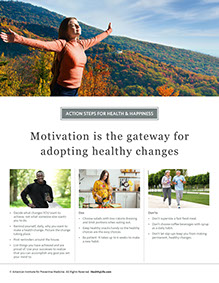
    Female standing outside with arms open taking in the fresh air.

    *  Decide what changes YOU want to achieve, not what someone else wants you to do.

    *  Remind yourself, daily, why you want to make a health change. Picture the change taking place.

    *  Post reminders around the house.

    *  List things you have achieved and are proud of. Use your successes to realize that you can accomplish any goal you set your mind to.

    Dos

    *  Choose salads with low-calorie dressing and limit portions when eating out.

    *  Keep healthy snacks handy so the healthy choices are the easy choices.

    *  Be patient. It takes up to 6 weeks to make a new habit.

    Don’ts

    *  Don’t supersize a fast food meal.

    *  Don’t choose coffee beverages with syrup as a daily habit.

    *  Don’t let slip-ups keep you from making permanent, healthy changes.

    Page from HealthyLife Weigh book by the American Institute for Preventive Medicine. www.HealthyLife.com. All rights reserved.

    © American Institute for Preventive Medicine