Tag: Weight Control

  • Plan Problem-Solving 2

    Healthylife® QuitWell™

    Part 2

    Image of smiling women at desk.

    Your worries and concerns take up time in your day. Many issues cannot simply be ignored or brushed aside. To avoid letting these thoughts trigger smoking or chewing habits, plan time to address them.

    Steps to Address Your Worries

    1. Write a worry at the top of a piece of paper. It may seem old-fashioned to write this down on paper, when so much is done on the computer or a smartphone. However, writing things down can be powerful.

    2. Divide the paper into three columns:

    a. What I can’t do. Recognize what is out of your control.

    b. What I can do. List possible actions that are within your control. Write things you know how to do and that are realistic actions for you to take.

    c. What I will do and when. Decide which action you are ready to take first. This action may not solve every part of the problem, but it is a small step toward a solution. Write when you will do this.

    3. After you have taken an action towards a solution, repeat this process the next day or when you are ready to take another step.

    © American Institute for Preventive Medicine

  • Childhood Obesity

    Weight Control

    The ratio of weight-to-height is called body mass index (BMI). For adults, BMI is a common tool to classify them as normal (healthy) weight, overweight, or obese. Waist measurement, alone, is another tool.

    For children and teens, a BMI-for-age and how this compares to other boys or girls their same age is needed. Why? Boys and girls have different amounts of body fat and the amount and location of body fat children have change with age. A child’s BMI-for-age is plotted on a growth chart to give a percentile. This percentile defines a child’s weight status.
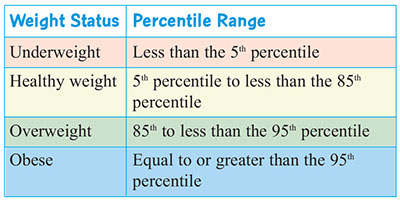
    You can find out your child’s BMI-for-age growth chart percentile from his or her doctor and fromwww.cdc.gov/nccdphp/dnpa/bmi/index.htm.

    Causes

    Image of 2 children eating dinner.

    Lack of Physical Activity

    *  Children spend less time playing outdoors and more time on indoor sedentary activities. On average, children spend more than four hours a day watching TV, playing video games, using a computer, and viewing DVDs. Almost three of these four hours is spent in front of the TV.

    *  The American Academy of Pediatrics (AAP) recommends that children watch no more than  2 hours of TV a day and that children younger than 2 years old watch no TV.

    *  Every additional hour of weekend TV watching by 5 year olds over the recommended 2 hours a day may lead to a 7% increase in risk of obesity at age 30. This means 3 hours a day can cause 7% increased risk; 4 hours a day can cause a 14% risk; 5 hours a 21% increased risk, and so on.

    *  Fewer than 15% of kids walk or bicycle to school compared to forty years ago when 50% did. About 60% are driven to school by a parent or other adult or teenager. One fourth of kids take the bus.

    *  Children get less physical activity at school. Gym classes and recess time have been cut to allow more time for an expanded curriculum.

    *  Places where children and teens live may be unsafe to walk and play in.

    *  Communities kids live in may not have places to go for recreation.

    Poor Eating Habits

    *  Skipping breakfast. Children who usually skip breakfast are more likely to be overweight than children who usually eat breakfast. Also, children who eat breakfast have a better attention span to do schoolwork and are less irritable.

    *  Drinking too many soft drinks. These give empty calories. When soft drinks replace milk, children do not get the calcium and vitamin D they need for healthy teeth and bones.

    *  Eating meals outside the home, especially eating fast food often. In general, items chosen at fast food restaurants have a lot of calories, fat, sugar, and salt. Fruit and vegetable choices are limited, too.

    *  Eating meals and snacks while watching TV. Also, ads on TV promote eating fast foods, cereals with added sugar, and high calorie snacks.

    *  Eating too few fruits and vegetables, which have many nutrients that are needed for good health.

    With poor eating habits and a lack of physical activity, children and teens take in more calories than they use up.

    Genetics Factors

    *  Children whose parents or brothers or sisters are overweight may be at a higher risk of becoming overweight.

    *  Genes can affect how the body stores fat or burns calories for energy.

    *  Children from certain ethnic groups have higher risks for overweight and obesity. These include American Natives, African Americans, and Hispanic Americans.

    Lack of Sleep

    *  Not getting enough sleep alters levels of hormones that regulate hunger. This leads to an increase in appetite. Studies have shown that sleep deprived people prefer foods that are high in fat, sugar, and calories.

    *  Not getting enough sleep can make kids drowsier during the day causing them to be less active.

    *  Being awake for more hours gives more time to eat.

    How Much Sleep Should Your Child Get?
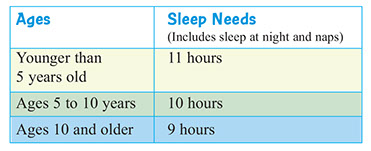
    Prevent & Control Obesity

    Reasons to Prevent & Control Childhood Obesity

    Children who are overweight or obese are at risk for these problems:

    *  Being teased and bullied.

    *  Low self-esteem.

    *  Depression.

    *  Asthma.

    *  High total blood cholesterol level and high blood pressure, which increase the risk for heart disease.

    *  Bone and joint problems.

    *  Sleep apnea. With this, breathing stops for 10 or more seconds at a time during sleep. Persons who are overweight are more prone to this because extra body tissue in the throat narrows or blocks the airway during sleep.

    *  Type 2 diabetes.

    *  Becoming overweight or obese adults.

    Childhood Obesity & Type 2 Diabetes

    Type 2 diabetes used to be called “adult-onset diabetes” because it usually affected adults over the age of 40 who were overweight. This is no longer the case. Since the 1990s, an alarming increase in type 2 diabetes has occurred in children and teens with these risk factors:

    *  Being overweight.

    *  Not getting enough physical activity.

    *  Having a dad, mom, or other close relative who has diabetes.

    *  Being an American Indian, African American, Hispanic/Latino, Asian American, a Pacific Islander, or an Alaskan Native.

    {Note: Just eating too much sugar does not cause diabetes.}

    Healthy Eating

    Healthy Eating at Home

    *  Be a good role model. Learn and follow healthy eating guidelines yourself.

    *  Offer healthy options for meals and snacks. This starts with buying healthy foods, such as fruits and vegetables, whole-grain breads and cereals, and low-fat milk products.

    *  Involve your child in planning meals and shopping for healthy foods. If necessary, use checkout lanes that do not have candy and other high calorie foods on display.

    *  Read the Nutrition Facts label to choose foods that are lower in fat, sugar, and calories. Limit foods that are high in fats and sugars (this includes corn syrup) that provide few nutrients. Especially limit soft drinks, which give empty calories from sugar. Limit sport drinks and other fruit drinks, including juices.

    *  Eat meals together as a family. Do this at the kitchen or dining room table, not in front of the TV.

    *  Keep mealtime pleasant, not stressful.

    Jump Start Your Child’s Day With a Healthy Breakfast

    Here are examples:

    *  1 or more servings of whole grains:

    –  ½ cup oatmeal.

    –  1 cup dry cereal.

    –  1 slice wheat toast.

    –  ½ whole-wheat pita pocket.

    *  1 serving of milk. {Note: Children younger than 2 years should have whole milk.}

    –  1 cup of low-fat or nonfat milk.

    –  1 cup of low-fat or nonfat yogurt.

    –  1 ounce of low-fat cheese.

    *  1 serving of fruit:

    –  Whole or sliced orange, banana, or apple.

    –  2 tablespoons raisins.

    *  1 serving of meat or beans:

    –  1 hard cooked egg.

    –  ½ ounce of almonds or walnuts.

    –  1 to 2 tablespoons of peanut butter.

    –  2 tablespoons of hummus.

    *  Do not use food as a way to punish or reward. Rewarding children with sweet treats teaches them to eat sweets in the future when they are upset, etc.

    *  Eat fast food less often. When you do pick up fast food, choose healthier options, such as milk instead of soft drinks; fruit cups instead of French fries; and smaller sandwiches instead of larger ones. And, add one or more servings of vegetables and fruits to fast food meals.

    *  Keep healthy snack foods on hand. Wash fresh fruit and put it in a bowl on the kitchen counter or table to make it easy for your child to eat.

    Healthy Snacks

    *  Apples, oranges, bananas, strawberries, and other fresh fruits.

    *  Canned peaches, pears, and other fruits canned in light syrup or juice.

    *  Raisins and other dried fruits (in small amounts).

    *  Fresh vegetables, such as carrot sticks, celery sticks, and cucumber slices.

    *  Whole-wheat pita bread with hummus (chick pea spread), lettuce and tomato.

    *  Animal crackers, graham crackers, and whole-wheat crackers. Look for ones that say no trans fats on the label.

    *  Peanut butter on rice cakes, whole-wheat crackers, or celery.

    *  Low-fat yogurt with whole-grain cereal sprinkled on top.

    *  Whole-grain cereals, such as Cheerios, Wheaties, and bran cereals. Look for ones that have 2 or more grams of dietary fiber per serving.

    *  Low-fat frozen yogurt.

    *  Frozen fruit bars.

    *  Pretzels.

    For children age 4 years old and younger, give foods that are soft and cut up in small pieces to help prevent them from getting something caught in their throats. Children age 4 years old and younger can easily choke on foods that are small and round, hard to chew, or are sticky. Examples are:

    *  Peanuts and other nuts.

    *  Popcorn.

    *  Hot dogs (even when cut in small pieces).

    *  Raisins and other dried fruits.

    *  Raw carrots.

    *  Chewing gum.

    *  Peanut butter from a spoon.

    *  Hard candy, sunflower or pumpkin seeds. (Wait until a child is 5 years old to give these.)

    *  Supervise your child when he or she eats.

    Healthy Eating at School

    *  The lunch meal at school should provide about one-third of your child’s daily vitamin, mineral, and calorie needs. These needs can be met through foods offered at school and/or from food items brought from home.

    *  If your child’s school has a lunch program, find out what the menu options are. Even in a school cafeteria, menu choices can be too high in fat and calories. Promote fruits, vegetables, and whole grains. These foods are rich sources of vitamins, minerals, and dietary fiber. Talk to your child about the foods and beverages the cafeteria and vending machines offer. Ask which ones he or she chooses.

    Encourage your child to choose:

    *  Low-fat and nonfat milk and water instead of soft drinks.

    *  Soups.

    *  Fruits and vegetables.

    *  Whole-grain breads and rolls instead of doughnuts and pastries.

    *  Baked instead of fried foods.

    Send Milk Money & Lunch Items from Home with Your Child.

    Examples are:

    *  Peanut butter and jelly or lean luncheon meats on whole wheat bread.

    *  Raw carrots, celery, cucumber, and other raw vegetables.

    *  Fresh or canned fruits.

    *  Puddings made with low-fat milk.

    *  Low-fat yogurt.

    *  Dinner leftovers, such as a baked chicken leg, salad greens with a small amount of salad dressing, dinner roll, etc.

    *  Soup, especially on cold days.

    If you send a lunch with your child, keep cold foods cold with a small ice pack or ice in a bag. Keep hot foods hot in an insulated jar or bottle. Let your child choose an insulated lunch bag that he or she likes to carry these lunch items in.

    Be More Active

    Image of family jogging together.

    Ways to Be More Active

    *  Children should get a total of 60 or more minutes of physical activity a day. Children who are not used to being active should start with as many minutes as they can handle and build up to at least 60 minutes a day.

    *  Be a good role model. Be active yourself.

    *  Set time limits for computer use, DVD and TV time. Do not allow your child to have a TV in his or her bedroom. When your child does watch TV, encourage him or her to get up and move, at least during commercials. These add up to eight to 19 minutes per half-hour TV show! Keep a jump rope by the TV so your child can use it during commercials and even during the program.

    *  Encourage your child to take part in a team sport, such as bowling or soccer, or to join an activity through school or the local community. If your overweight child is not comfortable in group activities, encourage ones that he or she likes to do and that do not embarrass your child.

    *  Do activities as a family. Do ones that are fun for your child and ones that he or she wants to do.

    *  Assign active chores for your child, such as walking the dog, vacuuming, etc.

    Childhood Obesity is on the Rise

    More children and adolescents in the U.S. are overweight or obese than ever before.

    *  The American Obesity Association says that three times as many kids in the U.S are obese as compared to 1970.

    *  National Health and Nutrition Examination Surveys (NHANES) have been taken over a 30 year time span. Results from 1971−1974 to 2003−2004 (the most recent published data), show an increase in the percent of children and teens who are overweight.

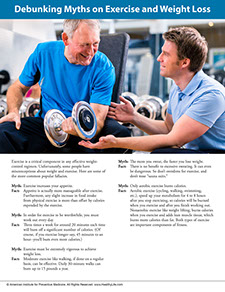
    Cover image to the Childhood Obesity brochure by the American Institute for Preventive Medicine. www.HealthyLife.com. All rights reserved.

    © American Institute for Preventive Medicine
  • Debunking Myths On Exercise And Weight Loss

    Weight Control

    Exercise is a critical component in any effective weight-control regimen. Unfortunately, some people have misconceptions about weight and exercise. Here are some of the more common popular fallacies.

    Myth: Exercise increases your appetite.

    Fact: Appetite is actually more manageable after exercise. Furthermore, any slight increase in food intake from physical exercise is more than offset by calories expended by the exercise.

    Myth: In order for exercise to be worthwhile, you must work out every day.

    Fact: Three times a week for around 20 minutes each time will burn off a significant number of calories. (Of course, if you exercise longer-say, 45 minutes to an hour–you’ll bum even more calories.)

    Myth: Exercise must be extremely vigorous to achieve weight loss.

    Fact: Moderate exercise like walking, if done on a regular basis, can be effective. Daily 30-minute walks can burn up to 15 pounds a year.

    Myth: Only aerobic exercise burns calories.

    Fact: Aerobic exercise (cycling, walking, swimming, etc.), speed up your metabolism for 4 to 8 hours after you stop exercising, so calories will be burned when you exercise and after you finish working out. Nonaerobic exercise like weight lifting, burns calories when you exercise and adds lean muscle tissue, which burns more calories than fat. Both types of exercise are important components of fitness.

    Myth: The more you sweat, the faster you lose weight.

    Fact: There is no benefit to excessive sweating. It can even be dangerous. So don’t overdress for exercise, and don’t wear “sauna suits.”

    Page from A Year of Health Hints book by the American Institute for Preventive Medicine. www.HealthyLife.com. All rights reserved.

    © American Institute for Preventive Medicine

  • Practice Relaxation Techniques 2

    Healthylife® QuitWell™

    Part 4

    Image of man relaxing while reading a book.

    Use relaxation techniques to manage daily stressors.

    Plan Relaxation Time

    Plan time during the day to relax. You can also do relaxation exercises as needed during the day. Practice these techniques before, during, or after trigger activities (like eating or talking on the phone).

    Relaxation techniques can help reduce stress-related health problems, such as high blood pressure, headaches, and pain. These tools also help you to have greater physical and mental control. This helps you get through times when you may have had a cigarette or other form of tobacco/nicotine in the past.

    How the mind can control the body:

    *  It can slow brain wave patterns.

    *  It can reduce heart and breathing rates.

    *  It can increase blood flow to the limbs.

    *  It can relax muscles.

    Think about the rest of today. When can you spend 10 minutes relaxing? Here are a few ideas of times you can practice relaxation:

    *  Break times when you would usually be on your phone, checking apps or scrolling mindlessly

    *  While drinking your morning coffee

    *  Winding down for bed in the evening

    *  Walking the dog or playing with your pet

    © American Institute for Preventive Medicine

  • Appreciate The Journey

    Healthylife® Weigh

    Part 5

    Two women enjoying a run together.

    Know why you are being physically active. This will help get you motivated to start and to keep going.

    1.Connect with your interests.If you enjoy hiking, find a new trail to explore. If you are in a new place, plan a day with lots of walking to learn about your new neighborhood. You may find you can be active for much longer when you have distracting, interesting scenery around you.

    2.Be reflective.Take time to reflect as part of your workout or your cool-down. Appreciate your abilities and strengths. Express gratitude for those who encourage and guide you.

    3.Have fun.Find an organized fun run or “Couch to 5k” program in your community. Fun runs often have a theme, like color runs, glow-in-the-dark runs, and obstacle courses. Many can be done as a team. Having a goal that is bigger than the physical activity itself can motivate you, keep you accountable, and keep you moving longer than you may have otherwise!

    4.Connect with others.Make memories with your friends and family that revolve around being active. Have tough conversations while on a long walk or hike. You may be more likely to find a solution or think more clearly while being active.

    5.Listen to music.Music can be inspiring and distract you from a tough workout. It can also help you keep up your pace.

    © American Institute for Preventive Medicine

  • Coffee And Tea

    Healthylife® Weigh

    Part 3

    Herbal tea.

    Coffee and tea drinks made with added ingredients can be a major source of sugar and saturated fat in your diet. The calories can also add up, pushing you over what your body needs for the day and not leaving enough room for nutrient-dense foods. Without anything added, coffee and tea drinks have fewer than 5 calories.

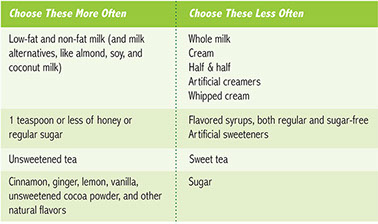
    Example chart of what to choose and not choose.

    If your favorite coffee or tea drink has more add-ins from the column on the right, save this drink for a special treat. Or, start to gradually cut back on how much of these you add to your drink. You can get used to new tastes. You may even like the new version better!

    Different teas can have a lot of natural flavor and sweetness. Experiment with lemon, chai, chamomile, fruit, and herbal teas.

    © American Institute for Preventive Medicine
  • Face Unsupportive Situations

    Healthylife® Weigh

    Part 4

    Couple using laptop computer at home on sofa.

    Apply the suggestions in the table below to your challenges. Not all strategies will be right for all scenarios. You can turn a negative situation into a positive one for everyone.

    *  Let others know what your goals are and why you are working to achieve them.

    *  Model trying new foods and being open to new tastes.

    *  Reduce the amount of time spent with negative people, if possible.

    *  Describe your efforts as a lifestyle change rather than a diet.

    *  Share how you are doing things differently this time if you have struggled in the past.

    *  Let supportive people know how much their support means to you. Send a sincere thank you card, email, or share a kind word in person. They will likely help you again.

    *  Enjoy treats every now and then. Plan to have a small amount. Don’t let guilt rob you of enjoying the treat!

    © American Institute for Preventive Medicine

  • How Much Energy Do I Need?

    Healthylife® Weigh

    Part 2

    Women cutting vegetables.

    Calories are units of energy that fuel your body for daily functions like breathing, eating, and thinking. Calories are also burned during physical activity. The more active you are, the more energy your body needs. Use the chart below to find your estimated daily energy needs. Calories needed vary by sex, age, and activity level. To determine your activity level, consider how you spend most of your day.

    *  Sedentary: You sit most of the day and do little to no physical activity (e.g., you walk once a week or do light gardening).

    *  Moderately Active: Your work involves movement, such as cleaning or light industrial work. You do some moderate-intensity physical activity a few times a week, like brisk walking or cycling.

    *  Active: Your work involves a lot of movement, such as heavy industrial work, construction work, or farming. You do physical activity most days during the week, such as jogging, swimming laps, intense walking, weight lifting, or sports.

    Chart showing calories needed per day by age, gender and activity level.

    These are roughly the calories you need per day to stay at your current weight.

    To lose 1 pound per week, you need to take in 500 fewer calories than you use/burn through daily activity. This guide encourages gradual, long-lasting weight loss.

    You can get your specific daily energy needs using the USDA’s SuperTracker online tool. Find this atwww.choosemyplate.gov/resources/MyPlatePlan.

    You can lose weight without severely restricting calories. Eating fewer than 1,200 calories per day can make it difficult for you to get all the nutrients you need. Eating this way can also be hard to follow long-term. A diet with fewer than 1,200 calories should be supervised by a doctor or dietitian.

    Special nutrition needs

    Talk to your doctor or dietitian before choosing an eating plan if you have special nutrition needs, such as:

    *  You are pregnant or breastfeeding

    *  You have a health condition or take medications

    © American Institute for Preventive Medicine
  • Look Past Advertising

    Healthylife® Weigh

    Part 3

    Man grocery shopping.

    Advertising can help point out healthy qualities in a food or drink. Advertising can also distract you from less healthy ingredients and nutrition facts. Check the nutrition facts and ingredients list to get the real scoop on what’s in the product. The drawbacks may outweigh the benefits advertised on the package.

    “Made With…”Example: Whole Grains, Real Fruit

    What it Means: At one point, the real ingredient (e.g., whole grain, fruit) was part of the product. That ingredient may have been processed further, causing it to lose nutrients. This claim does not tell you anything about how much of the whole food is in the end product.

    “Sugar Free”

    What it Means: A sugar free food has less than 0.5 grams of sugar per serving. What is in the food is more important than what the food is claiming to be free from. Check to see if extra saturated fat or artificial sweeteners have been added to make up for taste. Avoid foods high in saturated fat or foods containing artificial sweeteners.

    “Fat Free”

    What it Means: This food contains less than 0.5 grams of fat per serving (of any kind). If a food is fat free, make sure sugars or starches haven’t been added to replace the flavor and structure that fat gives food. Remember, unsaturated fat is an important part of a healthy diet and helps keep you feeling full.

    “Contains…”Example: Whole Grains, Real Fruit

    What it Means: This product contains some amount of this ingredient, but that amount may be very small. For example, a fruit drink that “contains real fruit” may be 10% real fruit juice and 90% added water and sugar. If you want more of the ingredient, like a whole grain or fruit, look for it to appear high on the list of ingredients.

    “Contains Zero Trans Fat”

    What it Means: There is no safe amount of trans fats, but a food label can say it contains zero trans fats if the trans fat content is below 0.5 grams per serving. To find trans fats, you will need to look at the ingredients. Avoid ingredients that are “hydrogenated” or “partially hydrogenated.”

    Organic, Grass-Fed, Cage-Free, Free-Range, Non-GMO

    Learn more about these marketing claims and labeling standards inPart 7of this guide.

    © American Institute for Preventive Medicine
  • Other Eating Patterns

    Healthylife® Weigh

    Part 7

    Homemade bean soup.

    Vegetarian

    Vegetarian diets are plant-based eating patterns. There are variations of the vegetarian diet:

    *  Vegan: includes only foods from plants (e.g., vegetables, fruits, legumes, grains, seeds, and nuts). No foods from animal sources are included.

    *  Lacto-vegetarian: includes plant foods plus cheese and other dairy products.

    *  Lacto-ovo-vegetarian: includes plant foods, cheese, other dairy products, and eggs.

    Vegetarian diets are usually low in saturated fat because animal proteins, a source of saturated fat, are limited or eliminated. Eating a plant-based diet can lower your risk of obesity, coronary heart disease, high blood pressure, type 2 diabetes, and some forms of cancer.

    The healthy eating patterns in this guide encourage you to make most of your food choices from plants. If you follow a vegetarian diet, you don’t need to make many changes to the guidelines in this guide.

    Choose a variety of foods to obtain necessary nutrients. Choose plant-based protein sources. If consuming some animal-based protein sources, choose eggs, seafood, and low-fat dairy.

    Vegetarians are at higher risk for some vitamin and mineral deficiencies. You can obtain these nutrients by eating a variety of plant foods.

    *  Iron can be found in pumpkin seeds, dried beans, legumes, lentils, spinach, whole grains, and enriched products.

    *  Vitamin B12 can be found in fortified breakfast cereals, fortified soy beverages, and some brands of nutritional yeast.

    *  Vitamin D can be found in some mushrooms and pasture-raised eggs. It can also be obtained by spending time in sunlight for at least 15 minutes each day with your arms exposed.

    *  Zinc can be found in whole grains, quinoa, pumpkin seeds, chia seeds, pecans, walnuts, legumes, and shellfish.

    *  Calcium can be found in green leafy vegetables (e.g., spinach, kale), nuts, broccoli, legumes, soybean products, and fortified foods.

    If you are concerned about meeting nutrient requirements, have a dietitian take a closer look at your diet. You may need to take a supplement if you are struggling to meet nutritional requirements from food alone.

    Paleo Diet

    The paleo diet, created by Dr. Loren Cordein, is described as a “caveman” diet that our Paleolithic ancestors would have followed. This is a controversial claim and diet. However, following a paleo diet can point you in the direction of choosing some healthy foods. This diet includes grass-fed meats, fish/seafood, fresh fruits and vegetables, eggs, nuts, seeds, and healthy oils. These are all nutritious foods that fit into MyPlate.

    The diet excludes processed foods, refined sugar, salt, and refined vegetable oils (this guide also suggests you limit them). However, the paleo diet also excludes cereal grains, legumes, dairy, and potatoes. These foods are healthy choices and are included in a healthy eating plan.

    The paleo diet may be high in saturated fats and protein, which may increase risk for heart disease, kidney disease and some cancers if consumed for long periods of time. More research on the paleo diet’s long-term effects is needed. A paleo-themed cookbook or blog may give you ideas for preparing vegetables in different ways or using less sugar. However, avoid strictly following a diet that limits good sources of nutrients, like grains and legumes.

    © American Institute for Preventive Medicine