Tag: Women’s Health

  • The Latest On Mammograms

    MEDICAL NEWS

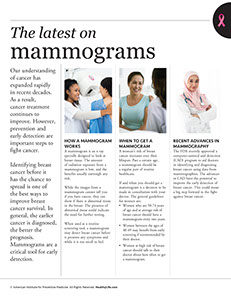
    Female doctor smiling.

    Our understanding of cancer has expanded rapidly in recent decades. As a result, cancer treatment continues to improve. However, prevention and early detection are important steps to fight cancer.

    Identifying breast cancer before it has the chance to spread is one of the best ways to improve breast cancer survival. In general, the earlier cancer is diagnosed, the better the prognosis. Mammograms are a critical tool for early detection.

    How a mammogram works

    A mammogram is an x-ray specially designed to look at breast tissue. The amount of radiation exposure from a mammogram is low, and the benefits usually outweigh any risk.

    While the images from a mammogram cannot tell you if you have cancer, they can show if there is abnormal tissue in the breast. The presence of abnormal tissue could indicate the need for further testing.

    When used as a routine screening tool, a mammogram may detect breast cancer before it presents any symptoms and while it is too small to feel.

    When to get a mammogram

    A woman’s risk of breast cancer increases over their lifespan. Past a certain age, a mammogram should be a regular part of routine healthcare.

    If and when you should get a mammogram is a decision to be made in consultation with your doctor. The general guidelines for women are:

    *  Women who are 50-74 years of age and at average risk of breast cancer should have a mammogram every two years.

    *  Women between the ages of 40-49 may benefit from early screening if recommended by their doctor.

    *  Women at high risk of breast cancer should talk to their doctor about how often to get a mammogram.

    Recent Advances in Mammography

    The FDA recently approved a computer-assisted and detection (CAD) program to aid doctors in identifying and diagnosing breast cancer using data from mammographies. The advances in CAD have the potential to improve the early detection of breast cancer. This could mean a big step forward in the fight against breast cancer.

    © American Institute for Preventive Medicine

  • Natural Remedies For Menopause Symptoms

    SELF-CARE CORNER

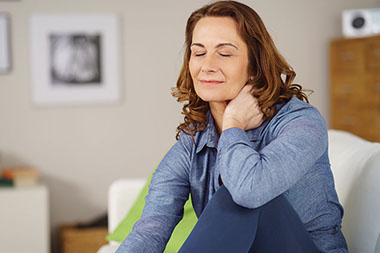
    Women sitting with eyes closed and relaxed.

    Menopause symptoms range from annoying to nearly unbearable. Hot flashes, mood changes and sleep problems are just a few things that come with this transition.

    Some women get relief from their menopause symptoms with complementary or “natural” approaches. Here’s what you should know about these remedies.

    Acupuncture

    Acupuncture involves stimulating specific points on the body. Usually, a practitioner will insert thin needles into the surface of the skin. Some studies have found acupuncture lowered the frequency and severity of hot flashes. But other studies have found no benefit.

    If you decide to try acupuncture, make sure you use a licensed and experienced practitioner. They should only use sterile, single-use needles.

    Hypnotherapy

    Hypnotherapy is when a provider uses hypnosis for health reasons. During a hypnotherapy session, your attention is concentrated and focused. You’ll have a stronger response to things that your provider says.

    Some evidence suggests that hypnotherapy can provide relief from hot flashes. Hypnosis is generally safe if a trained, licensed health care provider performs it. But if you have any mental health conditions, ask a provider before trying hypnotherapy.

    Mindfulness meditation

    Mindfulness meditation is a mental training exercise. It means you completely focus on what’s happening in the moment. It might include breathing, guided imagery or other techniques.

    Some evidence suggests that mindfulness meditation training helps menopausal women with:

    *  How much hot flashes bothered them

    *  Anxiety

    *  Sleep quality

    *  Stress

    *  Overall quality of life

    Meditation is generally safe. But ask a doctor before trying it if you have any physical or mental health conditions.

    Herbs for menopause symptoms

    Some studies have shown benefits to taking herbs for menopause. But others found that they didn’t help and could even be dangerous.

    Many supplements can interfere with medicines or cause problems if you have health conditions. In some cases, herbal supplements may contain things that aren’t listed on the label.

    Always talk to your health care provider before taking any herbal or vitamin supplement.

    Sources: National Center for Complementary and Integrative Health, U.S. Department of Health & Human Services Office on Women’s Health

    © American Institute for Preventive Medicine

  • Understanding Perimenopause

    MEDICAL NEWS

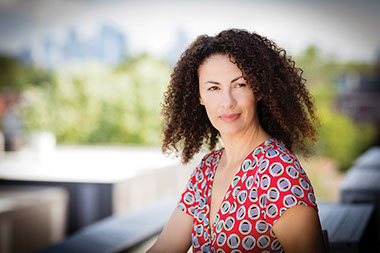
    Women outside looking out to the distance.

    Before a woman reaches menopause, she first goes through perimenopause. It is a time of adjustment as the body shifts away from the reproductive years. Preparing for these changes allows you to plan how to manage symptoms and find support.

    What is perimenopause?

    Perimenopause is the period of time when a woman’s body is gradually transitioning to menopause. It signals the end of the reproductive years and involves many physical and hormonal changes. When a woman’s period has been absent for a full 12 months, she has reached the end of perimenopause and is in post menopause.

    Every woman’s experience of perimenopause is different. Perimenopause can last for as little as four months to as long as ten years. The average length is about four to eight years. Many women begin perimenopause in their mid-forties though it can begin as late as their mid-fifties or as early as their mid-thirties.

    Symptoms

    *  Irregular or skipped periods

    *  Heavier or lighter periods

    *  Needing to urinate more frequently

    *  Hot flashes

    *  Vaginal dryness

    *  Difficulty sleeping

    *  Mood changes

    *  Changes in sexual desire

    *  PMS-like symptoms

    *  Trouble concentrating

    *  Headaches

    Manage Symptoms

    *  Eat a healthy, balanced diet with plenty of fruits, vegetables, and whole grains.

    *  Exercise regularly and include weight training at least two days a week to protect bone health.

    *  Watch for hot flash triggers such as alcohol or coffee.

    *  Establish healthy sleep habits.

    *  Seek ways to reduce stress, such as meditation, tai chi, or yoga.

    Treatment

    If symptoms are severe, your doctor may recommend additional treatment such as:

    *  Antidepressants to stabilize mood

    *  Low-dose birth control for irregular or heavy periods

    *  Hormone therapy to manage symptoms

    *  OTC or prescription medicine to address vaginal dryness or painful sex

    Pregnant during perimenopause

    Fertility naturally declines during perimenopause; however, it is still possible to conceive. The ovaries release fewer eggs, and fertility hormones gradually decrease, causing periods to become irregular. But, as long as you continue to have periods, it means you are still ovulating, and pregnancy is possible.

    © American Institute for Preventive Medicine

  • Depression 3

    Mental Health

    Depression is a medical illness. It is just as much an illness as are diabetes and heart disease. Depression is not a sign of being weak. It is not the person’s “fault.” A person who is depressed:

    *  Feels sad.

    *  Feels hopeless.

    *  Feels helpless.

    *  Sleeps or eats too little or too much.

    *  Thinks negative thoughts.

    *  Has lost interest in life.

    Depression makes a person less able to manage his or her life. It affects everything from mood to behavior.

    Persons of all ages, races, and ethnic backgrounds get depression. In the U.S., it will affect 10 to 25 percent of women and 5 to 12 percent of men during their lifetimes.

    Types & Symptoms

    Major Depression

    This is also called clinical depression. You may have this type if, for 2 or more weeks, you have 5 or more of the symptoms listed below or you have 1 or 2 of the symptoms in bold type.

    *  Loss of interest in things you used to enjoy. This includes sex.

    *  Feeling sad, blue, or down in the dumps.

    *  Feeling slowed down or restless.

    *  Feeling worthless or guilty.

    *  Changes in appetite. You lose or gain weight.

    *  Loss of energy or feeling tired all of the time.

    *  Problems concentrating or thinking. It is hard for you to remember things or make decisions.

    *  Trouble sleeping or sleeping too much.

    *  Thoughts of death or suicide. You attempt suicide.

    You Could Also Have One or More of These Symptoms

    *  Anger.

    *  Headaches or other aches and pains.

    *  Stomach and/or bowel problems.

    *  Sexual problems.

    *  Feeling negative, hopeless, anxious or worried.

    Note: Postpartum depression is a form of major depression that occurs in the mother after giving birth. Depression symptoms last more than 2 weeks after the baby is born.

    Dysthymia

    This is a mild but long lasting type of depression. An adult is thought to have this type when he or she has a depressed mood for most of the day, more days than not, for at least 2 years. For children, the same is true, but the symptoms are present for at least 1 year. Besides being sad, children with dysthymia may often:

    *  Be irritable, cranky, or act difficult.

    *  Have low self-esteem.

    With dysthymia, symptoms drain the person’s energy and keep him or her from feeling good. Sometimes people with dysthymia have bouts of major depression.

    Bipolar Disorder

    This used to be called manic-depression. With bipolar disorder, there are feelings of terrible “lows” and feelings of extreme “highs.” With these “highs,” a person feels happy, giddy, elated, or euphoric (manic). These cycles of “highs” and “lows” can last from days to months. In between these cycles, persons with bipolar disorder can feel normal.

    You may have this type of depression if you have had 4 of the symptoms below at one time for at least 1 week or you have had the symptom in bold type.

    *  You feel unusually “high,” euphoric, or irritable.

    *  You need less sleep.

    *  You talk a lot or feel that you can’t stop talking.

    *  You are easily distracted.

    *  You get lots of ideas at one time.

    *  You do things that feel good, but that have bad effects (e.g., foolish business ventures or uncontrolled spending habits).

    *  You have feelings of greatness.

    *  You make lots of plans for activities (at work, school, or socially) or feel that you have to keep moving.

    Causes

    *  Some types of depression run in families.

    *  Brain chemical imbalances.

    *  Life changes, such as the birth of a baby, divorce, retirement, job loss, and the death of a loved one.

    *  Hormonal and other changes, such as after having a baby (postpartum depression) or with menopause.

    *  Medical illnesses.

    *  Problems with others.

    *  Worries about money.

    *  Abuse of drugs or alcohol.

    *  Seasonal Affective Disorder (SAD). This is due to a lack of natural sunlight in the fall and winter.

    *  Low self-esteem. Negative attitudes about the world and self. Low tolerance for stress.

    *  Holiday “blues.”

    *  A side effect of medicines, such as some for high blood pressure. Some antidepressant medicines may increase suicidal thoughts and attempts, especially in children and teens. This is more likely to occur early in treatment or when changing a dose.

    Most Likely, Major Depression is Caused by a Mix of These Things:

    *  Family history of depression.

    *  Brain chemical imbalances.

    *  Emotional issues.

    *  Other factors, such as certain medical problems.

    In some persons, life events, such as extreme stress and grief, may bring on depression. In others, depression occurs when life is going well.

    Treatment

    Too Often, People Don’t Get Help for Depression. They Don’t Get Help for Many Reasons:

    *  They don’t know they are depressed.

    *  They blame themselves for how they feel.

    *  They have a hard time asking for help.

    *  They don’t know what to do or where to go for help.

    Why Get Help?

    Over 80% of people with depression can be treated with success, usually in a short time. Here are good reasons to seek help:

    *  Depression is the most common cause of suicide.

    *  Elderly depressed people have higher rates of chronic medical problems, such as heart disease.

    *  According to one study, severely depressed people are as disabled as those disabled with a chronic physical illness.

    *  Studies show a link between depression and a greater chance of getting ill in people of all ages.

    *  Social and family life suffer. Depressed people withdraw from others. Parents who are depressed have trouble tending to their children.

    *  The annual cost for treatment and lost wages due to depression is estimated at $43 to $53 billion a year.

    Treatment depends on a proper diagnosis. This should start with a complete physical exam by your doctor or health care provider to rule out illnesses and medicine side effects that have the same symptoms as depression. If depression is diagnosed, your doctor or mental health care provider will prescribe one or more treatments for your needs.

    Medicine(s). Antidepressant medicines work to alter brain chemicals. Doing this evens out mood. Over half of the people who take these medicines recover from depression in about 3 to 6 weeks.

    Types of Medicines for Depression

    These are in groups based on their chemical makeup or how they affect brain chemistry.

    *  SSRIs. These medicines alter serotonin, a chemical in the brain that affects mood, sleep, appetite, etc. There are many brand name and generic forms.

    *  SNRIs. These medicines alter serotonin and another brain chemical called norepinephrine.

    *  NDRIs. These medicines alter norephinphrine and another brain chemical called dopamine.

    *  Tricyclic antidepressants (TCAs). These medicines alter serotonin and another brain chemical.

    *  MAOIs. Persons who take MAOIs must follow a special diet. This is needed because some foods, if taken with MAOIs, can cause a high blood pressure crisis. Examples are aged cheeses and red wine. Because of this and other reasons, MAOIs are not used often.

    *  Lithium. This is used to treat bipolar disorder. Lithium reduces both manic and depressive episodes. When episodes occur, they are less severe in most persons who take lithium.

    *  Medicine used to treat acute mania in bipolar disorder.

    *  Over-the-counter herbal remedies, such as SAMe and St. John’s Wort for mild to moderate depression. Consult your doctor before taking these.

    It may take some time to find the medicine that works best with the least side effects. Prescribed antidepressant medicines are not habit forming.

    A therapist listens, talks, and helps you deal with your problems. This treatment is usually brief. Ten to 20 visits is common. This type of therapy can be done with:

    *  Just you and the therapist. This is one-on-one therapy.

    *  You, the therapist, and other people with similar problems. This is group therapy.

    *  You, the therapist, and family members, loved ones, or a partner. This is family or marriage therapy.

    Types of Psychotherapy Used for Depression

    *  Cognitive therapy. This focuses on thoughts and beliefs.

    *  Behavior therapy. This focuses on current behaviors.

    *  Interpersonal therapy. This focuses on current relationships.

    Psychotherapy may begin to help right away. For some people, it may take 8 to 10 weeks to show a full effect. More than half of the people with mild to moderate forms of depression do well in therapy.

    Medicine and Psychotherapy.

    The medicine treats the symptoms of depression. Psychotherapy helps people handle the ways depression can cause problems in their lives.

    Electro-Convulsive Therapy (ECT).

    Most depressions can be treated with medicine, psychotherapy, or both. ECT is mostly used for severe depression that is not helped with medicines. It can also be used for persons who are severely depressed with severe medical illnesses.

    Light Therapy.

    A special kind of light, called broad-spectrum light, is used. This gives people the effect of having a few extra hours of daylight each day. Special light boxes or light visors are used. Light therapy may help people who have Seasonal Affective Disorder (SAD). This mild or moderate form of depression comes in the fall and winter.

    Hospital Care.

    A person with severe depression may need to be given care in a hospital to prevent harm to himself, herself, or others; to monitor medicine(s); and/or to adjust medical therapy.

    Self-Care

    *  Take medicine(s), as prescribed, even when you begin to feel better. Tell your doctor about side effects.

    *  Consult with your doctor before taking over-the-counter herbs, such as SAMe or St. John’s Wort.

    *  Don’t use illegal drugs. Limit alcohol. These can cause or worsen depression. Drugs and alcohol can also make medicines for depression less effective. Harmful side effects can happen when alcohol and/or drugs are mixed with medicine.

    *  Attend support groups, such as ones for new mothers who have postpartum depression.

    *  Know that negative thinking is part of depression. As the depression lifts, the negative thoughts will lift, too.

    *  Don’t make major decisions during bouts of depression. Ask someone you trust to help you.

    *  Eat healthy foods. Eat at regular times.

    *  Exercise regularly.

    *  Express your feelings. Talk to friends, relatives, co-workers, etc.

    *  Try not to isolate yourself. Be with people you trust and feel safe with even though you feel down. Be with positive people.

    *  Help someone else. This will focus your thoughts away from yourself.

    *  Do something new or that you enjoy. Walk or drive to a new place. Try a new place to eat. Take a vacation. Take on a new project that will let you express yourself.

    *  Keep an emergency number handy (e.g., crisis hotline, trusted friend’s number, etc.) in case you feel desperate.

    *  If suicidal thoughts occur, remove any weapons, pills, etc. that could be used for suicide and get medical help.

    Medical Care

    Reasons to Call Doctor or Health Care Provider

    *  Symptoms of major depression occur.

    *  Depression has kept you from doing daily activities for more than 2 weeks or you withdraw from normal activities for more than 2 weeks.

    *  Depression results from one of these things:

    – A medical problem.

    – Taking over-the-counter or prescribed medicine. (This includes an antidepressant.)

    – Alcohol or drug abuse.

    – Grief over the loss of a loved one does not start to improve after a couple of months.

    *  Depression doesn’t lift 2 weeks after having a baby.

    *  Depression comes with dark, cloudy weather or winter months. It lifts when spring comes.

    *  You feel depressed now and one or more of these things apply:

    – You have been depressed before and did not get treatment.

    – You have been treated (with or without medicine) for depression in the past and it has come back.

    *  Any of these problems occur during holiday times:

    – You withdraw from family and friends.

    – You dwell on past holidays to the point that it interferes with your present life.

    Reasons to Get Immediate Care

    *  Attempting or planning suicide or writing a suicide note. Call the Suicide Prevention Lifeline at 800.273.8255 or have someone take you to a hospital emergency room. Or call 9-1-1 or your local rescue squad.

    *  Hearing voices, having overwhelming thoughts, or attempting to harm others, such as your baby after giving birth.

    Resources

    Depression and Bipolar Support Alliance

    800.826.3632

    www.dbsalliance.org

    International Foundation for Research and Education on Depression (iFred)

    www.ifred.org

    National Institute of Mental Health

    866.615.6464

    www.nimh.nih.gov

    Mental Health America! (MHA)

    800.969.6642

    www.mentalhealthamerica.net
    Depression brochure by the American Institute for Preventive Medicine. www.HealthyLife.com. All rights reserved.

    © American Institute for Preventive Medicine

  • Eating Disorders 3

    Mental Health

    Women looking at her body in a mirror.

    A person with an eating disorder is obsessed with food and/or body weight.

    Eating disorders are serious but treatable mental and physical illnesses that affect people of all ages, genders, body weights, and racial/ethnic backgrounds.

    It is estimated that millions of Americans have struggled with an eating disorder at some point over their lifetime. Eating disorders are caused by a range of biological, psychological, and sociocultural factors.

    You may not be able to tell someone has an eating disorder by how they look. A person with anorexia nervosa may be very underweight, but persons with bulimia nervosa and binge eating disorder can be underweight, normal weight, or overweight.

    Find out about eating disorders from the National Eating Disorders Association atnationaleatingdisorders.org.

    ays to Well-Being book by the American Institute for Preventive Medicine. www.HealthyLife.com. All rights reserved.

    © American Institute for Preventive Medicine

  • Eating Disorders 4

    Mental Health

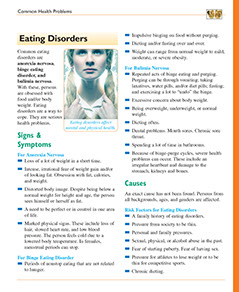
    Common eating disorders are anorexia nervosa, binge eating disorder, and bulimia nervosa. With these, persons are obsessed with food and/or body weight. Eating disorders are a way to cope. They are serious health problems.

    Signs & Symptoms

    For Anorexia Nervosa

    *  Loss of a lot of weight in a short time.

    *  Intense, irrational fear of weight gain and/or of looking fat. Obsession with fat, calories, and weight.

    *  Distorted body image. Despite being below a normal weight for height and age, the person sees himself or herself as fat.

    *  A need to be perfect or in control in one area of life.

    *  Marked physical signs. These include loss of hair, slowed heart rate, and low blood pressure. The person feels cold due to a lowered body temperature. In females, menstrual periods can stop.

    For Binge Eating Disorder

    *  Periods of nonstop eating that are not related to hunger.

    *  Impulsive binging on food without purging.

    *  Dieting and/or fasting over and over.

    *  Weight can range from normal weight to mild, moderate, or severe obesity.

    For Bulimia Nervosa

    *  Repeated acts of binge eating and purging. Purging can be through vomiting; taking laxatives, water pills, and/or diet pills; fasting; and exercising a lot to “undo” the binge.

    *  Excessive concern about body weight.

    *  Being overweight, underweight, or normal weight.

    *  Dieting often.

    *  Dental problems. Mouth sores. Chronic sore throat.

    *  Spending a lot of time in bathrooms.

    *  Because of binge-purge cycles, severe health problems can occur. These include an irregular heartbeat and damage to the stomach, kidneys and bones.

    Causes

    An exact cause has not been found. Persons from all backgrounds, ages, and genders are affected.

    Risk Factors for Eating Disorders

    *  A family history of eating disorders.

    *  Pressure from society to be thin.

    *  Personal and family pressures.

    *  Sexual, physical, or alcohol abuse in the past.

    *  Fear of starting puberty. Fear of having sex.

    *  Pressure for athletes to lose weight or to be thin for competitive sports.

    *  Chronic dieting.

    Treatment

    *  Counseling. This can be individual, family, group, and/or behavioral therapy.

    *  Support groups.

    *  Medication.

    *  Nutrition therapy.

    *  Outpatient treatment programs.

    *  Hospitalization, if needed.

    Questions to Ask

    Self-Care / Prevention

    Eating disorders need professional treatment.

    To Help Prevent an Eating Disorder

    *  Learn to accept yourself and your body. You don’t need to be or look like anyone else. Spend time with people who accept you as you are, not people who focus on “thinness.”

    *  Know that self-esteem does not have to depend on body weight.

    *  Eat nutritious foods. Focus on whole grains, beans, fresh fruits and vegetables, low-fat dairy foods, and low-fat meats.

    *  Commit to a goal of normal eating. Realize that this will take time. It will also take courage to fight fears of gaining weight.

    *  Don’t skip meals. If you do, you are more likely to binge when you eat.

    *  Avoid white flour, sugar and foods high in sugar and fat, such as cakes, cookies, and pastries. Bulimics tend to binge on junk food. The more they eat, the more they want.

    *  Find success in things that you do.

    *  Get regular moderate exercise 3 to 4 times a week. If you exercise more than your doctor advises, do non-exercise activities with friends and family.

    *  Learn as much as you can about eating disorders from books and places that deal with them.

    *  To help their children avoid eating disorders, parents should promote a balance between their child’s competing needs for independence and family involvement.

    To Treat an Eating Disorder

    *  Follow your treatment plan.

    *  Attend counseling sessions and/or support group meetings as scheduled.

    *  Identify feelings before, during, and after you overeat, binge, purge, or restrict food intake. What is it that you are hoping the food will do?

    *  Set small goals that you can easily reach. Congratulate yourself for every success. This is a process. Accept setbacks. Learn from them.

    *  Talk to someone instead of turning to food.

    *  Learn to express your rights. You have the right to say “no” and the right to express your feelings and your opinions. You have the right to ask that your needs are met.

    *  Keep a journal of your progress, feelings, thoughts, etc., but not about what you eat. The journal is just for you, not for others to read or judge. This is a safe place to be honest with yourself. The journal can also help you identify your “triggers” so that you can deal with them in the future.

    *  Don’t let the scale run your life. Better yet, throw out the scale!

    Resources

    Eating Disorders Awareness and Prevention

    202.382.3587

    nationaleatingdisorders.org

    Healthier at Home book by the American Institute for Preventive Medicine. www.HealthyLife.com. All rights reserved.

    © American Institute for Preventive Medicine

  • Exercise Lowers Breast Cancer Risk

    BE FIT

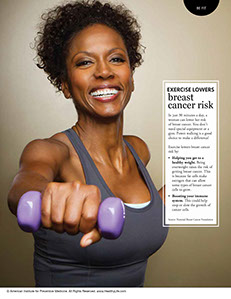
    Women using weights.

    In just 30 minutes a day, a woman can lower her risk of breast cancer. You don’t need special equipment or a gym. Power walking is a good choice to make a difference!

    Exercise lowers breast cancer risk by:

    *  Helping you get to a healthy weight. Being overweight raises the risk of getting breast cancer. This is because fat cells make estrogen that can allow some types of breast cancer cells to grow.

    *  Boosting your immune system. This could help stop or slow the growth of cancer cells.

    Source: National Breast Cancer Foundation

    © American Institute for Preventive Medicine

  • Health Screenings For Women

    SELF-CARE CORNER

    Stethoscope and female symbol pills on pink top view.

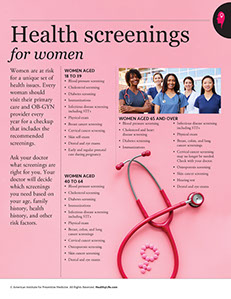
    Women are at risk for a unique set of health issues. Every woman should visit their primary care and OB-GYN provider every year for a checkup that includes the recommended screenings.

    Ask your doctor what screenings are right for you. Your doctor will decide which screenings you need based on your age, family history, health history, and other risk factors.

    Women aged 18 to 39

    *  Blood pressure screening

    *  Cholesterol screening

    *  Diabetes screening

    *  Immunizations

    *  Infectious disease screening including STI’s

    *  Physical exam

    *  Breast cancer screening

    *  Cervical cancer screening

    *  Skin self-exam

    *  Dental and eye exams

    *  Early and regular prenatal care during pregnancy

    Women aged  40 to 64

    *  Blood pressure screening

    *  Cholesterol screening

    *  Diabetes screening

    *  Immunizations

    *  Infectious disease screening including STI’s

    *  Physical exam

    *  Breast, colon, and lung cancer screenings

    *  Cervical cancer screening

    *  Osteoporosis screening

    *  Skin cancer screening

    *  Dental and eye exams

    Women aged 65 and over

    *  Blood pressure screening

    *  Cholesterol and heart disease screening

    *  Diabetes screening

    *  Immunizations

    *  Infectious disease screening including STI’s

    *  Physical exam

    *  Breast, colon, and lung cancer screenings

    *  Cervical cancer screening may no longer be needed. Check with your doctor.

    *  Osteoporosis screening

    *  Skin cancer screening

    *  Hearing test

    *  Dental and eye exams

    © American Institute for Preventive Medicine

  • Eating Disorders

    Student Health

    Five to 10 million adolescent girls and women have an eating disorder. About 1 million males do. The 3 most common eating disorders are anorexia nervosa, bulimia nervosa, and binge eating disorder. These eating disorders are a coping mechanism. They result in an obsession with food and/or weight; anxiety around eating; guilt; and severe and adverse effects on psychological and physical health. Eating disorders are very serious health problems.

    Signs & Symptoms

    For Anorexia Nervosa

    *  Loss of a lot of weight in a short period of time.

    *  Intense, irrational fear of weight gain and/or of looking fat. Obsession with fat, calories, and weight.

    *  A need to be perfect or in control in one area of life.

    *  Distorted body image. The person feels and sees herself or himself as fat despite being a normal weight for height and age.

    *  Marked physical signs. These include loss of hair, slowed heart rate, and low blood pressure. The person feels cold due to decreased body temperature. In females, menstrual periods can stop.

    For Bulimia Nervosa

    *  Repeated acts of binge eating and purging. Purging can be through vomiting; taking laxatives, water pills, and/or diet pills; fasting; and exercising a lot to “undo” the binge.

    *  Excessive concern about body weight.

    *  Being underweight, normal weight, or overweight.

    *  Dieting often.

    *  Dental problems. Mouth sores. Chronic sore throat.

    *  Spending a lot of time in bathrooms.

    *  Because of binge-purge cycles, severe health problems can occur. These include an irregular heartbeat and damage to the stomach, kidneys,  and bones.

    For Binge Eating Disorder

    *  Periods of nonstop eating that are not related to hunger.

    *  Impulsive binging on food without purging.

    *  Dieting and/or fasting over and over.

    *  Weight can range from normal weight to mild, moderate, or severe obesity.

    Causes

    An exact cause has not been found. Persons from all backgrounds, ages, and genders are affected. Risk factors include:

    *  A family history of eating disorders.

    *  Pressure from society to be thin.

    *  Personal and family pressures.

    *  Sexual, physical, or alcohol abuse in the past.

    *  Fear of starting puberty.

    *  Fear of having sex.

    *  Pressure for athletes to lose weight or to be thin for competitive sports.

    *  Chronic dieting.

    Treatment

    *  Counseling. This can be individual, family, group, and/or behavioral therapy.

    *  Support groups.

    *  Medication.

    *  Nutrition therapy.

    *  Outpatient treatment.

    *  Hospitalization, if needed.

    Treatment varies with the disorder and how severe it is. The earlier the condition is diagnosed and treated, the better the outcome.

    Questions to Ask

    Self-Care

    Eating disorders need professional treatment.

    To Help Prevent an Eating Disorder

    *  Learn to accept yourself and your body. You don’t need to look like anyone else. Spend time with people who accept you as you are, not people who focus on “thinness.”

    *  Know that self-esteem does not have to depend on body weight.

    *  Eat nutritious foods. Focus on whole grains, beans, fresh fruits and vegetables, low-fat dairy foods, and low-fat meats.

    *  Commit to a goal of normal eating. Realize that this will take time. It will also take courage to fight fears of gaining weight.

    *  Don’t skip meals. If you do, you are more likely to binge when you eat.

    *  Avoid white flour, sugar and foods high in sugar and fat, such as cakes, cookies, and pastries. Bulimics tend to binge on junk food. The more they eat, the more they want.

    *  Get regular, moderate exercise 3 to 4 times a week. If you exercise more than your doctor advises, do non-exercise activities with family and friends.

    *  Find success in things you do. Hobbies, work, school, etc. can promote self-esteem.

    *  Learn as much as you can about eating disorders from books and organizations that deal with them.

    *  To help their children avoid eating disorders, parents should promote a balance between their child’s competing needs for independence and family involvement.

    To Treat an Eating Disorder

    *  Follow your treatment plan.

    *  Attend counseling sessions and/or support group meetings as scheduled.

    *  Identify feelings before, during, and after you overeat, binge, purge, or restrict food intake. What is it that you are hoping the food will do?

    *  Set small goals that you can easily reach. Congratulate yourself for every success. This is a process. Accept set backs. Learn from them.

    *  Talk to someone instead of turning to food.

    *  Work toward the point where weight is no longer a way you rate your success. Think about your accomplishments, positive personal qualities, and valued relationships.

    *  Learn to express your rights. You have the right to say no and the right to express your feelings and your opinions. You have the right to ask that your needs are met.

    *  Keep a journal of your progress, feelings, thoughts, etc., but not about what you eat. The journal is just for you, not for others to read or judge. This is a safe place to be honest with yourself. The journal can also help you identify your “triggers” so that you can deal with them in the future.

    *  Don’t let the scale run your life. Better yet, throw out the scale!

    Resources

    Your school’s Student Health Service, Student Counseling or Mental Health Service

    National Eating Disorders Association (NEDA)Information and Referral Helpline

    800.931.2237

    www.nationaleatingdisorders.org

    Student Self-Care book by the American Institute for Preventive Medicine. www.HealthyLife.com. All rights reserved.

    © American Institute for Preventive Medicine

  • High Blood Pressure 2

    Pregnancy & Prenatal Care

    A blood pressure reading concerns the blood in the arteries. The top number in the reading is the systolic pressure. That’s the pressure when the heart muscle contracts. The bottom number is the diastolic pressure. That’s the pressure when the heart muscle relaxes.

    An example of a blood pressure reading is 120/80. This is measured in millimeters of mercury (mm Hg). A blood pressure reading should be taken before pregnancy or at its start. This is called a baseline blood pressure. The baseline reading shows what is normal for that woman. During the first several months of pregnancy, blood pressure may drop a little. It often rises slightly later in the pregnancy. That’s because of the extra work the mother’s body is doing. A slight rise is normal then. High blood pressure in pregnancy is when there is an increase of 30 or more in the systolic pressure (top number). An increase of 15 or more in the diastolic pressure (bottom number) is also a sign of high blood pressure.

    Causes

    Preeclampsia

    A common cause of high blood pressure in pregnancy is preeclampsia. This used to be called toxemia. Three things usually come with preeclampsia:

    *  High blood pressure

    *  Swelling of the face, hands, fingers, or feet

    *  Protein in the urine

    Other symptoms of preeclampsia are:

    *  Sudden weight gain or gaining more than 2 pounds a week

    *  Headaches

    *  Vision problems like spots before the eyes or blurry vision

    *  Pain in upper belly

    *  Severe indigestion that doesn’t go away

    Preeclampsia affects about 7 out of 100 pregnant women. It happens most often during a first pregnancy, but can occur again, especially with a new partner. And, it only happens during pregnancy. It goes away after delivery. Preeclampsia can lead to eclampsia. That’s when convulsions also occur. Eclampsia can result in a coma for the mother.

    Risk Factors

    The cause of preeclampsia is not known. High blood pressure does not have to be present before pregnancy. The things listed below may increase the risk for preeclampsia:

    *  First pregnancy or first pregnancy with a new partner

    *  Chronic high blood pressure or kidney disease

    *  Diabetes or lupus before the pregnancy

    *  Being overweight

    *  Being African American

    *  Pregnancy before age 20 or after age 35

    *  Being pregnant with more than one baby

    *  Preeclampsia in a past pregnancy or in a mother or sister

    Pregnancy Induced Hypertension (PIH)

    High blood pressure can develop during pregnancy without other symptoms. This is called pregnancy induced hypertension (PIH). This type of high blood pressure often happens after the 20th week. After delivery, blood pressure usually goes back to normal.

    Treatment

    High blood pressure and preeclampsia can range from mild to severe. They can be treated with medical help and home care. But if serious symptoms are present, medicine and/or hospital care may be needed. The health care provider may induce labor (bring on labor). Or a Cesarean section (C-section) may be done.

    When blood pressure remains high, not enough blood reaches the placenta. The fetus doesn’t get enough oxygen and nutrients. That can cause:

    *  Growth problems for the fetus

    *  Placenta abruptio.

    *  A baby that is born preterm, that has mental problems, is underweight, or stillborn

    Questions to Ask

    Self-Care

    *  Get a lot of rest. Sleep 8 to 12 hours at night. Take 2 naps during the day, if you can. When you sleep or rest, lie on your left side, as much as you can. This helps blood flow to the placenta. When you tire of lying on your left side, lie on your right side.

    *  Take medicine for high blood pressure as prescribed. If told to do so, take regular blood pressure readings at home. Ask your health care provider how to get a home test kit.

    *  Follow your health care provider’s advice about exercise.

    *  Do things to relax. Examples: listen to soft music, put your feet up, take a nap. Watch a TV show that makes you laugh. Put your hand on your belly to feel your baby move.

    *  Don’t take any medicine without your health care provider’s okay. That includes cold or sinus medicines and antacids.

    Prenatal Self-Care book by the American Institute for Preventive Medicine. www.HealthyLife.com. All rights reserved.

    © American Institute for Preventive Medicine