Tag: Women’s Medical Conditions

  • Health Screenings For Women

    SELF-CARE CORNER

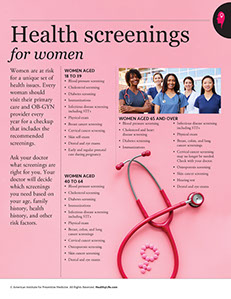
    Stethoscope and female symbol pills on pink top view.

    Women are at risk for a unique set of health issues. Every woman should visit their primary care and OB-GYN provider every year for a checkup that includes the recommended screenings.

    Ask your doctor what screenings are right for you. Your doctor will decide which screenings you need based on your age, family history, health history, and other risk factors.

    Women aged 18 to 39

    *  Blood pressure screening

    *  Cholesterol screening

    *  Diabetes screening

    *  Immunizations

    *  Infectious disease screening including STI’s

    *  Physical exam

    *  Breast cancer screening

    *  Cervical cancer screening

    *  Skin self-exam

    *  Dental and eye exams

    *  Early and regular prenatal care during pregnancy

    Women aged  40 to 64

    *  Blood pressure screening

    *  Cholesterol screening

    *  Diabetes screening

    *  Immunizations

    *  Infectious disease screening including STI’s

    *  Physical exam

    *  Breast, colon, and lung cancer screenings

    *  Cervical cancer screening

    *  Osteoporosis screening

    *  Skin cancer screening

    *  Dental and eye exams

    Women aged 65 and over

    *  Blood pressure screening

    *  Cholesterol and heart disease screening

    *  Diabetes screening

    *  Immunizations

    *  Infectious disease screening including STI’s

    *  Physical exam

    *  Breast, colon, and lung cancer screenings

    *  Cervical cancer screening may no longer be needed. Check with your doctor.

    *  Osteoporosis screening

    *  Skin cancer screening

    *  Hearing test

    *  Dental and eye exams

    © American Institute for Preventive Medicine

  • Depression 3

    Mental Health

    Depression is a medical illness. It is just as much an illness as are diabetes and heart disease. Depression is not a sign of being weak. It is not the person’s “fault.” A person who is depressed:

    *  Feels sad.

    *  Feels hopeless.

    *  Feels helpless.

    *  Sleeps or eats too little or too much.

    *  Thinks negative thoughts.

    *  Has lost interest in life.

    Depression makes a person less able to manage his or her life. It affects everything from mood to behavior.

    Persons of all ages, races, and ethnic backgrounds get depression. In the U.S., it will affect 10 to 25 percent of women and 5 to 12 percent of men during their lifetimes.

    Types & Symptoms

    Major Depression

    This is also called clinical depression. You may have this type if, for 2 or more weeks, you have 5 or more of the symptoms listed below or you have 1 or 2 of the symptoms in bold type.

    *  Loss of interest in things you used to enjoy. This includes sex.

    *  Feeling sad, blue, or down in the dumps.

    *  Feeling slowed down or restless.

    *  Feeling worthless or guilty.

    *  Changes in appetite. You lose or gain weight.

    *  Loss of energy or feeling tired all of the time.

    *  Problems concentrating or thinking. It is hard for you to remember things or make decisions.

    *  Trouble sleeping or sleeping too much.

    *  Thoughts of death or suicide. You attempt suicide.

    You Could Also Have One or More of These Symptoms

    *  Anger.

    *  Headaches or other aches and pains.

    *  Stomach and/or bowel problems.

    *  Sexual problems.

    *  Feeling negative, hopeless, anxious or worried.

    Note: Postpartum depression is a form of major depression that occurs in the mother after giving birth. Depression symptoms last more than 2 weeks after the baby is born.

    Dysthymia

    This is a mild but long lasting type of depression. An adult is thought to have this type when he or she has a depressed mood for most of the day, more days than not, for at least 2 years. For children, the same is true, but the symptoms are present for at least 1 year. Besides being sad, children with dysthymia may often:

    *  Be irritable, cranky, or act difficult.

    *  Have low self-esteem.

    With dysthymia, symptoms drain the person’s energy and keep him or her from feeling good. Sometimes people with dysthymia have bouts of major depression.

    Bipolar Disorder

    This used to be called manic-depression. With bipolar disorder, there are feelings of terrible “lows” and feelings of extreme “highs.” With these “highs,” a person feels happy, giddy, elated, or euphoric (manic). These cycles of “highs” and “lows” can last from days to months. In between these cycles, persons with bipolar disorder can feel normal.

    You may have this type of depression if you have had 4 of the symptoms below at one time for at least 1 week or you have had the symptom in bold type.

    *  You feel unusually “high,” euphoric, or irritable.

    *  You need less sleep.

    *  You talk a lot or feel that you can’t stop talking.

    *  You are easily distracted.

    *  You get lots of ideas at one time.

    *  You do things that feel good, but that have bad effects (e.g., foolish business ventures or uncontrolled spending habits).

    *  You have feelings of greatness.

    *  You make lots of plans for activities (at work, school, or socially) or feel that you have to keep moving.

    Causes

    *  Some types of depression run in families.

    *  Brain chemical imbalances.

    *  Life changes, such as the birth of a baby, divorce, retirement, job loss, and the death of a loved one.

    *  Hormonal and other changes, such as after having a baby (postpartum depression) or with menopause.

    *  Medical illnesses.

    *  Problems with others.

    *  Worries about money.

    *  Abuse of drugs or alcohol.

    *  Seasonal Affective Disorder (SAD). This is due to a lack of natural sunlight in the fall and winter.

    *  Low self-esteem. Negative attitudes about the world and self. Low tolerance for stress.

    *  Holiday “blues.”

    *  A side effect of medicines, such as some for high blood pressure. Some antidepressant medicines may increase suicidal thoughts and attempts, especially in children and teens. This is more likely to occur early in treatment or when changing a dose.

    Most Likely, Major Depression is Caused by a Mix of These Things:

    *  Family history of depression.

    *  Brain chemical imbalances.

    *  Emotional issues.

    *  Other factors, such as certain medical problems.

    In some persons, life events, such as extreme stress and grief, may bring on depression. In others, depression occurs when life is going well.

    Treatment

    Too Often, People Don’t Get Help for Depression. They Don’t Get Help for Many Reasons:

    *  They don’t know they are depressed.

    *  They blame themselves for how they feel.

    *  They have a hard time asking for help.

    *  They don’t know what to do or where to go for help.

    Why Get Help?

    Over 80% of people with depression can be treated with success, usually in a short time. Here are good reasons to seek help:

    *  Depression is the most common cause of suicide.

    *  Elderly depressed people have higher rates of chronic medical problems, such as heart disease.

    *  According to one study, severely depressed people are as disabled as those disabled with a chronic physical illness.

    *  Studies show a link between depression and a greater chance of getting ill in people of all ages.

    *  Social and family life suffer. Depressed people withdraw from others. Parents who are depressed have trouble tending to their children.

    *  The annual cost for treatment and lost wages due to depression is estimated at $43 to $53 billion a year.

    Treatment depends on a proper diagnosis. This should start with a complete physical exam by your doctor or health care provider to rule out illnesses and medicine side effects that have the same symptoms as depression. If depression is diagnosed, your doctor or mental health care provider will prescribe one or more treatments for your needs.

    Medicine(s). Antidepressant medicines work to alter brain chemicals. Doing this evens out mood. Over half of the people who take these medicines recover from depression in about 3 to 6 weeks.

    Types of Medicines for Depression

    These are in groups based on their chemical makeup or how they affect brain chemistry.

    *  SSRIs. These medicines alter serotonin, a chemical in the brain that affects mood, sleep, appetite, etc. There are many brand name and generic forms.

    *  SNRIs. These medicines alter serotonin and another brain chemical called norepinephrine.

    *  NDRIs. These medicines alter norephinphrine and another brain chemical called dopamine.

    *  Tricyclic antidepressants (TCAs). These medicines alter serotonin and another brain chemical.

    *  MAOIs. Persons who take MAOIs must follow a special diet. This is needed because some foods, if taken with MAOIs, can cause a high blood pressure crisis. Examples are aged cheeses and red wine. Because of this and other reasons, MAOIs are not used often.

    *  Lithium. This is used to treat bipolar disorder. Lithium reduces both manic and depressive episodes. When episodes occur, they are less severe in most persons who take lithium.

    *  Medicine used to treat acute mania in bipolar disorder.

    *  Over-the-counter herbal remedies, such as SAMe and St. John’s Wort for mild to moderate depression. Consult your doctor before taking these.

    It may take some time to find the medicine that works best with the least side effects. Prescribed antidepressant medicines are not habit forming.

    A therapist listens, talks, and helps you deal with your problems. This treatment is usually brief. Ten to 20 visits is common. This type of therapy can be done with:

    *  Just you and the therapist. This is one-on-one therapy.

    *  You, the therapist, and other people with similar problems. This is group therapy.

    *  You, the therapist, and family members, loved ones, or a partner. This is family or marriage therapy.

    Types of Psychotherapy Used for Depression

    *  Cognitive therapy. This focuses on thoughts and beliefs.

    *  Behavior therapy. This focuses on current behaviors.

    *  Interpersonal therapy. This focuses on current relationships.

    Psychotherapy may begin to help right away. For some people, it may take 8 to 10 weeks to show a full effect. More than half of the people with mild to moderate forms of depression do well in therapy.

    Medicine and Psychotherapy.

    The medicine treats the symptoms of depression. Psychotherapy helps people handle the ways depression can cause problems in their lives.

    Electro-Convulsive Therapy (ECT).

    Most depressions can be treated with medicine, psychotherapy, or both. ECT is mostly used for severe depression that is not helped with medicines. It can also be used for persons who are severely depressed with severe medical illnesses.

    Light Therapy.

    A special kind of light, called broad-spectrum light, is used. This gives people the effect of having a few extra hours of daylight each day. Special light boxes or light visors are used. Light therapy may help people who have Seasonal Affective Disorder (SAD). This mild or moderate form of depression comes in the fall and winter.

    Hospital Care.

    A person with severe depression may need to be given care in a hospital to prevent harm to himself, herself, or others; to monitor medicine(s); and/or to adjust medical therapy.

    Self-Care

    *  Take medicine(s), as prescribed, even when you begin to feel better. Tell your doctor about side effects.

    *  Consult with your doctor before taking over-the-counter herbs, such as SAMe or St. John’s Wort.

    *  Don’t use illegal drugs. Limit alcohol. These can cause or worsen depression. Drugs and alcohol can also make medicines for depression less effective. Harmful side effects can happen when alcohol and/or drugs are mixed with medicine.

    *  Attend support groups, such as ones for new mothers who have postpartum depression.

    *  Know that negative thinking is part of depression. As the depression lifts, the negative thoughts will lift, too.

    *  Don’t make major decisions during bouts of depression. Ask someone you trust to help you.

    *  Eat healthy foods. Eat at regular times.

    *  Exercise regularly.

    *  Express your feelings. Talk to friends, relatives, co-workers, etc.

    *  Try not to isolate yourself. Be with people you trust and feel safe with even though you feel down. Be with positive people.

    *  Help someone else. This will focus your thoughts away from yourself.

    *  Do something new or that you enjoy. Walk or drive to a new place. Try a new place to eat. Take a vacation. Take on a new project that will let you express yourself.

    *  Keep an emergency number handy (e.g., crisis hotline, trusted friend’s number, etc.) in case you feel desperate.

    *  If suicidal thoughts occur, remove any weapons, pills, etc. that could be used for suicide and get medical help.

    Medical Care

    Reasons to Call Doctor or Health Care Provider

    *  Symptoms of major depression occur.

    *  Depression has kept you from doing daily activities for more than 2 weeks or you withdraw from normal activities for more than 2 weeks.

    *  Depression results from one of these things:

    – A medical problem.

    – Taking over-the-counter or prescribed medicine. (This includes an antidepressant.)

    – Alcohol or drug abuse.

    – Grief over the loss of a loved one does not start to improve after a couple of months.

    *  Depression doesn’t lift 2 weeks after having a baby.

    *  Depression comes with dark, cloudy weather or winter months. It lifts when spring comes.

    *  You feel depressed now and one or more of these things apply:

    – You have been depressed before and did not get treatment.

    – You have been treated (with or without medicine) for depression in the past and it has come back.

    *  Any of these problems occur during holiday times:

    – You withdraw from family and friends.

    – You dwell on past holidays to the point that it interferes with your present life.

    Reasons to Get Immediate Care

    *  Attempting or planning suicide or writing a suicide note. Call the Suicide Prevention Lifeline at 800.273.8255 or have someone take you to a hospital emergency room. Or call 9-1-1 or your local rescue squad.

    *  Hearing voices, having overwhelming thoughts, or attempting to harm others, such as your baby after giving birth.

    Resources

    Depression and Bipolar Support Alliance

    800.826.3632

    www.dbsalliance.org

    International Foundation for Research and Education on Depression (iFred)

    www.ifred.org

    National Institute of Mental Health

    866.615.6464

    www.nimh.nih.gov

    Mental Health America! (MHA)

    800.969.6642

    www.mentalhealthamerica.net
    Depression brochure by the American Institute for Preventive Medicine. www.HealthyLife.com. All rights reserved.

    © American Institute for Preventive Medicine

  • Eating Disorders 3

    Mental Health

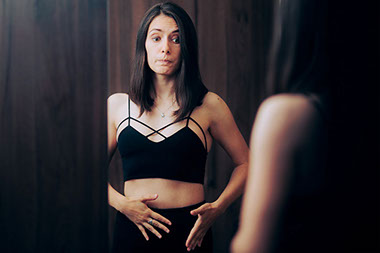
    Women looking at her body in a mirror.

    A person with an eating disorder is obsessed with food and/or body weight.

    Eating disorders are serious but treatable mental and physical illnesses that affect people of all ages, genders, body weights, and racial/ethnic backgrounds.

    It is estimated that millions of Americans have struggled with an eating disorder at some point over their lifetime. Eating disorders are caused by a range of biological, psychological, and sociocultural factors.

    You may not be able to tell someone has an eating disorder by how they look. A person with anorexia nervosa may be very underweight, but persons with bulimia nervosa and binge eating disorder can be underweight, normal weight, or overweight.

    Find out about eating disorders from the National Eating Disorders Association atnationaleatingdisorders.org.

    ays to Well-Being book by the American Institute for Preventive Medicine. www.HealthyLife.com. All rights reserved.

    © American Institute for Preventive Medicine

  • Eating Disorders 4

    Mental Health

    Common eating disorders are anorexia nervosa, binge eating disorder, and bulimia nervosa. With these, persons are obsessed with food and/or body weight. Eating disorders are a way to cope. They are serious health problems.

    Signs & Symptoms

    For Anorexia Nervosa

    *  Loss of a lot of weight in a short time.

    *  Intense, irrational fear of weight gain and/or of looking fat. Obsession with fat, calories, and weight.

    *  Distorted body image. Despite being below a normal weight for height and age, the person sees himself or herself as fat.

    *  A need to be perfect or in control in one area of life.

    *  Marked physical signs. These include loss of hair, slowed heart rate, and low blood pressure. The person feels cold due to a lowered body temperature. In females, menstrual periods can stop.

    For Binge Eating Disorder

    *  Periods of nonstop eating that are not related to hunger.

    *  Impulsive binging on food without purging.

    *  Dieting and/or fasting over and over.

    *  Weight can range from normal weight to mild, moderate, or severe obesity.

    For Bulimia Nervosa

    *  Repeated acts of binge eating and purging. Purging can be through vomiting; taking laxatives, water pills, and/or diet pills; fasting; and exercising a lot to “undo” the binge.

    *  Excessive concern about body weight.

    *  Being overweight, underweight, or normal weight.

    *  Dieting often.

    *  Dental problems. Mouth sores. Chronic sore throat.

    *  Spending a lot of time in bathrooms.

    *  Because of binge-purge cycles, severe health problems can occur. These include an irregular heartbeat and damage to the stomach, kidneys and bones.

    Causes

    An exact cause has not been found. Persons from all backgrounds, ages, and genders are affected.

    Risk Factors for Eating Disorders

    *  A family history of eating disorders.

    *  Pressure from society to be thin.

    *  Personal and family pressures.

    *  Sexual, physical, or alcohol abuse in the past.

    *  Fear of starting puberty. Fear of having sex.

    *  Pressure for athletes to lose weight or to be thin for competitive sports.

    *  Chronic dieting.

    Treatment

    *  Counseling. This can be individual, family, group, and/or behavioral therapy.

    *  Support groups.

    *  Medication.

    *  Nutrition therapy.

    *  Outpatient treatment programs.

    *  Hospitalization, if needed.

    Questions to Ask

    Self-Care / Prevention

    Eating disorders need professional treatment.

    To Help Prevent an Eating Disorder

    *  Learn to accept yourself and your body. You don’t need to be or look like anyone else. Spend time with people who accept you as you are, not people who focus on “thinness.”

    *  Know that self-esteem does not have to depend on body weight.

    *  Eat nutritious foods. Focus on whole grains, beans, fresh fruits and vegetables, low-fat dairy foods, and low-fat meats.

    *  Commit to a goal of normal eating. Realize that this will take time. It will also take courage to fight fears of gaining weight.

    *  Don’t skip meals. If you do, you are more likely to binge when you eat.

    *  Avoid white flour, sugar and foods high in sugar and fat, such as cakes, cookies, and pastries. Bulimics tend to binge on junk food. The more they eat, the more they want.

    *  Find success in things that you do.

    *  Get regular moderate exercise 3 to 4 times a week. If you exercise more than your doctor advises, do non-exercise activities with friends and family.

    *  Learn as much as you can about eating disorders from books and places that deal with them.

    *  To help their children avoid eating disorders, parents should promote a balance between their child’s competing needs for independence and family involvement.

    To Treat an Eating Disorder

    *  Follow your treatment plan.

    *  Attend counseling sessions and/or support group meetings as scheduled.

    *  Identify feelings before, during, and after you overeat, binge, purge, or restrict food intake. What is it that you are hoping the food will do?

    *  Set small goals that you can easily reach. Congratulate yourself for every success. This is a process. Accept setbacks. Learn from them.

    *  Talk to someone instead of turning to food.

    *  Learn to express your rights. You have the right to say “no” and the right to express your feelings and your opinions. You have the right to ask that your needs are met.

    *  Keep a journal of your progress, feelings, thoughts, etc., but not about what you eat. The journal is just for you, not for others to read or judge. This is a safe place to be honest with yourself. The journal can also help you identify your “triggers” so that you can deal with them in the future.

    *  Don’t let the scale run your life. Better yet, throw out the scale!

    Resources

    Eating Disorders Awareness and Prevention

    202.382.3587

    nationaleatingdisorders.org

    Healthier at Home book by the American Institute for Preventive Medicine. www.HealthyLife.com. All rights reserved.

    © American Institute for Preventive Medicine

  • Hiv/Aids 2

    Women’s Health

    HIV stands for human immunodeficiency virus. AIDS is acquired immune deficiency syndrome. It is caused by HIV. The virus destroys the body’s immune system. This leaves a person unable to fight off diseases. The virus also attacks the central nervous system causing mental problems.

    Signs & Symptoms

    When first infected with HIV, many people have no symptoms. Within a month or two, some persons have flu-like symptoms (e.g., fever, fatigue, headache, and swollen glands). These symptoms usually go away within a week to a month. They are often mistaken for other infections. In adults, symptoms of HIV may take months to 10 or more years to appear. In children born with HIV, symptoms appear within 2 years.

    Symptoms of HIV Before the Onset of AIDS

    *  Fatigue. Weight loss.

    *  Swollen glands.

    *  Fever and sweating. These occur often.

    *  Skin rashes that persist. Flaky skin.

    *  Getting sick often.

    *  Short-term memory loss.

    *  Infections. These include herpes, shingles, and yeast infections.

    In Women, Signs that HIV Could be Present Include:

    *  Chronic vaginal yeast infections.

    *  Abnormal Pap test from HPV exposure in the past.

    *  Cervical cancer.

    *  Pelvic inflammatory disease (PID).

    *  Some sexually transmitted infections, such as human papillomavirus (HPV). {Note: HPV can be present without HIV. Testing confirms its presence.}

    AIDS is the most advanced stage of HIV. With AIDS, there is a low level of cells in the blood called T4 cells. Persons with AIDS get many illnesses. These include skin infections, pneumonia, and cancer. These conditions are what lead to death.

    Symptoms of AIDS

    *  Extreme fatigue. Weight loss.

    *  Severe and chronic diarrhea.

    *  Fever. Severe headaches.

    *  Shortness of breath. Coughing. A hard time swallowing.

    *  Abdominal cramps. Nausea. Vomiting.

    *  Lack of coordination. Vision loss.

    *  Mental status changes.

    *  Seizures. Coma.

    Causes

    HIV is spread when body fluids, such as semen or blood, pass from an infected person to another person. This includes having sex without a latex or polyurethane condom and/or sharing drug needles.

    Infected females can give HIV to their babies during pregnancy, delivery, and breast-feeding. The risk of the baby getting HIV is greatly lowered if the mother takes antiviral medicines during the pregnancy and delivery. The baby takes medicine the first six weeks of life, too.

    High Risk Activities for HIV Infection

    *  Anal, oral and/or vaginal sex without a latex or polyurethane condom, unless you limit sexual contact to one person and neither of you is infected with HIV. High risk situations are having sex:

    – When drunk or high. (Judgement is impaired.)

    – With multiple or casual sex partners or with a partner who has had multiple sex partners.

    – With a partner who has used drugs by  injection or is a bisexual male.

    – When you or your partner has signs and symptoms of a genital tract infection.

    *  Sharing needles and/or “the works” when injecting any kind of drugs.

    *  Having had blood transfusions, especially before 1985, unless tested negative for HIV.

    *  Prolonged, open-mouth kissing with a person infected with HIV.

    Blood screening tests are also done on donated blood which makes it highly unlikely that you’d get HIV from current blood transfusions. You cannot get HIV from:

    *  Donating blood.

    *  Casual contact, such as touching, holding hands, hugging, and dry kissing.

    *  A cough, sneeze, tears, or sweat.

    *  An animal or insect bite.

    *  A toilet seat. Using a hot tub or swimming.

    Treatment

    There is no cure for AIDS. Treatment includes:

    *  Medications. Multi-drug combinations are used.

    *  Measures to reduce the risk of infections and diseases (e.g., rest, proper nutrition, and vitamin supplements, as advised).

    *  Emotional support.

    *  Medical treatment for infections and chronic problems.

    Questions to Ask

    Self-Care / Prevention

    Someday, a cure for HIV/AIDS may exist. For now, prevention is the best protection. Take these steps:

    *  Unless you are in a monogamous relationship in which you and your partner are HIV free, use male latex or polyurethane condoms every time you have sex.

    *  Don’t have sex with people who are at high risk for HIV. These are:

    – Persons with multiple sex partners.

    – Persons who inject illegal drugs.

    – Partners of persons infected or exposed to HIV.

    – Persons who have had multiple blood transfusions, especially before 1985, unless tested negative for HIV.

    *  Ask specific questions about your partner’s sexual past (e.g., have they had many partners or unprotected (no condom) sex?). Ask if they have been tested for HIV and if the results were positive or negative. Be aware, though, that the response may not be an honest one. You need to protect yourself! Get tested for HIV. Ask your partner to get tested, too. If you have been exposed to HIV, use prevention measures or avoid sex until you get tested for it.

    *  If you’ve had sex with someone you suspect is HIV positive, see your doctor.

    *  Don’t share needles with anyone. This includes illegal drugs, such as heroin, as well as, steroids, insulin, etc.

    *  Don’t share personal items that have blood on them, such as razors.

    *  Plan ahead for safer sex. Decide what you’ll say and be willing to do ahead of time with a potential sex partner.

    *  Keep a supply of condoms handy (e.g., in your purse, by the bed, in your pocket, etc.). Know the correct way to use them. Putting the condom on your partner can be a part of foreplay.

    *  Don’t have sex when your judgement is impaired, such as while under the influence of drugs or alcohol.

    *  Avoid sex if either partner has signs and symptoms of a genital tract infection.

    Detection

    A rapid oral HIV test and blood tests detect antibodies to HIV. Get tested for HIV at doctors’ offices, clinics, and health departments or use a home test and counseling service, such as Home Access. You can buy this over-the-counter, by phone at 800.HIV.TEST (448.8378), or online atwww.homeaccess.com.

    Resources

    National AIDS Hotline

    800.CDC.INFO (232.4636)

    AIDS Info

    800.HIV.0440 (448.0440)

    www.aidsinfo.nih.gov

    Women's Self-Care book by the American Institute for Preventive Medicine. www.HealthyLife.com. All rights reserved.

    © American Institute for Preventive Medicine

  • Osteoporosis

    Bone & Muscle Problems

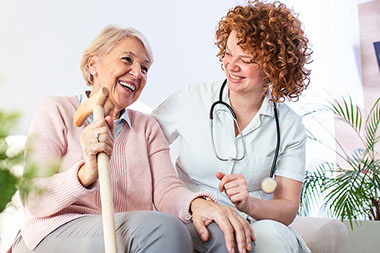
    Nurse with older women holding a cane.

    Osteoporosis is a loss of bone mass and strength. This significantly increases the risk of fractures and falls.

    To help prevent osteoporosis, take medicines as prescribed by your doctor, do weight-bearing exercises, choose a balanced diet rich in calcium and vitamin D, and practice good posture.

    Often, the first sign of osteoporosis is a fracture of a wrist, hip, or spine.

    To help detect osteoporosis, have tests that measure bone density as advised by your doctor.

    If you have been diagnosed with osteoporosis or had a fracture from a fall at standing height, talk with your doctor about medication options. Also, learn how to fall-proof your home. Learn more about bone health and osteoporosis atnof.org.

    Health at Home Lifetime book by the American Institute for Preventive Medicine. www.HealthyLife.com. All rights reserved.

    © American Institute for Preventive Medicine

  • Osteoporosis 2

    Women’s Health

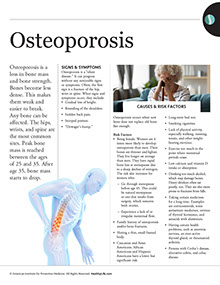
    Osteoporosis is a loss in bone mass and bone strength. Bones become less dense. This makes them weak and easier to break. Any bone can be affected. The hips, wrists, and spine are the most common sites. Peak bone mass is reached between the ages of 25 and 35. After age 35, bone mass starts to drop.

    Signs & Symptoms

    Osteoporosis is a “silent disease.” It can progress without any noticeable signs or symptoms. Often, the first sign is a fracture of the hip, wrist, or spine. When signs and symptoms occur, they include:

    *  Gradual loss of height.

    *  Rounding of the shoulders.

    *  Sudden back pain.

    *  Stooped posture.

    *  “Dowager’s hump.”

    Causes

    Osteoporosis occurs when new bone does not replace old bone fast enough.

    Risk Factors Include:

    *  Being female. Women are 4 times more likely to develop osteoporosis than men. Why?

    – Their bones are thinner and lighter.

    – They live longer on average than men.

    – They have rapid bone loss at menopause due to a sharp decline of estrogen. The risk also increases for women who: Go through menopause before age 45. This could be natural menopause or one that results from surgery which removes both ovaries. Experience a lack of or irregular menstrual flow.

    *  Having a thin, small framed body.

    *  Being Caucasian or Asian. African Americans and Hispanic Americans are at a risk, too.

    *  Lack of physical activity, especially walking, running, tennis, and other weight-bearing exercises.

    *  Long-term bed rest.

    *  Exercising too much to the point where menstrual periods cease.

    *  Low calcium and vitamin D intake or absorption.

    *  Family history of osteoporosis and/or bone fractures.

    *  Smoking cigarettes.

    *  Drinking too much alcohol, which may damage bones. Heavy drinkers often eat poorly, too. They are also more prone to fractures from falls.

    *  Taking certain medicines for a long time. Examples are: Corticosteroids; some antiseizure medicines; overuse of thyroid hormones; and antacids with aluminum.

    *  Having certain health problems, such as anorexia nervosa, an over-active thyroid gland, or rheumatoid arthritis.

    *  Persons with Crohn’s disease, ulcerative colitis, and celiac disease are at risk, too.

    Treatment

    There is no cure for osteoporosis. The focus of treatment is to prevent the disease, to prevent further bone loss, and build new bone. Special X-rays, such as one known as DEXA, can measure bone density in various sites of the body. These tests can help doctors decide if and what kind of treatment is needed. Treatment includes:

    *  Medications. There are different kinds. Your doctor will prescribe one(s) best suited for your needs.

    *  A balanced diet rich in calcium and vitamin D and taking supplements of these, as needed.

    *  Exercises, as advised by your doctor.

    *  Proper posture.

    *  Fall prevention measures:

    – Wear flat, sturdy, non-skid shoes.

    – Get regular vision exams. Wear corrective glasses, etc., as needed.

    – Ask your doctor if any medications you take could increase the risk of falls. Ask how to deal with this. Let your doctor know if your medicine(s) affect your vision, balance, etc.

    – Use grab bars and safety mats or nonskid tape in your tub and shower.

    – Use handrails on stairways.

    – Pick things up by bending your knees and keeping your back straight. Don’t stoop.

    – Use a cane or walker if necessary.

    – If you use throw rugs, use ones with nonskid backs.

    – See that halls, stairways, and entrances are well lit. Use night lights in hallways, bathrooms, etc.

    – Stay home if it is icy or slippery outside.

    Questions to Ask

    Self-Care / Prevention

    To Treat Osteoporosis

    *  Take medications, as prescribed.

    *  Do the daily exercises approved by your doctor.

    *  Practice good posture.

    To Treat, Slow, and Prevent Osteoporosis

    *  Eat a balanced diet.

    *  Get your daily calcium need.

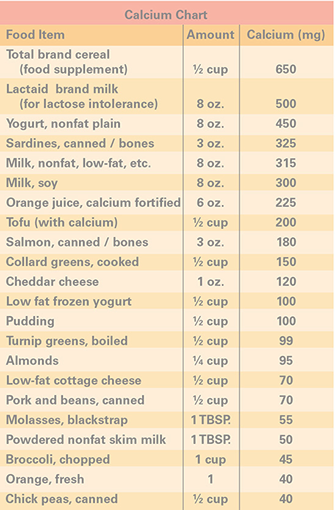
    Choose High Calcium Foods Daily

    *  Skim and low-fat milks, yogurts, and cheeses. {Note: If you are lactose intolerant, you may need to use dairy products that are treated with the enzyme lactose or you can add this enzyme using over-the-counter drops or tablets.}

    *  Soy milks and yogurts with added calcium.

    *  Soft-boned fish and shellfish, such as cod, salmon, sardines, and shrimp.

    *  Vegetables, especially broccoli, kale, and collards.

    *  Beans and bean sprouts, as well as tofu (soy bean curd), if processed with calcium.

    *  Calcium-fortified foods, such as some orange juices, apple juices, and ready-to-eat cereals.

    *  Take calcium supplements, as advised by your doctor.

    Get Your Recommended Daily Need for Vitamin D.

    *  Choose nonfat and low-fat dairy products that are fortified with vitamin D, saltwater fish, liver, and egg yolks. You also get vitamin D from direct exposure of sunlight on your skin. Fifteen minutes of midday sun exposure (without sunscreen) may meet the daily need.

    *  Take vitamin D supplements, as advised by your doctor. The best source of vitamin D for bone health is vitamin D3.

    *  Do regular, weight-bearing exercises at least 3 or 4 times a week. Examples are walking and low-impact or non-impact aerobics. (If you have osteoporosis, follow the exercise program outlined by your doctor.)

    *  Do not smoke.

    *  Limit alcohol.

    *  Use fall prevention measures.

    Resources

    National Osteoporosis Foundation

    www.nof.org

    Women's Self-Care book by the American Institute for Preventive Medicine. www.HealthyLife.com. All rights reserved.

    © American Institute for Preventive Medicine

  • Osteoporosis 3

    Bone & Muscle Problems

    Osteoporosis is a loss in bone mass and bone strength. Bones become less dense. This makes them weak and easier to break. Any bone can be affected. The hips, wrists, and spine are the most common sites.

    Signs & Symptoms

    Osteoporosis is a “silent disease.” It can occur without pain. You don’t see or feel changes taking place inside your bones. Often, the first sign is a fracture of the hip, wrist, or spine. When signs and symptoms occur, they include:

    *  Gradual loss of height

    *  Rounding of the shoulders

    *  Sudden back pain

    *  Stooped posture

    *  Dowager’s hump

    Causes & Risk Factors

    Bone is living tissue. It breaks down and is replaced with new bone. Osteoporosis occurs when new bone does not replace old bone fast enough.

    Risk Factors

    *  Being female. Women are more likely to develop osteoporosis than men.

    *  Low estrogen level. This occurs with menopause.

    *  Low testosterone level in men

    *  Aging

    *  A family history of osteoporosis or broken bones as adults

    *  Having a thin, small-framed body

    *  Lack of exercise, especially weight-bearing ones, such as walking and dancing

    *  Long-term bed rest

    *  Low calcium and vitamin D intake or absorption

    *  Smoking

    *  Drinking too much alcohol

    *  Long term use of some medicines, such as oral corticosteroids and antacids with aluminum

    *  Having certain health problems, such as anorexia nervosa, an over-active thyroid gland, and rheumatoid arthritis. Persons with Crohn’s disease, ulcerative colitis, and celiac disease are at an increased risk, too.

    Diagnosis

    There is no cure for osteoporosis. The focus is to:

    *  Prevent the disease

    *  Prevent further bone loss

    *  Build new bone

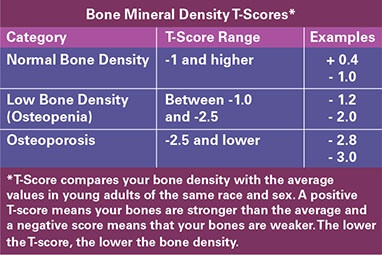
    *  All women 65 years of age and older should have a bone mineral density (BMD) screening test. Women who have had a fracture or are at a high risk for osteoporosis should get this test sooner than age 65, as advised by their doctors.

    *  Older men should have a BMD test if they have key risk factors for BMD-related fractures:

    – A past fracture, possibly due to osteoporosis

    – Low body weight. Physical inactivity.

    – Prolonged use of corticosteroid medications.

    {Note: Follow your doctor’s advice for when and how often to get screening tests for osteoporosis.}

    *  The most common test used to measure how dense bones are is a special X-ray known as a DXA or DEXA scan. You lie on a table and a technician moves a scanner above your spine, hip, or wrist. This safe and painless test takes about 10-20 minutes. Test results can identify persons who are at the highest risk for fractures.

    Medical Care

    Talk about your bone health with your doctor. Discuss:

    *  Your personal and family medical history

    *  Medications you take and have taken

    *  Falls or broken bones you have had as an adult

    *  Self-Care / Prevention measures you do already and ones you need help with

    Medical treatment may include:

    *  Treatment for problems that increase the risk for low bone mass and osteoporosis

    *  Evaluating your risk of falls. Tests for this include ones that check your balance, vision, blood pressure, muscle strength, and heart rhythm.

    *  An exercise program for your needs. Physical therapy may be prescribed.

    *  High doses of vitamin D if your blood level is very low. Your doctor needs to prescribe this.

    *  Medications:

    – Some slow down the breakdown of old bone. Two categories of these are bisphosphonates (biss-FOSS-fuh-nates) and anti-resorptive agents. Some of these medications are pills. Others are given in shots or through an IV.

    – Another one (teriparatide) helps the body make new bone faster than the old bone is broken down.

    Talk to your doctor about the benefits and risks of medications. Find out what side effects you should let him or her know about.

    Reasons to Contact Doctor/Provider

    *  You have any “Signs & Symptoms” of Osteoporosis.

    *  You want to find out about medicines and other ways to prevent and/or treat osteoporosis.

    *  You are a female age 65 or older and have not had a bone mineral density (BMD) test.

    *  You are a female age 50 and older; you have had a fracture or are at high risk for osteoporosis; and  you have not had a BMD test.

    *  You are an elderly male; you have risk factors for osteoporosis; and you need advice on getting a BMD test.

    *  After a fall, bump or strain, you have wrist, hip, or back pain.

    *  After a fall, you are not able to get up. Call or have someone call 9-1-1!

    Self-Care / Prevention

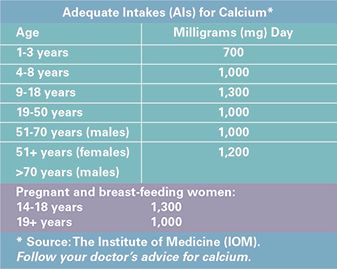
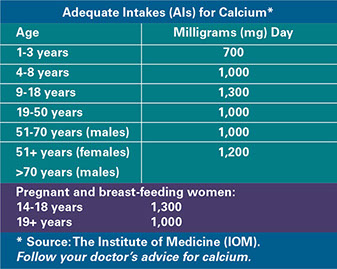
    Get Your Recommended Adequate Intake (AI) for Calcium Every Day

    *  Choose high-calcium foods daily. Examples are milk, yogurt, salmon, and green leafy vegetables.

    *  Take calcium supplements, as advised by your doctor. It is best to limit calcium to 500 milligrams at a time. Ask your doctor about taking Tums® to get calcium.

    *  Eat a balanced diet. Have at least 5 fruits and vegetables every day. These have many vitamins, minerals, and anti-oxidants that can benefit bone health, as well as overall health.

    *  Don’t smoke. If you smoke, quit! Get help from your doctor,www.smokefree.gov, and/or 1.800.QUIT.NOW (784.8669).

    *  Limit alcohol. Too much alcohol interferes with  the body’s need for calcium and vitamin D. It also increases the risk for falls.

    *  Take medications, as prescribed.

    Sources of vitamin D:

    *  Sun exposure (without sunscreen) on your skin. Fifteen minutes of midday sunshine may meet the daily need. {Note: You may not get vitamin D benefits from the sun: During winter months; if you have dark skin; and/or you are age 60 years and older.}

    *  Foods, such as fortified milks and cereals, egg yolks, saltwater fish, and liver.

    *  Vitamin D supplements, as advised by your doctor. The best source of vitamin D for bone health is vitamin D3.

    Use Fall Prevention Measures

    (Falling is what leads to broken bones for many people with osteoporosis.)

    *  Ask your doctor if any medications you take could cause you to fall and how to deal with this. Find out how to deal with vision and balance problems, too.

    *  Put salt or kitty litter on icy sidewalks. Or stay home during bad weather!

    *  Use grab bars and safety mats, etc. in your tub and shower.

    *  Use handrails on both sides of stairways.

    *  When you reach for things on the floor or pick things up, bend at your knees, not at your waist.

    *  Wear flat, sturdy, nonskid shoes.

    *  If you use throw rugs, use ones with nonskid backs. Or tack them down to the floor.

    *  Use a cane or walker, if necessary.

    *  Keep halls, stairways, and entrances well lit. Use night lights in hallways, bathrooms, etc.

    *  Keep a flashlight next to your bed.

    *  Practice proper posture.

    In the house, carry a cordless or cell phone with you, if you can. Doing this keeps you from rushing to answer the phone when it rings. You will also be able to call for help if you do fall.

    Be Physically Active

    Physical activity throughout life is important for bone health. Putting stress on your bones tells your body that your bones need to be made stronger.

    *  Do regular, weight-bearing exercise. Do this at least 3 or 4 times a week. Examples are walking, dancing, and step aerobics.*

    *  Do resistance exercises to strengthen muscles and build bone.* Examples are using weights and resistance bands.

    *  Do exercises that increase flexibility.* Examples are tai chi, yoga and stretching exercises.

    *  (Note: A person with osteoporosis should follow the exercise program outlined by his or her doctor.)

    Low bone mass and osteoporosis pose a major health threat.

    *  One out of every 2 women and one in 4 men over age 50 will have an osteoporosis-related fracture in his or her lifetime.

    *  After a fracture, persons are more likely to have chronic pain, a fear of falling, and depression. They lose independence and have a lower quality of life.

    *  One year after a hip fracture, 1 in 4 people dies, 1 can’t walk, and 2 of the 4 can walk but are less mobile than before the fracture.

    *  In the U.S., costs for osteoporosis and related fractures have been estimated to be about $14 billion a year.

    Resources

    National Osteoporosis Foundation

    800.231.4222

    www.nof.org

    NIH Osteoporosis and Related Bone Disease National Resource Center

    800.624.BONE (624.2663)

    www.bone.nih.gov

    Osteoporosis brochure by the American Institute for Preventive Medicine. www.HealthyLife.com. All rights reserved.

    © American Institute for Preventive Medicine

  • Pelvic Inflammatory Disease (Pid)

    Women’s Health

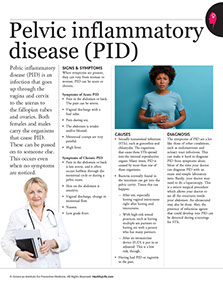
    Pelvic inflammatory disease (PID) is an infection that goes up through the uterus to the fallopian tubes. Both females and males carry the organisms that cause PID. These can be passed on to someone else. This occurs even when no symptoms are noticed.

    Signs & Symptoms

    When symptoms are present, they can vary from woman to woman. PID can be acute or chronic.

    Symptoms of Acute PID

    *  Pain in the abdomen or back. The pain can be severe.

    *  Vaginal discharge with a foul odor.

    *  Pain during sex.

    *  The abdomen is tender and/or bloated.

    *  Menstrual cramps are very painful.

    *  High fever.

    Symptoms of Chronic PID

    *  Pain in the abdomen or back is less severe. This often occurs halfway through the menstrual cycle or during a pelvic exam.

    *  Skin on the abdomen is sensitive.

    *  Vaginal discharge. Change in menstrual flow.

    *  Nausea.

    *  Low grade fever.

    Causes

    *  Sexually transmitted infections (STIs), such as gonorrhea and chlamydia. The organisms that cause these STIs spread into the internal reproductive organs. Many times, PID is caused by more than one of these organisms.

    *  Having had PID in the past.

    *  Recently having vaginitis.

    *  Bacteria normally found in the intestines can get into the pelvic cavity. Times this can happen:

    – After sex, especially having vaginal intercourse right after having anal intercourse.

    – With high risk sexual practices that increase the risk of infection. Examples are having multiple sex partners or having sex with a person who has many partners.

    – After an intrauterine device (IUD) is put in or adjusted. This is a low risk, though.

    Diagnosis

    The symptoms of PID are a lot like those of other conditions, such as endometriosis and urinary tract infections. This can make it hard to diagnose PID from symptoms alone. Most of the time your doctor can diagnose PID with an exam and simple laboratory tests. Rarely, your doctor may need to do a laparoscopy. This is a minor surgical procedure which allows your doctor to see all the structures inside your abdomen. An ultrasound may also be done.

    Treatment

    Antibiotics treat diagnosed PID. If the infection is severe, bed rest and antibiotics given through an IV may be needed. Treatment for an infected sex partner is also needed. This prevents getting the infection again.

    When PID is not treated, the infection can spread to other parts of the body. If it spreads to the blood, it may threaten life.

    Scarring from the infection can cause damage to a woman’s reproductive organs. It can cause infertility. Also, a woman who has had PID is at increased risk for:

    *  A tubal pregnancy.

    *  Premature labor and birth.

    Questions to Ask

    Self-Care / Prevention

    *  Wipe from front to back after a bowel movement to keep bacteria from getting into the vagina.

    *  When you menstruate, change tampons and/or pads often.

    *  Don’t have vaginal sex right after anal sex.

    *  Don’t have sex with anyone who has not been treated for a current case of PID or an STI or with anyone who has partners that haven’t been treated.

    *  Use barrier birth control methods with spermicides. These reduce the risk of getting PID from an infected partner. These include the male or female condom, cervical cap, or diaphragm. Use these even if you use other forms of birth control, such as the pill.

    *  Don’t use an IUD if you are at risk for STIs. If you use an IUD, have your doctor remove it if you become pregnant and then miscarry. If it is left in, your risk for PID goes up.

    *  Don’t smoke.

    *  Don’t use douches. These can spread bacteria further up the vagina.

    *  After childbirth, wait until you stop bleeding to have sex. After a D & C, abortion, or miscarriage, wait 1 week to have sex. Use a latex or polyurethane condom for 2 weeks after having an IUD put in.

    *  If you are at risk for PID, get tested for chlamydia and gonorrhea every 6 months.

    Resources

    National Women’s Health Information Center

    www.womenshealth.gov

    Women's Self-Care book by the American Institute for Preventive Medicine. www.HealthyLife.com. All rights reserved.

    © American Institute for Preventive Medicine

  • Anemia

    Women’s Health

    Paper cutouts of blood drops with stethoscopes.

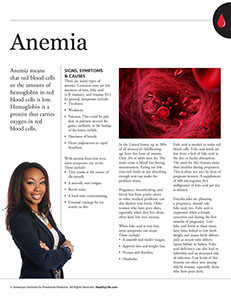
    Anemia means that red blood cells or the amount of hemoglobin in red blood cells is low. Hemoglobin is a protein that carries oxygen in red blood cells.

    Signs, Symptoms & Causes

    There are many types of anemia. Common ones are low amounts of iron, folic acid (a B vitamin), and vitamin B12. In general, symptoms include:

    *  Tiredness.

    *  Weakness.

    *  Paleness. This could be pale skin or paleness around the gums, nailbeds, or the linings of the lower eyelids.

    *  Shortness of breath.

    *  Heart palpitations or rapid heartbeat.

    With anemia from low iron, extra symptoms can occur. These include:

    *  Tiny cracks at the corner of the mouth.

    *  A smooth, sore tongue.

    *  Brittle nails.

    *  A hard time concentrating.

    *  Unusual cravings for ice, starch, or dirt.

    In the United States, up to 20% of all women of childbearing age have this form of anemia. Only 2% of adult men do. The main cause is blood lost during menstruation. Eating too few iron-rich foods or not absorbing enough iron can make the problem worse.

    Pregnancy, breastfeeding, and blood loss from peptic ulcers or other medical problems, can also deplete iron levels. Older women who have poor diets, especially when they live alone, often have low iron anemia.

    When folic acid is very low, extra symptoms can occur. These include:

    *  A smooth and tender tongue.

    *  Appetite loss and weight loss.

    *  Nausea and diarrhea.

    *  Headache.

    Folic acid is needed to make red blood cells. Folic acid levels are low from a lack of folic acid in the diet or faulty absorption. The need for this vitamin more than doubles during pregnancy. This is often not met by diets of pregnant women. A supplement of 400 micrograms (0.4 milligrams) of folic acid per day is advised.

    Females who are planning a pregnancy, should take folic acid, too. Folic acid is important when a female conceives and during the first months of pregnancy. Low folic acid levels at these times have been linked to low birth weight and major birth defects, such as neural tube defects (spina bifida) in babies. Folic-acid deficiency can also lead to infertility and an increased risk of infection. Low levels of this vitamin are often seen among elderly women, especially those who have poor diets.

    When vitamin B12 is low, extra symptoms can occur. These include:

    *  Chest pain on exertion.

    *  Swollen red tongue or bleeding gums.

    *  A hard time concentrating.

    *  Appetite loss and weight loss.

    *  Nausea and diarrhea.

    When vitamin B12 is very low, nervous system problems can occur, such as:

    *  Numbness and tingling in the hands and feet.

    *  Walking and balance problems.

    *  Memory loss, confusion, dementia or psychosis.

    One form of vitamin B12 deficiency anemia is pernicious anemia. This is usually caused when the body doesn’t absorb vitamin B12 from food. It can result from a lack of digestive acids and a substance called the intrinsic factor. Both are needed to absorb vitamin B12. Other causes are surgery that removes part or all of the stomach and autoimmune problems that cause cells in the stomach’s lining to shrink. Vitamin B12 is found only in animal foods. It is not in plant foods unless the vitamin is added, such as in some cereals.

    Other Types of Anemia

    *  Sickle cell anemia. This is an inherited disorder that affects the red blood cells’ ability to carry oxygen to the body’s tissues. Sickle cell anemia occurs mostly in African Americans but can occur in other ethnic groups too.

    *  Aplastic anemia. This is a serious disease of decreased bone marrow production.

    Also, alcohol, certain drugs, large amounts of aspirin, and some chronic diseases can cause anemia.

    Treatment

    Anemia shares symptoms with many health problems. It needs to be diagnosed by a doctor. Persons with severe anemia may need one or more blood transfusions.Treatment for it depends on the type and what caused it. This includes:

    *  Treating the problem that caused it.

    *  Eating a proper diet and taking vitamin and/or mineral supplements, as prescribed. {Note: Don’t take iron supplements on your own. Persons with a genetic illness called hemochromatosis (iron overload disease) can be harmed with iron supplements.}

    *  Getting vitamin B12 shots, if needed.

    Questions to Ask

    Self-Care

    To Get and Absorb Iron

    *  Eat foods that are good sources of iron: green leafy vegetables, lean red meat, beef liver, poultry, fish, wheat germ, oysters, dried fruit, and iron-fortified cereals.

    *  Eat foods high in vitamin C, such as citrus fruits, kiwi, tomatoes, strawberries, broccoli, and green or red bell peppers.

    *  If you drink tea, drink it between meals. Tannins in tea block iron absorption. Or add milk to tea. The calcium in milk binds with the tannins. (Herbal tea does not have tannins.)

    *  Take the supplements your doctor advises. {Note: High levels of iron in the blood may increase the risk for heart attacks. This is especially a concern if you have gone through menopause.}

    *  Avoid antacids, phosphates (which are found in soft drinks, beer, ice cream, candy bars, etc.), and the food additive EDTA. These block iron absorption.

    To Get and Absorb Folic Acid

    *  Eat good food sources of folate every day. These include asparagus, Brussels sprouts, spinach, romaine lettuce, collard greens, and broccoli. Other good sources are black-eyed peas, cantaloupe, orange juice, oatmeal, and whole-grain or fortified cereals.

    *  Eat fresh, raw fruits and vegetables often. Don’t overcook food. Heat destroys folic acid.

    *  Take the supplement your doctor advises.

    *  Don’t smoke or drink alcohol.

    Tips for Getting Vitamin B12

    *  Eat animal sources of food. Good choices are lean meats, fish, poultry, nonfat or low-fat dairy products.

    *  Strict vegetarians (vegans) who eat no animal sources of food should get vitamin B12 from a supplement or foods fortified with it, such as cereals or plant-based milks or nutritional yeast.

    Resources

    National Heart, Lung, and Blood Institute

    www.nhlbi.nih.gov

    Women's Self-Care book by the American Institute for Preventive Medicine. www.HealthyLife.com. All rights reserved.

    © American Institute for Preventive Medicine