Author: AIPM

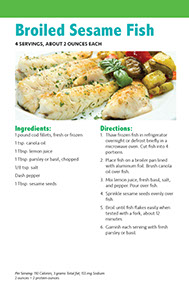
  • Broiled Sesame Fish

    Nutrition

    4 Servings, about 2-1/2 ounces each

    Ingredients:

    1 pound cod fillets, fresh or frozen

    1 tsp. margarine, melted

    1 Tbsp. lemon juice

    1 tsp. dried tarragon leaves

    1/8 tsp. salt

    Dash pepper

    1 Tbsp. sesame seeds

    1 Tbsp. parsley, chopped or 12 sprigs of dill

    Directions:

    1.  Thaw frozen fish in refrigerator overnight or defrost briefly in a microwave oven. Cut fish into 4 portions.

    2.  Place fish on a broiler pan lined with aluminum foil. Brush margarine over fish.

    3.  Mix lemon juice, tarragon leaves, salt, and pepper. Pour over fish.

    4.  Sprinkle sesame seeds evenly over fish.

    5.  Broil until fish flakes easily when tested with a fork, about 12 minutes.

    6.  Garnish each serving with parsley or dill.

    Per Serving:

    Calories – 110

    Total fat – 3 grams

    Sodium – 155 mg

    Page from HealthyLife Weigh Recipe book by the American Institute for Preventive Medicine. www.HealthyLife.com. All rights reserved.

    © American Institute for Preventive Medicine

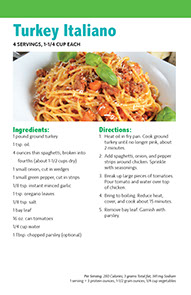
  • Chicken (Or Turkey) Italiano

    Nutrition

    4 Servings, 1 chicken breast half and 3/4 cup spaghetti mixture each

    Ingredients:

    4 chicken breast halves, skinned, boned (Or 1 pound ground turkey)

    1 tsp. oil

    4 ounces thin spaghetti, broken into fourths (about 1-1/2 cups dry)

    1 small onion, cut in wedges

    1 small green pepper, cut in strips

    1/8 tsp. instant minced garlic

    1 tsp. oregano leaves

    1/8 tsp. salt

    1 bay leaf

    16 oz. can tomatoes

    1/4 cup water

    1 Tbsp. chopped parsley, if desired

    Directions:

    1.  Pound chicken breasts with a metal meat mallet between sheets of plastic wrap until about 1/2 inch thick.

    2.  Heat oil in fry pan. Brown chicken breasts on each side.

    3.  Add spaghetti, onion, and pepper strips around chicken. Sprinkle with seasonings.

    4.  Break up large pieces of tomatoes. Pour tomato and water over top of chicken.

    5.  Bring to boiling. Reduce heat, cover, and cook until chicken and spaghetti are done, about 15 minutes.

    6.  Remove bay leaf. Garnish with parsley.

    Per Serving:

    Calories – 280

    Total fat – 3 grams

    Cholesterol – 68 milligrams

    Sodium – 341 mg

    Page from HealthyLife Weigh Recipe book by the American Institute for Preventive Medicine. www.HealthyLife.com. All rights reserved.

    © American Institute for Preventive Medicine

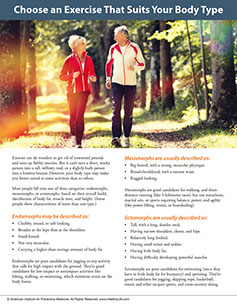
  • Choose An Exercise That Suits Your Body Type

    Fitness

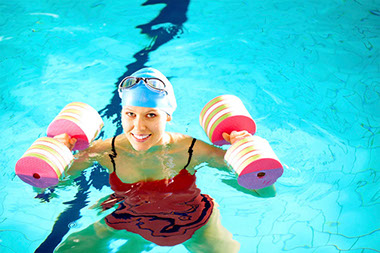
    Image of women doing water aerobics.

    Exercise can do wonders to get rid of unwanted pounds and tone up flabby muscles. But it can’t turn a short, stocky person into a tall, willowy reed, or a slightly built person into a brawny bruiser. However, your body type may make you better suited to some activities than to others. Most people fall into one of three categories: endomorphs, mesomorphs, or ectomorphs, based on their overall build, distribution of body fat, muscle tone, and height. (Some people show characteristics of more than one type.)

    Endomorphs may be described as:

    *  Chubby, round, or soft looking.

    *  Broader at the hips than at the shoulders.

    *  Small-boned.

    *  Not very muscular.

    *  Carrying a higher-than-average amount of body fat.

    Endomorphs are poor candidates for jogging or any activity that calls for high impact with the ground. They’re good candidates for low-impact or nonimpact activities like biking, walking, or swimming, which minimize strain on the body frame.

    Mesomorphs are usually described as:

    *  Big-boned, with a strong, muscular physique.

    *  Broad-shouldered, with a narrow waist.

    *  Rugged looking.

    Mesomorphs are good candidates for walking, and short-distance running (like 5-kilometer races) but not marathons, martial arts, or sports requiring balance, power, and agility (like power lifting, tennis, or boardsailing).

    Ectomorphs are usually described as:

    *  Tall, with a long, slender neck.

    *  Having narrow shoulders, chests, and hips.

    *  Relatively long limbed.

    *  Having small wrists and ankles.

    *  Having little body fat.

    *  Having difficulty developing powerful muscles.

    Ectomorphs are poor candidates for swimming (since they have so little body fat for buoyancy) and sprinting. They’re good candidates for jogging, skipping rope, basketball, tennis and other racquet sports, and cross-country skiing.

    Page image from A Year of Health Hints book by the American Institute for Preventive Medicine. www.HealthyLife.com. All rights reserved.

    © American Institute for Preventive Medicine

  • Color Your Diet

    Nutrition

    Image of various fruits.

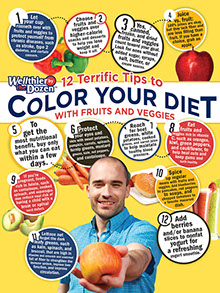
    *  Let your cup runneth over with fruits and veggies to protect yourself from chronic diseases, such as stroke, type 2 diabetes, and certain cancers.

    *  Choose fruits and veggies over higher-calorie snacks and desserts to help you lose weight and keep it off.

    *  Yes, canned, frozen, and dried fruits and veggies count toward your goal. Look for ones without added sugar, syrups, salt, butter, or cream sauces.

    *  Juice vs. fruit: 100% juices are okay, but they lack fiber and are less filling than fruit. If you have a choice, grab an apple.

    *  To get the most nutritional benefit, buy only what you can eat within a few days.

    *  Protect your eyes and skin with sweet potatoes, pumpkin, carrots, spinach, turnip greens, mustard greens, kale, red peppers, and cantaloupe.

    *  Reach for beet greens, white potatoes, cooked greens, and carrot juice to help maintain healthy blood pressure.

    *  Eat fruits and veggies rich in vitamin C, such as oranges, kiwi, green peppers, and cauliflower, to help heal cuts and keep gums and teeth healthy.

    *  If you’re pregnant, foods rich in folate, such as cantaloupe, cooked spinach, and asparagus may reduce your risk of having a child with a brain or spinal cord defect.

    *  Spice up regular meals with fruits and veggies. Add blueberries to pancakes, red peppers to soups, and chopped tomatoes to a favorite macaroni dish.

    *  Lettuce not forget the dark leafy greens, such as kale, spinach, and broccoli, that are high in vitamins and minerals and crammed full of fiber to strengthen the immune system, improve liver function, and improve circulation.

    *  Add berries and/or banana slices to nonfat yogurt for a refreshing yogurt smoothie.

    Color Your Diet poster by the American Institute for Preventive Medicine. www.HealthyLife.com. All rights reserved.

    © American Institute for Preventive Medicine

  • Control Portion Sizes

    Weight Control

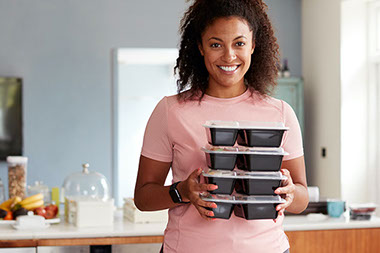
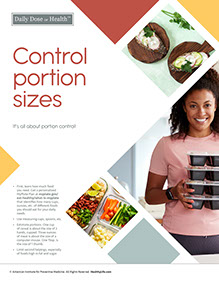
    Smiling women holding 4 pre-prepped meals.

    It’s all about portion control!

    *  First, learn how much food you need. Get a personalized MyPlate Plan atmyplate.gov/eat-healthy/what-is-myplatethat identifies how many cups, ounces, etc. of different foods you should eat for your daily needs.

    *  Use measuring cups, spoons, etc.

    *  Estimate portions. One cup of cereal is about the size of 2 hands, cupped. Three ounces of meat is about the size of a computer mouse. One Tbsp. is the size of 1 thumb.

    *  Limit second helpings, especially of foods high in fat and sugar.

    Page from HealthyLife Weigh book by the American Institute for Preventive Medicine. www.HealthyLife.com. All rights reserved.

    © American Institute for Preventive Medicine

  • Define Your Life Goals

    Systematic Stress Management Program

    Step 6: Time Management

    Step 6: Time Management Section

    Introduction

    Does Time Get the Best of You?

    Defining Your Life Goals

    Activity Worksheet

    Activity Log

    Time Management Techniques

    Action Plan for Improving Time Usage

    Procrastination Quiz

    How Do I Procrastinate?

    One Dozen Ways to Overcome Procrastination

    Should You Delegate?

    Delegation Caddy

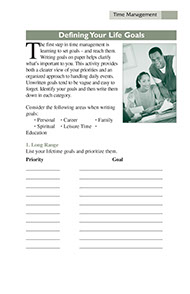
    The first step in time management is learning to set goals – and reach them. Writing goals on paper helps clarify what’s important to you. This activity provides both a clearer view of your priorities and an organized approach to handling daily events. Unwritten goals tend to be vague and easy to forget. Identify your goals and then write them down in each category. Consider the following areas when writing goals:

    *  Personal

    *  Career

    *  Family

    *  Spiritual

    *  Leisure Time

    *  Education

    1. Long Range

    List your lifetime goals and prioritize them.

    2. Mid Range

    List and prioritize your goals for the next 3 – 5 years.

    3. Short Term

    List and prioritize your goals as if you had just six months to live.

    Page from the Systematic Stress Management book by the American Institute for Preventive Medicine. www.HealthyLife.com. All rights reserved.

    © American Institute for Preventive Medicine

    Step 1: Understanding Stress

    Step 3: Type A & B Behavior Patterns

    Step 5: Thinking Differently

    Step 7: Communication & Stress

    Step 2: Stress Management at Work

    Step 4: Biofeedback Training & Relaxation

    Step 6: Time Management

    Steps to Systematic Stress Management™

    RELATED ARTICLES

    © American Institute for Preventive Medicine  –  All Rights Reserved.Disclaimer|www.HealthyLife.com

  • Destination: Healthy Vacation

    Healthy Travel

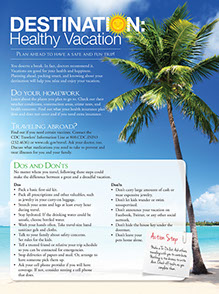
    Image of father and child playing in the pool.

    Plan ahead to have a safe and fun trip!

    You deserve a break. In fact, doctors recommend it. Vacations are good for your health and happiness. Planning ahead, packing smart, and knowing about your destination will help you relax and enjoy.

    Do your homework.

    Learn about the places you plan to go to. Check out their weather conditions, construction areas, crime rates, and health concerns. Find out what your health insurance plan does and does not cover and if you need extra insurance. No matter where you travel, following these steps could make the difference between a great and a dreadful vacation.

    Dos

    *  Pack a basic first-aid kit.

    *  Pack all prescriptions and other valuables, such as jewelry in your carry-on luggage.

    *  Stretch your arms and legs at least every hour during travel.

    *  Stay hydrated. If the drinking water could be unsafe, choose bottled water.

    *  Wash your hands often. Take travel-size hand sanitizer gels and cloths.

    *  Talk to your family about safety concerns. Set rules for the kids.

    *  Tell a trusted friend or relative your trip schedule so you can be contacted for emergencies.

    *  Stop deliveries of papers and mail. Or, arrange to have someone pick them up.

    *  Ask your cell phone provider if you will have coverage. If not, consider renting a cell phone that does.

    Don’ts

    *  Don’t carry large amounts of cash or wear expensive jewelry.

    *  Don’t let kids wander or swim unsupervised.

    *  Don’t announce your vacation on Facebook, Twitter, or any other social network.

    *  Don’t hide the house key under the doormat.

    *  Don’t leave your pets home alone.

    Traveling abroad?

    Find out if you need certain vaccines. Contact the CDC Travelers’ Information Line at 800.CDC.INFO (232.4636) orwww.cdc.gov/travel. Ask your doctor, too. Discuss what medications you need to take to prevent and treat illnesses for you and your family.

    Action Step

    Make a To-Do list. Ask others traveling with you to contribute. Nothing is too obvious to write down. Check off tasks as you complete them.

    Page image from Ways to Well-Being book by the American Institute for Preventive Medicine. www.HealthyLife.com. All rights reserved.

    © American Institute for Preventive Medicine