Category: Eye Conditions

  • Pink Eye (Conjunctivitis)

    Eye Conditions

    Pink eye is an inflammation of the conjunctiva. This is the covering of the inside of the eyelids and the whites of the eyes. The medical term for pink eye is conjunctivitis. It is called pink eye when the cause is a bacterial or viral infection. This is because the white part of the eye looks pinkish-red. Conjunctivitis can also be due to an allergic reaction.

    Signs & Symptoms

    Questions to Ask

    Self-Care / Prevention

    For Pink Eye

    *  Wash your hands often. Don’t share towels, washcloths, etc.

    *  Avoid contact with other people as much as you can until you have used the prescribed antibiotic eye drops, etc. for 24 hours. Follow the rules of your workplace about pink eye. For children, follow the rules of their school.

    *  With your eyes closed, apply a cotton ball soaked in warm (not hot) water to the affected eye 3 to 4 times a day. Do this for at least 5 minutes at a time. Use a clean cotton ball each time.

    *  Throw away any makeup that could be contaminated. Don’t wear eye makeup until the infection is all cleared up. Don’t share makeup with others.

    *  Don’t share eye drops with others.

    *  Don’t put a cover or patch over the eye. This can make the infection grow.

    *  Don’t wear contact lenses while your eyes are infected. Replace contact lenses or disinfect them twice before re-using.

    For Allergic Conjunctivitis

    *  Avoid things you know you are allergic to.

    *  Use over-the-counter eye drops. These soothe irritation and help relieve itching.

    *  Apply a washcloth rinsed in cold water to the eyes. Do this several times a day.

    *  Use protective eyewear when you work with chemicals and fumes.

    Healthier at Home book by the American Institute for Preventive Medicine. www.HealthyLife.com. All rights reserved.

    © American Institute for Preventive Medicine

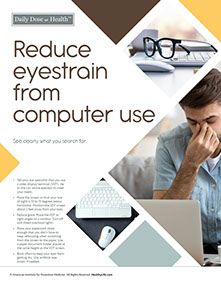
  • Reduce Eyestrain From Computer Use

    Eye Conditions

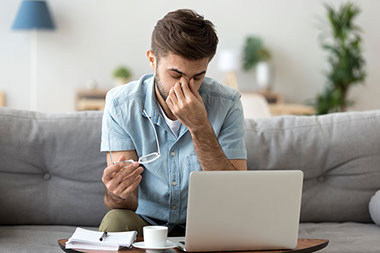
    Man holding glasses in one hand and rubbing eyes with the other hand.

    See clearly what you search for.

    *  Tell your eye specialist that you use a video display terminal (VDT). He or she can advise eyewear to meet your needs.

    *  Place the screen so that your line of sight is 10 to 15 degrees below horizontal. Position the VDT screen about 2 feet away from your eyes.

    *  Reduce glare. Place the VDT at right angles to a window. Turn off and shield overhead lights.

    *  Place your paperwork close enough that you don’t have to keep refocusing when switching from the screen to the paper. Use a paper document holder placed at the same height as the VDT screen.

    *  Blink often to keep your eyes from getting dry. Use artificial tear drops, if needed.

    Health at Home Lifetime book by the American Institute for Preventive Medicine. www.HealthyLife.com. All rights reserved.

    © American Institute for Preventive Medicine

  • See The Light In Healthy Ways

    Eye Conditions

    Women wearing sunglasses with a huge smile.

    *  Compact fluorescent light bulbs (CFLs) uses 75% less energy and last 10 times longer than incandescent bulbs, but contain tiny amounts of mercury. Recycle them according to your state’s guidelines. To safely dispose of a broken CFL, follow EPA guidelines fromepa.gov/hg.

    *  Wear eyewear that protects your eyes from ultraviolet (UV) light when it is sunny and even on cloudy days. Choose sunglasses that block 99 to 100% of both UVA and UVB rays.

    *  Wear a wide-brimmed hat during outdoor activities.

    *  Open blinds and curtains to let daylight fill rooms during the day.

    *  Install a skylight or solar panels for light and warmth and to save on cooling, heating, and lighting costs.

    *  Turn off lights when not in use. Install motion sensors, timers, and task lighting to save on light usage. One to two hours before bedtime, dim the lights.

    *  Wear protective eyewear during sporting events. Before mowing the lawn, look for and remove debris.

    Health at Home Lifetime book by the American Institute for Preventive Medicine. www.HealthyLife.com. All rights reserved.

    © American Institute for Preventive Medicine

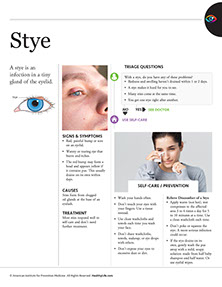
  • Stye

    Eye Conditions

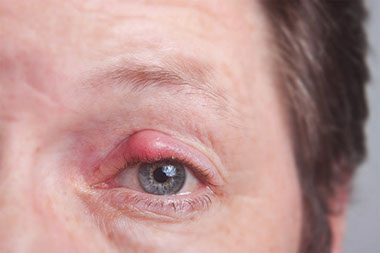
    Close up image of eye with a stye.

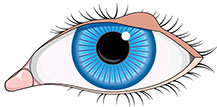
    A stye is an infection in a tiny gland of the eyelid.

    Illustration of a stye.

    Signs & Symptoms

    *  Red, painful bump or sore on an eyelid.

    *  Watery or tearing eye that burns and itches.

    *  The red bump may form a head and appears yellow if it contains pus. This usually drains on its own within days.

    Causes

    Sties form from clogged oil glands at the base of an eyelash.

    Treatment

    Most sties respond well to self-care and don’t need further treatment.

    Questions to Ask

    Self-Care / Prevention

    *  Wash your hands often.

    *  Don’t touch your eyes with your fingers. Use a tissue instead.

    *  Use clean washcloths and towels each time you wash your face.

    *  Don’t share washcloths, towels, makeup, or eye drops with others.

    *  Don’t expose your eyes to excessive dust or dirt.

    To Relieve the Discomfort of a Stye

    *  Apply warm (not hot), wet compresses to the affected area 3 to 4 times a day for 5 to 10 minutes at a time. Use a clean washcloth each time.

    *  Don’t poke or squeeze the stye. A more serious infection could occur.

    *  If the stye drains on its own, gently wash the pus away with a clean, wet cloth.

    Healthier at Home book by the American Institute for Preventive Medicine. www.HealthyLife.com. All rights reserved.

    © American Institute for Preventive Medicine

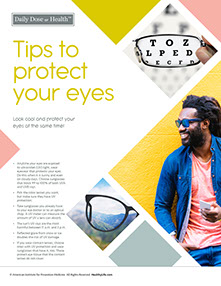
  • Tips To Protect Your Eyes

    Eye Conditions

    Man smiling wearing dark sunglasses.

    Look cool and protect your eyes at the same time!

    *  Anytime your eyes are exposed to ultraviolet (UV) light, wear eyewear that protects your eyes. Do this when it is sunny and even on cloudy days. Choose sunglasses that block 99 to 100% of both UVA and UVB rays.

    *  Pick the color lenses you want, but make sure they have UV protection.

    *  Take sunglasses you already have to your eye doctor or to an optical shop. A UV meter can measure the amount of UV a lens can absorb.

    *  The sun’s UV rays are the most harmful between 11 a.m. and 3 p.m.

    *  Reflected glare from snow or ice doubles the risk of UV damage.

    *  If you wear contact lenses, choose ones with UV protection and wear sunglasses that have it, too. These protect eye tissue that the contact lenses do not cover.

    Health at Home Lifetime book by the American Institute for Preventive Medicine. www.HealthyLife.com. All rights reserved.

    © American Institute for Preventive Medicine

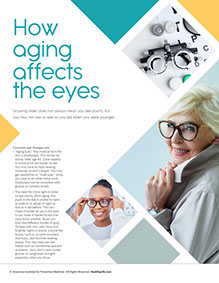
  • How Aging Affects The Eyes

    Eye Conditions

    Growing older does not always mean you see poorly. But you may not see as well as you did before. Common changes that affect your eyes are:

    *  “Aging Eyes.” The medical term for this is presbyopia (prez-bee-OH-pea-ah). This comes on slowly after age 40. Close objects or small print are harder to see. You may have to hold reading materials at arm’s length. You may get headaches or “tired eyes” while you read or do other close work. Presbyopia can be corrected with glasses or contact lenses.

    *  The need for more light in order to see clearly. With aging, the pupil in the eye is unable to open as wide or to adapt to light as fast as it did before. This can make it harder to see in the dark. It can make it harder to tell one color from another. Blues can look like different shades of gray. To help with this, add more and brighter lights in places around the house, such as at work counters, stairways, and favorite reading places. This may help you see better and can sometimes prevent accidents. Also, don’t wear tinted glasses or sunglasses at night, especially when you drive.

    Signs & Symptoms and What It Could Be

    Signs & Symptoms: Sudden loss of all or part of vision, especially in one eye with sudden weakness or numbness on one side.

    What It Could Be: Stroke

    What to Do: Get immediate care. Call 9-1-1.

    Signs & Symptoms: Vision loss after head or eye injury. Sudden vision loss or blurred vision, and seeing dark spots, or flashes of light all of a sudden.

    What It Could Be: Detached or torn retina.

    What to Do: Get immediate care.

    Signs & Symptoms: Severe pain in and above the eye. Eye redness, swollen upper eyelid. Dilated and fixed pupil. Very blurred vision, halos around lights.

    What It Could Be: Angle-closure glaucoma.

    What to Do: Get immediate care.

    Signs & Symptoms: Object or chemical in the eye.

    What It Could Be: Eye irritation or injury.

    See “Eye Irritations & Injuries” for more information.

    Signs & Symptoms: Gradual loss of side vision. Blurred vision. Halos around lights. Poor night vision.

    What It Could Be: Open-angle or chronic glaucoma.

    See “Glaucoma” for more information.

    Signs & Symptoms: Dark or blind spot in center of vision. Blurred or cloudy vision. Straight lines look wavy.

    What It Could Be: Macular degeneration.

    See “Macular Degeneration” for more information.

    Signs & Symptoms: Cloudy, fuzzy, foggy, or filmy vision. Halos around lights. Problems with glare from lamps or the sun.

    What It Could Be: Cataract.

    See “Cataracts” for more information.

    Signs & Symptoms: Pus discharge from the eye; the white of the eye and eyelid are red; crusting of the eyelid in the morning; feeling of sand in the eye

    What It Could Be: Conjunctivitis (“Pink Eye”).

    See “Conjunctivitis (Pink Eye)” for more information.

    Signs & Symptoms: Firm lump on eyelid or tender pimple on the edge of the eyelid.

    What It Could Be: Stye.

    See “Stye” for more information.

    Signs & Symptoms: Seeing spots, specks, wavy lines, or streaks of light.

    What It Could Be: Floaters and/or flashes.

    See “Floaters and/or flashes” for more information.

    Signs & Symptoms: Blurred vision when you look at close objects; headaches; eyestrain.

    What It Could Be: “Aging Eyes” or presbyopia.

    What to Do: Call eye doctor for an appointment and advice.

    Health at Home Lifetime book by the American Institute for Preventive Medicine. www.HealthyLife.com. All rights reserved.

    © American Institute for Preventive Medicine

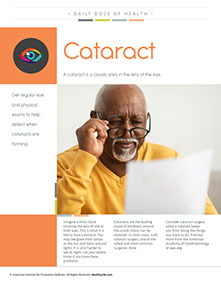
  • Cataract

    Eye Conditions

    Older man with glasses trying to read a piece of paper.

    A cataract is a cloudy area in the lens of the eye.

    Get regular eye and physical exams to help detect when cataracts are forming.

    Imagine a thick cloud covering the lens of one or both eyes. This is what it is like to have cataracts. You may see glare from lamps or the sun and halos around lights. It is also harder to see at night. Let your doctor know if you have these problems.

    Cataracts are the leading cause of blindness around the world. Vision can be restored, in most cases, with cataract surgery, one of the safest and most common surgeries done.

    Consider cataract surgery when a cataract keeps you from doing the things you want to do. Find out more from the American Academy of Ophthalmology ataao.org.

    Health at Home Lifetime book by the American Institute for Preventive Medicine. www.HealthyLife.com. All rights reserved.

    © American Institute for Preventive Medicine

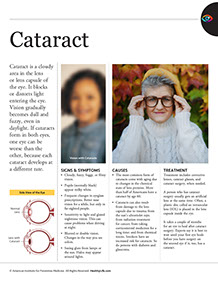
  • Cataract 2

    Eye Conditions

    A cataract is a cloudy area in the lens or lens capsule of the eye. A cataract blocks or distorts light entering the eye. Vision gradually becomes dull and fuzzy, even in daylight. Most of the time, cataracts occur in both eyes, but only one eye may be affected. If they form in both eyes, one eye can be worse than the other, because each cataract develops at a different rate.

    Signs & Symptoms

    *  Cloudy, fuzzy, foggy, or filmy vision.

    *  Pupils (normally black) appear milky white.

    *  Frequent changes in eyeglass prescriptions. Better near vision for a while, but only in far-sighted people.

    *  Sensitivity to light and glazed nighttime vision. This can cause problems when driving at night.

    *  Blurred or double vision. Changes in the way you see colors.

    *  Seeing glare from lamps or the sun. Halos may appear around lights.

    Causes

    *  The most common form of cataracts come with aging due to changes in the chemical state of lens proteins. More than half of Americans age 65 and older have a cataract.

    *  Cataracts can also result from damage to the lens capsule due to trauma; from ionizing radiation or infrared rays; from taking corticosteroid medicines for a long time; and from chemical toxins. Smokers have an increased risk for cataracts. So do persons with diabetes and glaucoma.

    Treatment

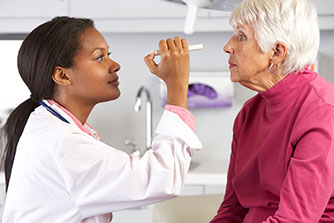
    Treatment includes eye exams, corrective lenses, cataract glasses, and cataract surgery, when needed.

    A person who has cataract surgery usually gets an artificial lens at the same time. A plastic disc called an intraocular lens (IOL) is placed in the lens capsule inside the eye.

    It takes a couple of months for an eye to heal after cataract surgery. Experts say it is best to wait until your first eye heals before you have surgery on the second eye if it, too, has a cataract.

    Questions to Ask

    Self-Care / Prevention

    To Help Prevent Cataracts

    *  Limit exposing your eyes to X-rays, microwaves, and infrared radiation.

    *  Avoid overexposure to sunlight. While outdoors, wear sunglasses with UV block and wear a hat with a brim.

    *  Wear glasses or goggles that protect your eyes whenever you use strong chemicals, power tools, or other instruments that could result in eye injury.

    *  Don’t smoke. Avoid heavy drinking.

    *  Keep other illnesses, such as diabetes, under control.

    *  Eat foods high in beta-carotene and/or vitamin C, which may help to prevent or delay cataracts. Examples are carrots, cantaloupes, oranges, and broccoli.

    To Treat Cataracts

    *  Be careful about driving at night. Let someone else drive if you can’t see well.

    *  Wear sunglasses with UV block.

    *  When indoors, don’t have lighting too bright or pointed directly at you. Install dimmer switches so you can lower the light level. Use table lamps, not ceiling fixtures.

    *  Use soft, white (not clear) light bulbs.

    *  Arrange to have light reflect off walls and ceilings.

    *  Read large print items. Use magnifying glasses, if needed.

    *  Schedule eye exams as advised by your doctor.

    *  Wear your prescribed glasses.

    Resources

    National Eye Institute (NEI)

    www.nei.nih.gov
    Healthier at Home book by the American Institute for Preventive Medicine. www.HealthyLife.com. All rights reserved.

    © American Institute for Preventive Medicine

  • Eye Care – Glaucoma

    Eye Conditions

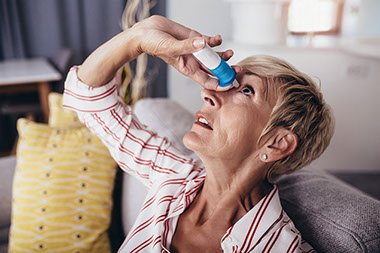
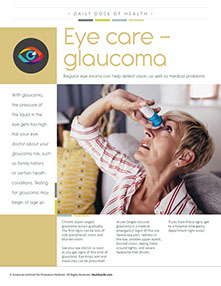
    Older women using eye drops.

    Regular eye exams can help detect vision, as well as medical problems.

    With glaucoma, the pressure of the liquid in the eye gets too high. Ask your eye doctor about your glaucoma risk, such as family history or certain health conditions. Testing for glaucoma may begin at age 40.

    Chronic (open-angle) glaucoma occurs gradually. The first signs can be loss of side (peripheral) vision and blurred vision.

    See your eye doctor as soon as you get signs of this kind of glaucoma. Eye drops and oral medicines can be prescribed.

    Acute (angle-closure) glaucoma is a medical emergency! Signs of this are: Severe eye pain, redness in the eye, swollen upper eyelid, blurred vision, seeing halos around lights, and severe headache that throbs.

    If you have these signs, get to a hospital emergency department right away!

    Health at Home Lifetime book by the American Institute for Preventive Medicine. www.HealthyLife.com. All rights reserved.

    © American Institute for Preventive Medicine