Category: Uncategorized

  • Cystic Fibrosis Awareness

    MEDICAL NEWS

    Girl in bed with breathing mask on while holding a teddy bear.

    Cystic fibrosis (CF) is an inherited disease that affects 70,000 people worldwide. People who have CF have a gene mutation. This gene mutation causes mucus in the body to become thick and sticky.

    With CF, thick mucus in the lungs can cause infections and make it hard to breathe. The pancreas, which helps digest food, becomes clogged. Then the body can’t absorb nutrients from food. This can cause malnutrition and poor growth. CF affects other organs, too.

    CF and genetics

    People with CF have two copies of the CF gene. They get one copy from each parent. Both parents must have at least one copy of the CF gene.

    People with only one copy of the CF gene are called carriers. They don’t have the disease and may not know that they have the CF gene. Each time two CF carriers have a child, the chances are:

    *  25 percent (1 in 4) the child will have CF

    *  50 percent (1 in 2) the child will be a carrier but will not have CF

    *  25 percent (1 in 4) the child will not be a carrier and will not have CF

    People with CF can also pass copies of their CF genes to their children. If someone with CF and a CF carrier have a child together, the chances are:

    *  50 percent (1 in 2) the child will be a carrier but will not have CF

    *  50 percent (1 in 2) the child will have CF

    Getting tested for the CF gene

    People who are considering pregnancy may wish to get a CF genetic test. This tells you if you have CF or if you could be a carrier. This test looks for the most common CF genes, but it doesn’t test for all of them. If you’re not sure if you need the test, ask your doctor. The decision to get CF testing is a personal one and is different for everyone.

    Longer lives  for CF

    There is no cure for CF. But with proper medical care, people with CF are living longer than ever before. Today, more than half of people who live with CF are over age 18.

    Sources: Cystic Fibrosis Foundation, National Institutes of Health

    © American Institute for Preventive Medicine

  • Living Well With Sickle Cell

    MEDICAL NEWS

    Two couples walking and laughing along the beach.

    Sickle cell disease (SCD) is a group of inherited blood disorders. With SCD, red blood cells are crescent or “sickle” shaped. They are also stiff, which makes it hard for them to move throughout the body. This can block blood flow, causing severe pain, infections, eye problems and stroke.

    Can SCD be cured?

    Some people with SCD can be cured with a blood and bone marrow transplant. There are also medications that help lower symptoms and problems from the disease.

    People with SCD should work with their doctors to find out which treatment is best for them. With the right medical care, many people with SCD can live full lives.

    Healthy living tips

    If you or your child has SCD, follow these tips to feel your best and avoid complications:

    *  See your doctor: Regular health checkups are essential when you have SCD. Ask your doctor how often you should have checkups.

    *  Prevent infections: Infections like the flu can be dangerous for people with SCD. Take steps to prevent them, like frequent handwashing, avoiding people who are sick and getting recommended vaccines.

    *  Drink plenty of water: Aim to drink eight to 10 glasses of water each day.

    *  Eat a healthy diet: Good nutrition is important. Your doctor or nutritionist can help you create a healthy eating plan that works for you.

    *  Get exercise: Stay active, but don’t do strenuous or very difficult exercise. Take breaks when you need to, and drink plenty of water.

    *  Avoid extreme heat and cold: Sudden changes in temperature can cause problems like severe pain. Don’t jump into very cold or hot water.

    Get emergency care when needed

    If you or your child has SCD with these symptoms, seek emergency medical care:

    *  Severe anemia: Signs include shortness of breath, dizziness, irregular heartbeat or extreme tiredness.

    *  Fever: A fever higher than 101.3 requires antibiotics right away.

    *  Acute chest syndrome: Symptoms of this complication include chest pain, coughing, fever and trouble breathing.

    *  Stroke: Signs include sudden weakness or numbness on one side of the body, confusion or trouble seeing, talking or walking.

    Sources: National Heart, Lung and Blood Institute, Sickle Cell Disease Association of America

    © American Institute for Preventive Medicine

  • Understanding Crohn’S Disease

    MEDICAL NEWS

    Man holding abdomen in pain.

    Crohn’s disease is a type of inflammatory bowel disease (IBD) that impacts the entire digestive tract. Most commonly, it causes inflammation and dysfunction of the small intestine and the beginning of the large intestine.

    While there is no cure, effective treatments can manage symptoms.

    Symptoms

    Symptoms may vary depending on the part of the digestive tract affected and the degree of inflammation. Common symptoms include:

    *  Diarrhea

    *  Abdominal pain and cramping

    *  Weight loss

    *  Anemia

    *  Fatigue

    *  Fever

    *  Nausea and loss of appetite

    *  Joint pain

    *  Eye redness

    *  Skin changes

    Causes

    The exact cause of Crohn’s disease is unknown. In some cases, it may be caused by an autoimmune reaction in which the immune system mistakenly attacks the cells of the digestive tract.

    Risk factors include:

    *  Family history

    *  Smoking

    *  Medications such as birth control, antibiotics, aspirin, and ibuprofen may slightly increase risk.

    *  High-fat diet

    *  Age. Those in their 20s are more likely to develop Crohn’s disease.

    Treatment

    Treatment aims to decrease the inflammation in the intestines and prevent complications. A doctor is the best resource for treatment options and an individualized plan. They may recommend:

    *Medications:These may be used to decrease inflammation and reduce the activity of the immune system. Some medicines can also relieve symptoms, such as antidiarrheals and pain medication.

    *Bowl rest:If the digestive tract is very inflamed, it may need time to rest and heal. Avoiding solid food and drinking only liquids may be required for a brief time. To maintain nutrition, a doctor may recommend liquid supplements or IV nutrition.

    *Diet:Specific foods may cause discomfort or pain during a flare-up. Following a healthy diet and paying attention to foods that cause trouble can help manage symptoms.

    *Surgery:If other treatments are ineffective, a doctor may recommend surgery to remove a part of the intestines that has become damaged. This is not a cure but may improve quality of life.

    © American Institute for Preventive Medicine

  • Campfire Safety

    WELL-BEING

    Group of people sitting around a campfire and tent.

    Whether roasting marshmallows or sitting up late to tell ghost stories, a campfire is a comforting and enjoyable way to spend time together. However, a fire should always be handled with caution. It’s essential to be smart when dealing with open flames. Here are three ways to stay safe around the campfire:

    1.Choose the campfire spot wisely.If possible, always use a fire pit designed for proper fire containment. Campfires should be located at least 15 feet away from any buildings, tents, or shrubs.

    2.Keep the area clear.There should be 10 feet of cleared space around the campfire, so remove any branches or debris. Keep all clutter clear of the site. And, of course, watch the kids closely. It’s never too early to teach them how to be safe around a fire.

    3.Douse the fire correctly at the end of the evening.Pour water over the fire until all coals are extinguished. Once the fire is completely out, stir the ash and test by carefully holding your hand above the area to be sure there is no residual heat. Repeat the process if needed.

    Source: Recreation.gov

    © American Institute for Preventive Medicine

  • Protect Your Pet From Toxins

    WELL-BEING

    Dog on 2 legs on the counter with food.

    Many substances that are safe for people may be toxic to pets. To care for your pet’s health, be aware of these hidden dangers.

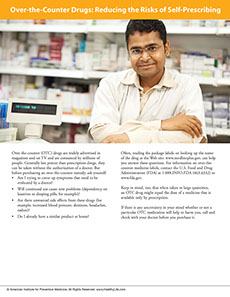
    *  Over-the-counter and prescription medications can be highly toxic to animals. Store them in sturdy containers that cannot be chewed through.

    *  Prescription animal medications are made to be tasty. Keep them well out of reach.

    *  Certain foods, such as chocolate, grapes, onions, and garlic, are toxic to pets.

    *  Products intended to kill rodents are particularly dangerous to pets. Choose pet-safe traps instead of chemicals.

    *  Paint, glue and cleaning products are toxic. Curious pets may mistake them for food. Keep these products safely stored and out of their reach.

    *  Bug spray and foggers are poisonous to pets. Because they have smaller bodies, it takes less of a product to cause problems.

    *  Certain house and garden plants may be toxic or irritating when consumed, depending on your pet. Check online to find out what plants are safe.

    © American Institute for Preventive Medicine

  • Health Tests For Men

    Medical Exams

    Abdominal Aortic Aneurysm (AAA) Screening

    Why you need this:

    The aorta is the main artery in the body. It extends upward from the heart, curves behind the heart, and runs downward through the chest and into the abdomen. The part in the abdomen is called the abdominal aorta. An aneurysm is a balloon-like swelling in a blood vessel wall. If this gets too big, the aorta can burst or tear. This is life threatening. Major risk factors for an aneurysm in the aorta are: being male; Being age 65 years or older; and a history of smoking at least 100 cigarettes over a lifetime. An ultrasound test is used to screen for an AAA. This test uses sound waves to get an image of your aorta and other structures in the upper abdomen to check for problems.

    What to do before the test:

    You may need to avoid eating for 8 to 12 hours before the test.

    What to expect:

    The test is usually painless. It does not involve the use of needles, injections, or radiation. You will be given a gown to wear. You lie on your back on an exam table. A warm gel is applied to the skin on your abdomen. The technician firmly presses a hand-held instrument (a transducer) in a back and forth motion over the skin of your abdomen. The test takes about 30 minutes. The gel is wiped off. The test is done.

    What the results mean:

    A radiologist looks at the images and sends a report to your doctor. If a problem is found, your doctor will order follow-up testing or treatment, as needed.

    Prostate Cancer Screening – Digital Rectal Exam

    Why you need this:

    Used as a screening tool for an enlarged prostate gland and for the possible presence of prostate cancer and tumors in the rectum.

    What to expect:

    The doctor inserts a gloved and lubricated finger into the anus to feel the prostate gland through the front wall of the rectum. The doctor feels for lumps or hard areas and for an enlarged prostate. This can feel uncomfortable, but does not usually cause pain.

    What the results mean:

    If a lump or other problem is felt, the doctor may prescribe follow-up tests.

    Prostate Cancer Screening – Prostate Specific Antigen (PSA)

    Why you need this:

    Used as a screening tool for the possible presence of prostate cancer.

    What to do before the test:

    Avoid having sex 24 hours before the test. Find out ahead of time, from your doctor, if you need to delay or skip any medicines you take until after the test.

    What to expect:

    A blood sample is taken, usually from a vein in the arm. The sample is sent to a lab.

    What the results mean:

    The results give the blood level of prostate-specific antigen, (a protein made by the prostate gland) in nanograms per milliliter (ng/mL). The upper limit of “normal” is 4.0 ng/mL. Levels above this do not mean prostate cancer is present for sure.

    Elevated PSA levels can also be from an enlarged prostate and prostate gland infections. Also, cancer can be present at levels below 4.0 ng/mL. Discuss the benefits and risks of PSA testing with your doctor. How much your PSA level changes from year to year, your age, and other medical problems you have are factors your doctor may consider in deciding about extra tests, such as a biopsy for prostate cancer.

    Men's and Women's Self-Care Book. Published by the American Institute for Preventive Medicine.

    © American Institute for Preventive Medicine