Category: Uncategorized

  • Be Safe − Drive Safely Checklist

    Personal Safety

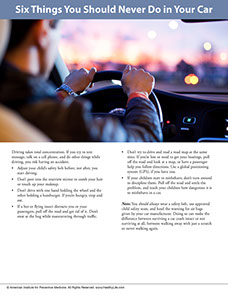
    *  Focus on the road when you are driving.

    *  Don’t talk on a cell phone or text message while driving.

    *  Always wear your seatbelt when you drive or ride in cars and trucks.

    *  Wear a helmet when riding on a motorcycle or a bicycle.

    *  Drive sober or with a driver who is.

    *  Discuss, with your care team, if any medication or supplement you take can make it unsafe for you to drive.

    *  Avoid driving at night if you have limited night vision.

    *  Keep emergency supplies in your car or truck. These include:

    – A cell phone

    – A flashlight and flares

    – Blankets

    – Bottled water

    Find out more about safe driving fromwww.safedriving.va.gov/resources/driving.asp

    Other Safety Tips

    *  Wear a medical alert tag to identify health concerns you have. Get one from a drug store or from: MedicAlert Foundation International at 1-888-633-4298 orwww.medicalert.org.

    *  Keep medicines and vitamins in “child-safe” containers and where children cannot reach them.

    *  Never be out of reach of a child in or near the water. Make sure children wear approved flotation devices. Adults should wear these, too.

    *  Lock guns in one place and bullets in another. Make sure children cannot get the keys.

    Resources

    VA National Center for Patient Safety

    www.patientsafety.gov

    National Safety Council

    www.nsc.org

    Health at Home Lifetime book by the American Institute for Preventive Medicine. www.HealthyLife.com. All rights reserved.

    © American Institute for Preventive Medicine

  • Safe Use Of Medications

    Medication

    Image of man picking up medications.

    *  Things to tell your doctor:

    – Things you have had an allergic reaction to.

    – If you are pregnant or breast-feeding.

    – If another doctor is also treating you.

    – If you have diabetes or kidney or liver disease.

    – If you use alcohol, tobacco, or drugs.

    *  See that your doctor has an up-to-date list of all the medicines you take. This includes prescribed and over-the-counter (OTC) ones, vitamins, and herbal supplements. Keep an up-to-date list in your wallet.

    *  Ask your doctor these questions: What is the medicine for? When should I take it? How long do I need to take it? Should I take it with or without food? Can I crush the pill or open up the capsule if I can’t swallow it whole? Write the answers down.

    *  Give a list of all medicines and supplements you take to your local and mail order pharmacist. Harmful mixtures with other drugs and with foods can be identified.

    *  Get prescribed medicines from a licensed pharmacy.

    *  Keep medicines in their original containers or in ones with sections for daily doses.

    *  Let your doctor know about your past reactions to certain medicines. As some people age, they may be more sensitive to some medications, such as painkillers or sedatives.

    *  Ask about the possible side effects of a medication. Find out what you should do if you have any.

    *  Ask if you can drink alcohol while taking the medication(s). Alcohol can lessen the effects of some medicines. Other medicines, such as sedatives, can be deadly when used with alcohol.

    *  Don’t take someone else’s medication.

    *  Safely discard unused and expired medicines. Use a community drug take-back program. Or, take medicines from their containers and mix them with used coffee grounds or kitty litter. Put this in a sealable bag and place it in the trash.

    *  Try to reduce the need for some medications, such as sleeping pills or laxatives. A warm bath and a glass of milk might help you fall asleep. Having more fiber in your diet can reduce or replace the need for a laxative. Check with your doctor on ways other than medicines to help treat your problem.

    *  Even if you feel better, don’t stop taking a prescribed medicine unless your doctor tells you to. Also, don’t skip doses.

    Resources

    U.S. Food and Drug Administration

    www.fda.gov

    Page from the Healthier at Home book by the American Institute for Preventive Medicine. www.HealthyLife.com. All rights reserved.

    © American Institute for Preventive Medicine

  • Eating Right With Gout

    SELF-CARE CORNER

    Variety of leaft greens.

    Gout is a type of arthritis. It can develop if a person has high levels of a substance called uric acid in their blood. Uric acid can form sharp crystals in the joints. This can cause severe pain, redness, warmth and swelling. Gout often affects the big toe, but it can affect other joints.

    Sometimes gout doesn’t cause any pain for a while. Then, a person may get severe pain in the affected joint. This is called a gout attack. When a gout attack happens, uric acid levels go up or the crystals in the joint cause irritation. A gout attack is very painful.

    In addition to pain, gout can cause heart problems. People who have gout may be more likely to have heart failure, a heart attack or stroke. Eating certain foods can help keep uric acid levels low. This can help a person prevent gout attacks.

    What to eat with gout

    If you have gout, you may want to eat more of the following foods:

    *  Leafy green vegetables

    *  Other green vegetables like green beans and peas

    *  Legumes like beans and lentils

    *  Tofu

    *  Low-fat or fat-free milk and dairy products

    *  Whole grain breads and cereals

    *  Vegetable oils like olive oil

    *  Coffee (if you already drink it)

    *  Citrus fruits like grapefruit and oranges

    *  Pineapple

    *  Strawberries

    *  Cherries

    In addition, drink at least eight glasses of water a day.

    Skip these foods & drinks

    Certain foods and beverages can trigger gout attacks. Avoid the following:

    *  Beer (alcoholic and  non-alcoholic)

    *  Alcoholic drinks

    *  Soda, fruit juice, and foods with high-fructose corn syrup

    *  Organ meats like liver and sweetbreads

    *  Cold water fish like tuna, salmon and trout

    *  Shellfish like mussels, scallops, squid, shrimp, oysters, crab and lobster

    Eating a healthy diet is a great way to manage gout and help avoid attacks. It also helps to get regular exercise. Be sure to see your doctor as recommended. Your doctor may prescribe gout medication if needed and will discuss your heart disease risk.

    Sources: American Heart Association, Arthritis Foundation

    © American Institute for Preventive Medicine

  • Make A Cold Care Kit

    SELF-CARE CORNER

    Women siting at table with a box and medicine.

    Like a first aid kit, a cold care kit contains all the essentials for managing a cold. Whether a run-of-the-mill cold virus, the flu, or COVID-19, the items in your kit make managing symptoms easier.

    Medicine

    Depending on the severity of your symptoms, some medications can bring much-needed relief. Always follow the dosing guidelines and talk to your doctor to make sure these over-the-counter medications are right for you:

    *  Pain relievers/fever-reducers such as Tylenol and Ibuprofen

    *  Decongestants

    *  Cough medicine, both those for dry cough (suppressant) and a cough with mucus (expectorant)

    *  Cough and throat drops

    *  Nasal and throat sprays

    Sanitizing

    Preventing the spread of a virus protects everyone around you. While most cold and flu viruses are not dangerous to healthy adults, the elderly, those with preexisting health conditions, and young children may be at higher risk of complications. At the first sign of a virus, up your sanitizing practices with these items:

    *  Hand sanitizer

    *  Sanitizing wipes

    *  Disinfectant spray

    *  Masks

    *  Disposable gloves

    Tools

    Your body will naturally need more support as your immune system works to neutralize the virus. Your kit should include items to aid in reducing discomfort and monitoring your symptoms. While unlikely to be serious, have tools on hand to evaluate how your body manages the virus:

    *  Thermometer

    *  Pulse oximeter

    *  Humidifier to moisten the air

    *  Tissues with lotion or aloe

    *  Electrolyte drinks

    Comfort

    Your cold care kit should include some items to make you feel more comfortable until your symptoms pass. Everyone has their own tricks to soothe pesky symptoms. Make sure your kit contains those items you naturally wish for whenever a cold strikes. Here are some ideas:

    *  Bath salts

    *  Heating pad

    *  Essential oils

    *  Soup or broth

    *  Tea bags (include decaffeinated options)

    © American Institute for Preventive Medicine

  • What’S In Your Medicine Cabinet?

    SELF-CARE CORNER

    Women sitting at kitchen table organizing medication.

    Unused or expired medications pose a health risk to you and your loved ones. Getting your medicine cabinet up to date should be part of your yearly spring cleaning.

    Medication left lingering in your cabinet is problematic for several reasons:

    *  Expired medication can make you sick or fail to work as expected.

    *  Unused prescription drugs are some of the most commonly misused substances among teens.

    *  Unused medications are a potential poisoning concern for both children and pets.

    In addition, identifying and properly disposing of unused or expired medications is a crucial way to prevent pollution from entering local water sources.

    Give your medicine cabinet a good declutter

    1.  Remove everything from your medicine cabinet and gather any over-the-counter or prescription drugs from around the house.

    2.  Place any prescriptions that are up to date and in use back in the cabinet.

    3.  All other prescription medications should go in a pile for disposal.

    4.  Check the expiration date on all over-the-counter medications. Place any that are expired in the disposal pile.

    5.  Evaluate anything that is not expired to determine if it is needed. It should go in the disposal pile if it is unlikely to be used.

    6.  Organize any remaining medications by type in the medicine cabinet. Ensure all medicine in the cabinet is clearly labeled.

    7.  It’s always important to store medication in a child and pet-proof location.

    How to safely dispose of medication

    The best way to get rid of unused or expired medication is through a local take-back program. Contact your local city or county government and ask if they hold hazardous waste collection days or have a location to drop off medications for disposal.

    You can also visitdisposemymeds.orgto find a local pharmacy that allows you to drop off medication.

    If you cannot find a place to take back your medication, follow these steps to dispose of it at home safely.

    1.  Empty all medication from its original container into a disposable container or ziplock bag.

    2.  Mix the medication with an undesirable substance such as kitty litter or coffee grounds, and seal it up.

    3.  Place the container in the trash.

    4.  Remove any identifying tags from empty medication bottles and place them in the trash or recycle bin.

    © American Institute for Preventive Medicine

  • Don’T Be A Distracted Walker

    BE FIT

    Women walking and talking on the phone.

    Walking is great exercise, and it doesn’t require training or special equipment. But if you’re using a phone or playing music, you could be putting yourself at risk. While it may seem strange to talk about distracted walking, it does happen – and people can get seriously hurt.

    Don’t text while walking.

    You could trip on an object or crack in the sidewalk. Or, you could run into another person or worse, walk in front of a vehicle.

    If you wear headphones, keep the volume low.

    Walkers who play loud music may raise their risk of injury because they aren’t aware of their surroundings.

    If you want to chat, use an earpiece in one ear only.

    A single earbud allows you to hear out of the other ear while walking. And, you won’t have to worry about hurting your arm or your neck to hold your phone.

    © American Institute for Preventive Medicine

  • Kids, Puberty & Sports

    BE FIT

    Adult and teen playing basketball.

    Sports can be a great way for kids to develop social skills, teamwork and resilience. But it’s important to know that athletic ability changes as kids grow.

    Growth affects performance

    During puberty, boys and girls have a growth spurt that can change their athletic ability. After going through puberty:

    *  Boys may notice more muscle strength and overall bigger body size.

    *  Girls often lose some muscle mass. They may temporarily lose some of their speed or agility.

    *  Kids could feel “clumsy” as they adjust to being taller. The brain hasn’t yet adjusted to this new height and may affect balance skills or body control.

    *  It may be harder to throw or hit a ball with longer arms.

    *  Girls may have headaches, mood swings or cramps during menstruation.

    Puberty & knee injuries

    As kids get taller and heavier, they have a higher risk of anterior cruciate ligament (ACL) injury. The ACL is an important ligament that supports the knee.

    ACL injuries can be serious. They may require surgery and can increase the risk of knee arthritis later in life.

    Most ACL injuries happen when a person suddenly stops, changes direction, jumps or lands on the ground. They don’t usually happen from a blow to the knee. Sometimes an ACL injury causes a “popping” sound as it occurs.

    ACL injuries may cause swelling, severe pain, and inability to put weight on the knee. If your child injures their knee, see a doctor right away.

    Positive support is key

    Coaches who know about the effects of puberty can help kids. In addition, parents can help their kids by being positive and supportive. Yelling at kids or being put down may cause them to quit their sport. Remember that changes caused by puberty are only temporary.

    Source: American Academy of Pediatrics

    © American Institute for Preventive Medicine

  • 10 Minutes Of Fitness

    BE FIT

    Man working out at home.

    Making time for 30 minutes of exercise can feel like a deal breaker in our busy lives. But devoting just 10 minutes to movement several times during the day adds up. And breaking your movement goals into manageable chunks may increase the chance you’ll meet your body’s needs.

    So, set a timer and try these 10 minutes fitness activities. Go at your own pace and make it fun:

    *  Do as many rounds of 10 push-ups, 10 squats, and 10 lunges as you can in 10 minutes.

    *  Find some stairs and walk up and down for 10 minutes.

    *  Take a brisk walk around the block or inside your home or office building.

    *  Turn on some music and dance for 10 minutes.

    *  Play a quick round of tag, basketball, or any active game with your kids.

    *  Set a timer and speed clean your home or office, incorporating as many squats and lunges as possible.

    © American Institute for Preventive Medicine