Category: Uncategorized

  • Cracking The Benefits Of Eggs

    HEALTHY EATING

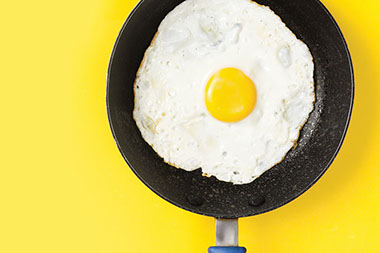
    Image of an egg in a frying pan.

    Very low sugar

    For people who need to watch their sugar or carbohydrate intake, eggs can be a good option. A large egg contains less than a fifth of a gram of natural sugar.

    Protein

    A large egg contains about 6 grams of high-quality protein. Protein can help you feel fuller, longer. This is because it’s slower to digest than carbohydrates.

    Protein is the building block for many important functions in the body. It helps build new skin, bones, muscles and blood.

    Protein may also help you keep your energy levels up throughout the day.

    Healthy fats

    Eggs contain omega-3 fats. These fats help with brain function. Experts think omega-3 fats may also help improve heart health.

    Eggs are low in saturated fat. Saturated fat is the type of fat linked to heart disease and other health problems. Most of the fat in eggs is found in the yolk.

    Vitamins and minerals

    Eggs contain a number of vitamins, including:

    *  Vitamin A, which is important for eye health

    *  Vitamin B12, which helps make red blood cells

    *  Folate, which can help prevent certain birth defects in pregnant women and is needed to make DNA in the body

    *  Vitamin D, which is important for bone health and immune system function

    Eggs also contain minerals that the body needs, such as iron, selenium and iodine.

    Enjoy eggs safely

    Eggs should be cooked thoroughly before eating. Raw or undercooked eggs can have dangerous bacteria like salmonella. This can make a person very sick. But, cooking eggs until the yolks are firm helps avoid this risk. Eggs should also be kept in the refrigerator. Don’t use any eggs that are past the expiration date.

    If you have any health conditions, ask your doctor before making changes to your diet.

    Sources: Academy of Nutrition and Dietetics, National Institutes of Health, United States Department of Agriculture
    © American Institute for Preventive Medicine
  • Escape The Holiday Carbohydrate Trap

    HEALTHY EATING

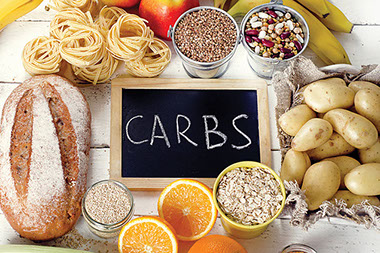
    Small chaulk board with the word CARBS written with a variety of carbs.

    The holidays can feel like one big carbohydrate trap. For people who are watching their carb intake, this time of year can be challenging. Between all the bread, mashed potatoes, and desserts, many people throw up their hands and declare, “I’ll start eating better AFTER the holidays.” But, there is no reason to take an all-or-nothing approach. You can enjoy holiday meals and avoid overdoing it.

    Whether you’re managing diabetes or just trying to eat fewer empty carbs, here are some holiday eating tips:

    *Focus on eating more vegetables.Have the turkey and some of your favorite veggie sides, and hold off on the mashed potatoes or rolls. You might find yourself satisfied, but if not, you can always go back for another serving.

    *Bring a dish you know is low-carb.Make sure it is something you enjoy eating, and that feels festive for the occasion. You’re not depriving yourself; you’re enjoying delicious, low-carb food.

    *Think in advance about what foods are worth the indulgence.Instead of sitting down and throwing caution to the wind, pick one or two of your favorite carbohydrate-rich foods to enjoy. If you really want dessert, try limiting your servings of potato, rolls, stuffing, and macaroni in your main meal.

    *Have a healthy snack in advance.If you show up at the table starving, you’re more likely to be tempted. A handful of nuts or an apple with peanut butter can take the edge off and prevent overeating.

    © American Institute for Preventive Medicine
  • Make A Healthy, Filling Snack With Hummus

    HEALTHY EATING

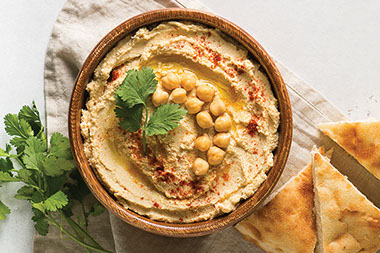
    A bowl of hummus.

    Hummus is a dip and spread that originated in the Middle East. But today, it’s popular in many parts of the world. It’s made with chickpeas, tahini (ground sesame seeds), garlic and spices.

    Hummus is vegan, but even meat-eaters can enjoy this spread. Hummus is a good source of plant-based protein. It’s also high in fiber,  B vitamins, magnesium and iron. And because it’s a great source of fiber, hummus helps keep you feeling fuller longer.

    If you don’t like plain hummus, you can make it many different ways. Some people add garlic, black beans or red peppers. But you can sweeten it up with sweet potato, pumpkin or even dark chocolate!

    Hummus is a healthy, satisfying dip that you can use in place of cheese and cream-based dips. Try it with tortilla strips, whole wheat crackers or on sandwiches.

    Many stores carry pre-made hummus. If you want to make your own, here’s how:

    Ingredients

    *  2 cups garbanzo beans, cooked (chickpeas)

    *  2 cloves garlic (minced)

    *  1/4 cup lemon juice

    *  1 tablespoon sesame tahini (sesame paste)

    *  2 tablespoons olive oil

    Directions

    1. Mash the garbanzo beans until smooth (if you have a blender, put the beans and lemon juice into it and blend).

    2. Add the garlic, lemon juice, tahini and oil. Mix well.

    Nutrition Facts: 6 servings. Calories 157; Total fat 8 g; Saturated fat 1 g; Sodium 138 mg; Total fiber 5g; Protein 6 g; Carbohydrates 18 g.

    Source: U.S. Department of Agriculture Choose My Plate

    © American Institute for Preventive Medicine
  • Potassium: Why You Need It

    HEALTHY EATING

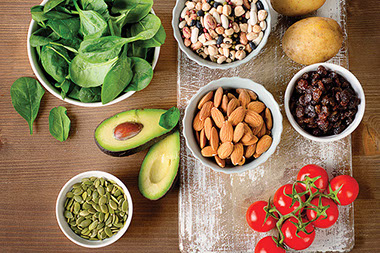
    A varity of foods high in potassium.

    Potassium is an important mineral that the body needs for various functions. But many people don’t get enough potassium in their diet. And people who take certain diuretic medicines may have low levels, too.

    Why do I need potassium?

    When potassium levels are low, a person may have:

    *  High blood pressure and stroke: Low potassium raises the risk of having high blood pressure, especially when a person eats high amounts of salt (sodium). High blood pressure is a major risk factor for heart attack and stroke.

    *  Kidney stones: Low potassium levels can take calcium out of the bones. This causes calcium to come out in the urine, which can lead to kidney stones. Kidney stones can be painful and sometimes require procedures or surgery to remove.

    *  Bone weakness: Potassium strengthens bones. Without it, bones may be weaker and more likely to break.

    *  Muscle weakness

    *  Heart rhythm problems, known as arrhythmias

    Food sources of potassium

    A healthy diet can help you get the right amount of potassium. These foods are good sources:

    *  Leafy greens, such as spinach and kale

    *  Vegetables like peas, cucumbers, squash and broccoli

    *  Root vegetables, such as potatoes, sweet potatoes and carrots

    *  Fruit from vines, such as raspberries, grapes and blackberries

    *  Citrus fruits, such as oranges and grapefruit

    *  Fruits, such as dried apricots, melon, raisins and bananas

    *  Legumes, such as beans and lentils

    *  Milk and yogurt

    *  Meats, poultry and fish

    How much potassium you need

    It’s usually best to get your potassium through a healthy diet. Don’t take potassium supplements unless your doctor recommends it. Most people need 2,600-3,400 milligrams (mg) of potassium every day.

    People who have chronic kidney disease may need to lower their potassium intake. This is because the kidneys help get rid of excess potassium. Ask your doctor about your potassium intake if you have kidney disease.

    Most people can get a proper balance of potassium and other minerals through their diet. Ask your doctor before making any major diet changes.

    Sources: National Institutes of Health, U.S. National Library of Medicine

    © American Institute for Preventive Medicine
  • Savory Potato Salad

    HEALTHY EATING

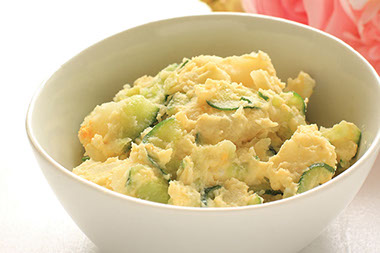
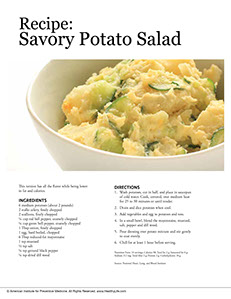
    A dish filled with potato salad.

    This version has all the flavor while being lower in fat and calories.

    Ingredients

    *  6 medium potatoes (about 2 pounds)

    *  2 stalks celery, finely chopped

    *  2 scallions, finely chopped

    *  ¼ cup red bell pepper, coarsely chopped

    *  ¼ cup green bell pepper, coarsely chopped

    *  1 Tbsp onion, finely chopped

    *  1 egg, hard boiled, chopped

    *  6 Tbsp reduced-fat mayonnaise

    *  1 tsp mustard

    *  ½ tsp salt

    *  ¼ tsp ground black pepper

    *  ¼ tsp dried dill weed

    Directions

    1.  Wash potatoes, cut in half, and place in saucepan of cold water. Cook, covered, over medium heat for 25 to 30 minutes or until tender.

    2.  Drain and dice potatoes when cool.

    3.  Add vegetables and egg to potatoes and toss.

    4.  In a small bowl, blend the mayonnaise, mustard, salt, pepper and dill weed.

    5.  Pour dressing over potato mixture and stir gently to coat evenly.

    6.  Chill for at least 1 hour before serving.

    Nutrition Facts: 10 servings, Calories 98; Total fat 2 g; Saturated fat 0 g; Sodium 212 mg; Total fiber 2 g; Protein 2 g; Carbohydrates 18 g.

    Source: National Heart, Lung, and Blood Institute

    © American Institute for Preventive Medicine
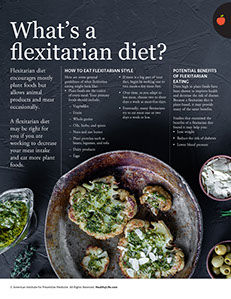
  • What’s A Flexitarian Diet?

    HEALTHY EATING

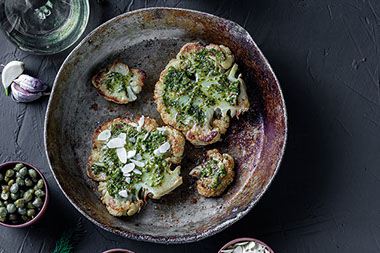
    Cauliflower steak with spices, sauce, almond flakes. Capers, olives, herbs, side by side.

    Flexitarian diet encourages mostly plant foods but allows animal products and meat occasionally.

    A flexitarian diet may be right for you if you are working to decrease your meat intake and eat more plant foods.

    How to eat flexitarian style

    Here are some general guidelines of what flexitarian eating might look like:

    *  Plant foods are the center of every meal. Your primary foods should include:

    – Vegetables

    – Fruits

    – Whole grains

    – Oils, herbs, and spices

    – Nuts and nut butter

    – Plant proteins such as beans, legumes, and tofu

    – Dairy products

    – Eggs

    *  If meat is a big part of your diet, begin by making one to two meals a day meat-free.

    *  Over time, as you adapt to less meat, choose two to three days a week as meat-free days.

    *  Eventually, many flexitarians try to eat meat one or two days a week or less.

    Potential benefits of flexitarian eating

    Diets high in plant foods have been shown to improve health and decrease the risk of disease. Because a flexitarian diet is plant-based, it may provide many of the same benefits.

    Studies that examined the benefits of a flexitarian diet found it may help you:

    *  Lose weight

    *  Reduce the risk of diabetes

    *  Lower blood pressure

    © American Institute for Preventive Medicine
  • Home Equity Loans – Are They Safe?

    FINANCIAL HEALTH

    Image of young family outside of home.

    A home equity loan is a loan for a set amount of money. You get the loan by using equity, or value, in your home. Each month, you make payments on the loan to gradually pay it back.

    There is some risk involved with home equity loans. If a person doesn’t make the payments, the lender can foreclose on their home. But they can be a good way to borrow extra money for home upgrades or other large expenses. Here’s what you need to know.

    Choose a lender carefully

    You can ask friends and family for recommendations. Then, look at what each one offers. Banks, credit unions and other lenders may all have different interest rates. They may also have different payment terms for the loan.

    Ask questions

    Your lender should explain the home equity loan to you. If you don’t understand something, ask. Make sure you know:

    *  The interest rate of the loan

    *  The monthly payment amount

    *  Annual percentage rate (APR), which includes fees and other charges

    *  Fees that may be charged for applying or closing on the loan

    Get your credit score

    When you apply for a loan, the lender will usually check your credit score. This is a number that tells the lender about your financial history. It includes things like how many accounts you have, late payment history and debt.

    Your lender can tell you your credit score when they check it. You also have a right to see a free copy of your credit reports once each year. You can get your free report atannualcreditreport.com.

    Shop around

    You can talk with more than one lender before you choose one. If lenders know you are looking at other options, this can help you get the best deal.

    Ask each lender for the lowest interest rates and fees. You can also ask them to beat the terms of another lender.

    Read carefully

    Before you sign, read the loan closing papers. They should match what you agreed to. Don’t sign if you’re not sure.

    Source: Federal Trade Commission

    © American Institute for Preventive Medicine
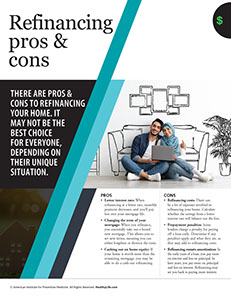
  • Refinancing Pros & Cons

    FINANCIAL HEALTH

    Couple sitting on floor with laptop.

    There are pros & cons to refinancing your home. It may not be the best choice for everyone, depending on their unique situation.

    Pros

    *  Lower interest rate: When refinancing at a lower rate, monthly payment decreases, and you’ll pay less over your mortgage life.

    *  Changing the term of your mortgage: When you refinance, you essentially take out a brand new mortgage. This allows you to set new terms, meaning you can either lengthen or shorten the term.

    *  Cashing out on home equity: If your home is worth more than the remaining mortgage, you may be able to do a cash-out refinancing.

    Cons

    *  Refinancing costs: There can be a lot of expenses involved in refinancing your home. Calculate whether the savings from a lower interest rate will balance out the fees.

    *  Prepayment penalties: Some lenders charge a penalty for paying off a loan early. Determine if any penalties apply and what they are, as that may add to refinancing costs.

    *  Refinancing restarts amortization: In the early years of a loan, you pay more on interest and less on principal. In later years, you pay more on principal and less on interest. Refinancing may set you back to paying more interest.

    © American Institute for Preventive Medicine
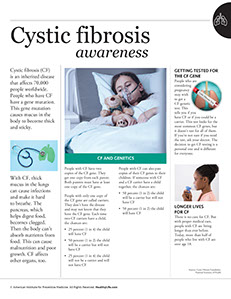
  • Cystic Fibrosis Awareness

    MEDICAL NEWS

    Girl in bed with breathing mask on while holding a teddy bear.

    Cystic fibrosis (CF) is an inherited disease that affects 70,000 people worldwide. People who have CF have a gene mutation. This gene mutation causes mucus in the body to become thick and sticky.

    With CF, thick mucus in the lungs can cause infections and make it hard to breathe. The pancreas, which helps digest food, becomes clogged. Then the body can’t absorb nutrients from food. This can cause malnutrition and poor growth. CF affects other organs, too.

    CF and genetics

    People with CF have two copies of the CF gene. They get one copy from each parent. Both parents must have at least one copy of the CF gene.

    People with only one copy of the CF gene are called carriers. They don’t have the disease and may not know that they have the CF gene. Each time two CF carriers have a child, the chances are:

    *  25 percent (1 in 4) the child will have CF

    *  50 percent (1 in 2) the child will be a carrier but will not have CF

    *  25 percent (1 in 4) the child will not be a carrier and will not have CF

    People with CF can also pass copies of their CF genes to their children. If someone with CF and a CF carrier have a child together, the chances are:

    *  50 percent (1 in 2) the child will be a carrier but will not have CF

    *  50 percent (1 in 2) the child will have CF

    Getting tested for the CF gene

    People who are considering pregnancy may wish to get a CF genetic test. This tells you if you have CF or if you could be a carrier. This test looks for the most common CF genes, but it doesn’t test for all of them. If you’re not sure if you need the test, ask your doctor. The decision to get CF testing is a personal one and is different for everyone.

    Longer lives  for CF

    There is no cure for CF. But with proper medical care, people with CF are living longer than ever before. Today, more than half of people who live with CF are over age 18.

    Sources: Cystic Fibrosis Foundation, National Institutes of Health

    © American Institute for Preventive Medicine
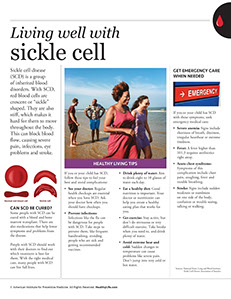
  • Living Well With Sickle Cell

    MEDICAL NEWS

    Two couples walking and laughing along the beach.

    Sickle cell disease (SCD) is a group of inherited blood disorders. With SCD, red blood cells are crescent or “sickle” shaped. They are also stiff, which makes it hard for them to move throughout the body. This can block blood flow, causing severe pain, infections, eye problems and stroke.

    Can SCD be cured?

    Some people with SCD can be cured with a blood and bone marrow transplant. There are also medications that help lower symptoms and problems from the disease.

    People with SCD should work with their doctors to find out which treatment is best for them. With the right medical care, many people with SCD can live full lives.

    Healthy living tips

    If you or your child has SCD, follow these tips to feel your best and avoid complications:

    *  See your doctor: Regular health checkups are essential when you have SCD. Ask your doctor how often you should have checkups.

    *  Prevent infections: Infections like the flu can be dangerous for people with SCD. Take steps to prevent them, like frequent handwashing, avoiding people who are sick and getting recommended vaccines.

    *  Drink plenty of water: Aim to drink eight to 10 glasses of water each day.

    *  Eat a healthy diet: Good nutrition is important. Your doctor or nutritionist can help you create a healthy eating plan that works for you.

    *  Get exercise: Stay active, but don’t do strenuous or very difficult exercise. Take breaks when you need to, and drink plenty of water.

    *  Avoid extreme heat and cold: Sudden changes in temperature can cause problems like severe pain. Don’t jump into very cold or hot water.

    Get emergency care when needed

    If you or your child has SCD with these symptoms, seek emergency medical care:

    *  Severe anemia: Signs include shortness of breath, dizziness, irregular heartbeat or extreme tiredness.

    *  Fever: A fever higher than 101.3 requires antibiotics right away.

    *  Acute chest syndrome: Symptoms of this complication include chest pain, coughing, fever and trouble breathing.

    *  Stroke: Signs include sudden weakness or numbness on one side of the body, confusion or trouble seeing, talking or walking.

    Sources: National Heart, Lung and Blood Institute, Sickle Cell Disease Association of America

    © American Institute for Preventive Medicine