Category: Uncategorized

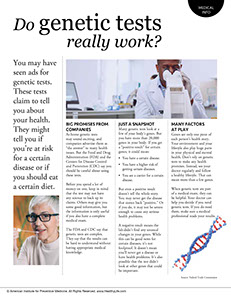
  • Do Genetic Tests Really Work?

    MEDICAL NEWS

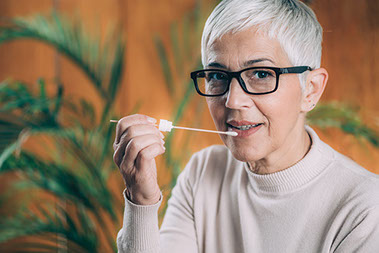
    Women holding a swab near her mouth.

    You may have seen ads for genetic tests. These tests claim to tell you about your health. They might tell you if you’re at risk for a certain disease or if you should eat a certain diet.

    Big promises from companies

    At-home genetic tests may sound exciting, and companies advertise them as “the answer” to many health issues. But the Food and Drug Administration (FDA) and the Centers for Disease Control and Prevention (CDC) say you should be careful about using these tests.

    Before you spend a lot of money on one, keep in mind that the test may not have any science to back up its claims. Others may give you some good information, but the information is only useful if you also have a complete medical exam.

    The FDA and CDC say that genetic tests are complex. They say that the results can be hard to understand without having appropriate medical knowledge.

    Just a snapshot

    Many genetic tests look at a few of your body’s genes. But you have more than 20,000 genes in your body. If you get a “positive result” for certain genes, it could mean:

    *  You have a certain disease.

    *  You have a higher risk of getting certain diseases.

    *  You are a carrier for a certain disease.

    But even a positive result doesn’t tell the whole story. You may never get the disease that comes back “positive.” Or if you do, it may not be severe enough to cause any serious health problems.

    A negative result means the lab didn’t find any unusual changes in your genes. While this can be good news for certain diseases, it’s not foolproof. It doesn’t mean you’ll never get a disease or have health problems. It’s also possible that the test didn’t look at other genes that could be important.

    Many factors at play

    Genes are only one piece of each person’s health story. Your environment and your lifestyle also play huge parts in your physical and mental health. Don’t rely on genetic tests to make any health promises. Instead, see your doctor regularly and follow a healthy lifestyle. That can mean more than a few genes.

    When genetic tests are part of a medical exam, they can be helpful. Your doctor can help you decide if you need genetic tests. If you do need them, make sure a medical professional reads your results.

    Source: Federal Trade Commission
    © American Institute for Preventive Medicine

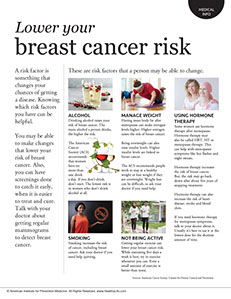
  • Lower Your Breast Cancer Risk

    MEDICAL NEWS

    Couple jogging on side walk.

    A risk factor is something that changes your chances of getting a disease. Knowing which risk factors you have can be helpful.

    You may be able to make changes that lower your risk of breast cancer. Also, you can have screenings done to catch it early, when it is easier to treat and cure. Talk with your doctor about getting regular mammograms to detect breast cancer.

    These are risk factors that a person may be able to change.

    Alcohol

    Drinking alcohol raises your risk of breast cancer. The more alcohol a person drinks, the higher the risk.

    The American Cancer Society (ACS) recommends that women have no more than one drink a day. If you don’t drink, don’t start. The lowest risk is in women who don’t drink alcohol at all.

    Manage weight

    Having more body fat after menopause can make estrogen levels higher. Higher estrogen raises the risk of breast cancer. Being overweight can also raise insulin levels. Higher insulin levels are linked to breast cancer.

    The ACS recommends people work to stay at a healthy weight or lose weight if they are overweight. Weight loss can be difficult, so ask your doctor if you need help.

    Using hormone therapy

    Some women use hormone therapy after menopause. Hormone therapy may also be called HRT, HT or menopause therapy. This can help with menopause symptoms like hot flashes and night sweats.

    Hormone therapy increases the risk of breast cancer. But, the risk may go back down after about five years of stopping treatment. Hormone therapy can also increase the risk of heart disease, stroke and blood clots.

    If you need hormone therapy for menopause symptoms, talk to your doctor about it. Usually it’s best to use it at the lowest dose for the shortest amount of time.

    Smoking

    Smoking increases the risk of cancer, including breast cancer. Ask your doctor if you need help quitting.

    Not being active

    Getting regular exercise can lower your breast cancer risk. While exercising five days a week is best, try to exercise whenever you can. Even a small amount of exercise is better than none.

    Sources: American Cancer Society, Centers for Disease Control and Prevention

    © American Institute for Preventive Medicine
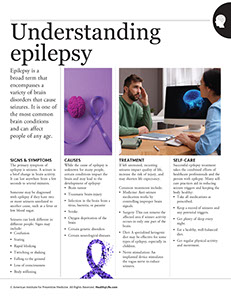
  • Understanding Epilepsy

    MEDICAL NEWS

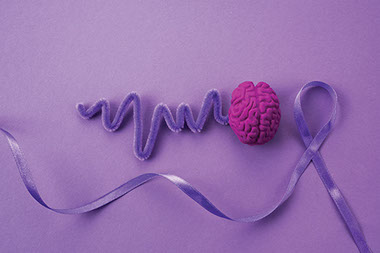
    Purple ribbon and brain to represent epilepsy awareness.

    Epilepsy is a broad term that encompasses a variety of brain disorders that cause seizures. It is one of the most common brain conditions and can affect people of any age.

    Signs & symptoms

    The primary symptom of epilepsy is seizures. A seizure is a brief change in brain activity. It can last anywhere from a few seconds to several minutes.

    Someone may be diagnosed with epilepsy if they have two or more seizures unrelated to another cause, such as a fever or low blood sugar.

    Seizures can look different in different people. Signs may include:

    *  Confusion

    *  Staring

    *  Rapid blinking

    *  Twitching or shaking

    *  Falling to the ground

    *  Loss of consciousness

    *  Body stiffening

    Causes

    While the cause of epilepsy is unknown for many people, certain conditions impact the brain and may lead to the development of epilepsy:

    *  Brain tumor

    *  Traumatic brain injury

    *  Infection in the brain from a virus, bacteria, or parasite

    *  Stroke

    *  Oxygen deprivation of the brain

    *  Certain genetic disorders

    *  Certain neurological diseases

    Treatment

    If left untreated, recurring seizures impact quality of life, increase the risk of injury, and may shorten life expectancy.

    Common treatments include:

    *  Medicine: Anti-seizure medication works by controlling improper brain signals.

    *  Surgery: This can remove the affected area if seizure activity occurs in only one part of the brain.

    *  Diet: A specialized ketogenic diet may be effective for some types of epilepsy, especially in children.

    *  Nerve stimulation: An implanted device stimulates the vagus nerve to reduce seizures.

    Self-care

    Successful epilepsy treatment takes the combined efforts of healthcare professionals and the person with epilepsy. Many self-care practices aid in reducing seizure triggers and keeping the body healthy:

    *  Take all medications as prescribed.

    *  Keep a record of seizures and any potential triggers.

    *  Get plenty of sleep every night.

    *  Eat a healthy, well-balanced diet.

    *  Get regular physical activity and movement.

    © American Institute for Preventive Medicine
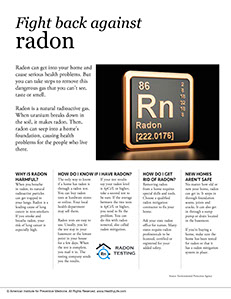
  • Fight Back Against Radon

    WELL-BEING

    Women yawning while driving.

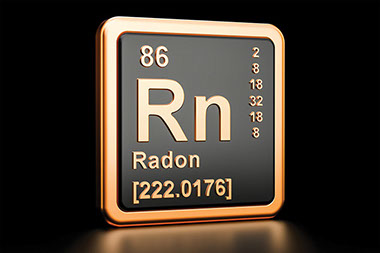
    Radon can get into your home and cause serious health problems. But you can take steps to remove this dangerous gas that you can’t see, taste or smell.

    Radon is a natural radioactive gas. When uranium breaks down in the soil, it makes radon. Then, radon can seep into a home’s foundation, causing health problems for the people who live there.

    Why is radon harmful?

    When you breathe in radon, its natural radioactive particles can get trapped in your lungs. Radon is a leading cause of lung cancer in non-smokers. If you smoke and breathe radon, your risk of lung cancer is especially high.

    How do I know if I have radon?

    The only way to know if a home has radon is through a radon test. You can buy radon tests at hardware stores or online. Your local health department may sell them.

    Radon tests are easy to use. Usually, you let the test stay in your basement or the lowest point in your house for a few days. When the test is complete, you mail it in. The testing company sends you the results.

    If your test results say your radon level is 4pCi/L or higher, take a second test to be sure. If the average between the two tests is 4pCi/L or higher, you need to fix the problem. You can do this with radon removal, also called radon mitigation.

    How do I get rid of radon?

    Removing radon from a home requires special skills and tools. Choose a qualified radon mitigation contractor to fix your home.

    Ask your state radon office for names. Many states require radon professionals to be licensed, certified or registered for your added safety.

    New homes aren’t safe

    No matter how old or new your home, radon can get in. It seeps in through foundation seams, joints and cracks. It can also get in through a sump pump or drain located in the basement.

    If you’re buying a home, make sure the home has been tested for radon or that it has a radon mitigation system in place.

    Source: Environmental Protection Agency

    © American Institute for Preventive Medicine
  • Say Goodbye To Bad Habits

    WELL-BEING

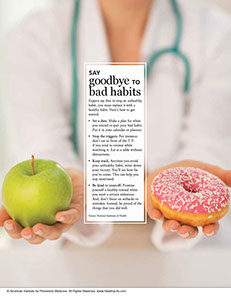
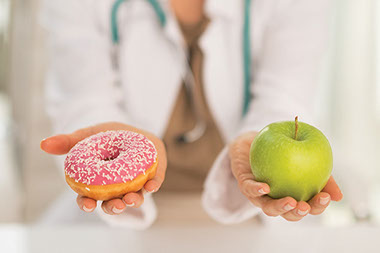
    Doctor holding apple in one hand and a donut in the other hand.

    Experts say that to stop an unhealthy habit, you must replace it with a healthy habit. Here’s how to get started.

    *Set a date.Make a plan for when you intend to quit your bad habit. Put it in your calendar or planner.

    *Stop the triggers.For instance, don’t eat in front of the T.V. if you tend to overeat while watching it. Eat at a table without distractions.

    *Keep track.Anytime you avoid your unhealthy habit, write down your victory. You’ll see how far you’ve come. This can help you stay motivated.

    *Be kind to yourself.Promise yourself a healthy reward when you meet a certain milestone. And, don’t focus on setbacks or mistakes. Instead, be proud of the things that you did well.

    Source: National Institutes of Health

    © American Institute for Preventive Medicine
  • Don’t Be Afraid To Cry

    Stress Management

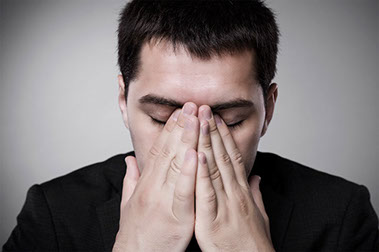
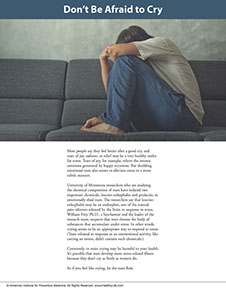
    Image of person with hands over face.

    Most people say they feel better after a good cry, and tears of joy, sadness, or relief may be a very healthy outlet for stress. Tears of joy, for example, relieve the intense emotions generated by happy occasions. But shedding emotional tears also seems to alleviate stress in a more subtle manner.

    University of Minnesota researchers who are studying the chemical composition of tears have isolated two important chemicals, leucine-enkephalin and prolactin, in emotionally shed tears. The researchers say that leucine-enkephalin may be an endorphin, one of the natural pain relievers released by the brain in response to stress. William Frey, Ph.D., a biochemist and the leader of the research team, suspects that tears cleanse the body of substances that accumulate under stress. In other words, crying seems to be an appropriate way to respond to stress. (Tears released in response to an unemotional activity, like cutting an onion, didn’t contain such chemicals.)

    Conversely, to resist crying may be harmful to your health. It’s possible that men develop more stress-related illness because they don’t cry as freely as women do.

    So if you feel like crying, let the tears flow.

    Page from A Year of Health Hints book by the American Institute for Preventive Medicine. www.HealthyLife.com. All rights reserved.

    © American Institute for Preventive Medicine
  • “Remember” To Relax With Biofeedback

    Stress Management

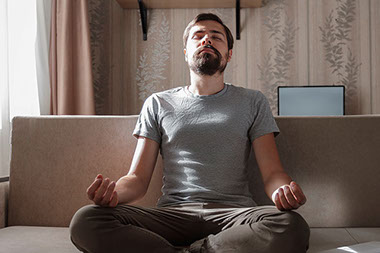
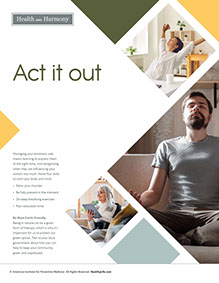
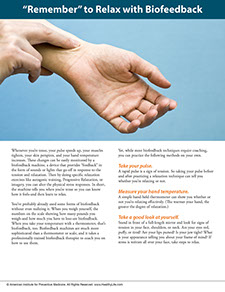
    Image of women deep breathing.

    Whenever you’re tense, your pulse speeds up, your muscles tighten, your skin perspires, and your hand temperature increases. These changes can be easily monitored by a biofeedback machine, a device that provides “feedback” in the form of sounds or lights that go off in response to the tension and relaxation. Then by doing specific relaxation exercises like autogenic training, Progressive Relaxation, or imagery, you can alter the physical stress responses. In short, the machine tells you when you’re tense so you can know how it feels-and then learn to relax.

    You’ve probably already used some forms of biofeedback without even realizing it. When you weigh yourself, the numbers on the scale showing how many pounds you weigh-and how much you have to lose-are biofeedback. When you take your temperature with a thermometer, that’s biofeedback, too. Biofeedback machines are much more sophisticated than a thermometer or scale, and it takes a professionally trained biofeedback therapist to coach you on how to use them.

    Yet, while most biofeedback techniques require coaching, you can practice the following methods on your own.

    Take your pulse. A rapid pulse is a sign of tension. So taking your pulse before and after practicing a relaxation technique can tell you whether you’re relaxing or not.

    Measure your hand temperature. A simple hand-held thermometer can show you whether or not you’re relaxing effectively. (The warmer your hand, the greater the degree of relaxation.)

    Take a good look at yourself. Stand in front of a full-length mirror and look for signs of tension in your face, shoulders, or neck. Are your eyes red, puffy, or tired? Are your lips pursed? Is your jaw tight? What is your appearance telling you about your frame of mind? If stress is written all over your face, take steps to relax.

    Page from A Year of Health Hints book by the American Institute for Preventive Medicine. www.HealthyLife.com. All rights reserved.

    © American Institute for Preventive Medicine
  • 10 Action Steps For Safe & Healthy Holidays

    Personal Safety

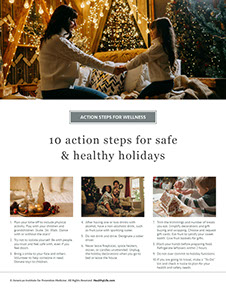
    Mother and daughter holding hands with lights hund all around.

    1.  Plan your time off to include physical activity. Play with your children and grandchildren. Skate. Ski. Walk. Dance with or without the stars!

    2.  Try not to isolate yourself. Be with people you trust and feel safe with, even if you feel down.

    3.  Bring a smile to your face and others. Volunteer to help someone in need. Donate toys to children.

    4.  After having one or two drinks with alcohol, have a non-alcoholic drink, such as fruit juice with sparkling water.

    5.  Do not drink and drive. Designate a sober driver.

    6.  Never leave fireplaces, space heaters, stoves, or candles unattended. Unplug the holiday decorations when you go to bed or leave the house.

    7.  Trim the trimmings and number of treats you eat. Simplify decorations and gift buying and wrapping. Choose and request gift cards. Eat fruit to satisfy your sweet tooth. Give fruit baskets for gifts.

    8.  Wash your hands before preparing food. Refrigerate leftovers within 2 hours.

    9.  Do not over commit to holiday functions.

    10. If you are going to travel, make a “To-Do” list and check it twice to plan for your health and safety needs.

    A Year of Health Hints book by the American Institute for Preventive Medicine. www.HealthyLife.com. All rights reserved.

    © American Institute for Preventive Medicine