Category: Uncategorized

  • Success Over Stress Basics

    Stress Management

    Stress is the way you react to any change (good, bad, real, or even imagined).

    What is Stress?

    These are ways the body responds to stress:

    *  Pupils dilate (get wider).

    *  Breathing speeds up.

    *  Heart rate speeds up.

    *  Oxygen increases in the blood.

    *  Blood moves to major muscles.

    *  Blood pressure rises.

    *  Muscles tense.

    *  Sweating occurs.

    *  Blood sugar increases.

    *  Abstract thinking goes down.

    Stress can make you more productive. It can also help you respond to threats to your safety, such as being near a fire.

    High levels of stress, though, can make you less productive. When left unchecked, stress can lead to health problems. These include:

    *  Heartburn

    *  Back or neck pain

    *  High blood pressure

    *  Heart disease

    *  A lowering of the body’s immune system

    In fact, the American Academy of Family Physicians states that about two-thirds of all visits to the family doctor are stress-related.

    Prevent Burnout

    You can get burnout from work or anything that takes more energy than you can give. Burnout is not a one-time event. It builds over time. The saying, “An ounce of prevention is worth a pound of cure,” applies to burnout.

    Tips to Help Prevent Burnout

    *  Set career and personal goals that can be achieved. Attempt to do well, but don’t try to be perfect.

    *  Follow good health habits.

    *  Try not to spread yourself too thin. Delegate tasks at work and at home to lessen your load. Learn to say, “No.”

    *  Prioritize what you need to get done in a day, a week, etc.

    *  Reduce long work or study hours, if you can. The more you do and the less you rest, the more likely burnout will occur.

    *  If you feel overwhelmed with your workload, discuss this with your boss.

    *  Discuss feelings and problems you are having with your family, friends, and coworkers. Talking helps to ease feelings of frustration that feed burnout. If things don’t get better, get help.

    *  Take regular 5 to 10 minute relaxation breaks. Take mental breaks from stressful situations, too. Learn to meditate and to practice relaxation techniques.

    *  Make time for leisure activities that you enjoy. Do these daily or at least every week.

    *  Plan one or more vacations during the year. Don’t work on your vacation.

    Relaxation Exercises

    Breathing Exercises

    Breathing exercises promote relaxation in 4 ways.

    1.  They tense and relax muscles. Taking a deep breath tenses muscles used for breathing. A deep exhale relaxes them.

    2.  They allow more oxygen to be absorbed. This assists the body’s response to stress. It also helps the body recover from stress.

    3.  They increase the amount of oxygen, which allows the heart to slow down. This helps calm you.

    4.  They give you the chance to pause and plan your response to something that causes stress.

    Deep Natural Breathing Steps

    1.  Sit in a chair, arms at your sides, legs uncrossed.

    2.  Note any tension in your muscles.

    3.  Put one hand on your chest and the other on  your abdomen.

    4.  Take in a breath slowly and deeply through your nose. Allow your abdomen to expand and push up your hand. After your abdomen is full of air, allow your chest to expand pushing up your other hand. This is one long, steady breath.

    5.  Hold the air in for 3 seconds.

    6.  Purse your lips and exhale through your mouth. Make a relaxing, whooshing sound.

    7.  Keep taking long, slow, deep inhales through  your nose and let out long, slow exhales through your mouth.

    8.  Focus on the sound and feeling of deep breathing. Continue for 3 to 5 minutes.

    Purifying Sighing Steps

    1.  Keep your shoulders erect.

    2.  Let out a big sigh, making a sound of relief as the air leaves your mouth.

    3.  Continue to sigh 10 to 15 times, one after the other.

    Note: If you are prone to hyperventilating, do not do this breathing exercise.

    Relaxation Exercises

    1.  Choose a quiet place that is free of distraction. Turn off the telephone. Ask for privacy.

    2.  Sit in a comfortable position so there is no extra tension in your muscles. Your chin may drop a bit as you choose to relax. Your feet should touch the floor. Do not lie down. You may fall asleep.

    3.  Close your eyes gently. Don’t squeeze them closed. Expect to feel very relaxed.

    4.  Repeat a word like “one” or any other one-syllable word. Say it silently over and over for 15 minutes. There is no right or wrong way to do this. You can repeat the word quickly or slowly. Do whatever comes naturally.

    5.  When thoughts distract you, ignore them. Return to the word “one.” These other thoughts are supposed to occur. Let them go. This shows the release of stress.

    Progressive Relaxation Steps

    1.  Sit in a chair and close your eyes. Rest your forearms on the sides of the chair. Place your palms downward.

    2.  Take a few slow, deep breaths.

    3.  Focus on any muscle tension you feel, but do nothing about it.

    4.  “Tense” and tighten a muscle group (as listed below) for 5 seconds. Then tell yourself to “relax” and let the tension dissolve for 30 seconds. Do this for each body part.

    – Bend both arms at the elbows and wrists. Make a fist with each hand. Relax.

    – Press your back against the chair. Relax.

    – Tighten your abdomen. Relax.

    – Lift and extend your lower legs. Relax.

    – Tighten your jaw. Relax.

    – Squinch your eyes. Relax.

    – Tuck your chin against your chest. Relax.

    Note: Don’t hold your breath during the tensing phase. Don’t tighten any body region that is weak or injured.

    5.  Keep breathing slowly and deeply.

    6.  Focus on the overall feeling of relaxation. Let your body go limp. Let your head and shoulders drop forward.

    7.  Imagine that you feel an energizing warmth flowing through your body.

    8.  Slowly open your eyes. Note how refreshed  you feel.

    Biofeedback

    Biofeedback uses special machines to monitor stress responses, such as heart rate, sweating, etc. While hooked up to biofeedback devices, you learn to control your body’s automatic responses to stress. Then you learn to do the same thing without the machines. Biofeedback is taught at centers that specialize in this technique.

    There are also biofeedback machines for home use. One example is a relaxometer. It is the size of a transistor radio. You attach two small electrodes to the palm of your hand. Sounds are relayed through earphones to gauge your relaxation level.

    Taking your own pulse is also a biofeedback method. Feel your pulse at your wrist or on the side of your neck. Count how many times you feel your pulse beat in 10 seconds. Multiply that number by 6. This is your 1-minute pulse rate. Take your pulse before and after doing a relaxation technique. Your pulse rate should be lower after you do relaxation exercises.

    Thought Control

    Thought Stopping

    Use this when you are obsessed with negative thoughts. If work problems dominate your thoughts, picture an “off duty” sign for the stop sign.

    1.  Isolate the stressful thought.

    2.  Close your eyes. Briefly focus on the stressful thought.

    3.  Count to three.

    4.  Shout “Stop!” (Or, if others are in earshot, picture a stop sign, a flashing red light, or the word “Stop” in bold letters.)

    5.  If the thought returns, repeat steps 2 to 4.

    6.  Go back to your normal activity. You should feel better.

    “Rehearse” for Stressful Events

    Stage actors rehearse their lines before a play. You can rehearse how you want to feel during events, etc. that cause stress for you. Doing this can help you relax when the stressful event really takes place. Follow these steps:

    1.  Close your eyes and unwind. Release all the tension in your muscles.

    2.  For a minute or two, focus on feeling relaxed.

    3.  For the next minute or so, think that you are really taking part in the event that causes stress for you.

    4.  Focus again on feeling relaxed.

    5.  Picture the event once again. Picture as many details as you can. (What is the setting? What are you wearing? Who else is there?)

    6.  Imagine feeling calm as you handle the stress-causing event with success.

    7.  Imagine a positive outcome. See your boss tell you that you did a good job, etc.

    Tips to Manage Stress

    *  Count to ten when you’re so upset you want to scream. It buys you time so you can think about what’s bothering you. This helps to calm you down.

    *  Own a pet. Studies show that having a pet, such as a dog or cat, appears to cut down the effects of stress on health.

    *  Have a cup of warm herbal tea. Sip it slowly and savor its soothing warmth and aroma.

    *  Change things around you to get rid of or manage your exposure to things that cause stress.

    *  Budget your time. Make a “to do” list. Rank order daily tasks. Don’t commit to doing too much.

    *  View changes as positive challenges.

    *  Sometimes a problem is out of control. When this happens, accept it until changes can be made.

    *  Talk out troubles. Talk with a friend, relative, or member of the clergy. Someone else can help you see a problem from another point of view.

    *  When you feel you are getting nowhere with a problem, escape for a little while. Take a walk, read a book, visit a museum, or take a drive. Leaving a situation for a short time helps you develop new attitudes.

    *  Laugh a lot. Laughter releases tension. It’s hard to feel stress in the middle of a belly laugh.

    *  Take a shower or bath with warm water. This will soothe and calm your nerves and muscles.

    *  Listen to soothing music in a quiet, calm place. Focus on the calmness of the music. When the music ends, you should feel more relaxed.

    *  Reward yourself with things that make you feel good. Add to your stamp collection. Buy flowers. Picnic in the park. Give yourself some “me” time.

    *  Help others. This takes the focus off of you and puts it on the needs of others.

    *  Have a good cry. Tears can help cleanse the body of substances that form under stress. Tears also release a natural pain-relieving substance from the brain.

    Reasons to Contact Doctor

    Reasons to Call Your Doctor or Provider

    For any of the problems listed below, call your doctor or health care provider. You will get advice on what to do.

    *  Anxiety

    *  Nervousness

    *  Crying spells

    *  Confusion about how to handle your problems

    *  You abuse alcohol and/or drugs (illegal or prescription) to deal with stress.

    *  You have been a part of a traumatic event in the past (e.g., armed combat, airplane crash, rape, or assault) and you now have any of these problems:

    – Flashbacks (you relive the stressful event)

    – Painful memories

    – Nightmares

    – Feeling easily startled and/or cranky

    – Feeling “emotionally numb” and detached from others and the outside world

    – Trouble falling asleep and/or staying asleep

    – Anxiety and/or depression

    *  You suffer from a medical illness that you are unable to cope with or that leads you to neglect proper treatment.

    *  You withdraw from friends, relatives, and coworkers and/or yell at them even when you are only slighty annoyed.

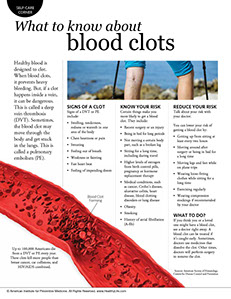
    Cover image to the Success Over Stress brochure by the American Institute for Preventive Medicine. www.HealthyLife.com. All rights reserved.

    © American Institute for Preventive Medicine

  • Home Medical Tests

    Medical Exams

    Home medical tests let you check for and monitor health conditions at home.

    Self-Testing Kits

    *  Diagnose when conditions are or are not present. These include kits that test for blood cholesterol level and blood in the stool.

    *  Monitor a chronic condition. These include kits that test for blood sugar levels and blood pressure readings.

    The U.S. Public Health Service and the Food and Drug Administration (FDA) give tips for safe and proper use of self-testing kits. (Each of these does not apply to all tests.)

    *  Don’t buy or use a test kit after the expiration date.

    *  Follow storage directions on the label.

    *  Note special precautions, such as not eating certain foods before testing.

    *  Study the package insert. First, read it through to get a general idea of how to perform the test. Then, go back and review the instructions and diagrams until you fully understand each step.

    *  Know what the test is meant to do and what it doesn’t do. Tests are not always 100% accurate.

    *  Some test results rely on comparing colors. If you’re colorblind, ask someone who is not colorblind to help you read the results.

    *  Follow instructions exactly. Don’t skip a step.

    *  When you collect a urine sample, use a sterile or clean container.

    *  Some steps need to be timed. Use a watch or clock with a second hand.

    *  Note what you should do if the results are positive, negative, or unclear.

    *  If something is not clear, don’t guess. Call the “800” number on the package or call a pharmacist for information.

    *  Keep test kits that have chemicals out of the reach of children. Discard away used test materials as directed.

    Page from the Healthier at Home book by the American Institute for Preventive Medicine. www.HealthyLife.com. All rights reserved.

    © American Institute for Preventive Medicine

  • Keep A Survival Kit In Your Car

    Personal Safety

    Image of a car kit.

    No car should be without a survival kit of items that you might need in the event you’re in an accident, run out of gas, have a breakdown, or get stuck. Items to include:

    *  First-aid kit.

    *  Flares.

    *  White cloth, for distress signal.

    *  Flashlight with spare batteries.

    *  Snow shovel.

    *  Knife or other basic tools.

    *  Empty gas can, for purchasing gas.

    *  Small fire extinguisher.

    *  Paper and pencil.

    *  Blanket.

    *  Change, for phone calls and tolls.

    *  Food and water, for long trips through unpopulated areas. Whistle.

    A Year of Health Hints book by the American Institute for Preventive Medicine. www.HealthyLife.com. All rights reserved.

    © American Institute for Preventive Medicine

  • Grief / Bereavement

    Mental Health

    Grief is a deep sadness or sorrow that results from a loss. The loss can be a major or minor one. It can result from something positive or negative. Bereavement is grieving most often linked with the death of a loved one.

    Signs & Symptoms

    Stages of Grief

    1. Shock.

    You feel dazed or numb.

    2. Denial and searching.

    *  You are in a state of disbelief.

    *  You ask questions, such as, “Why did this happen?” or “Why didn’t I prevent this?”

    *  You look for ways to keep your loved one or loss with you.

    *  You think you see or hear the deceased person.

    *  You begin to feel that the loss is real.

    3. Suffering and disorganization.

    *  You feel guilty, anxious, depressed, lonely, afraid, etc.

    *  You may place blame on everyone and everything.

    *  You may get physical symptoms. These include headaches, stomachaches, constant fatigue, and/or shortness of breath.

    *  You withdraw from routine and social contacts.

    4. Recovery and acceptance.

    *  You begin to look at the future instead of dwelling on the past.

    *  You adjust to the reality of the loss.

    *  You develop new relationships.

    *  You develop a positive attitude.

    Grieving the loss of a loved one can last weeks, months, or years.

    Causes

    *  A new or lost job, a promotion, demotion, or retirement.

    *  Relationship changes, such as getting divorced or having a child leave home.

    *  An illness, injury, and/or disability.

    *  The death of a family member or friend. Loss of property. Moving to a new place.

    Factors that shape a person’s response to a loss, such as death include:

    *  Age, gender, and health.

    *  How sudden the loss was.

    *  Cultural background. Religious beliefs.

    *  Finances.

    *  Social network.

    *  History of other losses or traumatic events.

    Each of these factors can add to or reduce the pain of grieving.

    Treatment

    Understanding the normal stages of grief, the passage of time, and self-care measures treat most cases of grief. When these are not enough, counseling can help.

    Questions to Ask

    Self-Care / Prevention

    *  Eat regular meals.

    *  Get regular physical activity.

    *  Allow friends and family to help you. Don’t hold your feelings inside. State how you really feel. Visit them, especially during the holidays, if you would otherwise be alone. Travel during the holidays if this helps.

    *  Share and maintain memories of a lost loved one. Being reminded of the past can help with the process of coming to grips with a loss.

    *  Try not to make major life changes, such as moving during the first year of grieving.

    *  Join a support group for the bereaved. People and places to contact include your EAP representative, your student counseling center, churches or synagogues, funeral homes, and hospice centers.

    *  Adopt a pet.

    *  Read self-help books about grief and death.

    Resources

    Healthier at Home book by the American Institute for Preventive Medicine. www.HealthyLife.com. All rights reserved.

    © American Institute for Preventive Medicine

  • Use Caution With Sleeping Pills

    Medication

    Image of women trying to sleep with pills on her nightstand.

    Used improperly, prescription sleeping pills (called sedative-hypnotics) can be as addictive as alcohol and can produce unpleasant withdrawal symptoms if stopped abruptly.

    You can develop a tolerance to sleeping pills in as little as two weeks of frequent use. In other words, you need higher and higher amounts to fall asleep. Older people should be especially cautious about taking sleeping pills, since their tolerance for medication is usually lower than middle-aged or younger adults.

    If you or someone you’re close to takes prescription sleeping pills, possible signs of misuse include:

    *  Taking sleeping pills nightly for more than two weeks.

    *  Needing to take higher doses to fall asleep.

    *  Increasing the dosage without consulting the doctor.

    If you’ve become dependent on sleeping pills, don’t quit cold turkey-you’re apt to suffer confusion, slurred speech, drowsiness, difficulty concentrating, relentless insomnia, and possibly death. So contact your doctor for instructions on how to wean yourself off the drug.

    Page from A Year of Health Hints book by the American Institute for Preventive Medicine. www.HealthyLife.com. All rights reserved.

    © American Institute for Preventive Medicine

  • Complementary & Integrative Health

    Alternative Medicine

    Image of complementary medicine.

    Complementary medicine is a non-mainstream practice used together with conventional medicine.

    Integrative medicine coordinates complementary approaches into mainstream medicine.

    Alternative medicine is non-mainstream medicine in place of conventional medicine.

    True alternative medicine is not common. Most people who use non-mainstream approaches use them with conventional treatment.

    The National Health Interview Survey (NHIS) found that 33.2% of adults in the U.S. used complementary health approaches.

    Natural products.

    These use substances found in nature, often sold as dietary supplements. Examples are:

    *  Herbs. Chemicals from herbs, plants, or plant parts act upon the body in a therapeutic way.

    * Vitamins and minerals. These are the most common dietary supplement used. About 40% of adults take a multivitamin and mineral (MVM).

    * Probiotics. These are defined as “live micro-organisms which, when given in adequate amounts, provide a health benefit on the host.”

    Mind and body practices

    These focus on the interactions among the brain, mind, body, and behavior. Some practices manipulate and/or move one or more body parts. Examples are:

    *  Acupressure. This applies pressure to certain places (acupoints) on the body by pressing on them with fingers or hands.

    *  Acupuncture. This uses needles that are inserted into the skin at certain points (acupoints).

    *  Chiropractic. This seeks to put the body into balance through manual realignment of the spine and other joints and muscles.

    *  Hypnotherapy. A person is put in a trance state to respond to suggestion to overcome a problem, such as a phobia, anxiety, or tobacco use.

    *  Meditation. This increases calmness and physical relaxation by using:

    – A quiet location that is free of or has few distractions.

    – A comfortable posture.

    – A specific focus on a word or sensation.

    – An openness to let distractions come and go without judging them.

    *  Massage therapy. This uses touching and rubbing techniques to relieve sore muscles and promote relaxation.

    *  Qi gong (“chee-GUNG”). This is part of traditional Chinese medicine. It uses movement, meditation, and controlled breathing to enhance the flow of “qi” in the body. (Qi is an ancient term for vital energy.)

    *  Relaxation therapies. These include breathing exercises, guided imagery, and progressive muscle relaxation.

    *  Tai chi. This is a series of postures and exercises of moving the body slowly and gently, and with awareness while breathing deeply.

    *  Yoga. A system of exercising using postures, breathing, and meditation.

    Page from the Healthier at Home book by the American Institute for Preventive Medicine. www.HealthyLife.com. All rights reserved.

    © American Institute for Preventive Medicine

  • Bloated Belly: Ways To Get Relief

    SELF-CARE CORNER

    Image of tea and different tea leaves.

    Most people have felt a bloated stomach after a big meal. Usually, the belly feels overly full. It can make clothing feel tighter. The belly may look swollen. Bloating is usually caused by too much food or air and gas getting trapped in the intestines.

    But some people get bloated even when they didn’t eat too much. In some cases, it can be downright painful. The best way to address painful bloating is to find the cause and know how you can treat it.

    Bloating culprits

    The most common causes include:

    *  Dairy foods. If you notice bloating after eating cheese, ice cream, or drinking milk, you could have lactose intolerance.

    *  Gum. Swallowing air while chewing can cause bloating.

    *  Eating too much fiber at once. Fiber is great for you, but if your body isn’t used to it, you can get bloated and uncomfortable. Increase the amount you eat gradually.

    *  Bowel problems. Being constipated or having irritable bowel syndrome (IBS) can cause painful bloating. Drinking plenty of water can help with constipation and fiber absorption.

    *  Menstrual cycles. Some women get bloated because their body holds extra water before or during their periods.

    Treat bloating at home

    Many times, bloating can be managed at home. Here’s how:

    *  Write down what you eat and drink. Record when you get stomach pain or bloating.

    *  Cut back on gum.

    *  Avoid carbonated drinks.

    *  Drink plenty of water to keep the bowels moving. Don’t use a straw when drinking.

    *  Eat enough fiber. Start with fruits and vegetables. Eat only small amounts of beans, lentils and other gas-causing foods until you get used to them.

    *  Watch out for sugar-free foods. Some artificial sweeteners can cause bloating and gas.

    *  Ginger, peppermint, chamomile or fennel herbal teas may help. Always ask a doctor before using herbs if you have a health condition or take any medicines.

    *  Over-the-counter anti-gas medicines with simethicone help move gas bubbles out of the body.

    When to see your doctor

    Call a doctor or seek immediate medical care if you notice bloating with:

    *  Blood with bowel movements (stool)

    *  Losing weight without making an effort

    *  Nausea or vomiting

    *  For women: menstrual bleeding between periods or after menopause

    *  Fever

    *  Severe pain that won’t go away

    These could be signs of a serious health issue that needs treatment.

    Source: American Academy of Family Physicians

    © American Institute for Preventive Medicine

  • Health Screenings For Women

    SELF-CARE CORNER

    Stethoscope and female symbol pills on pink top view.

    Women are at risk for a unique set of health issues. Every woman should visit their primary care and OB-GYN provider every year for a checkup that includes the recommended screenings.

    Ask your doctor what screenings are right for you. Your doctor will decide which screenings you need based on your age, family history, health history, and other risk factors.

    Women aged 18 to 39

    *  Blood pressure screening

    *  Cholesterol screening

    *  Diabetes screening

    *  Immunizations

    *  Infectious disease screening including STI’s

    *  Physical exam

    *  Breast cancer screening

    *  Cervical cancer screening

    *  Skin self-exam

    *  Dental and eye exams

    *  Early and regular prenatal care during pregnancy

    Women aged  40 to 64

    *  Blood pressure screening

    *  Cholesterol screening

    *  Diabetes screening

    *  Immunizations

    *  Infectious disease screening including STI’s

    *  Physical exam

    *  Breast, colon, and lung cancer screenings

    *  Cervical cancer screening

    *  Osteoporosis screening

    *  Skin cancer screening

    *  Dental and eye exams

    Women aged 65 and over

    *  Blood pressure screening

    *  Cholesterol and heart disease screening

    *  Diabetes screening

    *  Immunizations

    *  Infectious disease screening including STI’s

    *  Physical exam

    *  Breast, colon, and lung cancer screenings

    *  Cervical cancer screening may no longer be needed. Check with your doctor.

    *  Osteoporosis screening

    *  Skin cancer screening

    *  Hearing test

    *  Dental and eye exams

    © American Institute for Preventive Medicine

  • Snoring And Your Health

    SELF-CARE CORNER

    Women sleeping while wearing a CPAP machine.

    Occasional snoring is often harmless. It may happen when a person has a stuffy nose or is lying on their back. But if you snore every night, talk with a doctor. Long-term snoring can lead to health problems.

    Sleep suffers

    Snoring can make you wake up many times during the night. You probably won’t remember these awakenings. They interfere with your body’s ability to get good, sound sleep.

    Without quality sleep, you may feel tired nearly every day. This can lead to problems at work, school or home. In severe cases, it can lead to dangers like car collisions if you fall asleep at the wheel.

    Obstructive sleep apnea

    Sometimes snoring is a sign of a health problem called obstructive sleep apnea (OSA). Signs of OSA include:

    *  Loud snoring that happens nearly every night

    *  Pauses in breathing during sleep (this can happen hundreds of times per night)

    *  Choking or gasping for air during the night

    *  Feeling very tired even after a full night’s sleep

    *  Trouble concentrating or being irritable

    *  Waking up with a headache

    OSA can also cause heart problems because it can increase a person’s risk of high blood pressure, stroke or heart disease. It can also cause an irregular heartbeat, known as an arrhythmia.

    How to fix snoring

    There are many ways to reduce or eliminate snoring. First, see a doctor to get checked for any health problems. Your doctor may recommend:

    *  If you smoke, quit. Smoking can make snoring worse and leads to other serious health problems.

    *  Limit or avoid alcohol. Don’t drink alcohol close to bedtime. Alcohol relaxes throat muscles and can cause more snoring and pauses in breathing.

    *  Work toward a healthy weight if you are overweight. Being overweight often makes snoring worse.

    If these measures don’t help, ask your doctor about other options. Certain devices and surgery can help some people quit snoring.

    Relationship problems

    Snoring can cause social problems too. Some people find that their marriage or domestic partnership suffers. Partners may not be able to sleep in the same room because of the noise.

    Sources: American Academy of Otolaryngology – Head and Neck Surgery

    © American Institute for Preventive Medicine

  • Exercise When You Travel

    BE FIT

    Group of people hiking.

    How you exercise may look different when traveling, but it’s still worthwhile. In fact, mixing things up when you’re away from home keeps your workouts fresh and interesting. Try these tips:

    *Bring resistance bands along.Easily packable and super lightweight, resistance bands give you the flexibility to exercise anywhere. Bring a few different types for the most exercise options.

    *Book a hotel with a gym.Many hotels offer fitness rooms. The equipment is often fairly basic, but you can usually depend on a treadmill or bike and a set of free weights.

    *Use your bodyweight.All you really need for a good sweat session is your body! Movements like push-ups, tricep dips, squats, and lunges can be combined in a challenging circuit.

    *Get outside.What better way to get the most out of your travel than to explore on foot. And all that walking counts as exercise!

    © American Institute for Preventive Medicine