Category: Uncategorized

  • Avoid Holiday Debt

    Financial Health

    Small, mini shopping cart with 2 ornaments inside cart.

    Give yourself a present. Keep holiday spending within your means.

    *  Set a limit on what you will spend.

    *  Make a list before you shop.

    *  Buy from stores that offer layaway plans.

    *  Avoid impulse buying. Leave your credit cards at home.

    *  Shop less – in stores, online, and while watching TV.

    *  At family gatherings, discuss ways you can all spend less on gifts. Make a resolution to start a monthly savings account to use for holiday spending.

    *  Comparison shop. Check out prices online and in-store ads. Use coupons for items on your list.

    *  Pay with cash or a debit card.

    *  Don’t go overboard, even during sales. You’ll save 100 percent on items that you don’t need.

    *  Don’t charge more than you can pay off when your balance is due.

    ays to Well-Being book by the American Institute for Preventive Medicine. www.HealthyLife.com. All rights reserved.

    © American Institute for Preventive Medicine

  • E-Cigarettes: Are They Safer?

    MEDICAL NEWS

    Man with hoodie vaping.

    Electronic cigarettes, also known as e-cigarettes, are often advertised as a “safer cigarette.” E-cigarettes are battery-operated devices that contain liquid. The liquid heats up when it’s turned on. When someone smokes an e-cigarette, they inhale the vapor from the liquid inside.

    E-cigarettes are also called JUULs, vapes, vape pens, e-pens and e-hookahs. Smoking e-cigarettes is often called “vaping.”

    Is vaping safe?

    E-cigarettes don’t contain tar or tobacco like regular cigarettes.

    But, the liquid inside an e-cigarette contains high levels of nicotine. Nicotine is addictive, so it’s hard to stop using it. It also raises blood pressure and can lead to a heart attack.

    The liquid in e-cigarettes also contains other chemicals, which may include:

    *  Acetaldehyde, acrolein, and formaldehyde, which can cause lung and heart disease

    *  Acrolein, a weed killer that can cause lung cancer and chronic obstructive pulmonary disease (COPD)

    *  Diacetyl, which can cause serious lung disease

    *  Benzene, which is found in car exhaust

    *  Volatile organic compounds, which are chemicals that can cause cancer

    *  Propylene glycol, which is toxic to cells

    *  Heavy metals, including nickel, tin and lead

    The vapor that a person breathes out of an e-cigarette is called secondhand emissions. It may also contain some of these chemicals. This can make e-cigarettes harmful to people who are nearby, even if they’re not smoking it.

    A major problem with youth

    The American Lung Association says e-cigarette use among teens is becoming an epidemic. E-cigarette fruit and candy-like flavorings often appeal to kids and teens. They may think that e-cigarettes are safe. According to the U.S. Institutes of Health, most kids believe the liquid inside is for flavor only.

    Nicotine contained in the vaporized liquid is especially harmful to young people. Nicotine can damage a teens’ developing brain. It also makes them more likely to smoke regular cigarettes later.

    Get help quitting

    The Food and Drug administration says e-cigarettes are not a safe or effective way to quit smoking. Instead, you may be replacing one unhealthy habit with a different one.

    If you want to quit smoking or vaping, call 1-800-QUIT-NOW or go tosmokefree.gov

    Sources: American Lung Association, National Institutes of Health

    © American Institute for Preventive Medicine

  • Myths About Underactive Thyroid

    MEDICAL NEWS

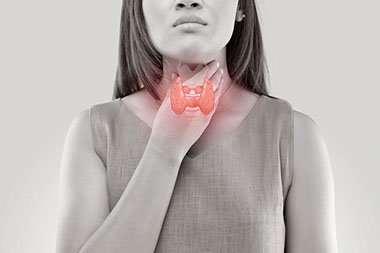
    Image of women holding her neck with an illustration of the thyroid gland on top.

    One of the most common thyroid problems is hypothyroidism, or underactive thyroid.

    Hypothyroidism means the thyroid gland isn’t making enough thyroid hormones. This can cause a number of symptoms, including:

    *  Fatigue

    *  Trouble with learning or remembering

    *  Dry hair, nails or skin

    *  Constipation

    *  Sore muscles

    *  Weight gain or bloating

    *  Heavy or irregular menstrual periods

    Although hypothyroidism is a common problem, there are many myths about it. Read on to learn about some common myths – and what you should know and hypothyroidism.

    Myth:You can’t lose weight if you have a thyroid problem.

    Fact:Many people can get to a healthy weight with hypothyroidism after getting on the proper dose of thyroid medication. They may need to work with a nutritionist or other health provider and get plenty of exercise. But losing weight is doable.

    Myth:You can’t get pregnant if you have hypothyroidism.

    Fact:Many women can get pregnant with an underactive thyroid. They should work with their doctor to make sure they are on thyroid medication that is safe and effective. It’s important to take thyroid medication consistently and carefully throughout pregnancy.

    Myth:Only older women have hypothyroidism.

    Fact:Thyroid problems can affect anyone, of any age. But women older than 60 years are at an increased risk for hypothyroidism.

    Myth:People with underactive thyroid need to take iodine.

    Fact:People with hypothyroidism should be on a medication that their doctor prescribes. Taking iodine supplements is usually not needed.

    Myth:High doses of thyroid medicine are better.

    Fact:Having too much thyroid hormone can lead to health problems like rapid heart rate, irregular heartbeat, bone loss and can even become life threatening. Work with your doctor to be sure your thyroid blood levels are within a healthy range.

    Myth:I can manage underactive thyroid with a healthy diet.

    Fact:A healthy diet is great for everyone, including people with underactive thyroid. However, even the best food choices cannot replace missing thyroid hormones. A person needs to take their thyroid medication as their doctor prescribes to replace these hormones.

    Source: American Association of Clinical Endocrinologists

    © American Institute for Preventive Medicine

  • Understanding Multiple Sclerosis

    MEDICAL NEWS

    Women in wheel chair.

    Multiple sclerosis (MS) is a common condition affecting millions of people across the world.

    What is MS?

    MS is an autoimmune disease. Your immune system is designed to fight off invaders like viruses and bacteria. Autoimmune means the immune system attacks healthy tissue by mistake.

    With MS, the immune system attacks a protective coating on the nerves in the brain and spinal cord. When this coating, called the myelin sheath, is damaged, the nerves have trouble sending signals.

    Types of MS

    Most people with MS have relapsing-remitting MS (RRMS). RRMS causes MS symptoms over a few days or weeks, known as a relapse. Then, MS symptoms go away for months or even years. When symptoms go away, this is called remission. The relapse and remission cycle repeats itself over time.

    Other people may have symptoms that slowly get worse. They don’t have periods of remission. This is known as primary progressive or secondary progressive MS.

    Symptoms of MS

    MS symptoms are very different from person to person. They can also change over time. Symptoms include:

    *  Feeling tired (fatigue)

    *  Weakness

    *  Loss of balance

    *  Numbness or tingling

    *  Stiff muscles or spasms

    *  Blurry vision

    *  Dizziness

    *  Loss of control of bladder or bowels

    *  Trouble with memory, learning or attention

    *  Speech problems

    *  Shaking

    *  Seizures

    If you have one or more of these symptoms, it doesn’t mean you have MS. However, you should see your doctor to find out the cause.

    How is MS treated?

    If you have MS, see your doctor regularly. Treatment can help slow the disease and manage symptoms. There are different medications available to treat MS, and physical therapy is helpful for some people. A doctor who specializes in treating MS can recommend the best treatment for you.

    While there is no cure, treatments for MS continue to improve. With a doctor’s help, many people with MS can manage their symptoms and feel their best.

    © American Institute for Preventive Medicine

  • Secure Your Home For Vacation

    WELL-BEING

    Small wooden home on table with hands protecting it.

    When you’re gone on vacation, you want to know your home is safe and secure. Ideally, you want to avoid letting your home look unoccupied and unwatched.

    Tips to protect your home while away

    *  Set lights on timers, both inside and out.

    *  Check doors and windows before you leave.

    *  Arrange for lawn care or snow removal.

    *  Have the post office hold your mail until you return.

    *  Cancel other deliveries.

    *  Enlist a neighbor to keep an eye on things.

    *  Check if your local police department offers vacation home checks.

    *  Invest in a security system.

    *  Install a video doorbell.

    *  Don’t post about your vacation on social media.

    *  Hire a housesitter to visit or stay at your home while you’re away.

    *  Invest in quality locks on all exterior doors.

    *  Leave a car in the driveway.

    *  Set up motion-activated lights in the backyard.

    *  Turn off your garage openers.

    © American Institute for Preventive Medicine

  • Save Time. Be Organized.

    Stress Management

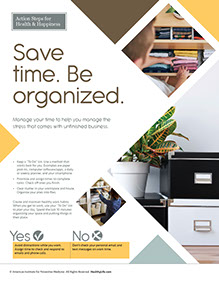
    Women organizing linens in baskets.

    Manage your time to help you manage the stress that comes with unfinished business.

    *  Keep a “To Do” list. Use a method that works best for you. Examples are paper post-its, computer software/apps, a daily or weekly planner, and your smartphone.

    *  Prioritize and assign times to complete tasks. Check off ones you finish.

    *  Clear clutter in your workspace and house. Organize your piles into files.

    Create and maintain healthy work habits. When you get to work, use your “To Do” list to plan your day. Spend the last 10 minutes organizing your space and putting things in their place.

    Avoid distractions while you work. Assign time to check and respond to emails and phone calls.

    Don’t check your personal email and text messages on work time.

    Page from HealthyLife Weigh book by the American Institute for Preventive Medicine. www.HealthyLife.com. All rights reserved.

    © American Institute for Preventive Medicine