Category: Uncategorized

  • Oh The Embarrassment

    WELL-BEING

    Close-up image of man's shoulder with dandruff.

    If you avoid wearing dark clothing because of those tell-tale dandruff flakes, know this.

    “Many people believe dandruff is caused by poor hygiene, but this simply isn’t true,” said Dr. Adam J. Friedman, professor and dermatologist at the Albert Einstein College of Medicine. “Rather than try to remedy dandruff by over-shampooing or over-brushing your hair, which can both be damaging to the hair, use dandruff shampoo and scalp treatments instead.”

    To get the best results from using dandruff shampoo, Dr. Friedman recommends the following tips:

    *Follow the instructions on the dandruff shampoo bottle.There are many different dandruff shampoos, and each contains different active ingredients for controlling symptoms. For example, some dandruff shampoos require that you lather the shampoo into the hair and onto the scalp and leave on for about 5 minutes before rinsing; others should not be left on the scalp.

    *If you are African-American, only shampoo once a week using a dandruff shampoo.See a dermatologist for the best product recommendation for your hair type.

    *If you are Caucasian or Asian, shampoo daily and use dandruff shampoo twice a week.If using one dandruff shampoo does not bring relief, try alternating between dandruff shampoos with different active ingredients.

    *Be careful when using a dandruff shampoo that contains coal tar.Tar shampoo can discolor blond, gray, or white hair, so if you have light-colored hair, you may want to choose a different dandruff shampoo. In addition, tar shampoo has the potential to make your scalp more sensitive to sunlight. If you use this type of dandruff shampoo, it’s important to protect your scalp from the sun by wearing a hat when outdoors and seeking shade whenever possible.

    “For most people, dandruff does not require medical attention,” said Dr. Friedman. “However, sometimes the flaking and itching that appears like dandruff is actually a medical condition, such as seborrheic dermatitis, psoriasis, fungal infections of the scalp, or eczema.” If you continue to have symptoms after using a dandruff shampoo, see your doctor.

    © American Institute for Preventive Medicine

  • Skip The Resolution – Try This Instead

    WELL-BEING

    Close up image of feet running.

    Some statistics suggest that more than 90 percent of New Year’s resolutions fail. Many of us want to better ourselves in some way, and a new year may seem like a good place to start. But how can you set yourself up for success?

    Many New Year’s resolutions are simply too strict and difficult to follow. As a result, it’s easy to give up and go back to old habits before February even arrives. If you’re looking to be healthier, don’t worry about a resolution. Instead, follow these tips.

    Make small changes.

    Giving up chocolate or red meat may seem like a great idea. But when you try to do this in real life, it can be much harder than you thought. Instead of “eliminating,” try “limiting.” For instance, allow yourself one small piece of dark chocolate a day. Or, eat red meat only once a week. That way, you can have your occasional treat without “failing” your resolution.

    Look forward, not back.

    Many people give up on their health goal when they have a bad day or two. Perhaps you went to a party and ate a large slice of cake or you skipped exercise for a few days because you were too busy. Treat each day as a fresh start and forget yesterday’s slip-ups. Instead, look at what you can do today to get back to your goal.

    Make goals about better health, not weight loss.

    While losing weight is important for many people, it can be frustrating when the scale doesn’t move despite making healthy changes. Instead of looking at a number, add up your changes in small successes. You ate more vegetables than usual today. You walked for 30 minutes instead of watching TV. Feel proud about all the steps you make toward your goal.

    © American Institute for Preventive Medicine

  • The Oldest-Old Americans- A Growing Group

    WELL-BEING

    Image of doctor and patient.

    Is 90 the new 85? In 1980, there were 720,000 people aged 90 and older in the United States. In 2010, there were 1.9 million people aged 90 and older. By 2050, the ranks of people 90 and older may reach 9 million, according to a report from the U.S. Census Bureau, commissioned by the National Institute on Aging.

    An average person who has lived to 90 years of age has a life expectancy today of 4.6 more years (versus 3.2 years in 1929-1931), while those who pass the century mark are projected to live another 2.3 years.

    The majority of those 90 years and older reported having one or more limitations in physical function. Two-thirds had difficulty with activities such as walking or climbing stairs.

    Women aged 90 years and older outnumber men nearly 3 to 1.

    What does this mean for you? Will Grandma find a place to live with you? Will you even want to retire early if you’re healthy and intending to live another third of your life? Have you saved for retirement and beyond? What can you do now to keep from having disabilities when you are older?

    © American Institute for Preventive Medicine

  • When The Wind Blows

    WELL-BEING

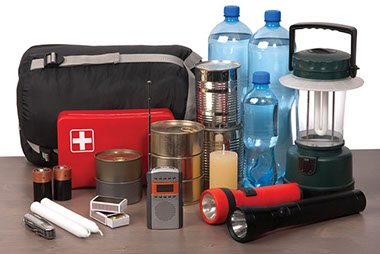
    Image of emergency items, such as flash lights.

    When a winter blizzard (or any natural disaster) leaves you without power, are you prepared to weather the storm?

    Know these facts from the University of Nebraska Extension service:

    *  Keep the refrigerator and freezer doors closed as much as possible to maintain the cold temperature. Once the power goes off, the refrigerator will keep food safely cold for about 4 hours if it’s unopened. A full freezer will hold the temperature for about 48 hours (24 hours if it’s half full) if the door remains closed.

    *  Keep an insulated cooler on hand and gel packs or water-filled and frozen milk cartons in the freezer to cool perishable items. Outside sub-freezing temps will also preserve frozen food if the power stays out for days.

    Stock one gallon of drinking water per person per day. Also stock up on staples that don’t need to be refrigerated such as canned foods (and a hand-held can opener), soups, dried or smoked meats, dried fruits and vegetables, powdered or evaporated milk, peanut butter, trail mix, granola bars, pet food, and ready-to-eat cereals.

    © American Institute for Preventive Medicine

  • Four Ingredients For A Happy Retirement

    Mature Health: Over Age 50

    Image of retired man gardening.

    Retirement involves major changes in your income, lifestyle, social life, and self-image. Not surprisingly, retirement can be very stressful-or blissful. Advance planning is a key ingredient for a happy retirement. A survey conducted by researchers at the University of Michigan found that 75 percent of those who had planned for retirement enjoyed it. Here are some specific ways you can make retirement less stressful and more satisfying.

    Get a part-time job.

    For some people, gradual retirement is easier to handle than being employed one day and unemployed the next. To smooth the transition, you may want to either work part-time at your present job for a few months or get a part-time job at another firm when you leave.

    Practice living on a retirement budget before you retire.

    And start saving for retirement as far ahead of time as possible. Don’t expect Social Security to cover all your expenses.

    Take care of yourself while you’re young.

    You can help to preserve your health by eating a low-fat diet, not smoking, drinking moderately (if at all), learning to manage stress, getting regular checkups, and being physically active.

    Cultivate hobbies and other outside interests.

    Fitness activities, community work, or academic studies can fill the void left by not having to report to work every day. To prevent boredom, consider a variety of activities-indoor and outdoor, mental and physical, group and individually oriented. And start thinking about projects you’d like to work on well before retirement, so you don’t stall out when the time comes.

    A Year of Health Hints book by the American Institute for Preventive Medicine. www.HealthyLife.com. All rights reserved.

    © American Institute for Preventive Medicine

  • Debunking The Myth Of Senility

    Mature Health: Over Age 50

    Image of mature male with a family member holding his hand in comfort.

    Don’t think that you’re getting senile just because you forget someone’s name or can’t remember where you parked your car. Everyone forgets occasionally. The truth is, most people do not become senile. Senility (or senile dementia) is a state of confusion and forgetfulness triggered by mental decline. Almost 100 different conditions mimic the symptoms of senility. (Alzheimer’s disease is the most common. Poor nutrition, hormone disorders, and use of certain medications can also cause confusion and forgetfulness. Even then, senility is misdiagnosed up to 20 percent of the time. So don’t assume that you or anyone else is senile without a thorough medical exam.

    A Year of Health Hints book by the American Institute for Preventive Medicine. www.HealthyLife.com. All rights reserved.

    © American Institute for Preventive Medicine

  • Age Successfully

    SELF-CARE CORNER

    Image of older couple.

    Successful aging means more than good health. It means taking charge of your personal well-being so that you can continue to live a vibrant, independent life, regardless of your age, according to Dr. Terri Ginsberg of the Institute for Successful Aging at the University of Medicine and Dentistry of New Jersey.

    “Successful aging isn’t difficult, but it does require a personal commitment to active living,” says Ginsberg. To help them age successfully, Ginsberg recommends that adults of all ages follow these “10 Resolutions for Healthy Aging:”

    1.Sleep at night.Avoid frequent daytime naps, late night snacks or watching television in bed.

    2.Eat lots of colors.Vibrantly colored fruits and vegetables on your plate mean a healthy diet that keeps your body moving.

    3.Get checked out.Catch up on any health screenings your doctor has recommended and don’t forget eye and dental check-ups.

    4.Worry less.It really is possible to “worry yourself sick.” Excessive worrying can lead to high blood pressure, digestive problems, chronic headaches and unhealthy weight gain.

    5.Stay in touch.Living alone doesn’t mean being alone. Reach out to friends, neighbors and relatives.

    6.Move more.Exercise improves heart health, and good heart health helps prevent a range of related disorders, including blood clots and depression.

    7.Read more.You can “exercise your brain” with newspapers, books, magazines or puzzles.

    8.Laugh and sing.Is there a better way to enjoy life? And both will help you to worry less.

    9.Take control.Be proactive about your own health. Ask your doctor questions about your health and for advice on positive lifestyle changes.

    10.Get involved.Local organizations of all types need volunteers. Helping others is the best tonic for feeling good about yourself.

    © American Institute for Preventive Medicine
  • Do’s And Don’ts For The Itch Of Eczema

    SELF-CARE CORNER

    Image of man itching arm.

    Most people have itchy skin at one time or another. A bug bite, dryness or another everyday irritation can make skin itchy. Usually, you apply some lotion or an anti-itch cream and it goes away.

    But, it’s different for people who have eczema. Eczema, also known as atopic dermatitis, can be so itchy that it affects daily life. It can also make it difficult for you to sleep at night. Other signs of eczema include:

    *  Very dry skin that doesn’t get better, even after applying lotion

    *  Red or brown patches of skin

    *  Itchy raised bumps

    *  Cracked skin

    *  Scaly patches

    Common locations for eczema are the hands, feet, face, inside the elbows, and behind the knees. Sometimes, eczema gets worse and then better. When it gets worse, this is known as an eczema flare.

    Many people with eczema find that using just a lotion is not enough. They may need to talk with their doctor about special or prescription-strength products. Eczema can affect babies and young children, too. Ask a pediatrician before you put any creams or other products on a baby or child.

    Eczema can’t be cured, but you can manage it. Talk to a doctor or dermatologist about your options.

    Eczema do’s

    People with eczema may find relief when they do the following:

    *  Keep a journal to find out what triggers your eczema. Young children may get eczema flares after eating certain foods. Older children and adults may get flares from high stress levels, sweating, soaps, detergents, pollen and dust.

    *  Use products that are eczema-friendly. Soaps and lotions without fragrance, dyes or common irritants are best. Products with the National Eczema Association seal on them are a good place to start.

    *  Use a thick moisturizer such as petroleum jelly (Vaseline) twice a day. The best time to apply moisturizer is right after bathing, before skin has completely dried.

    Eczema don’ts

    If you or your child has eczema, these are some “don’ts” to keep in mind:

    *  Don’t use harsh soaps and body washes, especially those that are antibacterial or highly scented.

    *  Don’t take long, hot showers or baths. Taking a bath with an oatmeal soak may be soothing, but keep the temperature warm, not hot. It’s best to take short, warm showers.

    *  Don’t use laundry detergent or fabric softener with dyes or perfumes.

    *  Don’t scrub the skin with washcloths, scrubbing sponges or products with scrubbers or “beads.”

    *  Don’t rub your skin with a towel after bathing. Instead, gently pat it dry and begin applying your moisturizer.

    © American Institute for Preventive Medicine

  • It’s Just A Cold (But When To See A Doctor)

    SELF-CARE CORNER

    Image of a child having her temperature checked.

    See a doctor if you aren’t getting any better or if your symptoms worsen, say medical experts from the FDA. With children, be alert for high fevers and for abnormal behavior such as unusual drowsiness, refusal to eat, crying a lot, holding the ears or stomach, and wheezing.

    Signs of trouble for all people can include:

    *  A cough that disrupts sleep

    *  A fever that won’t go down

    *  Increased shortness of breath

    *  Face pain caused by a sinus infection

    *  Worsening of symptoms, high fever, chest pain, or a difference in the mucus you’re producing, all after feeling better for a short time

    Cold and flu complications may include bacterial infections (such as bronchitis, sinusitis, ear infections, and pneumonia) that could require antibiotics.

    Remember: While antibiotics are used against bacterial infections, they don’t help against viral infections such as the cold or flu.

    © American Institute for Preventive Medicine