Category: Self-Care Corner

  • Foot Health Matters With Diabetes

    SELF-CARE CORNER

    Patient having his foot examined by a doctor.

    People with diabetes have a higher risk of getting certain foot problems. This usually happens because diabetes can cause nerve damage in the feet. This is known as diabetic neuropathy, which can lead to tingling, burning or weakness in your feet.

    Why does neuropathy matter?

    Diabetic neuropathy isn’t just painful. It also means that you may not feel things like cuts, injuries or heat or cold on your feet. Your feet could get hurt or burned and you wouldn’t know it. Then, with reduced blood flow, your body may not be able to heal the skin very well.

    Keeping skin healthy

    Wash, dry and moisturize the skin on your feet every day. Also, check for problems. Here’s how:

    *  After bathing, dry your feet gently with a towel.

    *  Look for corns, calluses, blisters or cuts. If you notice any of these, call your health care provider. Don’t try to remove corns or calluses yourself.

    *  If your skin looks healthy, you can moisturize. Apply a skin cream to dry areas.

    *  Don’t apply cream between your toes. This can cause fungus to grow. Keep the area between toes clean and dry.

    *  If you can’t trim your toenails easily, have this done by a podiatrist or other health provider.

    Good shoes are your friend

    Poorly fit shoes can cause sores, or ulcers, on your feet. These can lead to infection. Even if you don’t feel pain, see your doctor about any sores on your feet. You should also stay off your feet until your doctor says it’s ok. Don’t walk in your bare feet because this can put your feet at risk.

    You can avoid many foot ulcers by getting comfortable, supportive shoes. A podiatrist or foot specialist may help you find a pair that fits your feet well without rubbing. Wearing socks that wick moisture, such as wool socks, can also help. Wearing wet socks or shoes can lead to fungal infections.

    Helpful ways to avoid foot problems with diabetes:

    1.  Go to regular checkups.

    2.  See your doctor if you have any foot injuries or skin changes on your feet.

    3.  Follow your diabetes plan to keep blood sugar under control.

    4.  Check your feet every day.

    Source: American Diabetes Association

    © American Institute for Preventive Medicine

  • Say Goodbye To Winter Rash

    SELF-CARE CORNER

    Female using face cream on cheeks.

    Winter weather can create havoc for your skin. Cold air, low humidity, and the use of central heating all contribute to skin becoming dry, red, and itchy. A winter rash is a common skin condition that develops in the cool months.

    In addition, cool temperatures and dry air create a condition ripe for flair-ups for people who have skin conditions. This includes eczema or psoriasis.

    If you are prone to winter rashes, there are simple steps you can take to protect your skin and keep you comfortable all winter long.

    Keep your skin moisturized

    A thick, cream-based moisturizer is often a good choice in the winter. Because winter rashes are usually caused by dryness of the skin, find a lotion or cream that keeps your skin soft and smooth.

    Moisturize right after you bathe while your skin is still damp. For patches of skin that are dry, red, or itchy, you can apply lotion as often as needed.

    Avoid hot showers or baths

    Soaking in a steaming hot bath or shower might sound nice, but all that hot water can dry out your skin. When you bathe or shower, keep the water warm and limit your time to five or ten minutes.

    For some people, bathing every other day can aid in keeping the skin moisturized by allowing the skin’s natural oils to accumulate.

    Use a humidifier

    In cooler months, the air is cold and it also contains less water. If your home heating system does not have built-in humidity control, you may choose to purchase a humidifier to add moisture to the air.

    Ideal indoor air humidity should be between 30-50%. If you are using a humidifier, aim to stay in that range to prevent dryness.

    When to seek treatment for a rash

    Call your doctor if you have any of these symptoms:

    *  You develop open cuts or sores

    *  Your dry skin keeps you from sleeping

    *  You have itching without a visible rash

    *  Your self-care efforts do not relieve your dry skin

    © American Institute for Preventive Medicine

  • Do A Skin Self-Exam

    SELF-CARE CORNER

    Man looking at himself in mirror.

    The skin is the largest organ of the body. Yet, it is easy to overlook what is literally right in front of you when you look in the mirror every day.

    Regularly examining your skin, including the hard-to-reach places, gives you early notice that you should visit a dermatologist. Catching concerns early makes diagnosis and treatment easier and more effective.

    Common conditions

    Few people have flawless skin. It’s normal to experience skin issues, and the risk of skin disease increases with age. Common dermatological concerns you may experience include:

    *  Acne

    *  Psoriasis

    *  Eczema

    *  Rosacea

    *  Skin cancer

    *  Nail fungus

    *  Hair loss

    *  Wrinkles and other cosmetic skin concerns

    Skin Self-exam

    Many skin conditions are highly treatable when caught early. A regular skin self-exam lets you examine your whole body and monitor any moles, blemishes, or areas of concern.

    1.  Do a skin exam about once a month after exiting the shower or bath.

    2.  Stand in front of a full-length mirror. Check your front, back, and each side with your arms raised.

    3.  Bend your elbows and examine your forearms, underarms, and palms.

    4.  Using a hand mirror, check the back of your neck and scalp. Part your hair to look closer at your scalp.

    5.  Check your back and buttocks using a hand mirror.

    6.  Sit down and thoroughly examine your legs, the soles of your feet, and between your toes.

    When to seek care

    A dermatologist is a medical professional specially trained in diagnosing and treating hair, skin, and nail conditions. Regular visits to a dermatologist should be part of routine adult healthcare. But, in between visits, be on the lookout for these signs:

    *  A mole or patch of skin that changes color, size, or shape

    *  Severe or persistent acne

    *  Rash, itching, or hives that do not clear on their own

    *  A skin condition that does not heal

    *  Long-lasting skin irritation

    *   Persistent dry skin patches

    *  Nails that appear yellow or brittle

    *  Increasing hair loss

    © American Institute for Preventive Medicine

  • Gut Check: Tips For Healthy Digestion

    SELF-CARE CORNER

    Person holding a paper with a stomach illustration, one half happy stomach the other half a sick stomach.

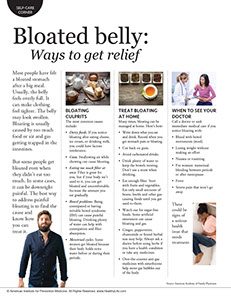
    Your digestive system plays a big part in your overall health. It breaks down food and drinks into nutrients. These nutrients are used for energy, growth, cell repair and more.

    But, we all know how digestive problems can be uncomfortable or downright dangerous. Problems like constipation, diarrhea, nausea, heartburn and bloating can quickly sideline your day. Stomach ulcers, gastroesophageal reflux disease (GERD) and bowel problems like Crohn’s Disease can lead to more serious health issues too.

    Help keep your digestion running as smoothly as possible.

    Fiber is first

    One of the best things people can do for better digestion is to eat more fiber. Getting enough fiber is needed to keep bowel movements regular.

    A low-fiber diet can lead to constipation, which can make you feel sluggish and bloated. It can also stretch out the colon over time and lead to serious bowel problems, especially in older adults.

    Get more fiber by eating foods like fruits, vegetables, beans and legumes and whole grains. Aim for 20-30 total grams of fiber each day. But, increase the amount slowly or you could have bloating and gas.

    Drink plenty of water. Taking fiber without enough water can make constipation worse. And, dehydration in general isn’t good for digestion.

    Talk to your doctor about a fiber supplement if you’re not having regular, soft bowel movements.

    Eat less processed foods

    Processed foods often contain very little fiber. Try to shop the four walls of your grocery store. This means avoid the middle grocery store aisles with packaged foods. Instead, buy fresh produce, lean meats, whole grains and dairy products.

    Some food additives may be linked to digestive problems. Research has shown that some food additives may cause inflammation in the gut or may affect its healthy bacteria. Studies are ongoing to find out more about this.

    Probiotics – do they work?

    Probiotics, or friendly gut bacteria, may be helpful in some cases. But experts say we need to learn more about these supplements. There are many different kinds of probiotics and we don’t yet know which ones are the most helpful. Some foods like yogurt with live active cultures, kefir and fermented foods like miso also contain probiotics.

    Ask your doctor before taking probiotic supplements.

    Source: National Institutes of Health

    © American Institute for Preventive Medicine

  • Self Care Corner 3

    SELF-CARE CORNER

    © American Institute for Preventive Medicine
  • Beating Jet Lag

    SELF-CARE CORNER

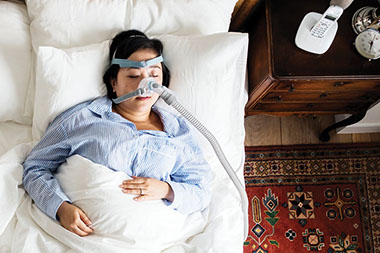
    Man sleeping on plane.

    Summer travel plans may take you to places across the globe. While this can be exciting, switching to a different time zone can take a toll on the body.

    The body has its own internal clock that tells you when to be awake and when to sleep. This is your circadian rhythm.

    If you travel to a different time zone, the clock gets disrupted:

    You may be awake when it’s nighttime or want to sleep during the day. This can make you exhausted. Jet lag can also cause:

    *  Headaches

    *  Feeling irritable

    *  Trouble concentrating

    *  Loss of appetite

    *  Upset stomach

    *  Diarrhea

    There are some ways to fight jet lag so you can enjoy your trip:

    *  Stay hydrated. Drink plenty of water before, during, and after your arrival.

    *  Avoid alcohol. Some people think a nightcap will help them sleep. But alcohol actually disrupts sleep and makes you more tired.

    *  Use your travel time wisely. If you’ll be on a plane during the “new” night time, try to rest. Use a sleep mask and ear plugs. Avoid staring at TV screens or other devices.

    *  Be careful with caffeine. If you must have caffeine, drink it in the new time zone’s morning hours. Avoid it after lunch.

    *  Get out in the sun. When you get to your destination, go outside if it’s daytime. This will help to tell your body when to be awake.

    *  Skip naps if possible. Napping could make it harder for you to fall asleep at the correct time. If you take a nap at 6 p.m., you could be awake most of the night.

    *  Consider melatonin. Melatonin is a hormone that your body makes to tell you that it’s time for sleep. Taking melatonin at your new bedtime can help you sleep better. It is available over-the-counter, but ask your doctor before trying it.

    Source: National Sleep Foundation

    © American Institute for Preventive Medicine

  • Health Screenings For Men

    SELF-CARE CORNER

    Blue stethoscope on a blue table.

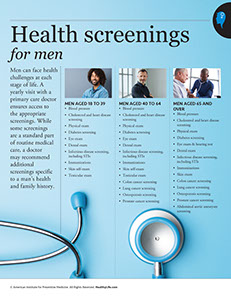
    Men can face health challenges at each stage of life. A yearly visit with a primary care doctor ensures access to the appropriate screenings. While some screenings are a standard part of routine medical care, a doctor may recommend additional screenings specific to a man’s health and family history.

    Men aged 18 to 39

    *  Blood pressure

    *  Cholesterol and heart disease screening

    *  Physical exam

    *  Diabetes screening

    *  Eye exam

    *  Dental exam

    *  Infectious disease screening, including STIs

    *  Immunizations

    *  Skin self-exam

    *  Testicular exam

    Men aged 40 to 64

    *  Blood pressure

    *  Cholesterol and heart disease screening

    *  Physical exam

    *  Diabetes screening

    *  Eye exam

    *  Dental exam

    *  Infectious disease screening, including STIs

    *  Immunizations

    *  Skin self-exam

    *  Testicular exam

    *  Colon cancer screening

    *  Lung cancer screening

    *  Osteoporosis screening

    *  Prostate cancer screening

    Men aged 65 and over

    *  Blood pressure

    *  Cholesterol and heart disease screening

    *  Physical exam

    *  Diabetes screening

    *  Eye exam & hearing test

    *  Dental exam

    *  Infectious disease screening, including STIs

    *  Immunizations

    *  Skin exam

    *  Colon cancer screening

    *  Lung cancer screening

    *  Osteoporosis screening

    *  Prostate cancer screening

    *  Abdominal aortic aneurysm screening

    © American Institute for Preventive Medicine

  • Self-Care For Your Brain

    SELF-CARE CORNER

    Photo illustration of brain with hands reaching out to touch it.

    Your brain needs care just like any other part of the body. As you age, your brain naturally shrinks, and certain hormones and neurotransmitters decline. It’s not uncommon for people to notice changes in their memory, thinking, and other cognitive abilities.

    Healthy lifestyle choices can reduce cognitive decline. When you care for your brain, you protect your ability to focus, remember, and learn new things.

    Your brain needs

    A healthy brain relies on a healthy lifestyle:

    *  Quality nutrients that support brain cells

    *  Omega 3 fats from fatty fish, nuts, seeds, and plant oils such as flaxseed

    *  Vitamins D, E, K, and B vitamins from a variety of fruits, vegetables, and sunshine (Vitamin D)

    *  Minerals such as iron, copper, and magnesium from leafy greens and other plant foods

    *  7-9 hours of good quality sleep each night

    *  Regular exercise and movement to promote blood flow and protect blood pressure

    *  Time to relax and de-stress

    *  Regular mental stimulation and challenge

    Brain drainers

    Some unhealthy choices or physical conditions can worsen mental decline over time. Anything that negatively impacts the health of the body affects the health of the brain, such as:

    *  Smoking and other tobacco and nicotine products, such as chewing tobacco

    *  Excessive alcohol intake

    *  High blood pressure

    *  Being overweight or obese

    *  Lack of physical activity

    *  Poor diet, especially processed foods and lots of red meat

    *  Social isolation and loneliness

    Brain self-care

    Eating a healthy diet that focuses on plants, getting enough physical activity, and sleeping well is good for every part of your body. But, your brain also benefits from self-care to meet its unique needs. Here are some ideas:

    *  Meditate to promote calming brain waves

    *  Learn an instrument to introduce a new skill

    *  Read daily to expand your knowledge

    *  Do a crossword or other type of puzzle to challenge your brain

    *  Pick up a new hobby

    *  Explore a new place

    *  Volunteer for a cause you believe in

    *  Be social and meet new people

    © American Institute for Preventive Medicine