Blog

  • Address Insecurity

    Healthylife® Weigh

    Part 6

    Man and dog outside.

    Focus on things that you can do well. List at least 5 things in your life that you are proud of. Examples include raising a family, earning a degree, getting promoted at work, increasing your bowling average, and having a garden!

    How can you improve these skills further? Set realistic goals to do this!

    Spend time with people who make you feel loved and secure. Build a list of places you can go where you feel comfortable.

    Spend Time with Animals

    Spend time with a pet. Volunteer at a shelter. Spend time with a friend or family member’s pet. Go to a pet store, or look at adopting a rescue animal. Spending time with a pet can:

    *  Decrease production of cortisol, a stress hormone that can put you on edge and make you ill over time.

    *  Increase serotonin, which helps you feel relaxed and happy.

    *  Help you feel secure. Pets, especially dogs, can love unconditionally and may sense when you need extra support. Some pets are trained to help you manage certain emotions, like anxiety.

    Stand Tall

    Change your posture, whether you are sitting or standing. Changing your posture can help you change your point of view.

    Power Stance: Plant your feet firmly, shoulder-width apart. Take a deep breath and pull your shoulders back, stretching your upper chest forward. Place your hands on your hips.

    This can help you feel respected and powerful. Appreciate your own power and what you are capable of doing. Feel respect for yourself.

    Stand or sit in this pose for a few minutes before a challenge, such as an emotional conversation or job interview. Use this  tool for addressing your inner critic or self-defeating thoughts.
    © American Institute for Preventive Medicine

  • Address Depression

    Healthylife® Weigh

    Part 6

    Man coping with depression.

    Signs & Symptoms

    *  Feeling sad, hopeless, helpless, and/or worthless

    *  Fatigue

    *  Loss of interest in daily activities, including sex

    *  Change in eating and sleeping patterns

    *  Anger, anxiety, or irritability

    *  Having a hard time concentrating or making decisions

    *  Thoughts of suicide or death

    Strategy

    *  Accept thoughts as they are. Focus on your response, rather than trying to shoo away the emotion.

    *  Be with and call relatives and friends who lift your morale and make you laugh.

    *  Do something to help someone else.

    *  Keep up with your regular exercise.

    *  Do something different. Walk or drive to someplace new.

    *  Challenge yourself with a new project. It doesn’t have to be difficult, but it should be enjoyable.

    *  Watch a funny TV show or movie.

    *  Reflect on your expectations and make adjustments –  it takes a long time to change habits and feel the new habits are “normal.”

    *  Change your clothes. Take a shower. Do small self-care activities.

    If you feel depressed for two weeks or longer, see a doctor.

    For a screening test for depression, contact:

    Mental Health America

    800-969-6642

    www.mhanational.org

    © American Institute for Preventive Medicine

  • Address Boredom

    Healthylife® Weigh

    Part 6

    Man changing channels and feeling bored at home.

    Being bored means being tired of doing the same thing over and over again. It may also mean having nothing to do or nothing that seems interesting to do. Write these ideas on sticky notes. Post reminders in places you often get bored.

    *  Shake up your daily routines! If you normally make dinner immediately after work, go for a short walk instead.

    *  Listen to music or an audio book while commuting, cleaning, or doing another boring task.

    *  Do something that keeps your hands busy! (e.g., cleaning, yard work, polishing your nails)

    *  Take your work outside on a nice day or sit in a conference room instead of at your desk.

    *  Do 10 jumping jacks to get your blood flowing!

    *  Put up with non-exciting tasks but look forward to times when you will be doing something you want to do!

    *  Go to your boredom jar and pick a task!

    Create a Boredom Jar

    Write down the things you want to do and will feel proud of doing when you complete them. These activities can be big or small, but try to write down at least a dozen activities. Write down some activities that take a short amount of time and some activities that take longer. Write these down on individual slips of paper and put them in a jar. When you feel boredom could lead to an unhealthy food choice, pick an activity from your jar. Do the activity written on the slip. Write down things you like to do:

    *  Short Activities (10-30 minutes)

    *  Longer Activities (30+ minutes)

    © American Institute for Preventive Medicine

  • Address Anxiety

    Healthylife® Weigh

    Part 6

    Women at home coping with anxiety.

    Anxiety is a feeling of dread, fear, or distress over a real or imagined threat to your mental or physical well-being. Avoid eating as a way to cope with anxiety. Try the strategies listed below.

    Strategy

    *  Take a long, warm bath or shower. Or, go for a swim.

    *  Focus on relaxing through exercise, soothing music, helping others, etc.

    *  Connect with people. Visit or call someone who will listen to you and support you.

    *  Drink a warm cup of decaf coffee or tea – avoid caffeine, which can make anxiety worse.

    *  Practice mindfulness and other relaxation techniques.

    Wash, Peel & Chop Away Anxiety

    Get your meal prep done and work away anxious feelings at the same time!

    Gently wash fruits and vegetables. Chop foods slowly and evenly. Prepare all of the ingredients for a meal neatly before starting to cook.

    Take your time to cook. Clean as you go, keeping your space tidy. Slowly wash and dry dishes by hand. Take breaks if you need to.

    Other Causes of Anxiety

    Anxiety could be a symptom of low blood sugar. Other symptoms of low blood sugar include shakiness, feeling faint, headache, rapid heartbeat, and sweating. In this case, you will need to have something to drink or eat, such as orange juice, a piece of hard candy, or crackers. Anxiety can also be a symptom of an anxiety disorder or other health condition. Check with your doctor if the symptoms above happen often.

    Take a Step Back

    Write down what you are anxious about. Step back and look at your concern from an outsider’s point of view. Imagine how others might handle these issues. You can also use this technique to look at your job or family duties. Ask yourself these questions:

    *  What can I expect of myself in this situation?

    *  Are my expectations realistic, given my abilities, strengths, and weaknesses?

    *  What do others expect of me?

    *  What ideas would others have for me? When you imagine how someone else might respond to a situation, you may come up with helpful ideas!

    If you struggle to answer these questions, wait at least an hour or sleep on it. When you come back to this worry, you may see things in a different way and feel more ready to address the issue.

    © American Institute for Preventive Medicine

  • Address Anger

    Healthylife® Weigh

    Part 6

    Women with hands on head screaming.

    Ways you can deal with anger, without eating:

    *  Count to ten at the first twinge of anger. Then count back down to zero.

    *  Take three or four slow, deep breaths. Picture the angry impulse passing you by.

    *  Take a walk until you can calm down. Or, do some other form of exercise. If you cannot exercise right away, plan to do it as soon as possible. Look forward to this opportunity to blow off some steam.

    *  If someone says or does something that bothers you, discuss it calmly or wait until you feel you can discuss it calmly. Use assertive communication tools.

    *  Distract yourself. Do a task that has to get done today or in the near future.

    *  Repeat to yourself or out loud, “I’m angry because: ____.” List what is making you angry. Ask yourself, “Are these rational thoughts?”

    *  Listen to music. Make a playlist of songs you know help to calm you down. Or, turn to a radio station that plays soothing music or music you can sing to.

    *  Help someone in need.

    © American Institute for Preventive Medicine

  • Add Fruits And Vegetables To Your Current Foods

    Healthylife® Weigh

    Part 2

    Tortilla with grilled chicken fillet, peppers, tomato, and lettuce.

    Try to include a fruit or vegetable with most snacks and all meals. Here are a few ideas to get you started.

    Add to Foods You Already Eat:

    *  Add an extra cup (or two!) of chopped veggies into your favorite omelet, soup, casserole, or whole grain pasta or brown rice dish.

    *  Add slices of cucumber, peppers, or onions to a sandwich.

    *  Add veggies as a filling in a burrito or quesadilla. Top a pizza with veggies.

    *  Shred carrots, zucchini, or an apple into muffins or other baked goods. Search for recipes that include crushed pineapple, avocado, and other produce as baking ingredients. Many fruits and vegetables can be used to replace some of the saturated fat and sugar in a recipe.

    *  Blend greens into a smoothie. Remove the stems first. If juicing, use the whole vegetable or fruit when possible. Juices are “sometimes” foods, as they don’t contain as much fiber or nutrients as the whole fruit or vegetable. The whole vegetable or fruit is more filling due to the fiber content and how much longer it takes to chew versus drink.

    © American Institute for Preventive Medicine
  • Add A Stress-Busting Food To Your Day

    Healthylife® Weigh

    Part 6

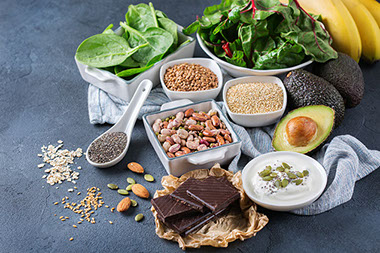
    Variety of food items high in magnesium.

    What you eat may impact your mood. Make sure you are eating a balanced diet with nutrient-dense foods. B vitamins and magnesium can be helpful for managing anxiety and boosting your mood. Avoid foods and drinks high in sugar that can cause mood swings and fatigue.

    B Vitamins

    B vitamins can stimulate the brain’s production of serotonin. This helps you relax and feel good.

    Good Sources of B Vitamins

    *  Animal products: fish, poultry, meat, eggs, or dairy

    *  Whole grains, beans and lentils

    *  Fruits and vegetables, especially leafy greens, papayas, oranges, and cantaloupe

    *  Fortified breakfast cereals and enriched soy or rice milk

    *  Nuts, such as almonds, pistachios, and walnuts

    Magnesium

    Magnesium has a calming effect on the brain. It can help relax muscles, blood vessels, and the gastrointestinal tract. Magnesium can also boost serotonin and reduce mood swings.

    Good Sources of Magnesium:

    *  Dark leafy greens

    *  Nuts, seeds, and dried fruit

    *  Beans and lentils

    *  Whole grains

    *  Avocados and bananas

    *  Dark chocolate

    *  Yogurt

    *  Fish

    © American Institute for Preventive Medicine
  • A Changing Food Label

    Healthylife® Weigh

    Part 3

    Man reading food label.

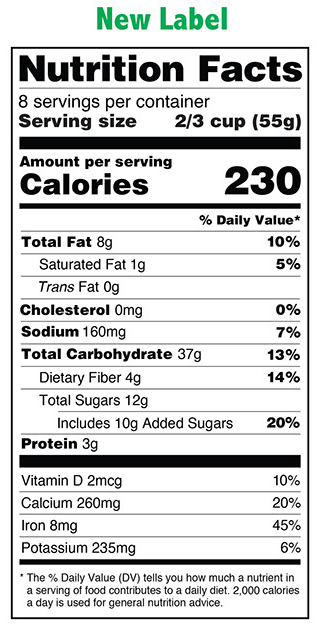
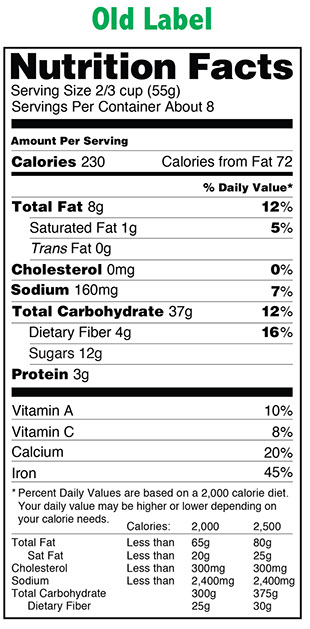
    In 2016, the FDA approved a new food label. The new food label is already on many foods. By mid-2021, all food labels will look like the new label. The new label will help you make more informed choices about what you eat. The changes are shown in the graphic below.

    Graphic of old and new food labels.
    Graphic of old and new food labels.

    © American Institute for Preventive Medicine

  • A Case For More Time In The Kitchen

    Healthylife® Weigh

    Part 3

    Couple cooking in the kitchen.

    While this section gives lots of tips for saving time, you may not want to speed through food preparation! Here are some reasons to allow extra time in your day or week for food preparation:

    *  Making more recipes from scratch will give you more control over what is in your food. You can also experiment with more flavors.

    *  Time in the kitchen can be a special time to connect with family and friends after a busy day or week. Turn the TV off and share tasks, like tossing a salad or setting the table.

    *  Many traditions are based around food. Cook old recipes or prepare a meal with an older family member. Sharing stories around food preparation can help you feel connected to your heritage. You may even create new traditions for the next generation of cooks!

    *  Cooking can be an enjoyable hobby. Searching for new recipes, getting creative with modifications, and sharing with others can help you manage stress and bring joy to your day.

    © American Institute for Preventive Medicine
  • You’re Built For Breathing

    Respiratory conditions

    Women blowing a handful of paper confetti.

    Focusing on your breathing is a great way to destress and reduce anxiety. Next time you need to calm down, simply pay attention to your breathing. Count your inhalations and exhalations.

    Your lungs are vital to living, and you need strong ones to live a healthy life. Whether or not you use tobacco, there are ways you can improve and protect your lungs:

    *  Don’t smoke or use tobacco, and avoid secondhand smoke whenever possible.

    *  Protect yourself from air pollution. Pay attention to the “air quality index” where you live. Stay inside during high-ozone days.

    *  Buy a radon kit to test your home. Next to tobacco use, radon exposure is the second-leading cause of lung cancer.

    Health at Home Lifetime book by the American Institute for Preventive Medicine. www.HealthyLife.com. All rights reserved.

    © American Institute for Preventive Medicine