Blog

  • Know How To Use A Fire Extinguisher

    Home Safety

    Image of fire extinguisher.

    Every home should have at least one fire extinguisher. Extinguishers should be mounted in plain sight and be simple for all family members (except small children, of course) to use in an emergency. Show the babysitter how it works, too.

    *  Buy a multipurpose extinguisher rated 2A10BC or higher. The letters indicate the type of fire the extinguisher will douse. “A” units are for combustible materials like paper or wood, “B” units are for flammable liquids like gasoline, and “C” units are for electrical fires. The numbers relate to the size of the fire. The higher the number, the greater the capacity to extinguish that fire.

    *  Check for a UL (Underwriters Laboratory) or FM (Fire Mutual) code. They tell you the product is effective, safe, and reliable.

    *  Be sure the directions are simple to understand. Mount the fire extinguisher securely, in plain sight.

    *  Be sure you understand how the firing mechanism works. Check to see whether you need to push a button or pull a lever. Don’t activate the extinguisher, though. Once you do, it must be serviced and recharged, even if you only use it for a few seconds and the gauge indicates it’s full.

    *  Check the pressure indicator once a month to be sure the extinguisher works.

    To use a fire extinguisher, remember the acronym PASS.

    *  Pull the pin.

    *  Aim the nozzle or barrel at the base of the fire, not at the flames.

    *  Squeeze the handle.

    *  Sweep back and forth at the base of the fire.

    A Year of Health Hints book by the American Institute for Preventive Medicine. www.HealthyLife.com. All rights reserved.

    © American Institute for Preventive Medicine

  • Complementary & Integrative Health

    Alternative Medicine

    Image of complementary medicine.

    Complementary medicine is a non-mainstream practice used together with conventional medicine.

    Integrative medicine coordinates complementary approaches into mainstream medicine.

    Alternative medicine is non-mainstream medicine in place of conventional medicine.

    True alternative medicine is not common. Most people who use non-mainstream approaches use them with conventional treatment.

    The National Health Interview Survey (NHIS) found that 33.2% of adults in the U.S. used complementary health approaches.

    Natural products.

    These use substances found in nature, often sold as dietary supplements. Examples are:

    *  Herbs. Chemicals from herbs, plants, or plant parts act upon the body in a therapeutic way.

    * Vitamins and minerals. These are the most common dietary supplement used. About 40% of adults take a multivitamin and mineral (MVM).

    * Probiotics. These are defined as “live micro-organisms which, when given in adequate amounts, provide a health benefit on the host.”

    Mind and body practices

    These focus on the interactions among the brain, mind, body, and behavior. Some practices manipulate and/or move one or more body parts. Examples are:

    *  Acupressure. This applies pressure to certain places (acupoints) on the body by pressing on them with fingers or hands.

    *  Acupuncture. This uses needles that are inserted into the skin at certain points (acupoints).

    *  Chiropractic. This seeks to put the body into balance through manual realignment of the spine and other joints and muscles.

    *  Hypnotherapy. A person is put in a trance state to respond to suggestion to overcome a problem, such as a phobia, anxiety, or tobacco use.

    *  Meditation. This increases calmness and physical relaxation by using:

    – A quiet location that is free of or has few distractions.

    – A comfortable posture.

    – A specific focus on a word or sensation.

    – An openness to let distractions come and go without judging them.

    *  Massage therapy. This uses touching and rubbing techniques to relieve sore muscles and promote relaxation.

    *  Qi gong (“chee-GUNG”). This is part of traditional Chinese medicine. It uses movement, meditation, and controlled breathing to enhance the flow of “qi” in the body. (Qi is an ancient term for vital energy.)

    *  Relaxation therapies. These include breathing exercises, guided imagery, and progressive muscle relaxation.

    *  Tai chi. This is a series of postures and exercises of moving the body slowly and gently, and with awareness while breathing deeply.

    *  Yoga. A system of exercising using postures, breathing, and meditation.
    Page from the Healthier at Home book by the American Institute for Preventive Medicine. www.HealthyLife.com. All rights reserved.

    © American Institute for Preventive Medicine

  • Types Of Surgery

    Medical Care

    Image of doctors performing surgery.

    It’s funny. People think of surgery as “major” when it happens to them and “minor” when it’s being done to someone else! In reality, surgery is thought to be major when it involves any vital organs and/or requires a long time period to perform. The following words classify various surgeries:

    Curative

    A procedure that rids the body of a problem or corrects a condition.

    Diagnostic

    A procedure that helps in making a diagnosis about a suspected problem.

    Elective

    A procedure that may or may not be done, depending upon the patient’s wishes.

    Emergency

    An immediate operation to save a life or maintain the use of a body part.

    Exploratory

    A surgery that explores a body organ or body area for a suspected disorder.

    Palliative

    A surgery that eases bodily pain but doesn’t cure the problem.

    Planned

    A surgery set up well in advance of the actual operation date.

    Urgent

    An operation that must be done within a matter of hours.

    Page from Health at Home book by the American Institute for Preventive Medicine. www.HealthyLife.com. All rights reserved.

    © American Institute for Preventive Medicine
  • Traffic Tips For Tots

    Child Safety

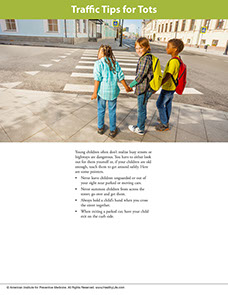
    Image of three children at a cross walk.

    Young children often don’t realize busy streets or highways are dangerous. You have to either look out for them yourself or, if your children are old enough, teach them to get around safely. Here are some pointers.

    *  Never leave children unguarded or out of your sight near parked or moving cars.

    *  Never summon children from across the street; go over and get them. Always hold a child’s hand when you cross the street together.

    *  When exiting a parked car, have your child exit on the curb side.

    A Year of Health Hints book by the American Institute for Preventive Medicine. www.HealthyLife.com. All rights reserved.

    © American Institute for Preventive Medicine

  • The Keys To Physical Well-Being Are Healthy Habits

    Personal Safety

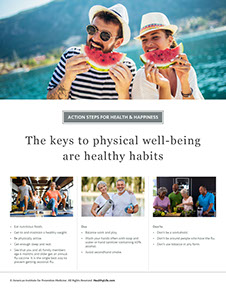
    Couple eating watermelon.

    *  Eat nutritious foods.

    *  Get to and maintain a healthy weight.

    *  Be physically active.

    *  Get enough sleep and rest.

    *  See that you and all family members age 6 months and older get an annual flu vaccine. It is the single best way to prevent getting seasonal flu.

    Dos

    *  Balance work and play.

    *  Wash your hands often with soap and water or hand sanitizer containing 60% alcohol.

    *  Avoid secondhand smoke.

    Don’ts

    *  Don’t be a workaholic.

    *  Don’t be around people who have the flu.

    *  Don’t use tobacco in any form.

    A Year of Health Hints book by the American Institute for Preventive Medicine. www.HealthyLife.com. All rights reserved.

    © American Institute for Preventive Medicine
  • The Id Card That Can Save Your Life

    Medical Care

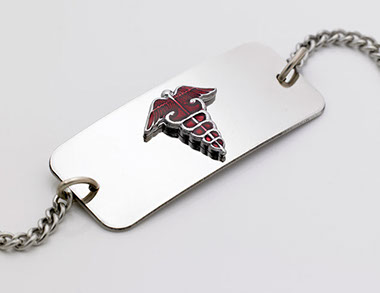
    Image of a medical alert tag.

    Heart attacks, car accidents, and other emergencies that leave you unconscious or in a state of shock make it impossible to communicate with health professionals. This is why carrying some sort of medical identification is so important. Three options to consider:

    *  Medic Alert tags. These medical tags alert others to the fact that you have a medical condition that might deserve immediate attention. The tags are given for such conditions as epilepsy or diabetes. To obtain one, contact the MedicAlert Foundation International, 2323 Colorado Ave., Turlock, CA 95382, 1.888.633.4298 orwww.medicalert.org.

    *  Microfilm ID cards. Many hospitals give their patients special cards that contain a small piece of film called microfiche. The film contains extensive medical history information that you provide when the card is issued. During an emergency, the card is read with the use of a microfilm machine.

    *  Nonmedical ID cards. Medical information can be written on a card that is provided by a variety of health organizations or one that is “homemade.” Because there is no official record of this information, health professionals may be reluctant to use some of it.

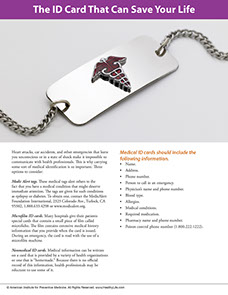
    Medical ID cards should include the following information.

    *  Name.

    *  Address.

    *  Phone number.

    *  Person to call in an emergency.

    *  Physician’s name and phone number.

    *  Blood type.

    *  Allergies.

    *  Medical conditions.

    *  Required medication.

    *  Pharmacy name and phone number.

    *  Poison control phone number (1.800.222.1222).

    Page from A Year of Health Hints book by the American Institute for Preventive Medicine. www.HealthyLife.com. All rights reserved.

    © American Institute for Preventive Medicine

  • The Healing Touch

    Alternative Medicine

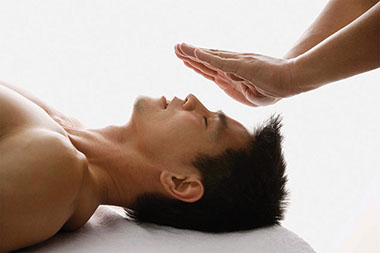
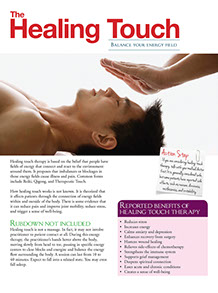
    Image of person having healing touch therapy.

    Balance your energy field

    Healing touch therapy is based on the belief that people have fields of energy that connect and react to the environment around them. It proposes that imbalances or blockages in those energy fields cause illness and pain. Common forms include Reiki, Qigong, and Therapeutic Touch.

    How healing touch works is not known. It is theorized that it affects patients through the connection of energy fields within and outside of the body. There is some evidence that it can reduce pain and improve joint mobility, reduce stress, and trigger a sense of well-being.

    Rubdown not included

    Healing touch is not a massage. In fact, it may not involve practitioner to patient contact at all. During this energy therapy, the practitioner’s hands hover above the body, moving slowly from head to toe, pausing in specific energy centers to clear blocks and energize and balance the energy flow surrounding the body. A session can last from 10 to 40 minutes. Expect to fall into a relaxed state. You may even fall asleep.

    Reported benefits of healing touch therapy

    *  Reduces stress

    *  Increases energy

    *  Calms anxiety and depression

    *  Enhances recovery from surgery

    * Hastens wound healing

    *  Relieves side-effects of chemotherapy

    *  Strengthens the immune system

    *  Supports grief management

    *  Deepens spiritual connection

    *  Eases acute and chronic conditions

    *  Creates a sense of well-being

    Action Step

    If you are considering healing touch therapy, talk with your medical doctor first. It is generally considered safe, but some patients have reported side effects, such as nausea, dizziness, restlessness, and irritability.

    Page from Ways to Well-Being book by the American Institute for Preventive Medicine. www.HealthyLife.com. All rights reserved.

    © American Institute for Preventive Medicine
  • Tell & Ask The Doctor Checklist

    Medical Care

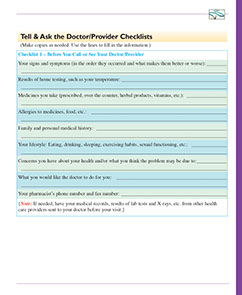
    Tell & Ask the Doctor Checklist

    Page from the Healthier at Home book by the American Institute for Preventive Medicine. www.HealthyLife.com. All rights reserved.

    © American Institute for Preventive Medicine

  • Take The Hazard Out Of Halloween

    Child Safety

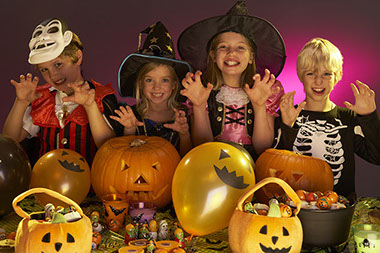
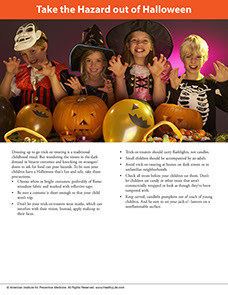
    Image of children in halloween customs.

    Dressing up to go trick-or-treating is a traditional childhood ritual. But wandering the streets in the dark dressed in bizarre costumes and knocking on strangers’ doors to ask for food can pose hazards. To be sure your children have a Halloween that’s fun and safe, take these precautions.

    *  Choose white or bright costumes, preferably of flame-retardant fabric and marked with reflective tape.

    *  Be sure a costume is short enough so that your child won’t trip.

    *  Don’t let your trick-or-treaters wear masks, which can interfere with their vision. Instead, apply makeup to their faces.

    *  Trick-or-treaters should carry flashlights, not candles. Small children should be accompanied by an adult.

    *  Avoid trick-or-treating at homes on dark streets or in unfamiliar neighborhoods.

    *  Check all treats before your children eat them. Don’t let children eat candy or other treats that aren’t commercially wrapped or look as though they’ve been tampered with.

    *  Keep carved, candlelit pumpkins out of reach of young children. And be sure to set your jack-o’- lantern on a nonflammable surface.

    A Year of Health Hints book by the American Institute for Preventive Medicine. www.HealthyLife.com. All rights reserved.

    © American Institute for Preventive Medicine