Blog

  • Syphilis

    Sexual Health

    Sexually transmitted infections (STIs) are ones that pass from one person to another through sexual contact. This can be from vaginal, anal, or oral sex, and from genital-to-genital contact. STIs are also called sexually transmitted diseases (STDs).

    Signs & Symptoms

    *  Primary stage. A large, painless, ulcer-like sore (chancre) appears around the area of sexual contact in 2 to 6 weeks.

    *  Secondary stage. A month later, a widespread skin rash appears on the palms of the hands, soles of the feet, and sometimes around the mouth and nose. The rash has small, red, scaly bumps that do not itch. Other types of rashes, swollen lymph nodes, fever, and flu-like symptoms may also occur. Small patches of hair may fall out of the scalp, beard, eyelashes, and eyebrows.

    *  Latent stage. The infection may go unnoticed for years, but damages the heart, muscles, and other organs and tissues.

    Causes

    A specific bacterial infection. It can lead to heart failure, blindness, dementia, or death if not treated. {Note: An elderly person with signs of dementia should be evaluated for syphilis. Men and women at an increased risk for syphilis should get screened. Talk to your doctor.}

    Treatment

    *  Antibiotics (usually Penicillin-G given by a shot into the muscle). All persons who have syphilis should be tested for HIV, as advised.

    *  After treatment, follow-up blood tests are needed in 6 and 12 (and possibly 3) months.

    *  Once treatment is complete, you’re no longer contagious, but you can get infected again.

    Questions to Ask

    Self-Care / Prevention

    Safer Sex To Help Prevent STIs

    *  The only sure way to avoid STIs is not having sex. This includes intercourse, oral sex, anal sex, and genital-to-genital contact. Caressing, hugging, dry kissing, and masturbation are no risk or extremely low-risk practices. So is limiting your sexual contact to one person your entire life. This is if your partner does not have an STI and has sex only with you.

    *  Latex and polyurethane condoms can help reduce the risk of spreading HIV and other STIs (i.e., chlamydia, gonorrhea, and trichomoniasis). To do this, they must be used the right way for every sex act. They do not get rid of the risk entirely. Barriers made of natural membranes, such as from lamb, do not give good protection against STIs.

    *  Females and males should use latex or polyurethane condoms every time they have genital-to-genital contact and/or oral sex. Use polyurethane condoms if either partner is allergic to latex. You don’t need condoms to prevent STIs if you have sex only with one partner and neither of you has an STI.

    *  For oral-vaginal sex and oral-anal sex, use latex dams (“doilies”). These are latex squares.

    *  Latex condoms with spermicides, such as nonoxynol-9 (N-9) are no better than other lubricated condoms for preventing HIV/STIs. Spermicides with N-9 do not prevent chlamydia, cervical gonorrhea, or HIV. on’t use spermicides alone to prevent HIV/STIs. Using spermicides with N-9 often has been linked with genital lesions which may increase the risk of spreading HIV. Also, N-9 may increase the risk of spreading HIV during anal intercourse.

    *  Use water-based lubricants, such as K-Y Brand Jelly. Don’t use oil-based or “petroleum” ones, such as Vaseline. They can damage latex barriers.

    *  To lower your risk for HPV, use latex or polyurethane condoms. These work best at covering areas of the body that HPV is most likely to affect. A diaphragm does not prevent the spread of HPV.

    *  Don’t have sex while under the influence of drugs or alcohol. You are less likely to use “safer sex” measures.

    *  Limit sexual partners. Sexual contact with many persons increases the risk for STIs, especially if no protection is used.

    *  Discuss a new partner’s sexual history with him or her before you start having sex. Know that persons are not always honest about their sexual past.

    *  Avoid sexual contact with persons whose health status and health practices are not known.

    *  Follow your doctor’s advice to check for STIs.

    Resources

    American Social Health Association (ASHA)

    www.ashastd.org

    CDC National STD Hotline

    800.CDC.INFO (232.4636)
    www.cdc.gov/STD

    Healthier at Home book by the American Institute for Preventive Medicine. www.HealthyLife.com. All rights reserved.

    © American Institute for Preventive Medicine
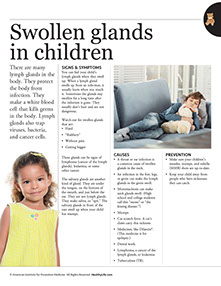
  • Swollen Glands In Children

    Children’s Health

    Signs, Symptoms & Causes

    There are many lymph glands in the body. They protect the body from infection. They make a white blood cell that kills germs in the body. Lymph glands also trap viruses, bacteria, and cancer cells.

    You can feel your child’s lymph glands when they swell up. When a lymph gland swells up from an infection, it usually hurts when you touch it. Sometimes the glands stay swollen for a long time after the infection is gone. They usually don’t hurt and are not dangerous.

    Watch out for swollen glands that are:

    *  Hard.

    *  “Rubbery.”

    *  Without pain.

    *  Getting bigger.

    These glands can be signs of lymphoma (cancer of the lymph glands), leukemia, or some other cancer.

    The salivary glands are another kind of gland. They are under the tongue, on the bottom of the mouth, and just below the ear. They are not lymph glands. They make saliva, or “spit.” The salivary glands in front of the ears swell up when your child has mumps.

    What Causes Swollen Glands?

    *  A throat or ear infection is a  common cause of swollen glands in the neck.

    *  An infection in the feet, legs, or groin can make the lymph glands in the groin swell.

    *  Mononucleosis can make neck glands swell. (High school and college students call this “mono” or “the kissing disease.”)

    *  Mumps.

    *  Cat scratch fever. A cat’s claws carry this sickness.

    *  Medicines, like Dilantin®. (This medicine is for epilepsy.)

    *  Dental work.

    *  Lymphoma, a cancer of the lymph glands, or leukemia.

    *  Tuberculosis (TB).

    How to Keep Your Child from Getting Swollen Glands

    *  Make sure your children’s measles, mumps, and rubella (MMR) shots are up-to-date.

    *  Keep your child away from people who have sicknesses they can catch.

    Questions to Ask

    Self-Care

    There isn’t much you can do for swollen glands. You have to treat the problem that made them swell. Watch to see if the glands get bigger. Watch to see if any other glands swell up. Call the doctor if the glands keep getting bigger, or if they last 3 or 4 weeks.

    Try these tips to make your child feel better:

    *  Tell your child to rest when they feel tired. Tell them not to “overdo it.”

    *  Give your child plenty to drink.

    *  Put warm, wet washcloths and antiseptic creams on scratches and other wounds.

    Children's Self-Care book by the American Institute for Preventive Medicine. www.HealthyLife.com. All rights reserved.

    © American Institute for Preventive Medicine
  • Sunburn

    Skin Conditions

    You should never get sunburned! It leads to premature aging, wrinkling of the skin, and skin cancer.

    Signs & Symptoms

    *  Red, swollen, painful, and sometimes blistered skin

    *  Headache

    *  Mild fever

    *  Chills, fever, nausea, and vomiting if the sunburn is extensive and severe

    Causes, Risk Factors & Care

    Sunburn results from too much exposure to ultraviolet (UV) light from: The sun, sunlamps, and workplace light sources, such as welding arcs. Severe sunburn can occur even when the skies are overcast.

    The risk for sunburn is increased for persons with fair skin, blue eyes, and red or blond hair and for persons taking some medicines. These include sulfa drugs, tetracyclines, some diuretics, and Benadryl, an over-the-counter antihistamine.

    Self-care treats most cases of sunburn. Medical treatment is needed for a severe case of sunburn. Immediate care is needed if dehydration and/or a heat stroke is also present with the sunburn.

    Prevention

    *  Avoid exposure to the midday sun (10 a.m. to 4 p.m. standard time or 11 a.m. to 5 p.m. daylight saving time).

    *  Use sunscreen with a sun protection factor (SPF) of 15 to 30 or more when exposed to the sun. The lighter your skin, the higher the SPF number should be. Make sure the sunscreen blocks both UVA and UVB rays. Reapply sunscreen every hour and after swimming.

    *  Use moisturizers, make-up, lip balm, etc. with sunscreen.

    *  Wear a wide-brimmed hat and long sleeves.

    *  Wear clothing with sunscreen protection or muted colors, such as tan. Bright colors and white reflect the sun onto the face.

    *  Wear sunglasses that absorb at least 90% of both UVA and UVB rays.

    Self-Care

    *  Cool the affected area with clean towels or gauze dipped in cool water. Take a cool bath or shower.

    *  Take an over-the-counter medicine for pain and/or fever.

    *  Apply aloe vera gel to the sunburned area 2 to 3 times a day.

    *  When you go in the sun again, wear sunscreen and cover sunburned skin so you don’t get burned more.

    *  Rest in a cool room. Find a position that doesn’t hurt the sunburn.

    *  Drink plenty of water.

    *  Don’t use local anesthetic creams or sprays that numb pain, such as Benzocaine or Lidocaine. If you must use them, use only a little, because they cause allergic reactions in some people.

    Signs & Symptoms

    Contact Doctor When:

    You have a fever of 102°F or higher and/or severe pain or blistering with a sunburn.

    Get Immediate Care When:

    You have signs of heat stroke.

    Health at Home Lifetime book by the American Institute for Preventive Medicine. www.HealthyLife.com. All rights reserved.

    © American Institute for Preventive Medicine
  • Suicidal Thoughts

    Student Health

    For persons 15 to 24 years old, suicide is the third leading cause of death, behind unintentional injury and homicide. More teenagers and young adults die from suicide than from cancer, heart disease, AIDS, birth defects, stroke, pneumonia, influenza, and chronic lung disease combined. Young women attempt suicide 4 to 8 times more often than young men, but males are 4 times more likely than females to die from suicide.

    Signs & Symptoms

    A lot of people think about suicide or say things like, “I wish I was dead,” at times of great stress. For most people, these thoughts are a way to express anger and other emotions. They may not, in and of themselves, be a sign of a problem. The signs and symptoms that follow need medical care.

    *  Writing a suicide note.

    *  Suicidal threats, gestures, or attempts.

    *  Thoughts of suicide that don’t go away or that occur often.

    (Note: In some suicides, no warning signs are shown or noticed.)

    Causes

    *  Depression.

    *  Bipolar disorder.

    *  Schizophrenia.

    *  Grief. Loss of a loved one.

    *  A side effect of some medicines. One is isotretinoin. This is prescribed for severe acne. Some antidepressant medicines can increase the risk for suicidal thoughts and behaviors, too. This is especially noted in children and adolescents. This risk may be higher within the first days to a month after starting the medicine. Persons who take antidepressants should be closely monitored.

    *  A family history of suicide or depression.

    *  Money and relationship problems.

    Treatment

    Suicidal threats and attempts are a person’s way of letting others know that he or she needs help. They should never be taken lightly or taken only as a “bluff.” Most people who threaten and/or attempt suicide more than once usually succeed if they are not stopped. Emergency care and hospitalization are necessary after an attempted suicide. Persons with suicidal thoughts should seek medical treatment.

    Questions to Ask

    Self-Care / Prevention

    If You Are Having Thoughts of Suicide

    *  Let someone know. Talk to a trusted family member, friend, or teacher. If it is hard for you to talk directly to someone, write your thoughts down and let someone else read them.

    *  Call your school’s Mental Health Service, your local Crisis Intervention Center or the National Suicide Prevention Lifeline at 800.273.8255. Follow up with a visit to your health care provider or your school’s Mental Health Service.

    How to Help a Friend Who May Be Suicidal

    *  Take him or her seriously. If your friend informs you of suicidal intentions, believe the threats.

    *  Keep firearms, drugs, etc. away from persons at risk.

    *  Take courses that teach problem solving, coping skills, and suicide awareness.

    *  If you think the person is serious about suicide, get help. Watch and protect him or her until you get help. Keep the person talking. Ask questions, such as, “Are you thinking about hurting or killing yourself?”

    *  Urge the person to call for help. If he or she is already under the care of a health care provider, have the person contact that provider first. If not, other places to contact are listed in the box below. Make the call yourself if the person can’t or won’t.

    *  Express concern. The person needs to know that someone cares. Most suicidal persons feel alone. Tell the person how much he or she means to you and others. Talk about reasons to stay alive. Don’t judge. The person needs someone to listen, not to preach moral values.

    *  Tell the person that depression and suicidal tendencies can be treated. Urge him or her to get professional care. Offer help in seeking care.

    Resources

    Your school’s Student Counseling or Mental Health Service or Student Health Service

    American Foundation for Suicide Prevention

    888.333.AFSP (2377)

    www.afsp.org

    (This is not a crisis hotline.)

    Metanoia Communications

    www.metanoia.org/suicide

    National Suicide Prevention Lifeline

    800.273.TALK (273.8255)

    www.suicidepreventionlifeline.org

    Student Self-Care book by the American Institute for Preventive Medicine. www.HealthyLife.com. All rights reserved.

    © American Institute for Preventive Medicine
  • Stye

    Eye Conditions

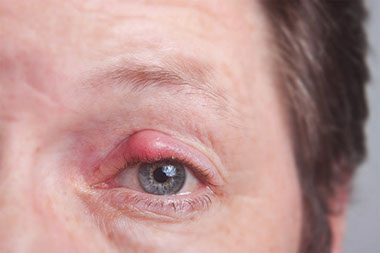
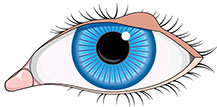
    Close up image of eye with a stye.

    A stye is an infection in a tiny gland of the eyelid.

    Illustration of a stye.

    Signs & Symptoms

    *  Red, painful bump or sore on an eyelid.

    *  Watery or tearing eye that burns and itches.

    *  The red bump may form a head and appears yellow if it contains pus. This usually drains on its own within days.

    Causes

    Sties form from clogged oil glands at the base of an eyelash.

    Treatment

    Most sties respond well to self-care and don’t need further treatment.

    Questions to Ask

    Self-Care / Prevention

    *  Wash your hands often.

    *  Don’t touch your eyes with your fingers. Use a tissue instead.

    *  Use clean washcloths and towels each time you wash your face.

    *  Don’t share washcloths, towels, makeup, or eye drops with others.

    *  Don’t expose your eyes to excessive dust or dirt.

    To Relieve the Discomfort of a Stye

    *  Apply warm (not hot), wet compresses to the affected area 3 to 4 times a day for 5 to 10 minutes at a time. Use a clean washcloth each time.

    *  Don’t poke or squeeze the stye. A more serious infection could occur.

    *  If the stye drains on its own, gently wash the pus away with a clean, wet cloth.

    Healthier at Home book by the American Institute for Preventive Medicine. www.HealthyLife.com. All rights reserved.

    © American Institute for Preventive Medicine
  • Student Health

    Student Health

    General Safety Guidelines

    Alcohol Safety

    Set Up Good Sleep Habits

    Choose Healthy Foods & Control Your Weight

    Stress & Emotional Eating

    Use ChooseMyPlate.Gov

    Depression

    Eating Disorders

    Mononucleosis (“Mono”)

    Suicidal Thoughts

    4 Warning Signs of Teen Depression

    Nutrition, Health & Safety Issues

    © American Institute for Preventive Medicine
  • Depression

    Student Health

    Depression is the most common reason college students go to their school’s counseling service. Depression makes a person less able to manage life. It affects a person’s mood, mind, body, and behaviors.

    Signs & Symptoms

    The number and severity of the symptoms vary from person to person. A person who is depressed has one or more of the signs and symptoms listed below.

    *  Feeling sad, hopeless, and helpless.

    *  Feeling guilty and/or worthless.

    *  Thinking negative thoughts.

    *  Having a loss of interest in things, such as social activities, hobbies, and sex.

    *  Sleeping too little or too much.

    *  Fatigue or loss of energy.

    *  Problems concentrating or making decisions.

    *  Ongoing physical symptoms, such as headaches, chronic pain, or digestive problems that don’t respond to treatment.

    *  Uncontrollable crying.

    *  Poor appetite with weight loss, or overeating and weight gain.

    *  Thoughts of suicide or death.

    Causes & Risk Factors

    *  Major changes and stress that accompany college, including choosing career goals, leaving home, and the strain from trying to study and socialize at the same time.

    *  Obsessing about expenses.

    *  Abuse of alcohol, drugs, and some medications.

    *  Relationship changes, such as break ups, a family divorce, or the death of someone close.

    *  Brain chemical imbalances. Also, some types of depression run in families.

    *  Hormonal changes. This could be from taking birth control pills or using anabolic steroids which can cause changes in mood.

    *  Lack of natural, unfiltered sunlight between late fall and spring. This is called Seasonal Affective Disorder (SAD). It may only affect some people that are prone to this disorder.

    *  Holiday “blues.”

    Most likely, depression is caused by a mix of: A family history of the illness; brain chemical imbalances; emotional issues; and other factors, such as a medical illness or alcohol abuse.

    In some people, events like extreme stress and grief may cause depression. In others, depression occurs even when life is going well.

    Treatment

    Treatment includes medicines, psychotherapy, and other therapies that are specific to the cause of the depression. Exposure to bright lights (similar to sunlight) for depression that results from SAD can be helpful. {Note: Some antidepressant medicines can increase the risk for suicidal thoughts and behaviors, especially in children and adolescents. This risk may be higher within the first days to a month after starting the medicine. Persons who take antidepressants should be closely monitored.}

    Questions to Ask

    Self-Care / Prevention

    *  Take medications as prescribed. Get your doctor’s advice before you take over-the-counter herbs, such as St. John’s Wort, especially if you take other medications.

    *  Don’t use illegal drugs. Limit alcohol. These can cause or worsen depression. Drugs and alcohol can also make medicines for depression less effective. Harmful side effects can occur when drugs and/or alcohol are mixed with medicine.

    *  Eat healthy foods. Eat at regular times.

    *  Get regular exercise.

    *  Talk to someone who will listen to the tensions and frustrations you are feeling.

    *  Try not to isolate yourself. Be with people you trust and feel safe with, even though you feel down.

    *  Do things you enjoy. Do something that lets you express yourself. Draw. Paint. Write your thoughts in a diary or journal.

    *  Relax. Listen to soft music, take a warm bath or shower. Do relaxation exercises.

    *  Avoid stressful situations or taking on added commitments when you feel depressed.

    *  Keep an emergency number handy (e.g., crisis hotline, trusted friend’s number, etc.) in case you feel desperate.

    Feeling better takes time. Don’t expect to just “snap out” of your depression.

    To Help A Friend Who Is Depressed

    *  Help your friend get an appropriate diagnosis. Make an initial appointment with a professional and offer to take your friend.

    *  Do not ignore remarks about suicide. Report them, immediately, to a student advisor, teacher, or health care provider.

    *  Be aware of the type of medication your friend needs to take and when it should be taken. If necessary, alert your friend’s health care provider about any side effects that you notice.

    *  Be supportive. Depression is no different from any other physical illness. It requires patience, understanding, love, and encouragement. Encourage your friend to continue with treatment and to see his or her health care provider if there is no improvement.

    *  Listen with care. Point out your friend’s successes and attributes when he or she feels worthless, helpless, or down about the future. Helping your friend see previous successes can help give the confidence needed to continue with treatment. Your friend doesn’t need you to tell him or her what to do. Listening is very helpful.

    *  Encourage your friend to go out and do things with you or with others, such as to see a movie or to do things your friend enjoyed in the past. Don’t push, though, or make too many demands.

    *  Seek support from organizations that deal with depression.

    Resources

    Your school’s Student Counseling Service or Student Mental Health Service. (Normally, these services are no cost to you.)

    International Foundation for Research and Education on Depression (IFRED)

    www.ifred.org

    Mental Health America (MHA)

    800.969.6642

    www.mentalhealthamerica.net

    National Mental Health Consumers’ Self-Help Clearinghouse

    800.553.4539

    www.mhselfhelp.org

    Student Self-Care book by the American Institute for Preventive Medicine. www.HealthyLife.com. All rights reserved.

    © American Institute for Preventive Medicine
  • Stroke (Brain Attack)

    First Aid

    A stroke is also called a “brain attack.” With a stroke, brain cells die due to a blood clot or rupture of a blood vessel in the brain. The end result is brain damage (and possible death).

    In the U.S., strokes are the 3rd leading cause of death. They are the leading cause of adult disability.

    Signs & Symptoms

    *  Sudden numbness or weakness of the face, arm, or leg, especially on one side of the body.

    *  Sudden confusion, trouble speaking or understanding.

    *  Sudden trouble seeing in one or both eyes.

    *  Sudden trouble walking, dizziness, loss of balance or coordination.

    *  Sudden severe headache with no known cause.

    Causes

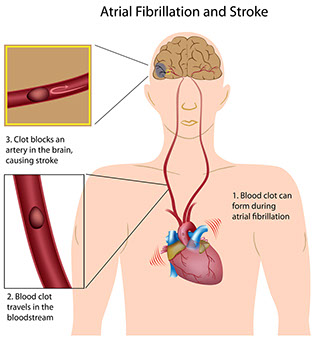
    Most strokes are caused by a blood clot in an artery in the neck or brain. Some are caused by bleeding into or around the brain.

    Risk Factors for a Stroke

    *  Previous stroke or transient ischemic attack (TIA)-a temporary lack of blood supply to the brain.

    *  Atrial fibrillation. This is an irregular beating of the heart.

    *  High blood pressure. Cigarette smoking. Diabetes. Coronary artery disease.

    *  Being a male over age 70.

    Illustration of how a stroke is caused.

    Prevention

    *  Take medicine(s), as prescribed, to control blood pressure, blood cholesterol, diabetes, and atrial fibrillation. Aspirin may help reduce the risk of stroke in women ages 55-79 years. Discuss this with your doctor.

    *  Get to and stay at a healthy weight. Get regular exercise.

    *  Don’t smoke. If you smoke, quit. Use alcohol in moderation. Manage stress.

    Questions to Ask

    Self-Care / Prevention

    First Aid before Emergency Care

    *  Note the time when the first sign(s) of stroke occurred. Report this time to emergency personnel. For the most common type of strokes, a clot-busting drug should to be given within 3 hours of the start of symptoms.

    *  Do not give the person anything to eat or drink. Do not give aspirin.

    Healthier at Home book by the American Institute for Preventive Medicine. www.HealthyLife.com. All rights reserved.

    © American Institute for Preventive Medicine
  • Stress Relief For Caregivers

    Mature Health: Over Age 50

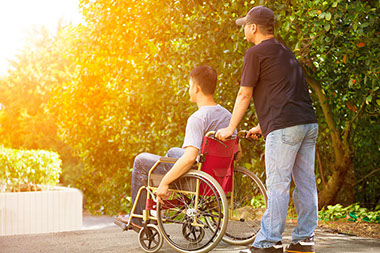
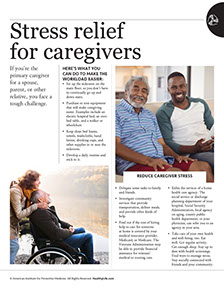
    Image of a caregiver helping a man in a wheelchair.

    If you’re the primary caregiver for a spouse, parent, or other relative, you face a tough challenge. Here’s what you can do to make the workload easier.

    *  Set up the sickroom on the main floor, so you don’t have to continually go up and down stairs.

    *  Purchase or rent equipment that will make caregiving easier. Examples include an electric hospital bed, an over-bed table, and a walker or wheelchair.

    *  Keep clean bed linens, towels, washcloths, hand lotion, drinking cups, and other supplies in or near the sickroom.

    *  Develop a daily schedule and stick to it.

    To reduce the stress of your ongoing responsibility:

    *  Delegate some tasks to family and friends.

    *  Investigate community services that provide transportation, deliver meals, and provide other kinds of help.

    *  Enlist the services of a home health care agency. The social service or discharge planning department of your hospital, Social Security Administration, local agency on aging, county public health department, or your physician, can refer you to an agency in your area.

    *  Plan to get out of the house to shop or socialize at least one day a week.

    *  Find out if the cost of hiring help to care for someone at home is covered by your medical insurance provider, Medicaid, or Medicare. The Veterans Administration may be able to provide financial assistance for veterans’ medical or nursing care.

    A Year of Health Hints book by the American Institute for Preventive Medicine. www.HealthyLife.com. All rights reserved.

    © American Institute for Preventive Medicine
  • Stress & Emotional Eating

    Student Health

    College life may leave you feeling stressed. Do you need extra vitamins and nutrients? Though a busy schedule may sometimes cause people to neglect eating well, we do not use any more (or fewer) nutrients while under mental stress. When you are feeling stressed and strung-out, try these tips:

    *  Take time to take care of yourself. This includes taking time to eat well. Don’t just snack all day. Sit down and enjoy your meal.

    *  Try quick foods, such as fresh, canned, or frozen veggies added to canned soups or pastas. Order in if you like, but try not to skip meals.

    *  Start your day with breakfast! It will help you get going for the rest of the day.

    Food cravings may be a sign of hunger created from skipping meals, from a lack of nutrients in your diet, or an attempt to satisfy emotional needs. Food won’t solve your emotional dilemmas. The next time you find yourself heading for the fridge for a quick emotional fix, use the following tips.

    *  You are studying for that big exam and find yourself nervous and anxious. Instead of splurging on ice cream, seek out different relaxation techniques. Sit quietly with your eyes closed and breathe deeply for a few minutes. Or, go for a quick walk. Get enough sleep. Sleep deprivation makes most people anxious and irritable.

    *  You’ve had a big fight with your roommate and are furious. Anger can cause overeating quicker than most other emotions. Instead of eating as a response to this, try, instead, to confront the target of your anger. Have that difficult conversation after you have had a chance to calm down or write out your feelings in a letter.

    *  You find yourself with nothing to do, but sit around and eat. Many people eat out of boredom. Solution? Diversion! Find something else to capture your attention. Find which diversions work best for you and use them.

    *  Most importantly, don’t spend time feeling guilty when you eat to get an emotional fix. Doing this occasionally is not a problem.

    Snacks and Your Backpack

    Snacking is a big part of hectic college life. When you are out shopping for snacks, stock up on pretzels, fruit, graham crackers, mini-size cereal boxes, popcorn, meal replacement bars, etc.

    If snacking and studying go together, try setting a schedule. Study for one hour and then grab a snack. This helps keep calories in control. Measure out a portion size of the snack rather than eating out of a large box or bag.

    When it comes to eating on the run, have a 6 inch submarine sandwich on a whole grain roll or a vegetarian pita. Don’t go long periods of time without eating. This leaves you famished and fatigued.

    Resources

    Page from Student Self-Care book by the American Institute for Preventive Medicine. www.HealthyLife.com. All rights reserved.

    © American Institute for Preventive Medicine