Blog

  • Don’t Be Duped By Antiwrinkle Creams

    Mature Health: Over Age 50

    Image of women looking in a mirror examing her face.

    Don’t be misled by over-the-counter skin care products that claim to get rid of wrinkles. There’s no such thing. The closest thing to a wrinkleremoving cream is retinoic acid, a synthetic form of vitamin A. Applied to the skin surface, retinoic acid increases blood flow and stimulates skin cells called fibroblasts to produce new collagen (a protein that keeps skin smooth). This process can help to reduce tiny wrinkles and make deep wrinkles less noticeable. Retinoic acid also speeds up the rate that your skin’s cells move to the surface and die off to be replaced with new cells, so your skin looks younger.

    Retinoic acid is available as Retinol in over-the-counter products and by prescription under the trade name Retin-A. Regular vitamin A has no effect on wrinkles, whether it’s taken orally or applied directly to the skin.

    A Year of Health Hints book by the American Institute for Preventive Medicine. www.HealthyLife.com. All rights reserved.

    © American Institute for Preventive Medicine

  • Prevent Poisoning

    First Aid

    Do This, Not That

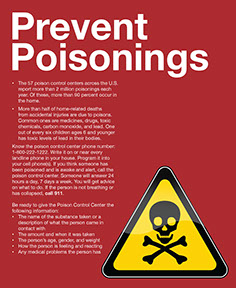
    *  The 57 poison control centers across the U.S. report more than 2 million poisonings each year. Of these, more than 90 percent occur in the home.

    *  More than half of home-related deaths from accidental injuries are due to poisons. Common ones are medicines, drugs, toxic chemicals, carbon monoxide, and lead. One out of every six children ages 6 and younger has toxic levels of lead in their bodies.

    Know the poison control center phone number: 1-800-222-1222. Write it on or near every landline phone in your house. Program it into your cell phone(s). If you think someone has been poisoned and is awake and alert, call the poison control center. Someone will answer 24 hours a day, 7 days a week. You will get advice on what to do. If the person is not breathing or has collapsed, call 911.

    Be ready to give the Poison Control Center the following information:

    *  The name of the substance taken or a description of what the person came in contact with

    *  The amount and when it was taken

    *  The person’s age, gender, and weight

    *  How the person is feeling and reacting

    *  Any medical problems the person has

    Chemical and Alcohol Poisoning

    Lead Poisoning

    Carbon Monoxide (CO) Poisoning

    Safe at Home - Do This, Not That Book. Published by the American Institute for Preventive Medicine.

    © American Institute for Preventive Medicine

  • Dizziness & Vertigo

    Brain & Nervous System

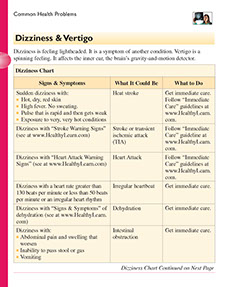
    Dizziness is feeling lightheaded. It is a symptom of another condition. Vertigo is a spinning feeling. It affects the inner ear, the brain’s gravity-and-motion detector.

    Dizziness Conditions

    Heat Stroke

    Signs & Symptoms

    Sudden dizziness with:

    *  Hot, dry, red skin

    *  High fever. No sweating.

    *  Pulse that is rapid and then gets weak

    *  Exposure to very, very hot conditions

    What to Do

    Get immediate care.

    Stroke or Transient Ischemic Attack

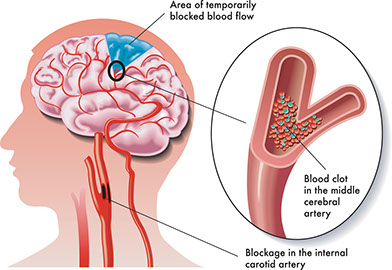
    Illustration on how a stroke is caused.

    Signs & Symptoms

    Dizziness with “Stroke Warning Signs”

    What to Do

    Follow “Immediate Care” guideline.

    Heart Attack

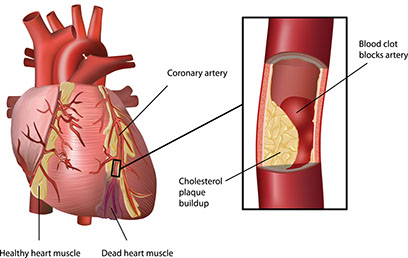
    Illustration of how a heart attack is caused.

    Signs & Symptoms

    Dizziness with “Heart Attack Warning Signs”

    What to Do

    Follow “Immediate Care” guidelines

    Irregular Heartbeat

    Signs & Symptoms

    Dizziness with a heart rate greater than 130 beats per minute or less than 50 beats per minute or an irregular heart rhythm

    What to Do

    Get immediate care.

    Dehydration

    Signs & Symptoms

    Dizziness with “Signs & Symptoms” of dehydration

    What to Do

    Get immediate care.

    Intestinal Obstruction

    Signs & Symptoms

    Dizziness with:

    *  Abdominal pain and swelling that worsen

    *  Inability to pass stool or gas

    *  Vomiting

    What to Do

    Get immediate care.

    Dissecting Aortic Aneurysm

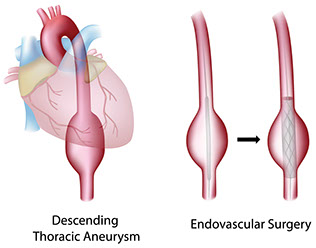
    Illstration of a descending thoracic aneurysm.

    This is a tear in the main artery from the heart.

    Signs & Symptoms

    Dizziness and fainting. Severe chest pain with extreme pain felt across the upper back (not just on one side) that came on within 15 minutes for no apparent reason, such as an injury or back strain. The pain can spread to the abdomen.

    What to Do

    Get immediate care. (Do not take aspirin.)

    Ear Infection

    Signs & Symptoms

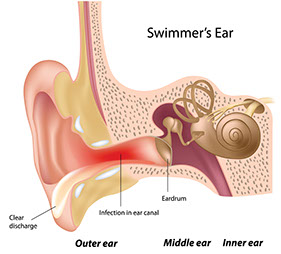
    Dizziness with ear pain, ringing in the ear, pus or other ear discharge, fever

    What to Do

    Contact doctor.

    Illustration of swimmer's ear.

    Labyrnthitis

    This is an inflammation in the ear that usually results from an upper respiratory infection.

    Signs & Symptoms

    Dizziness with:

    *  True spinning sensation

    *  Loss of balance

    *  Nausea and vomiting

    *  Ringing in the ears

    *  Jerky movements of the eye

    What to Do

    Contact doctor.

    Low Blood Sugar

    This can occur in persons taking insulin or oral pills for diabetes and/or after not eating for 4 or more hours.

    Signs & Symptoms

    Dizziness with hunger, sweating, trembling, anxiety, and confusion

    What to Do

    Use self-care.

    Temporary Drop in Blood Pressure (Orthostatic Hypotension)

    This could be a side effect of taking medicines, such as ones for high blood pressure and depression.

    Signs & Symptoms

    Dizziness when getting up too quickly from a seated or lying position

    What to Do

    Use self-care.

    Other Causes of Dizziness:

    *  Alcohol

    *  New medications, antibiotics, or high doses of aspirin

    *  A change in altitude or motion sickness

    *  Sudden movement, such as with turning the head quickly

    *  Seeing fast moving objects Treatment for dizziness depends on the cause.

    Vertigo

    Signs & Symptoms

    *  Wooziness

    *  Sense that the room is spinning

    *  Nausea

    *  Blurred vision

    *  Floating, rocking, and/or rolling feeling

    *  Sense of walking on an uneven surface

    *  Loss of balance

    Causes, Risk Factors & Care

    Vertigo is caused by a problem with the inner ear. Causes of vertigo are:

    *  Benign Positional Vertigo (BPV). This is the most common type. It may happen when you turn over in bed, get up, sit down, bend over, or just tilt your head. The sensations start within seconds of changing positions and last less than a minute. As bothersome as BPV is, it rarely signals more serious disease. Risk factors for BPV are aging, viral infections, and a prior head injury.

    *  Ménière’s disease. This condition may be due to spasms of blood vessels in the inner ear, fluid retention in the inner ear, or allergic reactions. Ménière’s disease is linked with a decrease in hearing and tinnitus. It sometimes leads to permanent hearing loss.

    *  Multiple sclerosis. With this, the covering that protects nerves (myelin) is destroyed. Over time, scar tissue (sclerosis) forms where the myelin used to be in the brain and spinal cord. Scar tissue or inflammation in the brain may cause vertigo symptoms.

    After proper diagnosis, most cases of vertigo are easily treated in the doctor’s office or at home with self-care.

    While attacks of Ménière’s disease can continue for many years, some symptoms can be controlled with medication.

    Self-Care

    For Orthostatic Hypotension:

    *  Don’t jump out of bed. Go from a lying position to a sitting position slowly. Sit on the edge of the bed a few minutes. Stand up slowly.

    *  From a sitting position, stand up slowly. Hold onto the arms of the chair or the head of the bed for support.

    *  If you feel lightheaded, sit back down for a few minutes. Take a few deep breaths. Get up again, slowly.

    For Benign Positional Vertigo (BPV):

    *  Sit on the side of the bed and lean to your right, resting the right ear on the bed. This might make you dizzy and nauseous at first.

    *  Wait 20 seconds until the dizziness stops and sit up straight.

    *  Wait another 20 seconds and repeat steps 1 and 2 on your left side.

    *  Do this exercise 10 to 15 times, 3 times a day.

    For Ménière’s Disease:

    *  Lie still in bed until the dizziness and nausea are gone.

    *  Walk with assistance.

    *  Don’t change positions too fast.

    *  Do not drive, climb ladders, or work around dangerous machinery.

    *  Decrease the amount of salt and fluids in your diet.

    *  Avoid bright lights. Do not read when you have a spinning feeling.

    *  Resume your normal activities when symptoms go away.

    *  Avoid alcohol, caffeine, and tobacco.

    Health at Home Lifetime book by the American Institute for Preventive Medicine. www.HealthyLife.com. All rights reserved.

    © American Institute for Preventive Medicine

  • Diverticulosis & Diverticulitis

    Abdominal & Urinary Conditions

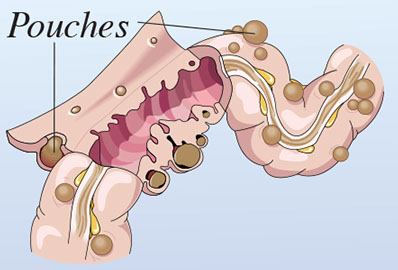
    Illustration of diverticulosis in colon.

    Diverticulosis in Colon

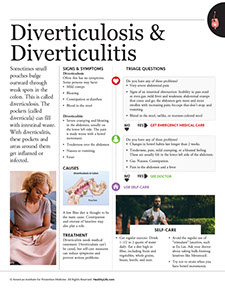
    Sometimes small pouches bulge outward through weak spots in the colon. This is called diverticulosis. The pockets (called diverticula) can fill with intestinal waste. With diverticulitis, these pockets and areas around them get inflamed or infected.

    Signs & Symptoms

    For Diverticulosis

    Often this has no symptoms. Some persons may have:

    *  Mild cramps.

    *  Bloating

    *  Constipation.

    *  Blood in the stool.

    For Diverticulitis

    *  Severe cramping and bloating in the abdomen, usually on the lower left side. The pain is made worse with a bowel movement.

    *  Tenderness over the abdomen.

    *  Nausea.

    *  Fever.

    Causes

    A low fiber diet is thought to be the main cause. Constipation and overuse of laxatives may also play a role.

    Treatment

    Diverticulitis needs medical treatment. Diverticulosis can’t be cured, but self-care measures can reduce symptoms and prevent serious problems.

    Questions to Ask

    Self-Care / Prevention

    *  Get regular exercise. Drink 1-1/2 to 2 quarts of water daily. Eat a diet high in fiber, but avoid foods that bother you (e.g., corn, nuts, etc.).

    *  Avoid the regular use of “stimulant” laxatives, such as Ex-Lax. Ask your doctor about taking bulk-forming laxatives like Metamucil.

    *  Try not to strain when you have bowel movements.

    Healthier at Home book by the American Institute for Preventive Medicine. www.HealthyLife.com. All rights reserved.

    © American Institute for Preventive Medicine

  • A Diet For Lifetime Health

    Mature Health: Over Age 50

    Image rich in B vitamins.

    Studies show that some older adults are deficient in vitamins B6, B12, and folate (a B vitamin). To guard against vitamin deficiencies, plan a diet that includes food sources of these nutrients.

    *  Lean meats, chicken, organ meats and fish, are high in B6.

    *  Milk, eggs, and lean meats are excellent sources of B12.

    *  Asparagus, brussels sprouts, and almost all green, leafy vegetables are high in folate. Other sources are cantaloupe, orange juice, and fortified grain products.

    *  Citrus fruits, tomatoes, cantaloupe, strawberries, green pepper, and broccoli are rich in vitamin C.

    It is also important to get adequate protein and calcium daily. Low-fat dairy products are rich sources of calcium. Two servings a day of 2 to 3 ounces of meat, chicken, or fish provide the protein you need. Other sources of protein include cooked dried beans, peanut butter, milk, and eggs.

    A Year of Health Hints book by the American Institute for Preventive Medicine. www.HealthyLife.com. All rights reserved.

    © American Institute for Preventive Medicine

  • Diarrhea In Children

    Children’s Health

    Signs, Symptoms & Causes

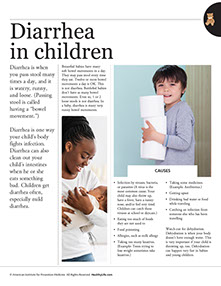
    Diarrhea is when you pass stool many times a day, and it is watery and loose. (Passing stool is called having a “bowel movement.”)

    Diarrhea is one way your child’s body fights infection. Diarrhea can also clean out your child’s intestines when he or she eats something bad. Children get diarrhea often, especially mild diarrhea.

    Breast-fed babies have many soft bowel movements in a day. They may pass stool every time they eat. Twelve or more bowel movements a day is O.K. This is not diarrhea. Bottle-fed babies don’t have as many bowel movements. Even so, 1 or 2 loose stools is not diarrhea. In a baby, diarrhea is many very runny bowel movements.

    Watch out for dehydration. Dehydration is when your body doesn’t have enough water. This is very important if your child is throwing up, too. Dehydration can happen very fast in babies and young children.

    Many things can cause diarrhea:

    *  Infection by viruses, bacteria, or parasites (A virus is the most common cause. Your child may also throw up, have a fever, have a runny nose, and/or feel very tired. Children can catch these viruses at school or daycare.)

    *  Eating too much of foods they are not used to.

    *  Food poisoning.

    *  Allergies. (Example: milk allergy).

    *  Taking too many laxatives. (Example: Teens trying to lose weight sometimes take laxatives.)

    *  Taking some medicines. (Example: Antibiotics.)

    *  Getting upset.

    *  Drinking bad water or food while traveling.

    *  Catching an infection from someone else who has been travelling.

    Questions to Ask

    Self-Care

    Do the tips that follow if your child shows these signs of dehydration

    – Is thirsty.

    – Has a dry mouth and dry skin.

    – Has a dry diaper or passed little or no urine.

    – Is confused or dizzy.

    – Is weak or has a weak cry.

    *  Get medical care fast.

    *  Stop solid foods. Give clear liquids. Give the liquids the doctor tells you to give.

    *  Don’t give your child very cold or hot liquids or boiled milk.

    *  Don’t give your child liquids with lots of sugar, like soft drinks, gelatins, grape juice, and apple juice. These can make the diarrhea worse.

    *  Don’t give just clear liquids for more than 24 hours. Start normal meals within 12 hours.

    * For bottle-fed babies and children under 2, give over-the-counter mixtures like Pedialyte®. They have liquid and minerals.

    – For breast-fed babies, nurse the baby. But give only as much breast milk as the baby wants. Feed every 2 hours. Ask the baby’s doctor about giving water and over-the-counter mixtures.

    – For children over age 2, give up to 6 cups of liquid per day. Good choices are: Over-the-counter mixtures, like Pedialyte®; Kool-Aid®; Sports drinks, like Gatorade®. Water, but don’t give just water. Give other clear liquids, too.

    Do the tips that follow if there are no signs of dehydration

    *  Feed your child normal meals. Your child may want to eat smaller amounts than normal.

    *  Don’t give fatty or fried foods.

    *  Don’t give your child foods that upset his or her stomach.

    *  Don’t feed your child just a B.R.A.T. diet. This was an old way to treat diarrhea. B.R.A.T. stands for ripe Bananas, Rice, Applesauce, and dry Toast. It is O.K. to give your child these foods with other ones, though.

    *  Don’t let your child exercise too hard until the diarrhea is all gone.

    *  Don’t give your child Kaopectate® or other over-the-counter medicines to stop diarrhea unless your child’s doctor says it’s O.K. And, don’t give your child Pepto-Bismol®. Like aspirin, Pepto-Bismol® has salicylates which have been linked to Reye’s Syndrome, a condition that can kill.

    *  To keep diarrhea germs from spreading, follow these tips:

    – Make sure your child washes his or her hands after using the toilet.

    – Give your child paper towels to dry his or her hands.

    – Have everyone at home wash their hands often, so the infection doesn’t spread.

    – Be sure to wash your hands after changing diapers or washing your child.

    Follow these steps to avoid food poisoning

    *  Wash your hands with warm soapy water for 20 seconds (count to 30) before you handle food or items used to prepare foods.

    *  Use clean tools and clean surfaces when you prepare foods.

    *  Keep raw meat, poultry, eggs, and fish away from other foods, utensils, and serving plates.

    *  Wash your hands after you touch or prepare raw meat, poultry, fish, shellfish, or eggs. Wash the items used to prepare these foods, too. Use hot soapy water or put them in the dishwasher.

    *  Don’t mix raw foods with cooked and ready-to-eat foods when you shop, prepare, and store foods.

    *  Store foods that can spoil in the refrigerator. Read food labels. Use leftovers stored in the refrigerator within 3 to 4 days.

    *  Don’t eat raw eggs or eggs that aren’t cooked enough. Don’t eat foods with raw eggs like cookie batter.

    *  Cook foods to a safe temperature. Check and follow the label or recipe.

    *  Keep hot foods hot (higher than 140ºF) and cold foods cold (40ºF or lower).

    Children's Self-Care book by the American Institute for Preventive Medicine. www.HealthyLife.com. All rights reserved.

    © American Institute for Preventive Medicine

  • Diarrhea

    Abdominal & Urinary Conditions

    Image of medicine in pink bottle.

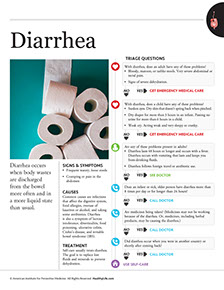
    Diarrhea occurs when body wastes are discharged from the bowel more often and in a more liquid state than usual.

    Signs & Symptoms

    *  Frequent watery, loose stools.

    *  Cramping or pain in the abdomen.

    Causes

    Common causes are infections that affect the digestive system, food allergies, overuse of laxatives or alcohol, and taking some antibiotics. Diarrhea is also a symptom of lactose intolerance, diverticulitis, food poisoning, ulcerative colitis, Crohn’s disease, and irritable bowel syndrome (IBS).

    Treatment

    Self-care usually treats diarrhea. The goal is to replace lost fluids and minerals to prevent dehydration.

    Questions to Ask

    Self-Care / Prevention

    *  If vomiting is also present, treat for vomiting first.

    *  To prevent dehydration:

    – Drink plenty of water and other fluids, such as sports drinks, broths, and Kool-Aid (which usually has less sugar than soda).

    – Avoid drinks with caffeine or alcohol.

    – Avoid having high “simple” sugar drinks, like apple juice, grape juice, and sodas. These can make the diarrhea persist. Or, dilute juices and sodas with water.

    If you have signs of dehydration seek medical care. Until you get care, drink fluids:

    *  Broths and sports drinks.

    *  For children less than 2 years old, give over- the-counter mixtures, such as Pedialyte as advised by their doctors.

    *  If you breast-feed, give only as much milk as your baby wants. Feed every 2 hours.

    *  Avoid caffeine and alcohol.

    *  Choose foods that don’t upset your stomach.

    *  Do not have foods that are greasy, high in fiber, or very sweet.

    *  Avoid milk, but try yogurt that has live cultures of lactobacillus acidophilus (unless you are lactose intolerant).

    *  Follow a light diet. Eat foods that are easy to digest, such as:

    – Bananas.

    – Plain rice.

    – Boiled potatoes.

    – Toast.

    – Crackers.

    – Cooked carrots.

    – Baked chicken without the skin or fat.

    – Soups with vegetables and noodles or rice.

    *  Don’t exercise too hard.

    *  Adults can try an over-the-counter medicine, such as Imodium A-D or Pepto-Bismol. Follow the directions on the label. {Note: Stools can become black after taking Pepto- Bismol. Also, do not give aspirin or any medication that has salicylates, such as Pepto- Bismol, to anyone under 19 years of age, due to the link to Reye’s syndrome.}

    *  Wash your hands after you go to the toilet and before you prepare food. Use paper towels to dry your hands. Throw the towels away.

    Resources

    National Institute of Diabetes and Digestive and Kidney Diseases (NIDDK)www2.niddk.nih.gov

    Healthier at Home book by the American Institute for Preventive Medicine. www.HealthyLife.com. All rights reserved.

    © American Institute for Preventive Medicine

  • Diabetes

    Diabetes Education

    Diabetes is too much sugar (glucose) in the blood. Glucose needs to get into the cells to be used for energy. Insulin is the hormone needed for glucose to get from the blood into the cells. Diabetes results when no insulin is made, not enough insulin is made, or the body does not use insulin well.

    Types of Diabetes

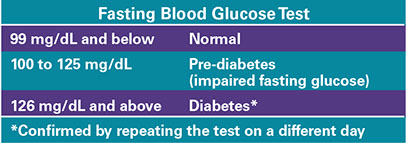
    One test used to diagnose diabetes is a fasting blood glucose test.

    Overweight and obese adults between ages 40 and 70 years old should be tested for adnormal blood sugar levels and type 2 diabetes. Follow your doctor’s advice for screening tests for diabetes.

    Type 1

    With this type, the pancreas gland makes no insulin or very small amounts. Often, the pancreas has fewer cells that make insulin. This type most often occurs in children and young adults. It can happen at any age, though.

    Type 2

    With this type, the pancreas does not make enough insulin or the body does not use insulin the right way. Often, this occurs in persons who are overweight and/or who don’t exercise. Modest weight loss and moderate physical activity can delay or help prevent type 2 diabetes.

    Pre-diabetes

    With this type, blood glucose levels are higher than normal, but not high enough to be diagnosed with diabetes. Many people with pre-diabetes develop type 2 diabetes within 10 years. Modest weight loss and moderate physical activity can delay or help prevent type 2 diabetes.

    Gestational

    This type occurs during pregnancy. It usually ends when the pregnancy ends. It does, though, increase the risk for the mother to get diabetes in the future. The mother will need follow-up blood sugar checks.

    Signs & Symptoms

    In the U.S., about 27 percent of people with diabetes do not know they have it. They may not have symptoms. According to the American Diabetes Association, some signs and symptoms of diabetes are:

    *  Urinating often

    *  Unusual thirst

    *  Extreme hunger

    *  Unusual weight loss

    *  Extreme fatigue

    *  Being very cranky

    *  Blurry vision

    If you have any of these symptoms, see your doctor. In type 1 diabetes, symptoms tend to come on quickly. In type 2, symptoms tend to come on more slowly. You can even have diabetes without any symptoms.

    A screening test can detect diabetes early. Early treatment may reduce other health problems related to diabetes.

    Diabetes has no cure, but it can be controlled. Goals are to keep blood sugar levels between 70 and 130 mg/dL before meals; and less than 180 mg/dL two hours after starting a meal.

    Health Problems Related to Diabetes

    When diabetes is left untreated or not treated well, you are at an increased risk for these health problems:

    *  Heart disease

    *  Stroke

    *  Poor circulation

    *  Foot problems

    *  Infections in general and slow healing of wounds and infections

    *  Yeast infections, especially in women

    *  Kidney and eye problems. This includes blindness.

    *  Gangrene. Sometimes this is so severe that the affected limb must be amputated.

    Risk Factors

    Discuss your risk for diabetes with your doctor or health care provider.

    For Type 2 Diabetes

    *  Your mother, father, brother, and/or sister has or had diabetes.

    *  You are overweight. You are not physically active.

    *  You are age 45 or older.

    *  You are female with a past history of gestational diabetes and/or you had at least one baby who weighed more than 9 pounds.

    *  You come from ethnic groups that are more prone to diabetes: African Americans, Latinos, Native Americans, Asian Americans, and Pacific Islanders.

    For Type 1 Diabetes

    *  You have a family history of type 1 diabetes.

    *  You had a virus that has injured the pancreas gland or a problem that has destroyed cells in the pancreas gland that make insulin.

    Medical Care

    Medication

    Diabetes pills. These are prescribed when diet and exercise are not enough to control your blood sugar. Types include:

    *  Ones that delay or block the breakdown of starches and some sugars (e.g., acarbose).

    *  Ones that help your body release more insulin (e.g., glyburide and tolbutamide).

    *  Ones that lower blood sugar without helping your body make more insulin (e.g., metformin).

    Insulin. There are different types based on how fast and over how many hours they work. People with type 1 diabetes need insulin. Some persons with type 2 diabetes need insulin. It can be given through:

    *  Insulin injections (shots)

    *  Insulin pump therapy

    Other medicines, as needed, to control blood pressure, blood cholesterol levels, etc.

    Exams & Tests

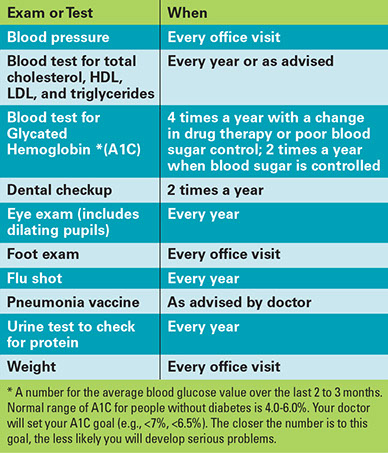
    If you have diabetes, have exams and tests, as advised. In general, diabetics should have the following:

    Self-Care

    Keep Track of Your Blood Glucose

    *  Test your blood sugar, as advised. People with type 1 diabetes may be told to test before each meal and at bedtime. People with type 2 diabetes may be told to test every other day or daily and at certain times.

    *  Keep a log of your blood sugar results. Note any reasons that could help explain why your blood sugar is higher or lower than usual. Share this log with your health care provider.

    Foot Care

    *  Check your feet every day. Let your health care provider know of any problems (swelling, redness, other color changes, ingrown toenails, corns, and foot injuries). Use a mirror to look at the bottom of your feet.

    *  Keep your feet clean.

    *  Wear shoes and slippers that fit your feet well. Don’t go barefoot, indoors or outdoors.

    *  Cut nails straight across and not too close to the skin. Have a foot doctor cut your toenails, if advised.

    Skin Care

    To reduce the risk of skin problems and infections:

    *  Keep your skin clean. Bathe or shower, daily, with warm water and a mild soap.

    *  Apply lotion to your skin to keep it moist.

    *  Protect your skin from damage.

    – Avoid cuts, scrapes, punctures, etc. If you get a skin injury, treat it right away. Keep it clean and cover the area with a clean, dry bandage. Call your doctor if the injury does not start to heal in a day or two or if you notice signs of infection (redness, swelling, pus, throbbing, and pain).

    – Avoid sunburn. Use a “broad spectrum” sunscreen, with an SPF of 15 or higher.

    – Wear gloves in cold weather and when you do work that may injure your hands.

    Diet

    In general, you may be advised to:

    *  Lose weight if you are overweight.

    *  Eat meals at regular times.

    *  Follow a meal plan for breakfast, lunch, dinner, and snacks. You may be told to count carbohydrates. Books, booklets, and food labels list carbohydrate amounts.

    *  Have 20 to 35 or more grams of dietary fiber per day. Fiber is in bran, whole-grain breads and cereals, fresh fruits and vegetables, beans and peas, and seeds.

    *  Strictly limit saturated and trans fats. To do this, choose nonfat dairy products; very lean meats (and in small amounts); and limit all animal and “hydrogenated fats.”

    *  Limit alcohol. Follow your doctor’s or health care provider’s advice.

    Exercise

    Regular exercise helps control your weight and blood sugar. It also lowers your blood cholesterol, blood pressure, and risk of heart disease. Exercise may also reduce the amount of medicine you need to take for your diabetes and make you feel better.

    *  If told to, test your blood glucose before and after exercise.

    *  When you exercise, have with you a carbohydrate source, such as fruit juice, hard candies, or glucose gel or tablets. For each of these, take the amount as advised by your health care provider.

    *  Find out if you should also carry a glucagon emergency kit. Your doctor needs to prescribe this. You and persons you exercise with should learn how to use this.

    Diabetic Emergencies

    Hypoglycemia (Low Blood Sugar)

    This can happen if you: Skip or don’t finish meals or snacks or wait too long to eat; exercise more than usual; and/or take excess diabetes medicine or insulin.

    Symptoms

    *  Shaky feeling. Weakness. Dizziness.

    *  Rapid pulse. Shallow breathing.

    *  Sweating. Cold, clammy skin.

    *  Sudden blurred or double vision

    *  Numbness or tingling around the mouth and lips

    *  Sudden mood changes. Confusion.

    *  Faintness. You may pass out.

    What to Do

    If you can, check your blood sugar. If it is lower than the level set by your health care provider, such as 70 mg/dL, have 15 grams of a “fast acting” carbohydrate. Examples are:

    *  1/2 cup (4 ounces) fruit juice or regular (not diet) pop

    *  5 or 6 regular (not sugar-free) hard candies

    *  4 teaspoons of sugar or honey

    *  6 to 10 gumdrops or jelly beans

    *  3 glucose tablets (or the number your health care provider advises). Drug stores sell these.

    *  1 cup (8 ounces) of milk

    *  If you don’t feel better after 15 minutes, take the same amount of sugar source again. If you still don’t feel better, call your doctor.

    *  If a person with diabetes passes out, can’t swallow, or can’t be roused, get emergency care. Use a prescribed emergency glucagon kit to inject glucagon. If there is no glucagon, rub sugar or any type of sweet paste, such as cake frosting, inside the person’s mouth. Call for emergency medical care. Do not give insulin, food, or liquids.

    Hyperglycemia (High Blood Sugar)

    This can happen if you: Get sick; eat too much; don’t do your normal exercises; don’t take your insulin or your diabetes pills or don’t take enough of them.

    Symptoms

    *  Extreme thirst

    *  Urinating often

    *  Nausea

    *  Acting cranky

    *  Dry, itchy skin

    *  Feeling very sleepy

    *  Blurred vision

    What to Do

    *  Check your blood sugar. Follow your doctor’s advice for your blood sugar level. If it is over 240 mg/dL or if you are sick, you may be told to check your urine for ketones. Call your doctor right away if your urine shows moderate or large amounts of ketones.

    *  Follow your treatment plan more closely.

    High Blood Sugar with Ketones in the Blood

    This is a serious condition. It can result in a coma. It occurs in persons who have type 1 diabetes. It is called diabetic ketoacidosis (DKA).

    Early Symptoms

    *  Intense thirst. Dry mouth.

    *  High blood glucose levels

    *  Urinating often

    *  Positive urine ketone tests

    Later Symptoms

    *  Tiredness. Dry, flushed skin.

    *  Nausea and/or vomiting

    *  “Fruity” breath odor

    *  Hard time breathing. Usually short, deep breaths.

    *  Lethargy. Can’t be roused.

    What to Do

    *  Call your doctor right away for advice.

    *  If you can’t reach your doctor, get to a hospital emergency department right away.

    High Blood Glucose without Ketones

    This is called hyperosmolar hyperglycemic nonketonic syndrome (HHNS). It occurs most often in persons who have type 2 diabetes. It usually comes after another illness, such as the flu, that caused dehydration. If it is not treated, seizures, coma, and even death can occur.

    Symptoms

    *  Dehydration. This may be the only symptom.

    Warning Signs of HHNS

    These occurred days or weeks before HHNS.

    *  Extreme thirst

    *  Very high blood glucose levels (over 600 mg/dL)

    *  High fever

    *  May have vision loss

    *  Sleepiness or confusion

    What to Do

    *  Drink water

    *  Get to a hospital emergency department right away.

    Resources

    American Diabetes Association

    800.DIABETES (342.2383)

    www.diabetes.org

    National Institute of Diabetes and Digestive and Kidney Diseases (NIDDK)

    www.niddk.nih.gov

    Diabetes brochure by the American Institute for Preventive Medicine. www.HealthyLife.com. All rights reserved.

    © American Institute for Preventive Medicine

  • Diabetes Prevention

    Diabetes Education

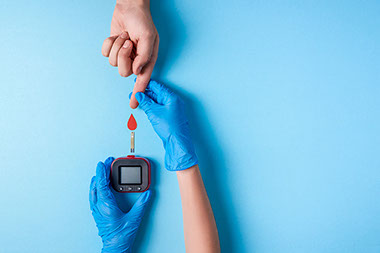
    Gloved hands, helping another hand check blood sugar level.

    Step 1: Lose weight if you are overweight.

    *  People at risk of type 2 diabetes may be able to delay or prevent it by losing five to seven percent of their total body weight.

    *  Aim to lose one pound a week.

    *  Ask family and friends to support you.

    Step 2: Make wise food choices.

    *  Control food portions.

    *  Reduce serving sizes of high fat and high calorie foods.

    *  Increase the amount of veggies (especially nonstarchy veggies, like leafy greens), and fiber that you eat. Choose fruit for desserts.

    *  Avoid sugar sweetened beverages, such as regular soda and sweet tea.

    *  Limit your sodium intake to 1,500 mg a day.

    Step 3: Be physically active every day.

    *  If you are not already active, start slowly.

    *  Build up to at least 30 minutes a day of a moderate-intensity physical activity five days a week.

    Action Step:Keep a log of what you eat and how much you exercise. It will help you stay on track.

    Health at Home Lifetime book by the American Institute for Preventive Medicine. www.HealthyLife.com. All rights reserved.

    © American Institute for Preventive Medicine

  • Guard Against Denture Trouble

    Mature Health: Over Age 50

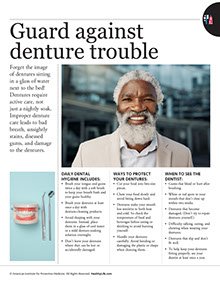
    Close up image of a mature women smiling showing her dentures.

    Forget the image of dentures sitting in a glass of water next to the bed! Dentures require active care, not just a nightly soak. Improper denture care leads to bad breath, unsightly stains, diseased gums, and damage to the dentures. Daily dental hygiene should include these measures.

    *  Brush your tongue and gums with a soft brush to keep your breath fresh and your gums healthy.

    *  Brush your dentures at least once a day with denture-cleaning products.

    *  Rinse your mouth with a mild salt-water solution (1 teaspoon of ordinary table salt in 1/2 cup warm water) after meals and before going to bed.

    *  Don’t leave your dentures where they can be lost or accidentally damaged.

    How you eat can also protect your dentures, so take these precautions.

    *  Cut your food into bite-size pieces.

    *  Chew your food slowly and avoid biting down hard.

    *  Dentures make your mouth less sensitive to both heat and cold. So check the temperature of food and beverages before eating or drinking to avoid burning yourself.

    To help keep your dentures fitting properly, see your dentist at least once a year. See your dentist if you have any of the following problems.

    *  Gums that bleed or hurt after brushing.

    *  White or red spots in your mouth that don’t clear up within two weeks.

    *  Dentures that become damaged. (Don’t try to repair dentures yourself.)

    *  Difficulty talking, eating, and chewing when wearing your dentures.

    *  Dentures that slip and don’t fit well.

    A Year of Health Hints book by the American Institute for Preventive Medicine. www.HealthyLife.com. All rights reserved.

    © American Institute for Preventive Medicine